
Water meter replacement nears completion
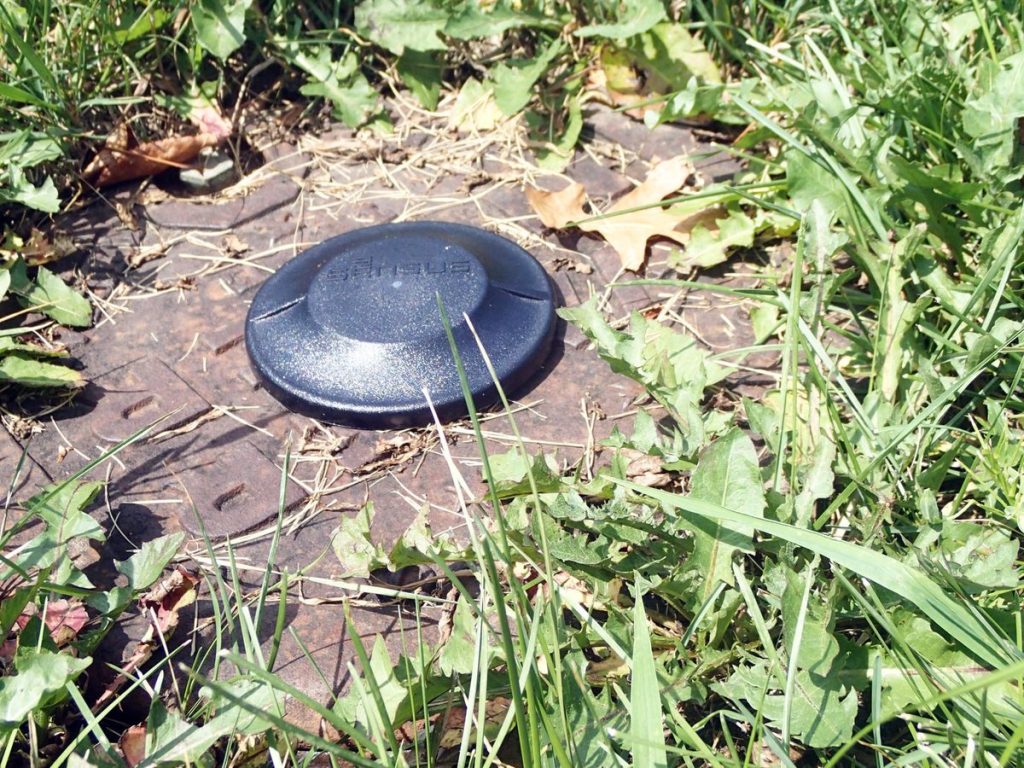
TONY BROWN/DAILY FORUM
Small, black antenna caps attached to the metal covers of newly installed “smart” municipal water meters have caused a few mishaps around town. Public Works Director C.E. Goodall said the antennas typically rise about three-quarters of an inch above the cover plates, and that several have been struck by lawnmowers. Goodall is urging residents and lawn-care workers to exercise appropriate caution by mowing around meter covers or raising mower blades to an appropriate height.
It’s taken a little long than expected, but the effort to replace all 4,200 of the City of Maryville’s water meters is nearly complete and should be finished within the next 30 to 60 days.
Public Works Director C.E. Goodall said Thursday that only about 90 of the old meters are still in place, many of them inside structures, which means replacement technicians are having to schedule appointments with property owners to gain entry.
The old meters, most of which were installed at least 20 years ago, are being swapped out for “smart” meters equipped with digital electronics that allow them to be read instantly from a remote location, in this case City Hall.
It was taking about three weeks’ worth of eight-hour days for a city worker to manually read the old meters at a cost of more than $17,000 a year. Once the new system is up and running, that employee will be assigned full-time to the Public Works water/sewer maintenance crew.
A portion of the new meters are already transmitting data on a trial basis via antennas mounted on Maryville’s north and south water towers, and Goodall said the transition to the new system is moving forward pretty much as expected.
With one minor problem.
Each of the metal covers protecting the new meters has been outfitted with a small plastic antenna case. The protective cases rise above the covers, which are usually installed flush with the ground, approximately three-quarters of an inch.
Goodall that about seven of the devices have already been destroyed by lawnmowers.
He said replacing the devices costs around $30, unless the blades also pull up the electronics further underground, which adds another $150 to the expense.
City officials are still working on a policy stating who is responsible for replacing damaged antennas after they are accidentally damaged. However, since only a handful of meters have been hit out of more than 4,000 installed, the issue doesn’t appear to be a serious one.
In addition to smart meters, the project also includes installation of a water main leak-detection system, a series of sensors installed via manholes and other access points that will notify Public Works when and approximately where a pipe is losing water.
Once city workers know that a leak exists in a certain area they will be able to use a sonar-like device to pinpoint its exact location before digging down to the main and patching it.
Currently such leaks, such as the one Wednesday afternoon on South Market Street, can go undetected until water is literally forced up through the pavement, a happenstance than adds to the time and expense of making repairs.
The Maryville City Council approved the meter replacement initiative about a year ago following research by municipal staff indicating aging meters were significantly under-measuring usage, meaning that Public Works was providing users with more water than was being paid for.
Maryville’s water and sewer budget is classed as an “enterprise fund,” meaning that costs associated with those services are supposed to be paid for through user fees rather than taxes. In that sense, improving meter accuracy simply means the city will now be able to collect money it is legally owed.
Schneider Electric, a multi-national energy management firm, proposed installing the new meters and main-leak sensors on a cost-recovery basis, estimating that the new equipment would produce savings and increased revenues totaling about $7.8 million over 15 years.
Of that amount, $3.6 million is being paid to Schneider, leaving an eventual net improvement in the city’s bottom line of nearly $4.2 million.
A sample of existing meters in 2016 indicated that factories and businesses accounted for most of Maryville’s unmeasured water usage, indicating that increased costs for homeowners should be minimal.




