
Life in the desert
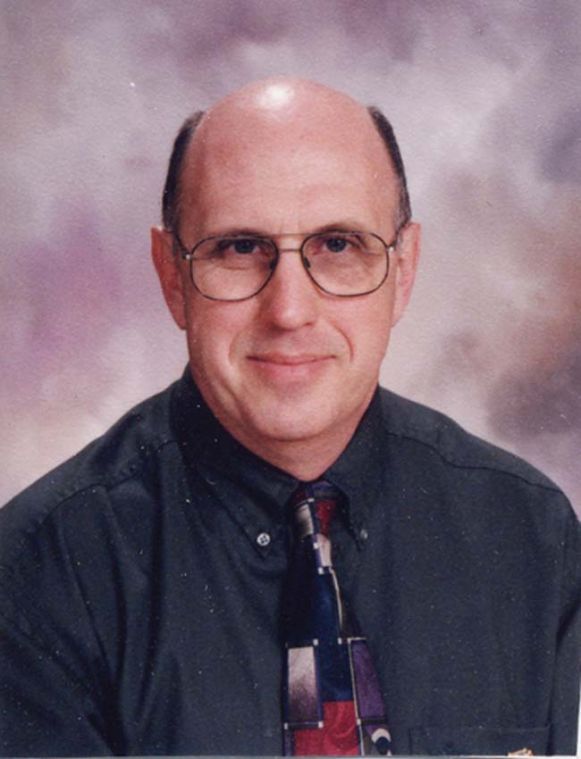
LARRY ANDERSON
Larry Anderson
When the word “desert” is heard, we typically conjure images of sand dunes, sidewinders and cacti, but now, in our increasingly weird culture, “desert” has taken on new meanings. Desert has become associated with things needed but are not easily accessible; that is, the kind of society we have causes some to have more access than others. This is unthinkable to those craving examples of injustice.
Those lacking access, as the argument goes, have been abandoned to a desert existing within our broader land of plenty. The most common example of this is “food deserts,” which have been linked to poor neighborhoods in urban areas and to rural areas removed from a supermarket.
Food deserts allegedly contribute to poor diets because either individuals don’t have easy access to markets or they tend to shop at convenience stores that may be close by but don’t offer the types of nutritious food needed. This situation has given rise to social and political implications.
Now, liberals know most Americans are fair as demonstrated by our long history of charity, volunteerism and pitching in. If lefties can direct sympathy to the desert supposition, they can point out the virtue of liberal goodness over stodgy conservatism.
I don’t question it is more difficult for some to get to a store than it is for others; I just challenge the use of food deserts as anything other than a propaganda tool. The notion suggests the situation is much more dire than it really is, that kids are going hungry, that a great injustice exists.
This begs the question, “How did people get along before the discovery of food deserts?” One should not confuse lack of convenience with social conspiracy.
Liberals won’t mention that one big reason supermarkets do not exist in some urban neighborhoods is because they have been driven out by crime. Nor do they mention personal responsibility in providing. Nor do they bring up the lack of good jobs which provides the cash for food. Many of those jobs scrammed because of liberal politics.
Food deserts have worked to an extent politically, so why not more deserts?
Now there are book deserts, with more to come.
Much of the book desert argument is either false or so terribly rushed into the guilt market, poor documentation has been provided to skeptics like myself. Here is a quote from the Topeka Capital-Journal as found in the St. Joseph News-Press May 14: “American children growing up in typical homes will hear 45 million words before the age of four … Most of the 45 million words a toddler hears come from books which offer much richer and more diverse vocabulary.”
Really? Let’s do the math. That many words means a child hears read an equivalent of 450 books of 100,000 words each within four years. That is over a hundred such books per year. No one does that, so either a bad calculating error was made or this is false reporting, perhaps to score a political point.
And what is the political point? Here it comes from the same article: “Shamefully, in the land of opportunity, children growing up in poverty may only hear 13 million words, a 30 million-word gap that can leave a child at an educational (and professional) disadvantage for the rest of his or her life. Researchers and educators have long held this early word gap as a massive stumbling block on the road to educational equality.”
See! Alleged reading deserts are yet another example of inequality in bad old America. The root is unequal distribution of resources. Sound familiar? It should. It is the age-old liberal mantra.
This was at the end of the article: “Multiple studies have now demonstrated the existence of ‘book deserts’ in which access to reading materials particularly for the young children who need them most, is severely limited.”
So, what’s missing in the argument? Will.
You can’t tell me that so called “deserts” are insurmountable by those who supposedly inhabit them if determination exists. Adults who can’t resolve them for themselves and their children are woefully unprepared to solve life’s much bigger problems.
Individuals solving problems for themselves should not be lost in hazy politics. Society at large is not wholly responsible for solving every personal problem that arises. Dangerous dependency follows.
The hurdle in the road to success for many isn’t the problem named but the politics of helplessness teaching such.
Larry W. Anderson is a retired educator, author and life-long Northwest Missourian.



