
Self-care shouldn’t be just about you
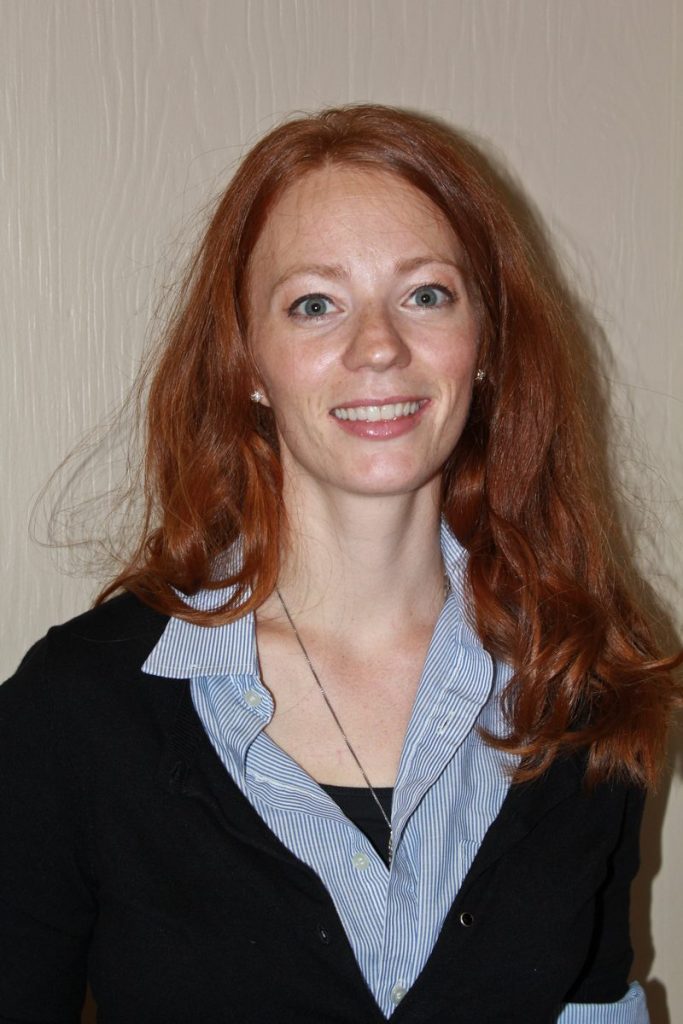
Jennifer Ditlevson Haglund
Although my daughter can say hundreds of words and she’s big for her age, she’s still working on balancing liquids on a spoon when transporting them from her bowl to her mouth. I admit that I’m likely to blame for the delay in skill development. I’ve helped her too much, because I dislike messes.
This week, gripping her spoon, she blurted with a surprising proclamation: “Self! Self!”
Her “self” would do the work of shoveling cereal into her mouth, without my help. A month shy of two, she’s decided autonomy suits her.
She, in her newfound independence, has no idea that it is a dirty four-letter word that has been given an increasing amount of power in the last 150 years due to its vastness and mystery. Modern Western philosophy could be credited for pushing forward the mesmerizing thing that is a self. If she wants, my daughter can spend her whole life studying what it means, and how to actualize, lose, find, and prove herself. She might even one day spend time asking if the self has physicality, and how the self relates to something like a soul.
The self has been put to work in the English language in many ways, but as a kind of reflexive prefix, it can be added to almost anything to make a word. You can practice self-abuse, self-employment, self-help, and self-praise, along with a long list of others. I hope I teach her about self-control, self-discipline, and self-examination as she grows more cognizant of her individuality and will, because her lifelong journey will provide her plenty of opportunity for more unseemly and destructive diversions of the self — like self-absorption.
If I haven’t lost readers yet with the 17 uses of the same word, there’s one more use of the “self” that interests me and deserves some column inches. Self-care, according to Instagram and Twitter posts, translates to lots of costly, sometimes sexy, instances of pampering. On Instagram, the most popular pictures in #selfcare and #selfcaresunday hashtag categories feature women showing off pictures of their bodies, pets, essential oils, food, and skin care products. Posting pictures of cups of frothy matcha poised over strategically placed suds dripping from naked legs in a bubble bath might qualify as proof of self-care to some, but I’d call that a self-congratulatory luxury photo op.
More than being annoyed, I find myself concerned with how self-care has been reduced to “treating yo self” to mani-pedis, shopping trips, and craft drinks. It’s as if the self has been reduced to an enthusiastically camera-ready consumer. What a low estimation of the purpose of a self.
I’m not opposed to uninterrupted and long bubble baths, good coffee, and scented candles. I like all of those things, but none of them alone gets into that space or dimension I call my “self.” If my soul is separate than my self, those pleasures don’t go so far as to rejuvenate or wake that, either.
Intellectuals of all viewpoints like to bicker and conjecture the composition and function of the self, and I don’t have time to offer a meaningful gloss of any of their work here. I can say that I get much of my understanding of self from my faith. It’s unique but created, ever-evolving but ultimately stable. Most important, although it’s individual, its best expression manifests in the service of others, not myself.
Jesus, who is my model, took time for self-care, but every time there was a consideration of preserving the self for the eventual benefit of others. It’s recorded in the fifth chapter of Luke that he “would withdraw to desolate places and pray.” In the sixth chapter of Mark, Jesus told his disciples they should rest. That suggestion came after the group had been serving so much that they’d had no time to eat. Of course, the story goes that the crowds followed them anyway and got some food out of the deal, too.
The healthy self cannot grow from concerns of viability to an infectious vibrancy without the the help of or relation with the other. Wearing cucumber face masks, drinking white wine in the afternoon, napping in hammocks, and accomplishing the wheel pose celebrate the extravagances of life, but self-gratification should not be confused with self-care.
Jennifer Ditlevson Haglund is a former news reporter for the Maryville Daily Forum, now living and writing in New York City.



