
Scan offers window on heart attack risks
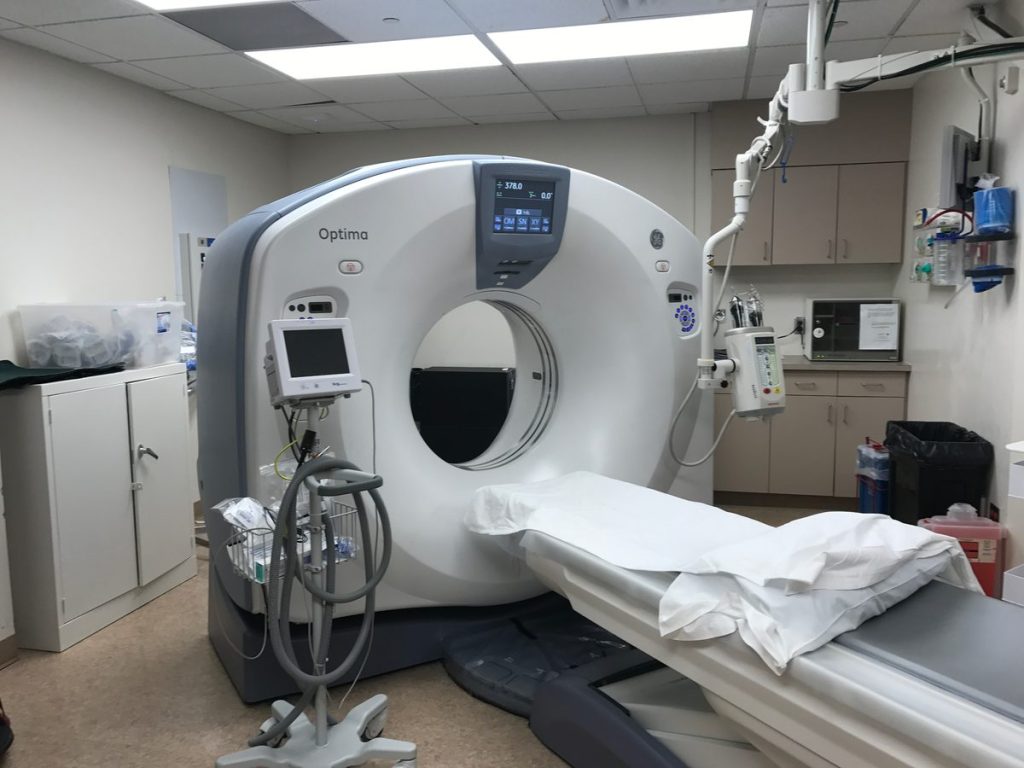
CODY THORN/DAILY FORUM
Calcium scoring, a low radiation tomography scan, or more commonly known as a CAT or CT scan, is now available at SSM Health St. Francis Hospital for patients with heart health needs.
MARYVILLE, Mo. — “Calcium scoring,” a type of low-radiation computed tomography scan — better known as a CT or CAT scan — is now available to patients at SSM Health St. Francis Hospital.
According to a hospital release, the procedure, designed to help identify heart disease risks, is quick, painless, and can be performed without orders from a physician.
Results, the release stated, are generally available to patients on the same day the test is conducted.
Essentially the scan is a non-invasive method for obtaining information about the presence, location, and extent of calcified plaque inside arteries.
Plaque results when there is a build-up of fat and other substances under the inner layer of the arterial wall. This material signals the presence of atherosclerosis, also known as coronary artery disease.
People with this condition have an increased risk for heart attacks since, over time, the calcified buildup narrows arteries and can close off blood flow to the heart.
Because calcium is a marker for coronary artery disease, the amount of calcium detected through a cardiac CT scan is a helpful prognostic tool.
The findings of a cardiac CT are expressed as a calcium score, which is arrived at through analysis by a radiologist.
A negative scan shows no calcium within the coronary arteries, and suggests that the chance of having a heart attack over the next two to five years is low.
A positive scan means that coronary artery disease is present, and the amount of calcium detected helps predict the likelihood of a heart attack.
Test results are shared with the patient’s primary care physician.
According to St. Francis, men ages 40-70 and women 50-70 with the following risk factors can benefit from a calcium scoring scan: abnormally high cholesterol levels, a family history of heart disease, diabetes, high blood pressure, smoking, being overweight, and being physically inactive.
The release stated that the scan, which takes about 30 minutes, provides patients with information about heart attack and stroke risks so that they can be counteracted through changes in diet and lifestyle.
Cost for the screening is $50 with payment required at the time of service. The test is not normally covered by health insurance.
For more information, call the St. Francis Imaging Services Department at 660-562-7907.