
We can’t lose on ‘bed tax’
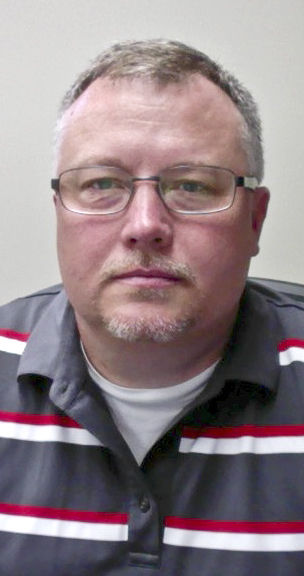
Phil Cobb Glasses
In what has become an encouraging trend of town and gown collaboration, Northwest Missouri State University and the City of Maryville have combined to propose what I think is an ingenious plan to build a new $20 million multi-purpose, joint-use complex, and at the same time give an enormous shot in the arm to local economic development efforts.
The brainchild of Northwest President John Jasinski and Maryville City Manager Greg McDanel would be paid for with what is commonly referred to as a “bed tax.”
More accurately, it should probably be called a room tax, but let’s not get caught up on insignificant details.
It sounds simple, and it is.
Anyone who rents a hotel room within the city limits of Maryville would pay a 5-percent tax on that room.
That money, about $3.82 per room per night would add up over the course of a year to around $215,000.
Of that money, $150,000 would go toward the complex.
About $65,000 would go toward additional tourism and marketing initiatives to promote economic development within the city.
Those numbers are based on current average room occupancies.
Keep in mind, there is a new hotel being built at Mozingo Lake Recreation Park, adjacent to the new Watson 9 hybrid golf course and the Sechrest 18 traditional (full-length) course.
A conference center is set to be constructed next, complete with full-service banquet facilities.
I recently have been told that another hotel is soon to be announced to be located near the southern edge of town.
Now there are always going to be people who say we are robbing Peter to pay Paul.
I can hear people saying, “Just because you have more rooms doesn’t mean you’re going to rent more rooms,” they might say. “They’re just going to go to Mozingo instead of one of the hotels in town.
(By the way, Mozingo is technically in the city limits of Maryville and would be subject to the proposed “bed tax.”)
Just wanted to get that out there.
Well, that might be true to a certain extent.
Some people who have traditionally come to Maryville because of Mozingo and have stayed in one of the four existing hotels will probably choose to stay closer to the lake.
That just makes sense.
I’ll give you that.
But let’s look at what this new multipurpose center can do for Maryville’s tourism.
Imagine the number of people who will come to town because of this proposed new building.
I’m thinking of youth and collegiate soccer tournaments, track meets, football games, tennis matches, etc. — throughout the year and in spite of what can often be unfavorable weather conditions.
These types of events bring people to town — athletes, parents, grandparents, etc.
These people spend money when they come to town.
That helps local business and it adds to the tax base.
And don’t forget that this facility will be fully capable of hosting major trade shows.
I’ve heard some concern over why we need this facility when the city is building the conference center at the lake.
The answer is simply this: they are two completely different animals.
The conference center at the lake will be very much dependent on what takes place at the lake — weddings, receptions, smaller conferences, banquets, golf tournaments, fishing tournaments, and the like.
The multipurpose facility, which would be located on the university campus would have the capability of hosting much larger events.
Think in terms of a university indoor track meet with athletes and spectators from potentially every school in the MIAA conference.
When all these people come to town, they are going to need a place to stay.
That increases the occupancy rate of local hotels, and in the case of a successful room tax, that would mean even more money for the city to help promote itself as a tourism destination.
Now here’s the great part.
Not everyone will agree that we need a new multipurpose building on the university campus, and not everyone will believe it necessary to promote Maryville as a tourist destination.
I’ve already heard people say that the city has no business helping the university build this new facility.
That’s okay.
Everyone is entitled to their own opinion.
But even if you don’t agree that this is a smart move for the city, you should still vote “yes” when it appears on the general election ballot on Nov. 8.
Because even if you don’t like it, it won’t cost you a dime unless you stay in one of the hotel rooms.
This will be money coming into our city from almost entirely outside sources.
At the very least, even if occupancy rates don’t increase like I’m confident they will, this measure would increase the city’s tax base without costing its citizens any money.
If someone can see why that is a bad thing, please enlighten me.
Of course everytime the city proposes a tax for anything I hear something like, “They should fix the streets before they worry about XYZ project.”
Well, it’s true that the city has streets that need to be fixed — no question.
But even if the city wanted to use its proceeds from the bed tax, to fix streets, they couldn’t.
Those types of tax revenues, by law, can only be used for tourism and other activities to be deemed tourism-related by state statute.
I personally feel like the city has made giant strides toward improving its streets in recent years.
I don’t know if anyone remembers what Main Street in front of the Maryville Daily Forum office use to be like?
We had pot holes the size of Volkswagens outside our windows.
The streets aren’t perfect, but guess what.
They never will be.
Street repair and maintenance is a challenge for every municipality, and Maryville is not immune.
That issue will always exist.
I believe the city has done an admirable job of maintaining, and in some cases replacing its high-traffic thoroughfares, while taking advantage of development opportunities when they arise.
I’ve been told that work will begin on the north end of Main Street very soon — if not yet this week, then certainly by next week.
The city will be reasphalting a 1-mile stretch from Highway 71 south to 242nd Street.
So, to wrap things up:
Voting “yes” for the proposed 5-percent bed tax on the November ballot will mean a new multipurpose building on the Northwest campus that city residents can also use, increased tourism to Maryville boosting local business and local tax revenues to help broaden the tax base and potentially contribute toward future street repair.
It’s a no-lose proposition.



