Federal regulations place workshop’s future in doubt
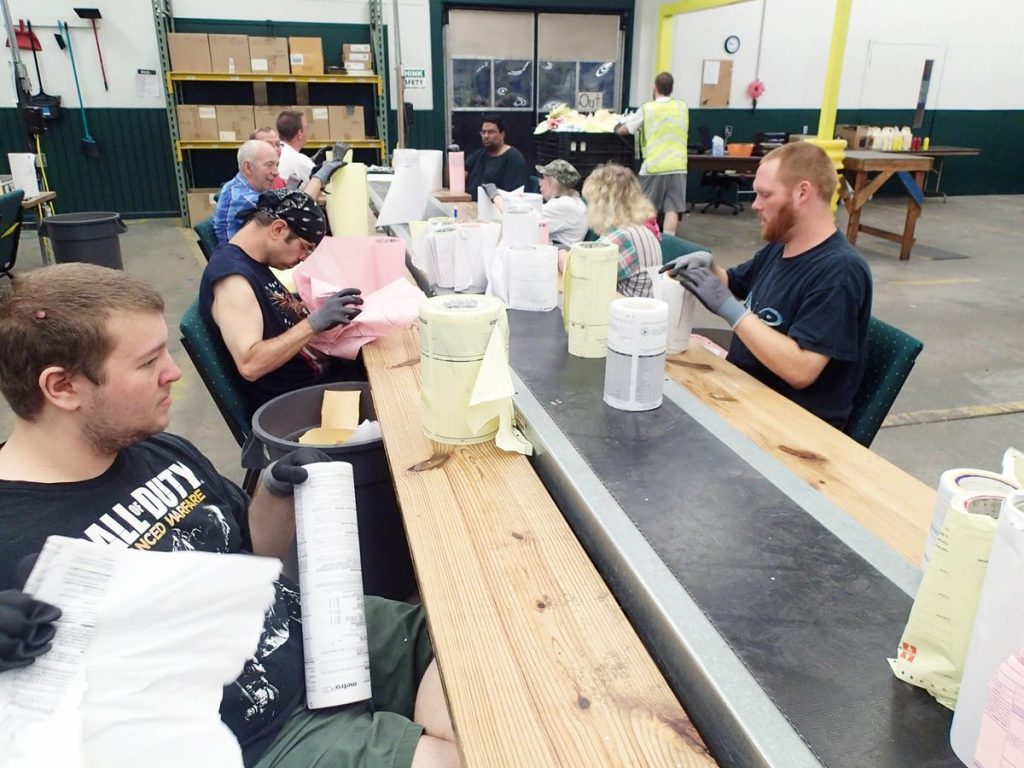
TONY BROWN/DAILY FORUM
New federal regulations mandating higher wages and the mainstreaming of workers with disabilities into the private sector are threatening the future of Missouri’s sheltered workshops, including NoCoMo Industries in Maryville, the production line of which is shown here. “I think a lot of workshops will fold up during this calendar year,” said NoCoMo board President David Lawyer. “I don’t think ours will be one of them. But it looks like ‘workshop’ will not even be a valid term three years from now.”
A set of Final Rules designed to implement the federal Workforce Innovation and Opportunity Act, a job training bill signed into law by President Barack Obama in 2014, could spell the end of Maryville’s NoCoMo Industries sheltered workshop.
At the least, the new rules will drastically alter the way the workshop serves people with developmental and cognitive disabilities.
The rules, which NoCoMo General Manager Nicki Samson said fill more than 900 pages and go into effect at the end of this month, declare that workshop employees must be paid minimum wage, and specify that that such workers under age 24 must clear additional assessment hurdles before being allowed to work in a non-competitive environment.
Instead, such workers would be encouraged — or forced — to competitively seek jobs in the private sector.
Samson is one of 18 workshop leaders statewide who has been named to a Missouri Association of Sheltered Workshop Managers committee tasked with countering the new rules or, failing that, figuring out a strategy to lessen their impact.
While raising sheltered workshop pay and “mainstreaming” more workers with disabilities into the private sector might sound like lofty ideals, Samson said, the so-called “subminimum wage” standard, along with subsidies through the state Department of Elementary and Secondary Education, is what makes such operations fiscally viable.
In addition, according to both Samson and NoCoMo board President David Lawyer, the cognitive, emotional, and physical deficits that challenge workshop employees often render non-sheltered employment impractical.
“We’re fairly low functioning (in terms of employees),” Lawyer said. “Some workshops have very high-functioning folks working for them. That’s not us. I don’t think any of our folks could seek a competitive employment position.”
A senior manager at the Deluxe Corp. factory in Maryville, Lawyer said the notion of “corporate America” softening employee expectations and production standards in order to accommodate workers with significant cognitive disabilities was “ludicrous.”
Samson said NoCoMo’s certified employees, that is those with disabilities, are currently paid on a sliding scale based on work performed measured against the estimated production of a fully capable minimum-wage worker.
Raising wages to Missouri’s minimum $7.65 an hour standard, she said, even assuming such a course was affordable, would likely render some workers income-ineligible for other forms of assistance, such as Supplemental Security Income, Supplemental Nutrition Assistance (formerly Food Stamps), housing subsidies, and Medicaid.
In essence, Samson said, workshop workers — for a few dollars more — would lose their social safety nets but still make too little money to provide themselves with adequate food, clothing, and shelter.
According to the state workshop managers group, the new rules, which are to be phased in over three years, will also require workshops to hire non-disabled employees in order to integrate the “work unit.”
“To meet the ‘work unit’ mandates, individuals with disabilities would be terminated and replaced by non-disabled employees to ensure the ideal of integration,” MASWM stated in its most recent newsletter. “As with other proposals, some of the most adversely affected may be those with the most significant disabilities.”
MASWM, which has hired former U.S. Rep. Jon C. Porter as a lobbyist, sent a delegation to Washington this week in an attempt to make its case before lawmakers.
After the lobbying group returns to Missouri, Samson said her committee will travel to a workshop managers meeting later this month in Columbia to report on the situation and launch a campaign aimed at broadening public opposition to the new rules titled “Dignity Has a Voice.”
Despite those efforts, Lawyer said he is not optimistic.
But he is also determined to keep NoCoMo’s doors open in some form or fashion.
“I really don’t think there is anything we can do to get out of the way of it,” he said. “We’re already investigating different business opportunities. I think that we can form some partnerships that will enable us to do different kinds of work that we might be able to do minimum wage for.”
Other strategies, Lawyer said, include moving some of NoCoMo’s higher functioning workers into minimum-wage jobs, a pay rate that has already been achieved by a dozen or so of the operation’s approximately 40 certified employees.
He added that the workshop might also cut back hours for employees whose larger paychecks endanger their state and federal benefits.
“I think a lot of workshops will fold up during this calendar year,” Lawyer said. “I don’t think ours will be one of them. But it looks like ‘workshop’ will not even be a valid term three years from now.”
Raising workshop pay across the board to minimum wage will triple NoCoMo’s payroll, Lawyer said, while costing the workshop around $140,000 in subsidies from the state, which pays $19 a day for each subminimum wage worker who puts in a full six-hour shift.
Still, lawyer thinks the workshop can survive with “the right business models in place” and a stronger emphasis on private support and fundraising
“At the end of the day, Nicki and I have said to each other that we’re not going to let anybody who wants to walk through the doors of NoCoMo every day have to go be somewhere else. Our folks like what they do, and we’re going to do everything we can to make sure that is an ongoing situation.”
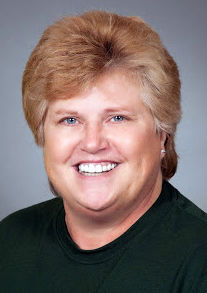
NoCoMo Industries General Manager Nicki Samson