MHS receives grant for docudrama
Jennifer Ditlevson Haglund
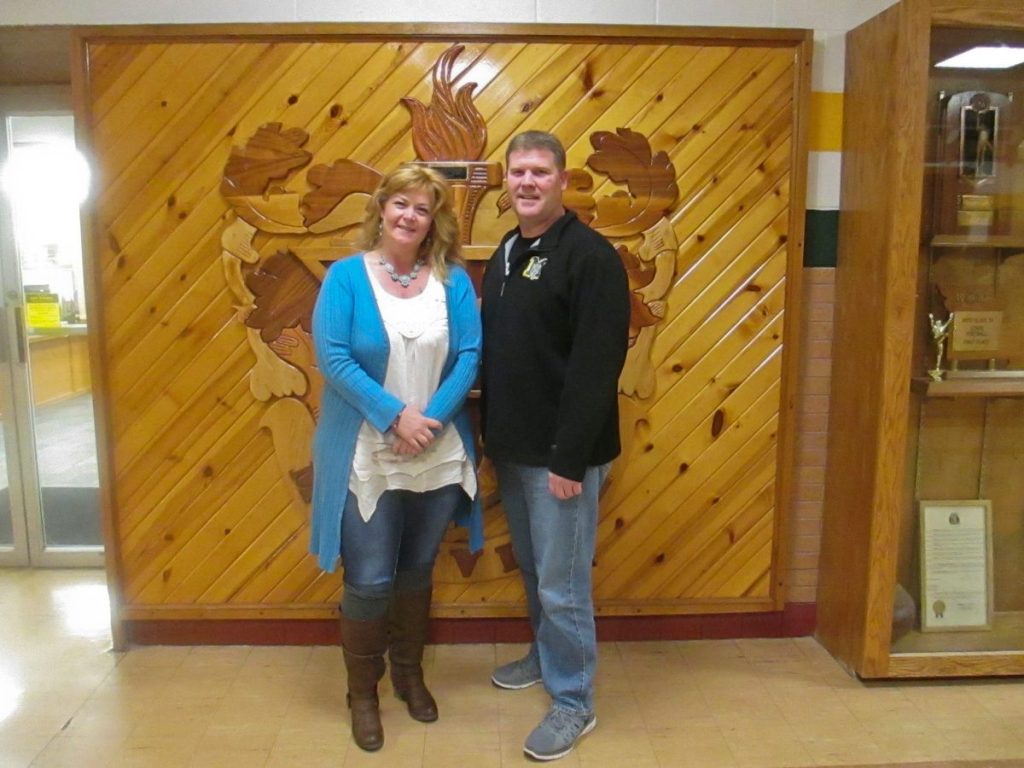
Maryville High School’s Holly Cronk and Missouri State Highway Patrol Trooper Dale Reuter work year round to plan an annual docudrama intended to give young people a lasting impression about the consequences of impaired and distracted driving. On Tuesday, Cronk accepted a $4,550 grant from the Missouri Coalition for Roadway Safety that will help fund the 2016 event.
Last fall’s docudrama presented by Maryville High School caught the attention of the Missouri Coalition for Roadway Safety, which this week awarded the event’s lead coordinator, Holly Cronk, a $4,550 grant to help pay for this year’s event.
According to Cronk, members of the coalition attended the docudrama last October, and Missouri State Highway Patrol Trooper Dale Reuter suggested that she apply for the grant to help defray costs of the exercise, which recreates a fatal accident complete with mangled automobiles and blood-covered victims.
The event, which is staged for students from both Maryville and several nearby communities, emphasizes how such tragedies can be prevented if teens avoid impaired driving and distractions such as texting.
“In my 24 years of experience, education is the key to preventing things like this,” Reuter said.
High schools across the country conduct similar recreations prior to events like prom night or homecoming football games, but Maryville’s take on the docudrama differs from some others because it doesn’t stop with a mock crash and guest speakers.
Cronk’s vision is to create something that stays with the students — a total sensory experience.
“We’re going for maximum impact,” she said. “We have to make it real to beat what a lot of these kids see in their playtime with video games and movies. This is real.”
Since MHS began the docudrama in 1999, public officials, first responders, and businesses have contributed time and resources to help create the most realistic experience possible.
Reuter, who has had to tell families that their loved ones aren’t coming home, said he takes the drill personally because he has witnessed the direct impact preventable deaths have on the community.
When Cronk and Reuter discussed bringing nationally known speakers to the event, they decided against it because they find it more effective to work with people in the area who have suffered tragedy and loss.
The docudrama moves from the crash itself through the grieving process, and students see a hearse and a casket. Pastors speak and students listen to mock obituaries.
Cronk said the most powerful impact may come from speakers who have actually been involved in such accidents or who have lost family members or friends.
“Unfortunately in the last few years we haven’t had any difficulty in finding someone local who would speak,” she said.
Reuter added that it is sobering to realize that at least one of the students seated in the audience will likely be killed in an accident within five years.
Last October’s docudrama referenced a real incident to remind people of the importance of safe driving practices. Angee Clements spoke about losing her son Bradie, who was killed in a rollover crash the previous spring.
Both Reuter and Cronk said the accident was still fresh in the minds of many in attendance.
“We know we have one shot, and we want to give it the best we can,” Reuter said.
Cronk said that in the past the event has received sponsorship from local businesses and institutions, including The Hangar, Nucor LMP Steel Inc., and SSM Health St. Francis Hospital. Each participating school also contributes $50 for a total of around $450.
“A lot of people pitch in, and it’s amazing,” Cronk said. “Otherwise, it would be pretty darn costly to pull it off.”
One reason the docudrama is so lifelike, Reuter said, is its dual purpose. Besides serving as a teaching tool for the students it’s also a hands-on training exercise for local first-responder agencies and healthcare providers.
Cronk said the grant funding will be used to take the event to the next level, allowing her team to upgrade moulage (special makeup used to simulate severe injuries), update its website, and produce more event T-shirts.
Making the docudrama ever more lifelike, she said, could help students understand the finality of death and the heartache that goes along with losing friends and family forever.
After each docudrama, Cronk collects feedback from students. She estimates that 9 of 10 young people consider watching the event to be a positive experience.
“We hardly ever get a negative response, but when we do it’s usually because they think the narrator is being gruff,” Cronk said. “It can be too real for people.”
Frankness, however, is what Cronk said she hopes to achieve.
“Those are high-impact times, and they need to know the numbers and why people died,” she said.
Reuter said the docudrama has an obvious immediate effect, but that the impact may wear off after a while, which makes it important to hammer the message home as effectively as possible.
In a planned change this fall, Cronk said she wants to move the site of the docudrama from The Hangar cinemaplex to the performing arts center currently under construction at the high school.
For more information about the docudrama, go to www.northwestmissouri docudrama.com