District unveils new math curriculum
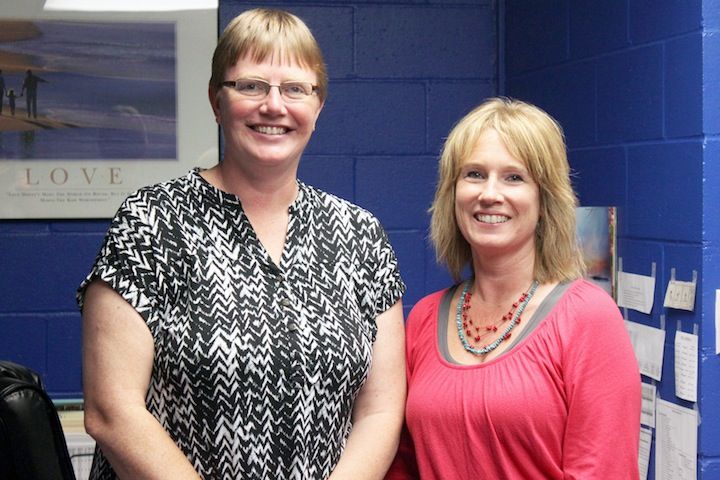
ALANNA WOLF/DAILY FORUM
Northeast Nodaway R-V Principal Linda Mattson, left, and math teacher Sara Mehlenbacher say they are excited about the new math curriculum introduced into Ravenwood classrooms this year. Both educators said they believe the approach will help students improve performance in a number of academic areas.
The Northeast Nodaway R-V School is taking a new approach to teaching mathematics this year.
Instead of using a STEM (science, technology, engineering, and mathematics) curriculum, the district has implemented the Engage New York curriculum, which focuses on problem solving and learning new ways to solve traditional math problems.
“Overall the kids have responded really well to it,” said Principal Linda Mattson. “They’re thinking about math and how to solve problems more than they ever have before.”
The decision to switch to the new curriculum came after examining past Missouri Assessment Program scores and the district’s independent priority standards, Mattson said.
“Our MAP scores were not as high as we would like,” she said, “and we wanted to make sure that our priority standards we covered at the level we wanted them to be covered at. We knew we had to make a change in curriculum.”
After recognizing the need a shift, Northeast Nodaway administrators contacted Donella Sherry of the Northwest Missouri State University Regional Professional Development Center.
After receiving Sherry’s input and conducting some more research, the district opted for Engage New York.
Often called EngageNY, the curriculum differs from STEM in its emphasis on problem solving and students’ ability to communicate and understand mathematics using non-traditional methods and techniques.
“With Engage New York, students are required to do more than just solve problems,” said Northeast Nodaway math teacher Sara Mehlenbacher. “Students have to be able to communicate their thinking, to problem solve and persevere through problems that might be difficult.”
The goal is for students to learn several ways of solving problems rather than using a single, traditional approach.
District officials say the hope is that students will be able to identify a problem-solving style that works best for them while acquiring the ability to successfully communicate how they reached their answers.
“This is great news for our kids,” Mattson said. “They’re learning how to process, understand, and communicate different aspects of mathematics.”
“And they’re gaining confidence in their abilities,” Mehlenbacher added, “which is incredibly important. This program is all about building understanding, so that students understand what they’re doing, and more importantly, why they’re doing it.”