Mozingo at 20: Lake’s impact still growing
FILE PHOTO
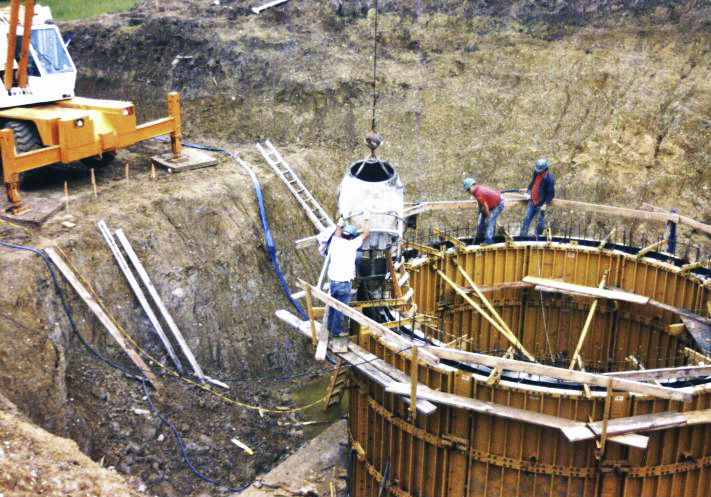
Construction workers fabricate the massive intake structure still used to pull water from Mozingo Lake so that it can be piped to the city of Maryville’s drinking water treatment facility. Former City Councilman Jeff Funston said the 1,000-acre lake, officially completed 20 years ago this year, provides Maryville with a water reserve large enough to ensure essential needs during a drought lasting up to three years.
Almost exactly 20 years ago, Aug. 5, 1995, the front nine holes at what is now the Sechrest 18 golf course at city-owned Mozingo Lake Recreation Park opened to the public for the first time.
The city of Maryville plans to mark that milestone with a three-day celebration Friday through Sunday that will include green fees and camping charges rolled back to 1995 levels, live music, a mud volleyball tournament, a 5K fun run and other activities and promotions.
While a host of improvements, additions and renovations — everything from equestrian trials to boat ramps — have been added to Mozingo over the years, old newspapers from the Daily Forum’s files reveal some interesting similarities between the park’s early days and its current era, during which Mozingo continues to evolve into a regional recreation destination.
For one thing, as in 2015, 1995 was a record year for rainfall, a happenstance that at first threatened to delay plans to open the new course.
Following the Great Flood of 1993 — when high water washed over the top of Mozingo’s still-under-construction dam — the seemingly endless rains returned in ’95, turning fairways into mud beneath a lushly green cover of tender, new grass.
However, by the first week of August things had dried up enough so that Mozingo Superintendent Ron Darnell and golf pro Rick Schultz decided to open the top half of the course during a “sneak preview” limited to players from Maryville and Nodaway County.
The event was a smash.
“Excited is kind of a gross understatement,” golfer Donald Sullivan said at the time. “This is really incredible. I have played, I guess, on championship courses before; but to have one right here is just great.”
Meanwhile, well beyond the Maryville city limits, none other than Donald Trump was making headlines. The Donald wasn’t running for president then, but offering to sell the Plaza Hotel in New York to a Saudi Arabian prince and a Singapore entrepreneur in a bid to shore up his troubled real estate empire.
In another bit of déjà vu, then-first lady Hillary Clinton was in the news for leaving her husband, President Bill Clinton, home at the White House while embarking on a five-nation trip to South Asia at the request of the U.S. State Department.
In the sporting world, PGA golfer Tom Watson — whose company two decades later would design the still-unopened Watson 9 youth course at Mozingo — was struggling at the Western Open in Lemont, Illinois, in an attempt to secure his first pro tour victory since 1987.
Closer to home, the route of the Nodaway County Fair parade route was changed in the summer of 1995 because Main Street was closed between Third and Fifth streets. Also, in July of that year, a severe storm ripped into town, wreaking havoc at the Thunderbird Estates trailer court where a possible tornado destroyed several mobile homes.
The more things change, apparently, the more at least some of them really do stay the same.
Which is not to say that today’s Mozingo, a popular spot for boaters, campers, equestrians, hunters, water-skiers and anglers as well as golfers, is anything like the 3,000 acres of largely open, undeveloped countryside that greeted its first patrons nearly a generation ago.
Mozingo was built first and foremost to serve as Maryville’s primary source of drinking water. But the recreational opportunities created by a 1,000-acre lake with 26 miles of shoreline were apparent from the beginning. In addition to the golf course, early developments included an RV park and primitive camping area. In addition, the city constructed a youth group camp that includes cabins and a multi-purpose dining hall.
Further to the north, Northwest Missouri State University created the Mozingo Outdoor Education Recreation Area, a high-adventure compound that includes climbing towers and facilities for canoeing, archery, trap shooting, astronomy and crisis response training.
Other amenities added in recent years embrace seven rental cabins that have proven so popular they are often booked months in advance.
But the most dramatic changes at Mozingo have occurred over the past three years under the guiding hands of a citizens advisory committee and Assistant City Manager Ryan Heiland, who was placed in overall charge of park planning and operations by City Manager Greg McDanel.
Over the winter of 2012-13, the committee and Heiland worked to bring about renovations at the golf course clubhouse that were part of an overall re-branding effort designed to market both the course and the surrounding 3,000-acre park to potential patrons across the four-state region.
Then, in early 2013, in an effort to publicize the park’s diversity of offerings, the city officially changed the area’s name from Mozingo Lake to Mozingo Lake Recreation Park.
Administrative changes were also in the offing. The park’s staff chart was reshuffled and simplified, and toward the end of 2014 the Maryville City Council approved a $24,000 contract with Hue Labs of Reno, Nevada, for a redesign of the Mozingo website.
The new site, which went live May 6, has significantly reduced processing time for reservation requests at the golf course, RV park and rental cabins while offering patrons an interactive calendar showing open dates in green and already-reserved dates in red.
Heiland said this spring that early feedback on the site has been overwhelmingly positive, and that the automated reservation system generated more than $7,000 in sales during its first week of operation.
Many of the improvements described above had their genesis in a new Mozingo master plan approved by the council late last year.
Drafted by RDG Planning & Design of Omaha, Nebraska, the 129-page plan proposes several new facilities at the park, including a new visitors’ center and hoped-for private development of a hotel and conference center.
By far the biggest addition to the Mozingo lineup has been construction of the Watson 9 nine-hole junior golf course, built at a cost of nearly $600,000 raised privately by the Junior Course at Mozingo Lake Committee, which was established in 2013 by Dr. Bruce Twaddle, a local dentist and golf enthusiast.
Twaddle’s campaign received a major boost when PGA legend Tom Watson agreed to help with the design. The Watson name attracted national attention to Mozingo, especially after a pair of visits to Maryville by the five-time British Open champion, who described the course as an important part of his wider effort to attract more young people to the game.
Though construction of the course is complete, heavy rains have delayed the Watson 9 opening, just as wet weather put a crimp in the development of what is now the Sechrest 18 course when the park was first established.
As big an impact as Mozingo has had on Maryville and the surrounding area — not least in terms of its role as a reliable water source — former city council member Jeff Funston, who served on the council in the 1970s and 1990s before being elected to a final three-year term that ended in April of this year, recalls that the reservoir almost didn’t get built.
Funston said Tuesday that an “extremely vocal minority,” labeling itself with the phrase “No-Zingo,” opposed lake construction from the beginning, citing a long list of concerns ranging from possible pollution from an old appliance dump to a rumored lakefront land-grab that would have barred public access to what is now the park.
In the end, Mozingo supporters W.R. O’Riley and Vilas Young were elected to the council, ensuring that the $12 million project, financed with $4 million in local revenue bonds and an $8 million federal match through the U.S. Department of Agriculture, would proceed.
In hindsight, Funston said, not building the lake would have left Maryville in the same lurch as during a mini-drought in the 1970s, when the City Council seriously considered shutting down coin laundries and car washes, and officials at Northwest Missouri State University proposed trucking in water from other cities.
Because Mozingo exists, Funston said, Maryville has a three-year water reserve.
“The project was easily justified for the water supply alone,” he said. “We could have put a chain-link fence around the lake, locked the gate and called it good, but why would you do that? … Maryville would be a different place today without Mozingo Lake.”
FILE PHOTO
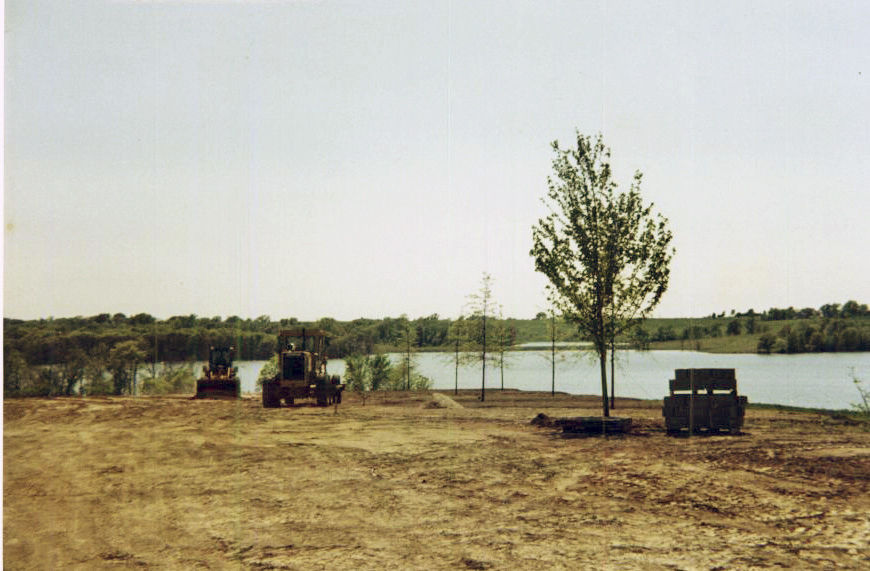
Earth moving equipment stands parked along the along the bare shore of a still-filling Mozingo Lake, which over the last two decades has been transformed into a 3,000-acre recreation area serving golfers, anglers, equestrians, campers, picnickers, hikers and hunters.
FILE PHOTO
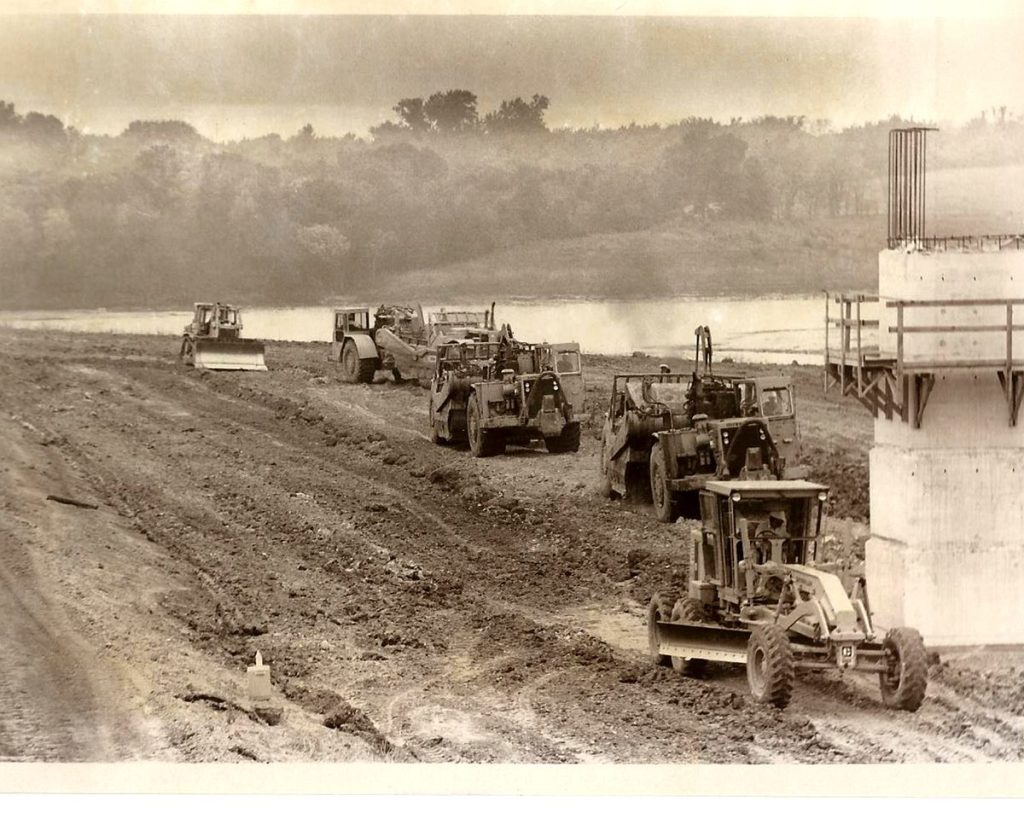
Operators use graders, bulldozers and other heavy equipment to level the bottom of what today is 1,000-acre Mozingo Lake. First conceived in the 1970s, the lake was built to serve as Maryville’s primary water supply. A golf course, RV campground, group camping area and boating facilities soon followed as the lake and its surrounding 3,000-acre park were transformed into a regional tourist and recreation destination.
FILE PHOTO
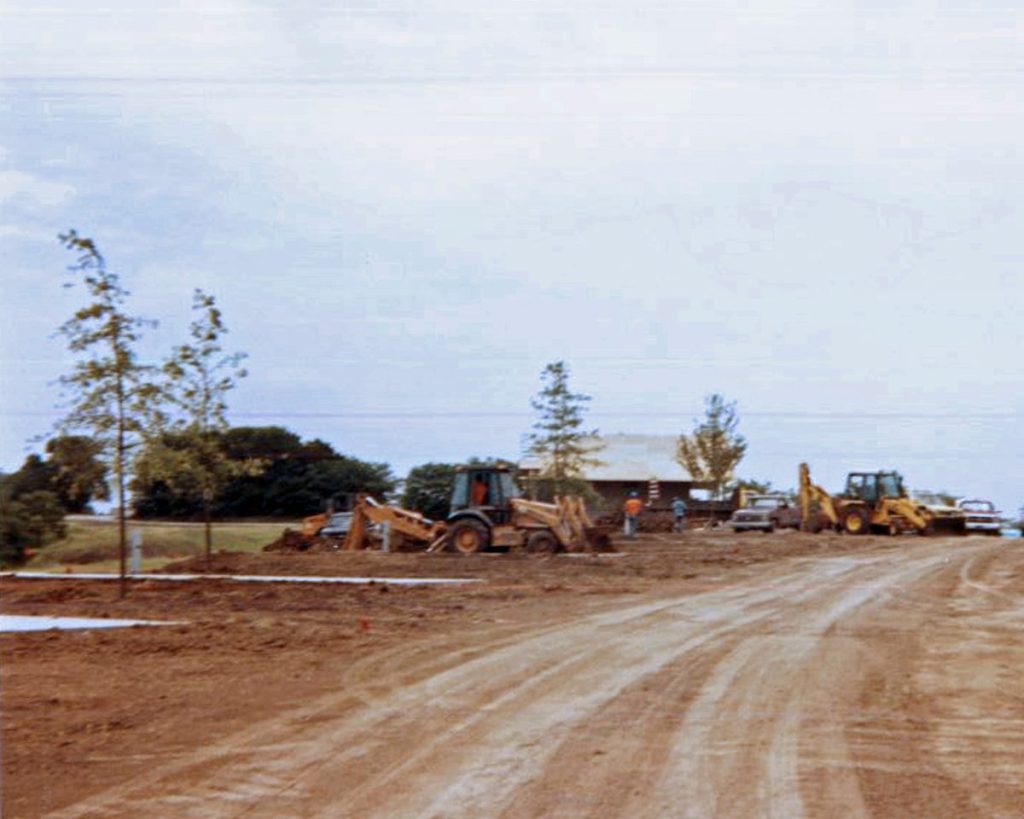
This photo shows the Mozingo Lake Recreation Park recreational vehicle campground while it was still under construction. Today’s park also includes two golf courses (one still to be opened) an equestrian trail, a handicap accessible fishing dock, a swimming beach, boat ramps and other amenities.
FILE PHOTO
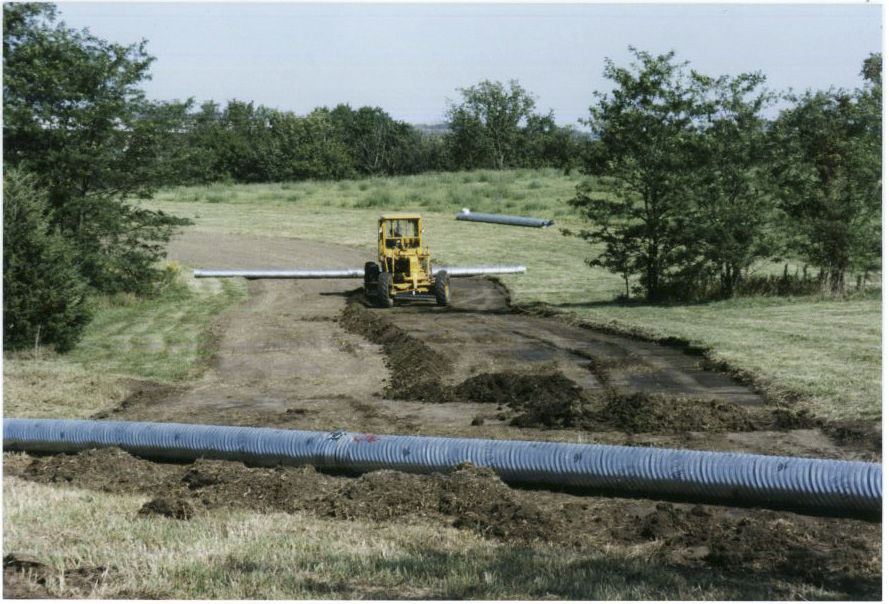
A grader levels part of a new road under construction at Mozingo Lake during the 1990s. The lake — now known as Mozingo Lake Recreation Park — was completed in 1995 at a cost of around $12 million, which included $8 million in U.S. Department of Agriculture funds and a $4 million local match financed through a municipal bond issue.
FILE PHOTO
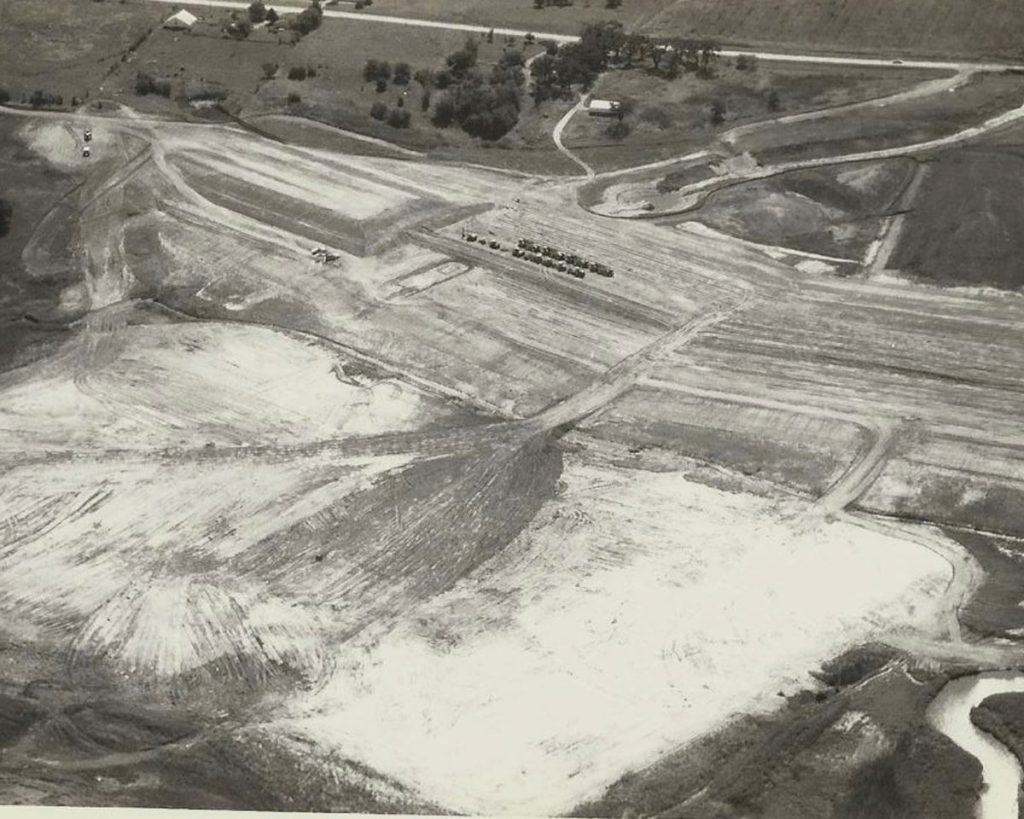
An aerial shot of the Mozingo Lake site during the early phases of construction.
FILE PHOTO
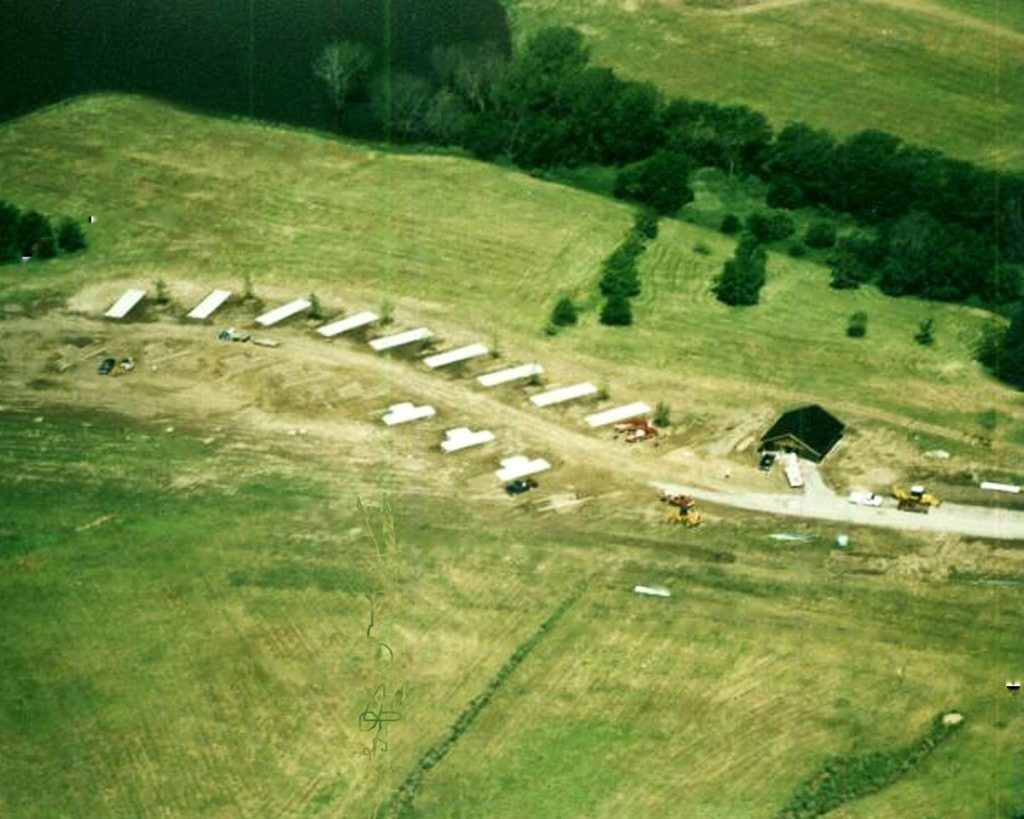
Newly installed pads at the Mozingo Lake recreational vehicle camping area show white against green grass in this aerial photo from the 1990s when the park was still under construction.