Plentiful rain, cool temperatures slow corn growth, delay planting
CHRIS ROUSH/DAILY FORUM
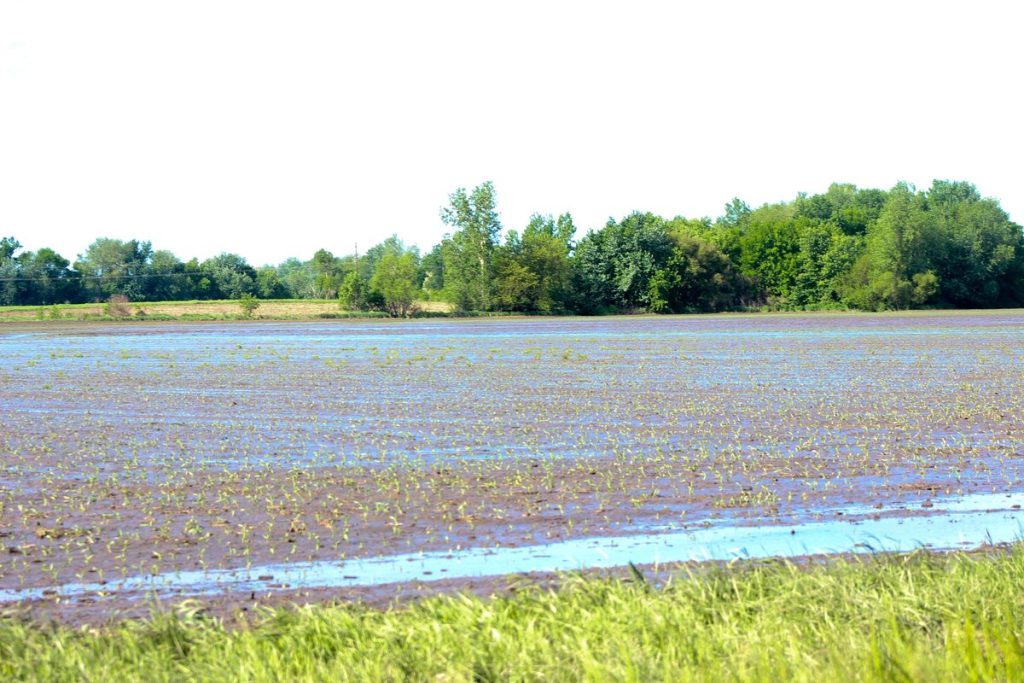
Heavy rainfall overnight Saturday raised river levels throughout the county on Sunday. The 102 River closed Route U temporarily near Arkoe, flooding fields along the river bottom.
Frequent rains over the last month and May’s average to below-average temperatures have posed challenges for growers looking to plant their crops.
According to the US Department of Agriculture (USDA) National Agriculture Statistics Service (NASS), northwest Missouri was not alone in being kept out of the fields by weather. During the week of May10-17, the state averaged only 1.5 days suitable for fieldwork, still ahead of a local 0.9 days.
Statewide corn planting progressed to 82 percent complete, exactly in line with the previous five-year average. However northwest Missouri lags considerably with only 56 percent of corn acres planted. Similarly, 65 percent of that corn has emerged statewide, whereas only 37 percent has in northwest Missouri.
While this week’s high temperatures are in the 50- and 60-degree range, crop consultant and Milne-Dinsdale seed dealer Erin Dinsdale said it is warm enough for seeds to take in water and germinate.
Dinsdale said that 50 degrees is the base temperature to start growth for soil, crops and insects.
“This cool, wet weather just means slowed growth and metabolism,” she said. “The crops are just more susceptible to plant diseases and insects in conditions like this.”
When the soil is warmer and dyer, the seeds could outgrow those diseases and infections because they’re healthier, but in this situation, the seeds are exposed to such conditions longer.
“It takes longer to get to the fertilizer because the seed is still relying on its own reserves,” Dinsdale said. This makes them more prone to root and fungal diseases.
Talking mostly in terms of corn right now, the major threats include that general crop growth, pest interaction, herbicide interaction, and nitrogen loss.
“Right now corn is losing nitrogen to immobilization,” Dinsdale said. “I suggest growers be thinking about supplemental nitrogen at this point.”
In cool soil conditions, Dinsdale said she tends to see more crop injury and chemicals not fully killing the weeds.
With a heavy weekend rain flooding on river bottoms and standing in low spots and terraces, replanting is the conversation on the table.
In their crop scouting endeavors, Dinsdale said her Cropwise LLC employees are seeing that, even in the wet spots, the seed is still there and in good condition.
“It’s not rotted, it just isn’t growing right now.”
While only 7 percent of soybeans have been planted in northwest Missouri, 16 percent have been planted across Missouri, both far behind the five-year average of 27 percent and the 2014 progress of 30 percent.