
Celebrating Northwest’s contributions
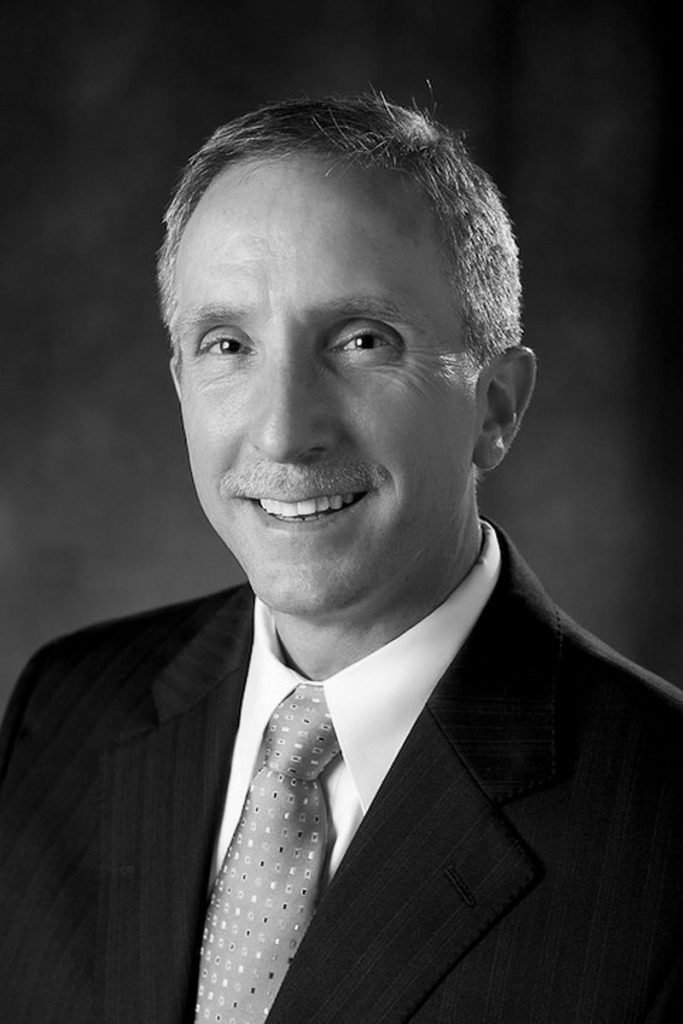
John Jasinski
A flurry of activity came with the end of the academic year last week at Northwest Missouri State University —retirement receptions to meetings of the Northwest Foundation Board and Board of Regents, to our spring commencement ceremonies Saturday, at which we celebrated the achievements of 945 graduates.
Furthermore, we are excited about last Friday’s opening of Fourth Street from Downtown Maryville to the Northwest campus — a project that is a product of the synergy and common vision Northwest and the City of Maryville share to drive economic development. I am thankful for City Manager Greg McDanel and our city leaders for their tremendous partnership and vision to see that project through.
The timing of the street’s opening could not have been more perfect as we welcomed hundreds of families for commencement ceremonies and released the results of our long-awaited economic impact study.
The results of the study, conducted by a third-party data analysis firm, show Northwest generated $617.5 million in added regional income last year, which is equal to creating 9,465 new jobs.
The results are clear.
Northwest delivers significant economic value to our region and the state. Our local economy is fueled, in part, by investing in higher education and Northwest. The institution delivers through operational spending, student spending, visitor spending and human capital that includes Northwest alumni who stay in the region to work and raise families.
In fact, that human capital segment is the most significant with an estimated 69 percent of alumni staying in the region and generating $516.4 million in added income.
The report shows Northwest students who graduate with a bachelor’s degree earn $22,200 more per year than individuals whose highest degree is a high school diploma, or more than $1 million more during their lifetimes.
In terms of a societal perspective, students earn more because of the skills they acquire while attending Northwest, and businesses earn more because the enhanced skills of students make them more productive.
Altogether, societal benefits generated for Missouri through Northwest equal $1.2 billion. Furthermore, for every dollar invested, Missouri receives $6.20 in state income. There’s not a more powerful argument that education is the lifeblood of our communities, our state, our nation and society’s future.
Lawmakers have passed the state’s budget with a 1.3 percent increase for performance and equity funding. What that means for Northwest is a share of 1.19 percent or $379,764. Additionally, we are optimistic that some support for deferred maintenance will be passed during the session.
While we’re always thankful for any support received, we know from our strategic planning environmental scan that funding patterns will likely continue to show state disinvestment.
In the meantime, we will keep our focus on student success and delivering high quality and high value. I offer thanks to Sen. Dan Hegeman and Rep. Allen Andrews, who understand and champion what we do at Northwest.
Above all, the study we received last week provides factual information about the economic impact Northwest has on our region. I firmly believe the future of our society rests on education, and Northwest is a shining light of that. This impact also is a tribute to our faculty, who bring it every day. They help make Northwest’s profession-based education so valuable by providing unparalleled mentoring and guidance to students.
That faculty impact is evident as our most recent Northwest graduates launch their careers at places such as Cerner, Anheuser-Busch, the Federal Reserve Bank, a U.S. Embassy and a multitude of school districts throughout the region. Others are moving on to graduate programs.
Later this month, we will celebrate the commencement for students graduating from our Missouri Academy of Science, Mathematics and Computing.
I have no doubt that all of our Northwest and Missouri Academy graduates will be drivers in their fields, as Saturday’s commencement speaker, Thomas Sanchez, a 2002 Northwest alumnus and the founder and CEO of Social Driver, described.
We have much work ahead as we strive to protect college access and affordability while maintaining and elevating academic quality. In the end, though, there is much for which to be thankful at Northwest Missouri State University. Thanks, community members, for being part of our team, focusing on student success and driving economic impact.



