
South Main Corridor Improvement Project completed
GEOFFREY WOEHLK/THE FORUM
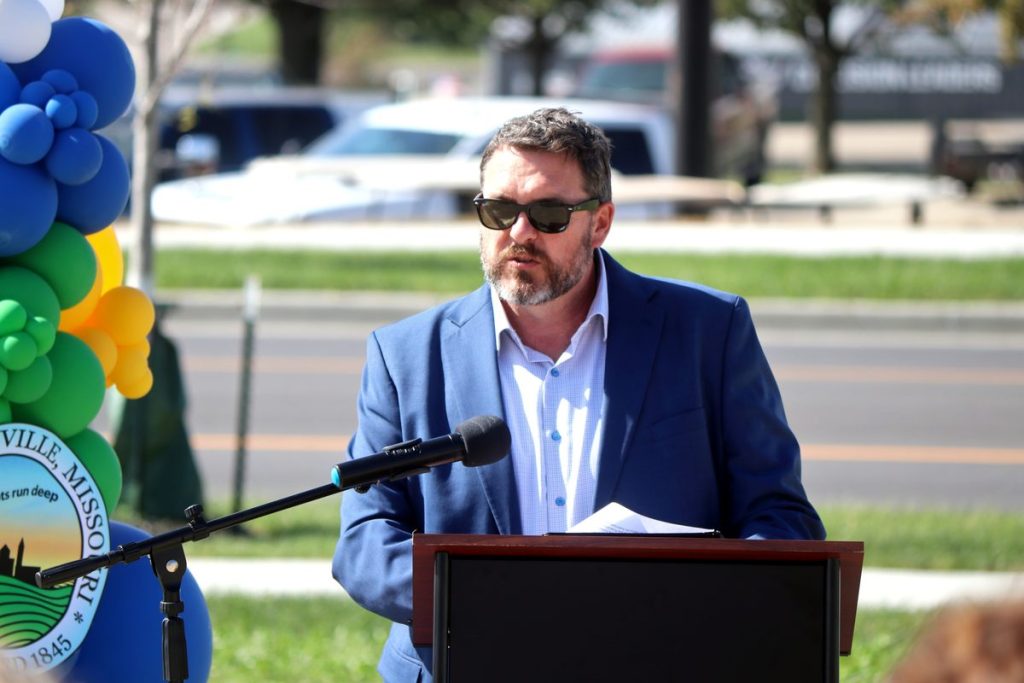
City Manager Ryan Heiland speaks during a ceremony celebrating the completion of Phase II of the South Main Corridor Improvement Project on Monday. Heiland was assistant city manager in 2012 when the project was made the No. 1 priority in the city’s comprehensive plan and has helped see it through from beginning to end.
MARYVILLE, Mo. — Fourteen years, seven mayors, two city managers, one global pandemic and more than $21 million later, the biggest road project in Maryville’s history is now complete. City officials, staff, business owners and community members gathered on Monday afternoon to cut a ribbon on Phase II of the South Main Corridor Improvement Project.
“Today marks an important milestone for the city of Maryville and the completion of one of the most significant infrastructure investments our community has undertaken,” said City Manager Ryan Heiland during the ribbon-cutting ceremony. “… South Main serves as the primary gateway into our community, connecting residents, businesses and visitors. For many years, improving this corridor has been a city priority with the goal of creating a safer, more attractive and better-connected roadway that supports future growth and economic development.”
The ceremony held outside the Park Inn on Monday was a capstone to a transformative infrastructure project that made a host of functional and aesthetic improvements to the South Main corridor designed to make it safer, more accessible for pedestrians and more of a welcoming sight for visitors driving into town on Maryville’s most significant economic artery.
“We have a beautiful addition to our city right out here that everybody can appreciate,” said Mayor John McBride Monday.
SOUTH MAIN TIMELINE
- Dec. 2012: Comprehensive plan cites South Main as No. 1 priority
- Aug. 2015: Traffic corridor study outlines problems, solutions
- April 2017: Capital improvement sales tax extended, providing funding for a decade-long construction plan
- Dec. 2018: $10.48 million BUILD grant awarded for project
- Dec. 2019: Full corridor design completed
- April 2021: Project split into two phases after bids come in over budget
- Oct. 2021: Phase I begins construction
- Aug. 2022: $5.925 million RAISE grant awarded for Phase II
- Aug. 2023: Phase II bids come in over budget
- Sept. 2023: Phase I completed
- Nov. 2023: $500K TAP grant awarded for Phase II trails
- Aug. 2024: Phase II begins construction
- Oct. 2026: Phase II completed
The project began as a goal in the city’s comprehensive plan in 2012. By 2015, the city had a traffic study in hand that outlined the problems with the clogged corridor, and prescribed fixes. The estimated price tag was between $12 and $15 million. A full decade and a global pandemic in between would drive that price up.
To pay for it, city voters endorsed an extension of the capital improvement sales tax in 2017, setting the city on the path toward at least a decade of construction that would be paid for exclusively by city taxpayers.
But in late summer 2018, city staff worked feverishly with the Northwest Missouri Regional Council of Governments to complete an application package for a federal Better Utilizing Investments to Leverage Development (BUILD) grant. The two staffs worked around the clock in a 45-day sprint to submit the materials, and sent in the application with “minutes to spare.”
Even after the application had been submitted, the project still faced long odds: the BUILD program had $1.5 billion of funding to allocate for 851 potential projects requesting more than $11 billion of aid from across the country.
In the end, the $10.48 million BUILD grant awarded to Maryville, one of only four in Missouri that year, would prove to be a turning point for the city’s confidence in its grant process and ability to secure federal and state funding.
It also meant a much quicker timeline, and a local match of only a few million.
But just before the project was ready to get into full swing, the COVID-19 pandemic struck, throwing a wrench into the well-laid plans.
Delay after delay at the federal level pushed the process back into 2021, when the city finally received the first construction bids for the project that had been gestating since 2012 — and they were way over budget.
Driven up by pandemic-related issues affecting global supply chains, what had been estimated as a $12-13 million project in 2018 was, by March 2021, now estimated to be closer to $16 million. And that number would only go up.
The solution drawn up by city staff and contractor SK Design was to split the project into two parts, with Phase I running from the intersection with South Avenue to the intersection with State Route V, and Phase II running from there to the intersection with U.S. Highway 71.
The original funding — the $10.48 million BUILD grant plus a few million in local matching dollars — would only be enough to cover Phase I, which came in at a little over $13 million. A triumphant ribbon-cutting for that section of the project was held in September 2023. Phase II would prove to in some ways be even more challenging.
“Completing projects of this magnitude was not without its challenges,” said Heiland, who was part of the city leadership team that put the South Main project at the top of the comprehensive plan in 2012. “Over the past four years, we’ve navigated rising construction costs, bidding challenges, utility relocations, and complexities of roadway construction. Despite these obstacles, we remain focused on the long-term benefits for our community, and today, we’re proud to see that vision become a reality.”
The first hurdle had been to secure funding to complete Phase II. The fallback plan had been for the city to foot the bill, which had been the original idea back in 2012. But privately, city staff were confident that they would be able to secure more federal funding, which was abundant in the post-COVID years.
Sure enough, in August 2022, the city was awarded a $5.925 million grant through the federal Rebuilding American Infrastructure with Sustainability and Equity (RAISE) program, the successor to BUILD. It required no local match, and initially, the grant was expected to be enough to cover the cost of Phase II.
But the post-COVID spike in materials costs spiked even higher than expected, and the project costs skyrocketed: The city initially received only one bid for the project, and it was about $4 million higher than the grant amount.
City staff went back to the drawing board, dropping some items, value-engineering others, and tacked on a $500,000 grant from the Missouri Department of Transportation to boot that would pay for the sidewalks associated with Phase II. After rebidding, the city authorized $1.7 million in bonds to make up the difference on a price tag that ended up at a little over $8 million.
On Aug. 19, 2024, Genesis Environmental Solutions broke ground on Phase II, and Monday, city leaders celebrated the end of a long road — and the start of a new one.
“As we look at the completed corridor today, we can all take pride in what has been accomplished,” Heiland said Monday. “Completion of Phase II represents more than the end of a construction project. It represents a lasting investment in public safety, our local businesses and the continued growth and vitality of Maryville.
“These improvements will serve our community for decades to come and help make Maryville an even better place to live, work, visit and do business.”
GEOFFREY WOEHLK/THE FORUM
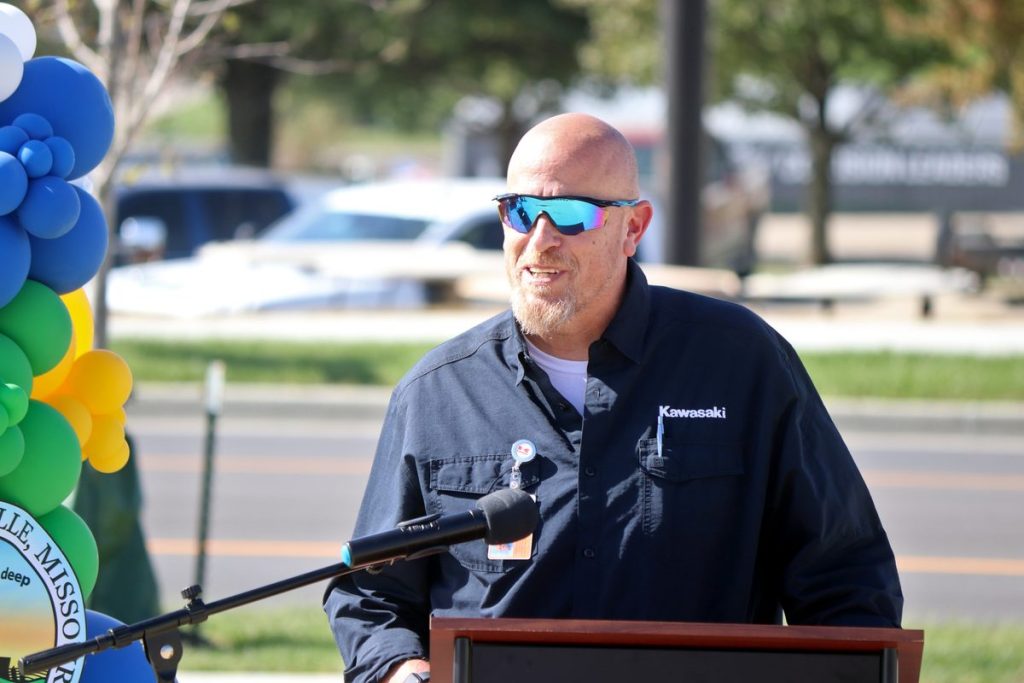
Mayor John McBride speaks Monday at a ribbon-cutting for Phase II of the South Main Corridor Improvement Project.
GEOFFREY WOEHLK/THE FORUM
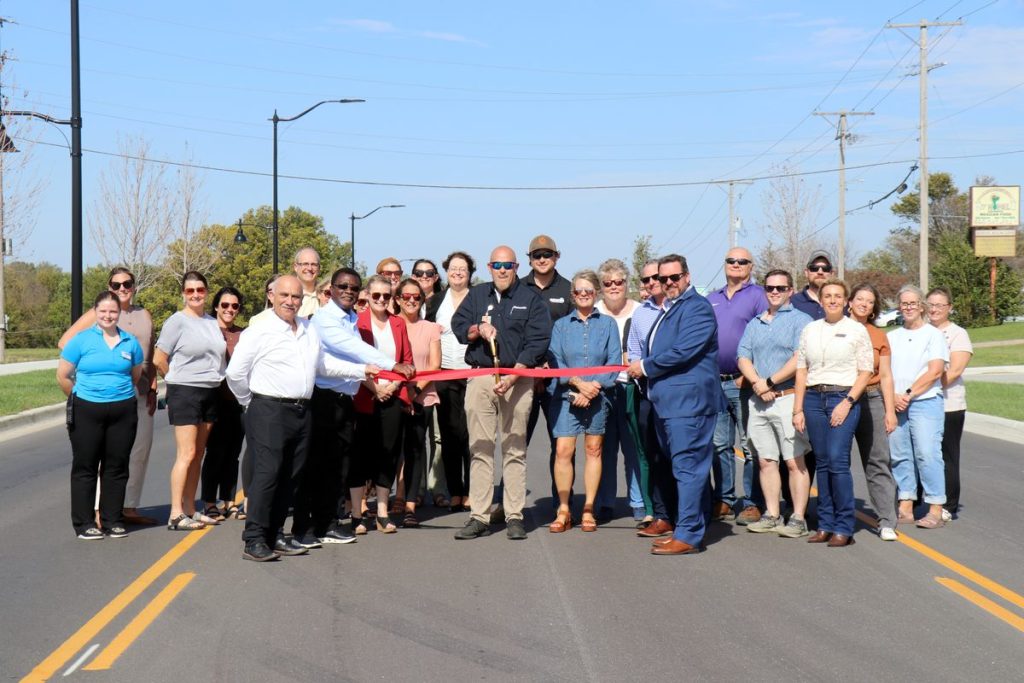
City officials, staff, business owners and community members cut a Greater Maryville Chamber of Commerce ribbon Monday on the stretch of South Main Street outside the Park Inn to celebrate the completion of Phase II of the South Main Corridor Improvement Project.




