Future health professionals take part in Rural Immersion Program
SUBMITTED BY MU EXTENSION
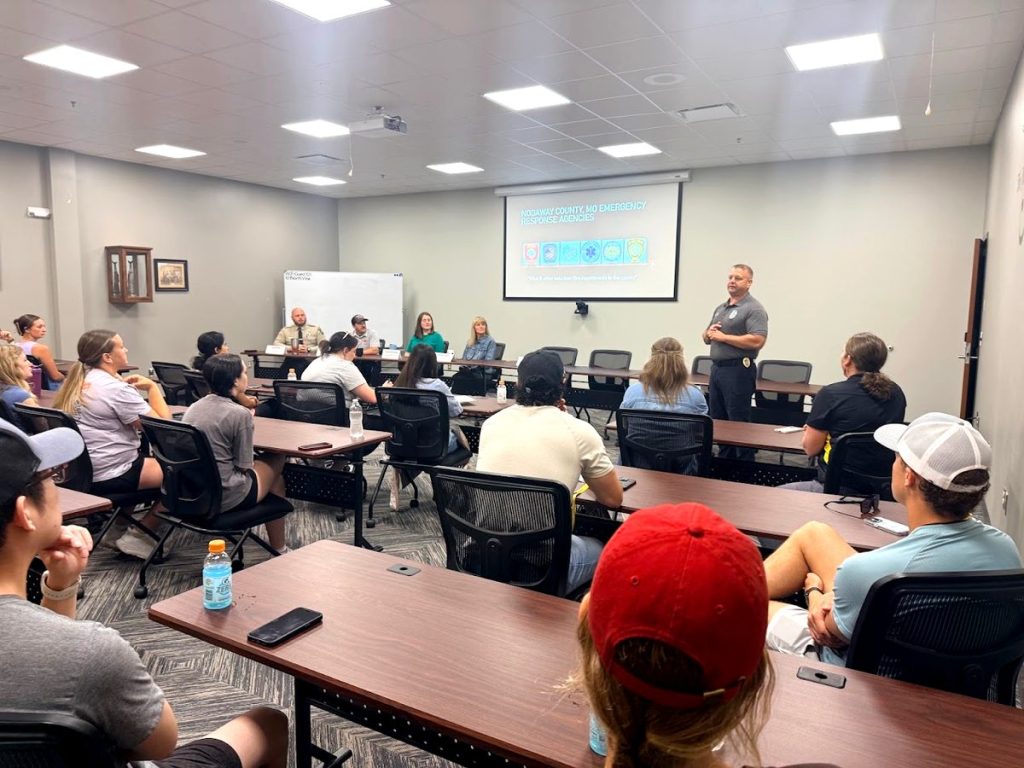
Maryville Police Chief Mike Stolte speaks to students in the Rural Immersion Program during their visit to the R. Keith Wood Public Safety Facility in Maryville. As part of the program, students pursuing healthcare-related degrees heard presentations from local experts and officials on how healthcare is interconnected to much of rural life in particular.
MARYVILLE, Mo. — Nineteen future healthcare students from Missouri universities spent five days learning about rural northwest Missouri in June during the 2026 Rural Immersion Program, a partnership between the University of Missouri School of Medicine’s Rural Scholars Program and University of Missouri Extension.
The Rural Immersion Program traveled through Gentry, Grundy, Harrison, Mercer and Nodaway counties, where students learned about factors that influence rural health in the northwest Missouri region. Rather than focusing solely on clinical care, students learned how healthcare is connected to agriculture, the economy, education, natural resources, behavioral health and culture overall, a news release stated.
“The Rural Immersion Program helps students understand that healthcare extends far beyond hospital or clinic walls,” said Jen Osborn, MU Extension engagement specialist, in the news release. “When future healthcare professionals see how these communities work together to address issues, including healthcare, they begin to understand what makes rural Missouri such a rewarding place to live and work. It really shows the collaborative and supportive strength of rural Northwest Missouri.”
Throughout the week, students heard presentations and panel discussions from regional healthcare experts, providers, emergency services professionals, nurses, dentists, social workers, administrators and more. Common topics surfaced, including Missouri’s healthcare workforce, access to care, healthcare costs and policies that impact these areas. Tours added to the program, with experiences at Wright Memorial Hospital in Trenton and Mosaic Medical Center and the R. Keith Wood Public Safety Facility in Maryville.
Participants gained a broader understanding of the social, cultural and economic factors that influence health, learning from additional local professionals, elected officials, agricultural producers, educators and community organizations. Presentations and visits to the MU Extension Hundley-Whaley Research Center, Shelburne Hills Farm and Dunn Ranch Prairie highlighted the importance of agriculture, conservation and environmental stewardship to rural economies and community well-being, the news release stated. Students also learned how organizations such as GRM Networks and local economic development agencies strengthen rural communities through broadband expansion, business development, childcare initiatives and strategic community planning.
The program concluded at Mozingo Event Center in Maryville with presentations from the Rural Immersion students. Students shared their understanding of the challenges of rural practice and viewed them as opportunities for professional growth. They discussed the broader scope of rural healthcare, the importance of interdisciplinary teamwork and the rewarding relationships that develop when providers become active members of the communities they serve. For many participants, the experience reshaped how they view rural healthcare.
One student reflected that hearing rural physician Tammy Hart describe herself as “a friend who is a physician,” changed their perspective on community-centered care, emphasizing that meaningful relationships are built long before patients enter a clinic. Another participant said observing physicians serve as mentors, volunteers and community leaders outside of the practice setting strengthened their desire to pursue rural family medicine.
“The northwest region of Missouri really welcomed these students and rolled out the red carpet,” said Randa Doty, MU Extension engagement specialist. “This was a great learning opportunity and experience for the communities and for the students, both. The connections made during this program have been amazing.”
SUBMITTED BY MU EXTENSION
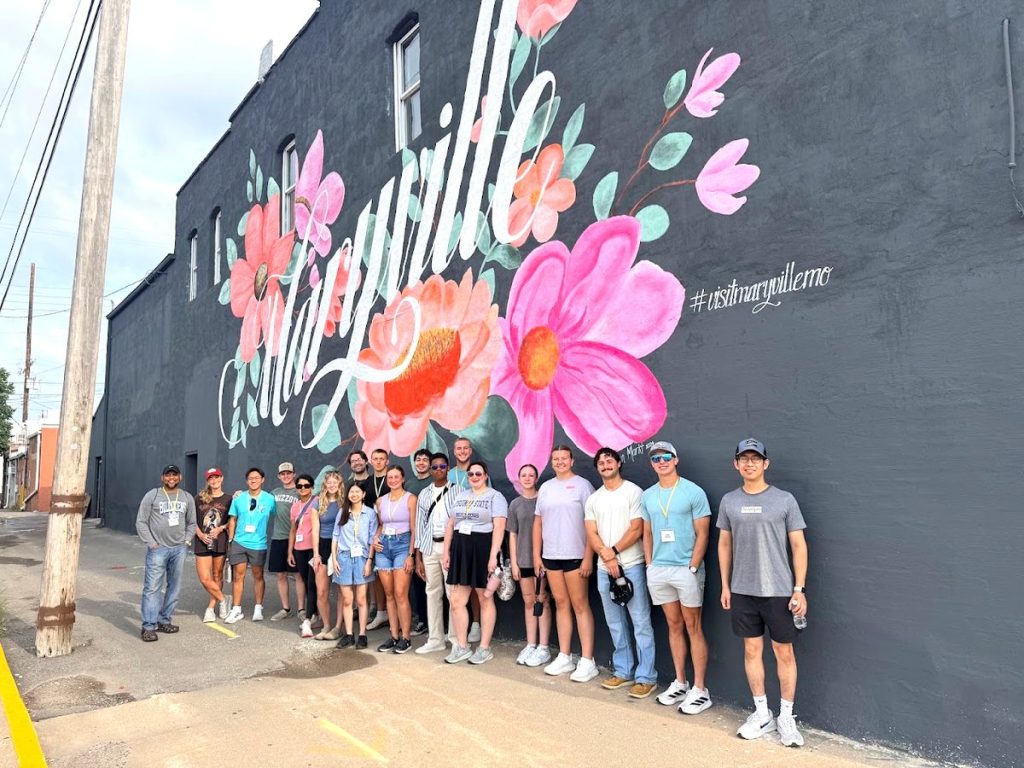
Students in the Rural Immersion Program, a partnership between the University of Missouri School of Medicine’s Rural Scholars Program and the University of Missouri Extension, spent time in Maryville as part of the program’s tour of five northwest Missouri counties. The program was held in June.