Candidate Forum Full Transcript
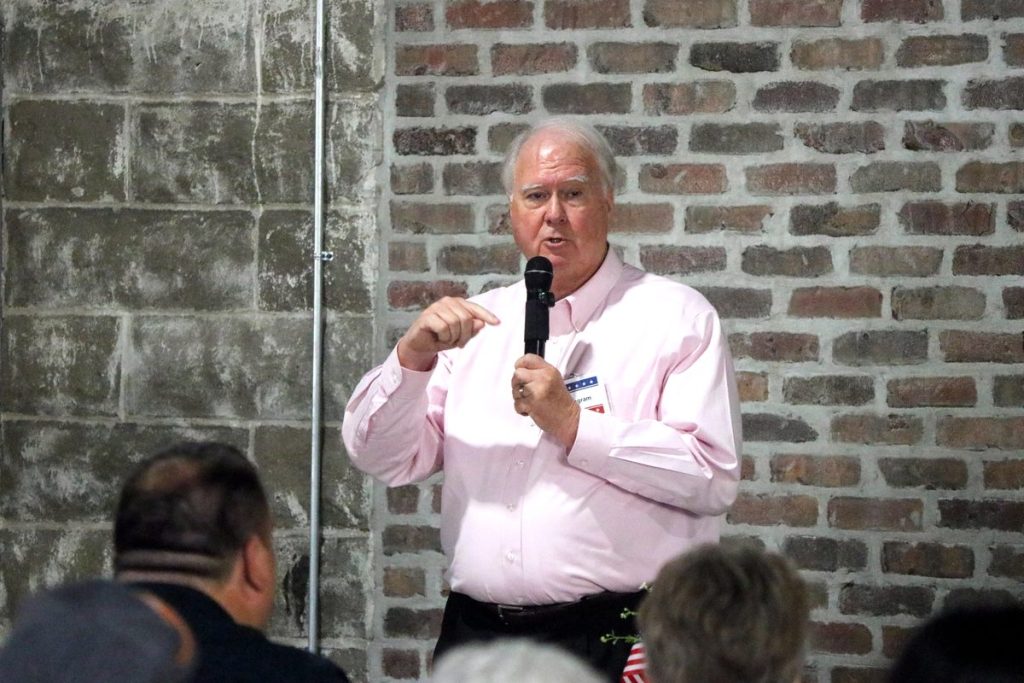
Jim Ingram Republican
Below are the answers given by candidates during the Greater Maryville Chamber of Commerce Summer Candidate Forum on July 15. Statements have been lightly edited for clarity; they should not be taken as a 100 percent accurate transcript.
U.S. HOUSE, 6TH DISTRICT
Opening statements
Jim Ingram
By way of introduction, my name is Jim Ingram. After college, I did two things: I married the most fabulous woman in the world, her name is Eleonore. She’s not here tonight, but we have two daughters and five grandkids. The other thing I did upon graduating from college was I was on active duty in the Army for four years. After the Army I went to the private sector, four banks, (before I started) my own business in 1998 in Liberty, Missouri, in Clay County, still going after 28 years. My daughter currently runs the business on a day-to-day basis which frees me up to run for Congress.
Like all small businesses, we have issues and problems. I’ll give you an example of one. We hit a rough spot financially about six or eight years in. And the business was supporting my wife and I, my daughter and her family, and it could no longer do that. To solve the problem, I got my commercial driver’s license — a CDL — and drove a tractor-trailer the country for about a year …. So I’ve walked a mile in your shoes; I’ve been around the block once or twice — truth be told, maybe three or four times.
But I can represent you well in D.C. I think D.C. is broken. We need to fix it. The two biggest things to be done to fix it will be term limits and a balanced budget amendment. Thank you.
Cody Oshel
I wanna thank the chamber for hosting and — I think I can say “Becky” Albrecht now because you’re not my superintendent like you were when I was growing up in Trenton. If you want any dirt, she’s got it. But, Cody Oshel, I grew up in Trenton, Missouri. … My family’s been in this district for eight generations — my 3-year-old and 1-year-old are lucky to call this place home. We actually live here in Maryville.
I toured the district from side-to-side and cities in between as a United Methodist pastor, serving churches from Kirksville all the way to Weston, serving in Stanberry. The church in Stanberry tripled while I was in attendance and that’s where I was lucky to meet my wife who was going to Northwest while I was going to seminary.
And so, through that, what I saw was an absence of leadership. And that’s really what I’ve been called to do to run in this race, is fill the absence in leadership. When I was in Stanberry, there was a guy there, his name is Doc Smith. He wasn’t a doctor at all, he was just known for taking care of all the people that were younger than him, and so he got the name “Doc Smith.” And he said, “See the people; it matters.” And so people truly feel unseen and unheard just even here in Nodaway County where we’re a county away from where the current Congressman is. And so people feel unseen and unheard, and so I’m running to represent people so that they can feel like they have representation in D.C.
After I left ministry, I was recruited by Thrivent Financial, which is a Fortune 500 financial house where I immediately impacted economic growth from my home office here in Maryville. But I do the same thing as I did as a young pastor serving small, medium and large churches. It’s going and seeing the people where they are to be able to represent them to be able to make a true impact. And so that’s what I’m gonna do when I win, is go out and see people, be able to continue to have a conversation with folks so they’re not just seeing me now and then wondering what I look like a few years from now.
Chris Stigall
Good evening folks, my name is Chris Stigall. It’s a real thrill to be here. Thank you to the chamber for hosting this event. It’s always good to be back in Maryville. Go Bearcats — I’m a proud Bearcat, graduated in 1999. I met my lovely wife, Christine, here — she was an education major; I was a broadcasting major. And my first time ever on a microphone was right here in Maryville. This place means a lot. And what I’ve managed to do for most of my career is parlay my broadcasting skills that I learned here 30 years ago or more. I took them first to Kansas City where I began doing talk radio, and then most recently I’ve been in national syndication talking about the issues with folks all across the country — certainly here in north Missouri — for now, almost 25 years.
And most recently, my decision to run for this office was simply because the issues of the day are now becoming more consequential than they’ve ever been before, I think we can all agree now. We’re on the precipice of something radically different in this country’s future than we’ve known before. There are two very distinct views of the direction of this country and direction Congress should take it. And I happen to know where I stand as a conservative. I happen to know what I oppose, and we’ve seen what’s being elected in places like New York — it’s on the growth, it’s on the march in Congress. I think north Missouri needs protected and defended for all the many issues that we’ll discuss tonight, certainly. But bottom line, as someone who knows how to take the fight to the party that I certainly oppose — maybe not everybody in this room does — but I believe in standing up or the principles that made this country great. And we have a decision right now as a country whether we’re going to do that or not.
So I came off the sidelines, and I decided to leave my job and jump into this race for this period of time. I don’t look to make it a career — I don’t need the career. I want to represent you as best I can and use my communication skills to do that.
Now I’ll just tell you really quickly, it was COVID, (COVID was) the moment that an opportunity like this, when it presented itself, I said, “I’m ready.” And it was Maryville, believe it or not, that really inspired me. It was during COVID that I came and visited Pagliai’s Pizza. I took my kids on a little tour of Maryville, of Northwest Missouri State. The salad bar was wide open, and I absolutely loved the fact the salad bar was wide open, and I said, “This is home, this is normal.” I’m here to defend that. Thank you, Pagliai’s.
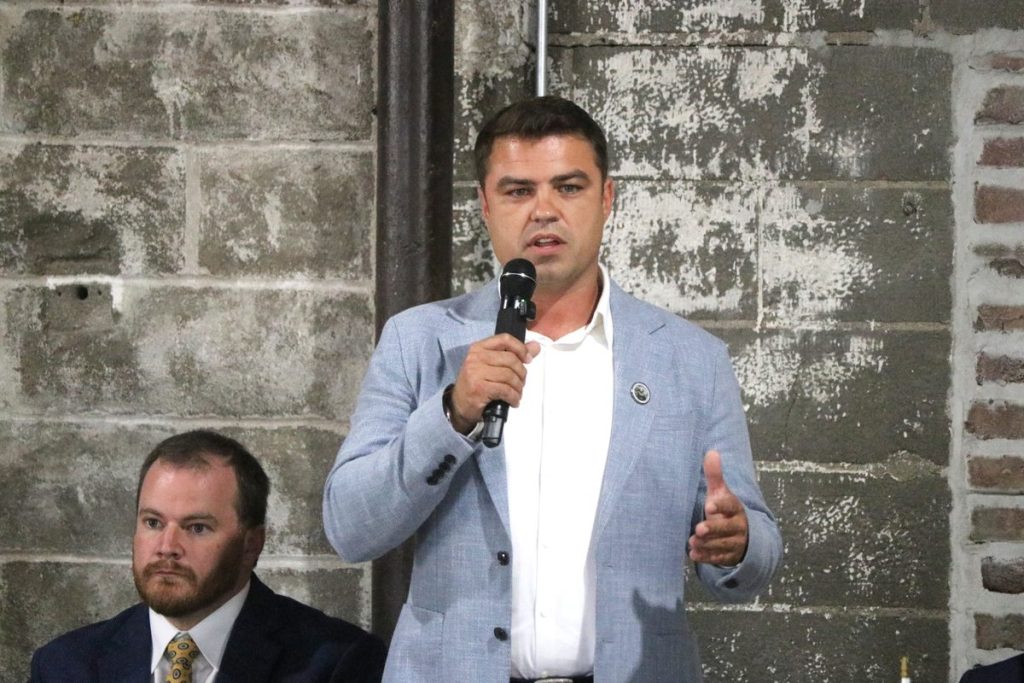
Nathan Willett
How’s it going, my name is Nathan Willett. I’m running for Congress because it’s time for the next generation to step up and lead, and I have a proven conservative record as well. I’m proud to be endorsed by the Missouri Fraternal Order of Police because in Kansas City I stepped up and defeated the defund-the-police era movement. And so back in — you remember 2020, talking about the COVID insanity here in Missouri that was even happening — there was also the defund-the-police era. And that was absolutely one of the most disgusting things happening. … It went to 400 officers short in our city, and I fought to bring back our police funding back to record numbers, getting record academy classes, because I fully support our law enforcement.
I believe it’s also time for someone who answers to all people across our 33 counties. This is an election up to the people. Unfortunately, we only had 120 days to campaign. Most campaigns, you get to campaign for over a year because you know the Congressman is going to retire. But I’ve been taking my campaign and my grassroots support on the road through our 33 counties.
I’ve been proud to be endorsed by Missouri Farm Bureau. My family’s farmed north Missouri for seven generations, including over in Atchison County. I’m also proud to be endorsed by the Missouri Soybean Association and Missouri Right to Life. I have a 100 percent pro-life record on the Kansas City Council, voting down every time that there’s any type of taxpayer funding for abortion, and got the first-ever safe haven baby box that’s gonna be installed in Clay County as we speak — the first pro-life victory we’ve ever seen in a blue city.
I’m a proven fighter. I wanna fight for you, I wanna work for you, and I believe it’s up to the people to decide the next Congressman, not the establishment. And I will continue to show up and fight for you all. I’m very excited to be here. I’m not a Bearcat myself, but I do have eight credit hours at Northwest Missouri State. That’s the only way to move up on the education pay scale, so I had to do that. So the last class I did take was online, but it was Maryville. Thank you.
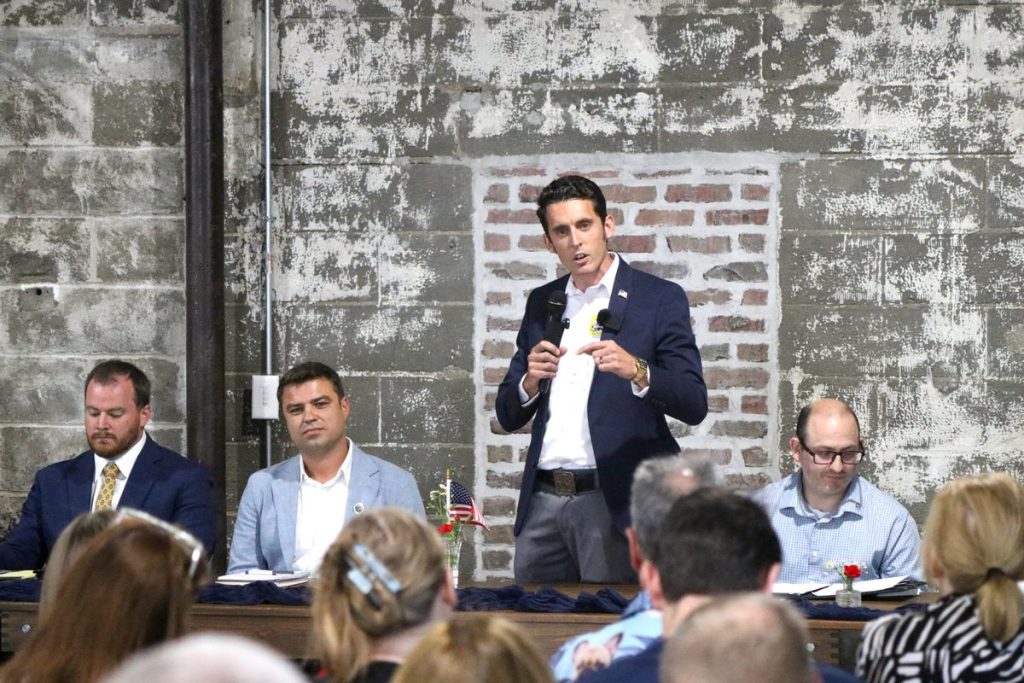
Nathanael Schultz
Good evening, thank you all for giving us the time and taking time out of your evening to be here. And I appreciate the panel up here, I think you’ll be able to get a good grasp of the contrast in us. And I’ll be short about what makes me unique, and I think a lot of it’s our upbringing and where we come from. For me, I was homeschooled until my senior year. I’m from the northeast side of the state. Really the whole family’s entrepreneurs — I’m the second of 10 — and my dad started his own business. And us growing up through that, we learned a lot about the rural economy and the mechanisms of it. One of early businesses was doing tours of downtown Hannibal where I had the carriage, and what I really loved is meeting the people, hearing, talking with them, understanding who we live with. And I think that’s something, especially as a person of my generation, would like to give back to our communities.
One of the key differences between me and the gentlemen sitting here is that I’m the only candidate that believes abortion should not happen, period. So whenever I say I’m pro-life, I’m pro-life all the way, and that’s what I mean by that.
I’m a staunch supporter of the Second Amendment. I believe that our Constitution provides for the future, and the guidelines it sets up endures time, and we should apply it, certainly. But another thing that really makes me different there is, I’m the entrepreneur. Like Trump said in 2015, you send more politicians to Washington, you get more Washington. You send business people that can understand how things happen, how things get done, make deals so you’re not relying on your PACs and your donors to make decisions or steer away from decisions. So I think that representing the people that built this country is something I do very well, and certainly those of you who have the same ideals.
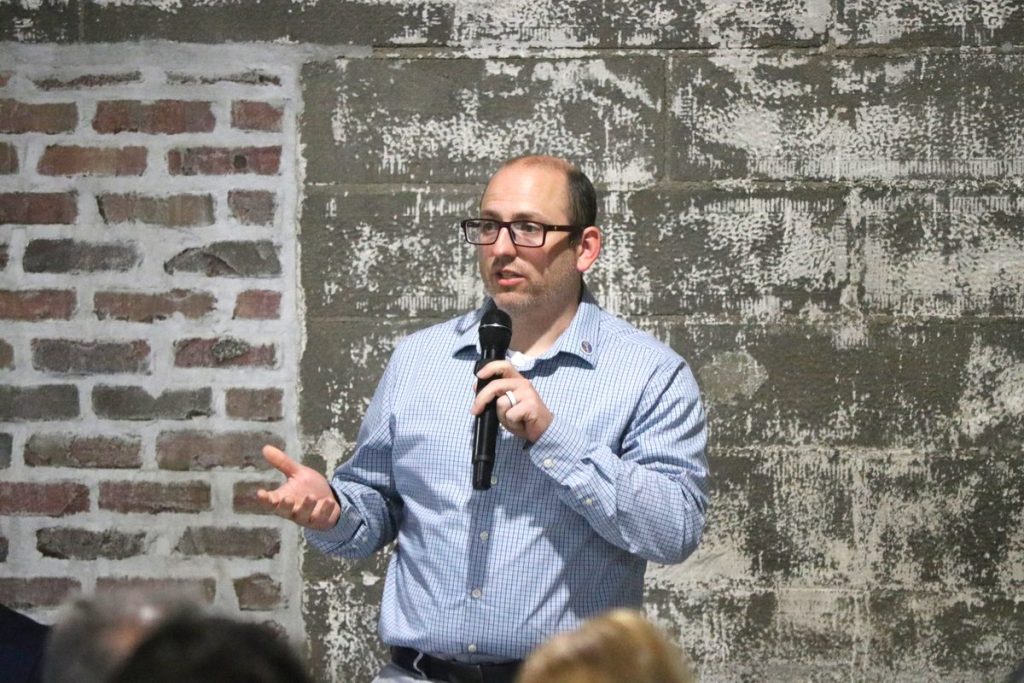
Josh Smead
How’s it going everybody, my name is Josh Smead. First I just want to say thank you to the Maryville chamber for putting this event on. It’s worth pointing out this is probably the first time in a quarter-century that Republicans have been brave enough to stand on the same debate — or I should say, conversation — stage and have a bipartisan conversation. Sam Graves did not show up for this district for a quarter-century, and every single person you see seated here is Sam Graves 2.0 who’s going to be doing the exact same thing. Over a million dollars of dark money from super PACs has already been put into this race by these gentlemen in front of you. I’m grassroots-supported. I’m entirely funded by people here in the state. Lots of grassroots donors, many small-dollar donors.
But I’ve been campaigning now for about a year and a half. My campaign values are kind of based on what I call my three Fs: Family, Freedom and Future. We need to be focused on our families and growing our families, our sense of community in north Missouri. The freedom component is something that we see every day from this administration, this White House: Constitutional rights being trampled on. Whether it’s the First Amendment because they can’t handle what Stephen Colbert says on the air, search and seizure, habeas corpus, due process — all of these things have gone out the window because Donald Trump and his White House think that is the appropriate way to implement their policies. And frankly, we need to be focused on the future. If you look at these guys’ platform pages, every single one of their policy points talks about what Donald Trump wants, and they’re begging for his endorsement. Frankly, it’s pathetic. We need someone to focus on the future of north Missouri, local issues, and not just focused on who’s in the White House and trying to suck up for that endorsement. Thank you.
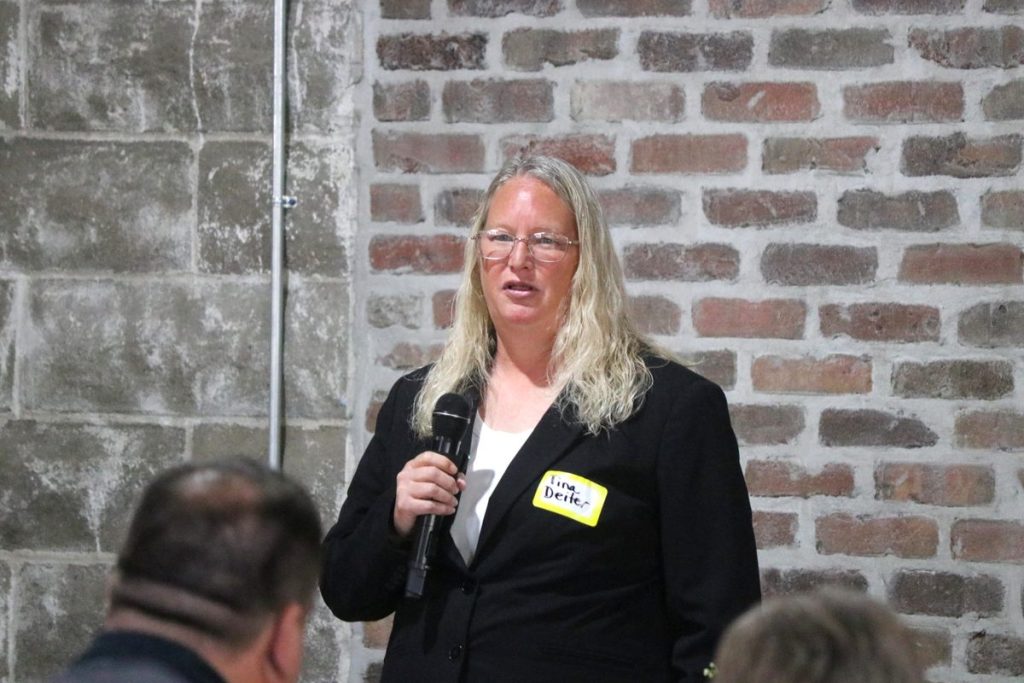
Matt Levine
All right, thank you for Maryville Chamber of Commerce for hosting this tonight; this is a great turnout. My name is Matt Levine, I’m 37 years old, I’m a supervisory Transportation Security officer at Kansas City International Airport and on my off days I am a substitute teacher in Park Hill School District. I’ve served for over a decade in the public, face-to-face, whether it be in the classroom molding these young minds to be better citizens and to be the bedrock of our future. And right now I serve as a Transportation Security officer facing national security and protecting the traveling public. And so that’s why I decided to run for Congress, is because we need somebody that is a leader, that is here for you, and that knows how to protect our voices here in Missouri.
So, the biggest inspiration for me was my grandfather. He served in World War II, and he would never talk about his time in the service until it was just me, him and my nana. And I told him what I was studying in school. And so he smiled at me. And it was a smile that just held something darker behind his eyes. And so I asked him, I’m like, “Why did you enlist?” Because I was thinking about enlisting when I was in high school. And he told me, he believed in this country. He believed what our country was about. It wasn’t about politics. It was about freedom. Rights. Our voices to be heard, both here and in Washington. And that really stuck. And that’s what made me fight for a year and a half now, just like Josh, and it’s gonna keep pushing me forward.
QUESTION 1: Sam Graves has held this office for many voters’ around here entire adult lives. How, if elected, would you similar to Sam or different than Sam?
Cody Oshel
Yeah that’s a great question. So one thing I will say about Sam, though I disagree with how he represented across the district — or lack of, in some ways — was that he is really the last generation of statesmen. What we see today is this move from what I’d say is like the PGA world to something else. We have all this crazy rhetoric out there. So I think he’s done a good job of holding to that. You know, I grew up in the political arena with people like Kit Bond, and people like that that were family friends that went out and they saw people where they were. They would have been at the duck festival in Parnell over the weekend. And that doesn’t happen anymore.
So I think showing up, being able to be in front of people, but continuing to represent as a statesman in the community and not going to the far rhetoric that’s out there. But seeing people, having quarterly forums so you have access to people. I believe in an open-door policy in my corporate job, I did that in ministry. I believe the people should have access to you because if we want D.C. to look like north Missouri, we have to be able to get in front of north Missouri so we can have that elevated versus the other way around.
I also believe that Maryville’s gonna continue to be my home. I have a 3-year-old and a 1-year-old — my wife’s probably gonna ensure that I’m home as much as I possibly can be. We also love Maryville and want this to remain our home. I’ve been to D.C., I represented clergy … on Capitol Hill. It’s a good place to go — I’m not impressed by it — but it’s a good place to spend time making an impact and come back home.
Chris Stigall
I worked for Congressman Graves for a couple of years in his third term, and the thing that impressed me most about that office — and really was impressed upon me by everybody who worked in that office — was constituent services. That’s the thing that Congressional offices really don’t get a lot of attention over. We talk a lot about the national food fights on the floor of the House and what’s going on between the White House and Congress, but the little-talked-about but, I think, most important part of a Congressional office is the fact that there are veterans who struggle to get their benefits for one reason or another. And the Congressman’s office is able to help secure those things. If somebody doesn’t get their Social Security check, the Congressman’s office can help figure that out. Somebody needs a passport, the Congressman’s office can help figure that out. Constituent services. And if you talk to people around the district, you will hear — and I bet there are many in this room — who have reached out to the Congressman’s office and gotten help from their representative. That is the most important thing. I think the Congressman did that exceptionally well and I wanna continue that.
What would I do differently though? As a communicator professionally, that is the one thing that, as Cody mentioned, the Congressman was not a forward-facing guy. He did the work, I think he did it well, but in 2026, I think, my job, if I do it well, is to make you sick of seeing me. Maybe it’s on the phone, maybe it’s on TV, but I promise you you’re gonna here plenty from me, not only physically visiting all 33 counties, but also on places like social media and other places advocating for you. You’ll physically see me regularly, that’s a goal of mine. Thank you.
Nathan Willett
Yeah, well, I appreciate Sam’s service, I respect his service for the last 26 years, but one thing that I disagree on is filing to run for office, and then pulling out at the last minute, and then handpicking the next person to come in there. I think that’s very disingenuous and un-American, especially on the 250th anniversary year of the greatest country to ever exist. And so that’s why I put my name on the ballot.
But I do wanna give Congressman Graves a couple points where I think he’s done really well and I would hope to continue to do well on. He’s been very proactive with Missouri’s flooding. He’s made sure that we also make sure that our levees and our infrastructure are up to date. I know that that is very hard to do when you’re competing against what you see big cities, what they want in terms of their levee projects, or rural areas, like Atchison County. My great-granddad started Levee District No. 1 up there. I know it’s important to protect all our river towns across north Missouri, from Rock Port, all the way down to Parkville, to Hannibal — there’s a ton of different river towns. We’ve gotta make sure they’re protected and make sure our farmland is not getting backed up to the federal government. It should stay fertile farmland. And that’s one thing I appreciate about him and will continue to do.
But the bottom line is, I do believe constituent services are very important, and I have a record of doing that. I represent 90,000 constituents on the Kansas City city council, and when that snow is not being removed properly from the neighborhood, I go and get that snow plow myself — especially if there’s a snow day at Park Hill during that time. I know how to get things done. I’m a doer. I prioritize all my constituents. When I was able to run for City Council, I was able to knock on all 15,000 doors of the … voters out there. Obviously, you can’t do that within a Congressional election, but we’ve been touring all 33 counties, making sure that we understand the needs of our local leaders, and it is my office that will fight to prioritize making sure that you guys are set up for your federal grants, have the local matches ready to go and fight for our needs across a variety of our counties here. Thank you.
Nathanael Schultz
Well I believe that a few of the things that Sam Graves did well was look after the infrastructure at large. Now, getting right to what I would do different, hospitals like Hannibal’s hospital got quite a big input. But we need to immediately introduce and support legislation that would support these rural hospitals and their emergency room systems just like we do for our fire, EMS and other services that we all use. We need to keep those alive that services all of us. Another part on that is actually going after the illegal immigrants who are privy to our services and are not paying into the system. So when you have a population — all of us working people, we pay in in hopes that whenever we need it, it’s there. Well we can’t have that type of system if someone is using the services who is not paying in or has never paid into that system.
Another thing that I would do very proactively is go toward our foreign policy. So as a Congressman, you are the only body that actually makes a declaration of war. And everything that we have going on — we talked about the rural economy, we talk about cost of living — it all has to do with what’s going on in Israel, what’s going on with Iran. And we need to realize where our allies are, in Israel, and to authorize us to do what we need to do to go after countries like Iran, who has attacked us for more than 40 years, and back to the founding of our country: from the halls of Montezuma to the shores of Tripoli. Tripoli was about the Islamic terrorists — pirates — that were raiding our ships as we tried to travel. So we need to be straight up about who the enemies of our country are, their plans and actions, and how we’re going to address that to make sure that it isn’t affecting us right here in north Missouri.
Josh Smead
I’m very proud to say that I will be nothing like Sam Graves when I plan on winning this seat in north Missouri. One of Sam Graves’ biggest issues is that he literally never showed up. When I talk with people — I’ve talked with thousands of people now all across north Missouri — they don’t even know what he looks like. He does not show up. That’s been one of the biggest issues that we’ve had, and that’s one of the reasons I’m running. Because, frankly, it feels like we don’t have a voice in north Missouri.
For example, I’m glad that foreign policy was brought up. We should not be at war with Iran. And Congress needs to vote on that. And politicians like Sam Graves have turned themselves into rubber stamps that are green lighting forever wars in the Middle East, where we’re gonna spend trillions of dollars more — on our national deficit, I might add. It’s bad policy, and frankly, it’s bad for Missouri. Over 9 percent of everybody 18 and older in Missouri is a veteran. That’s higher than the national average. And if you go out in our rural areas, it’s even higher than that. So these people are being very cavalier with our resources that we have for our military, especially servicemembers’ lives — the 13 that have already died dealing with Iran — and the billions already and soon-to-be-likely trillions of dollars we’re gonna have to spend on these overseas conflicts. In north Missouri, we need someone to focus on our crumbling roads, the fact that hospitals are closing, the fact that our public schools are also in danger because these guys are going to defund them. We need a new direction for north Missouri and frankly, Sam Graves and the same old status quo — Sam Graves 2.0 — is not going to cut it. I’m looking forward to bringing a fresh perspective to north Missouri. Thank you.
Matt Levine
Thank you for that question, it’s a great question. So, I would like to say I would be absolutely nothing like Sam Graves, however, he has fought for farmers — because he is a farmer. He has fought for internships for college students in rural hospitals. Great. However, where are the rural hospitals? They’re closing. And what’s happening to our farmers? The tariffs are killing them. So, I’m gonna be different because I’m gonna fight for the farmers by revoking these tariffs, because they are a tax on the American people. I’m going to fund our hospitals so that we can rebuild, build infrastructure, build these rural hospitals so that college students can have those internships. And I’m also going to fight so hard for our public education. Because I am a teacher. I’m an educator for these special needs kids, and these kids need public education. We don’t need to privatize everything. These privatization vouchers from private schools where they can pick and choose who they bring into their school is ridiculous. These special needs kids aren’t gonna get into private school. They deserve an education just like the rest of us. I’m a public education person. So, I would love to say I’d be absolutely nothing like Sam Graves, but I will fight for farmers, just like he did. I will fight for rural hospitals, just like he did. But I am completely different in that I will never stop fighting for farmers, and I will never stop fighting for rural hospitals. I will not pass the One, Big, Beautiful Bill Act. I will not revoke your Medicaid, your health insurance. Thank you.
Jim Ingram
Sam has done a fairly good job over the years. I think the problem — COVID hit, he got very complacent and stopped showing up. When I first thought about running, I was at … Lincoln Days in St. Louis a year and a half ago, and a gal in my county who I’d never met before says, “We’re looking for someone to run against Sam Graves.” And I’d been thinking about it and that was kind of the thing that pushed me over the edge. I’ve been to a lot of counties — I was in Hannibal for breakfast, and had a guy come up afterwards and said, “Jim, we have not seen Sam Graves here in six years.” After that we had lunch in Lewis County, that’s north of Hannibal, and a guy comes up afterward, and the guy says, “I have never seen Sam Graves in my county.”
A lot of things Sam did was good. But you have to stay in touch with all the people out here. And one of my goals, if you elect me to Congress, I will try to visit every county once a year, like this setting where I can basically tell you what I’m doing for you in D.C., and you can tell me what I need to do or not do to make your life better.
I went to the Missouri Farm Bureau state convention in December. Great people, in Caldwell County, friendly. And they said, “Jim what are you doing here?” I says, “I came to learn.” And they were blown away. Most politicians show up and say, “This is what you need to do.” They want someone to listen to them, because you can tell me directly what you need or don’t need from the government and act upon that, versus telling people what you think they need. And I’m gonna listen, I’m gonna come by once a year, and I’ll look you in the face and tell you what I’m doing. Thank you.
QUESTION 2: Do you really have a plan to visit with the constituencies?
Chris Stigall
Like Jim, you know, it’s critically important. Thirty-three counties is a huge landmass. I mean, thank you for the question. I don’t know that everybody necessarily knows how big the Sixth Congressional District is, but it is massive. And just in case you don’t, from Atchison County over to Clark County, so from the Kansas side to the Illinois side, then of course from the Iowa border all the way to the North River. It’s massive. Since it’s been redistricted, it’s a little smaller, but still huge. So the priority has to be physically being on the ground. And we have committed to at least visiting twice a year every county. I think that’s easily achieved, it’s just a matter of, I think literally we’ve talked about already, our team, if successful after August 4th, flying into probably St. Louis or Quincy and camping out east. Because quite frankly, out east is where, if you talk to folks, they’re a different planet from where we are here in the west. So, the very specific plan is simply making it a priority. If we put it on the calendar early … and make sure that we have, as Jim said, forums like this, you hope that people attend. It’s critical that you let people know on social media in 2026 as well so if people can’t physically be in the room, they need to know where they can access the conversation. So it’s really about being forward-facing, and I think needed, quite frankly, in the new era.
Nathan Willett
You’re not doing constituent services right unless you actually show up in your communities, so it’s important to know the needs throughout all of our 33 counties. Right now on the City Council, I represent the needs of my neighborhoods and I go out and fight for them. There’s a neighborhood that was promised sidewalks when they got a part of Kansas City annexed in way back in the day. They didn’t end up with the proper infrastructure, but I fought and got 6 million dollars in new sidewalks in my very first year on the City Council. Now all the students in those neighborhoods can actually walk to school. It’s about understanding the needs and showing up over and over again.
I’ll be speaking at Lincoln Days consistently. Not just on election years, but also throughout the off-election cycle as well. I’ll be showing up to Federated Women. The backbone of the Republican Party is a lot of our women out there, they do a lot in their communities, and I’ll making sure that I’ll show up for that. It’s also about understanding the institutions that make north Missouri great. And immediately when I ran for this office, I surrounded myself and put together an ag advisory committee of people all across north Missouri. Generational, next generational leaders in agriculture, former Farm Bureau presidents, president of Missouri Soybean, next generation cattlemen, people who just restarted the Cattlemen’s Association of Livingston County, the Boswells, or the Veneers who are fourth-generation farmers up in Putnam County. I make sure I surround myself with people who will hold me accountable to, and we have had weekly call-ins throughout this race advising me on things throughout their community. I’m already doing that right now throughout this campaign. And the fact of the matter is, the current Congressman only gave 120 days to go across 33 counties and build relationships with people. They were not trying to have a competitive campaign. They were not trying to let a candidate come in there and build relationships that are needed in our communities, and that is absolutely disgusting and un-American. And so that’s what I’ve been doing from the get-go here, actually going out and making sure we go from Platte County to Atchison County, Clark County all the way to Marion, and I’m proud to have earned many support endorsements across from different sheriffs and different community leaders that wanna see a change in that and for the next generation of leadership in our community. Thank you.
Nathanael Schultz
This is the Show-Me State, right? I think we’d like to be shown, not just told, and we have a distrust — naturally — for politicians that tell us one thing and then go off and do another. So I’m the only candidate, on all my flyers, I have my cellphone number on there. It’s the way that I currently live my life. And one of the small businesses that me and two of my brothers have is towing and recovery, so I answer the phone at all hours of the night. And then the other one is fire and water damage, so I answer my phone at all hours of the day and night. That’s how I live my life, that’s how I’m working this campaign. Not only that, but I do live on a small farm, and I do rely on small-town economics in my business for that to work. So the whole eastern side of the state is something that I know like the back of my hand. Making sure that I’m here to this area is a super-high priority, to answer your question directly. And it’s something that, through my actions and what I’ve done already, and then I live on the road now that I’m doing this campaign, I’m coming face-to-face, and I’m certainly happy to have phone conversations even while I’m campaigning. And if I can’t answer the phone, I’ll call you back.
So chamber events like this, doing groups and understanding, you know, it’s the small businesses that are parts of these. And so making sure that if you can find those things out, then get with them. So that’s a huge part of it — making sure that you’re actually making the rounds yourself and not leaving it up to your field staff. Because people need a relationship, and then, as a Congressman, you need to be there in person dealing with what issues are happening on the ground. You don’t get that unless you’re here in person. So one aspect of that is the veterans services. If you’re here, there are so many small towns, and they have to drive all the way to Columbia or Kansas City to get the services they need, or they’re going through a massive outpatient process trying to get that service right there at home. We’re fighting two battles, and what really makes sense is, making sure they can get the care they needed at home in their rural hospital, and then that also funds the rural hospital for the services that they provide.
Josh Smead
Yeah, so, I think it’s interesting that so many of these guys that wanna come be Sam Graves 2.0 are using him as the example of someone who’s shown up, someone who’s good with constituent services, because the thing I hear more than anything else when people talk about listening to Sam Graves and getting responses from his office is that they’re the same boilerplate response every single time. All that being said, it’s also worth pointing out to the radio DJ that St. Louis is not actually in our district, so if you’re gonna camp out there, you’re not actually gonna be in the district. But that’s OK, they’ve been moving the maps around quite a bit. So it’s worth mentioning, though, so 50 years ago, we had a Democratic representative here in the Sixth District, his name as Jerry Litton. Every month, he would have a “Dialogue with Litton” — monthly town halls. He would bring in people from Washington — at one point he brought in Jimmy Carter — he would bring in multiple important people from Washington, from the area. He would have a town hall every single month. That’s absolutely something that I’d be looking to do, in addition to, of course, traveling around to all the various counties. Thus far in my campaign, I’ve put about 20,000 miles on the car. I’ve been doing this now for about a year and a half, trying to meet as many people as I can, and I know I’ve already had more events like this than I believe Sam Graves has had in maybe the last 20 years. So it is time for a change, I think I’m that guy. And this is the Show-Me State, and I’ve been showing people to this point in my campaign that I’m gonna be out there speaking with you where you’re at. Thank you.
Matt Levine
So, you talk about this being the Show-Me State — well I call it my home. And if it’s my home, you’re all my family. And I, for one, show up for my family. I moved out here because my sister, my brother-in-law, begged me to come out here to be closer to my nieces. So I moved out here. Family is everything to me. And being the representative makes you my family because this state is my home. I do plan to visit every county while in Congress. All 33. I plan on holding town halls similar to this, that way I can see you, talk to you face-to-face, listen to your concerns, listen to what you need, desperately, from Congress.
Because right now, Sam Graves is invisible. Apparently only Stigall’s the only one that’s seen him. Otherwise he’s flying his plane to Paris. Whereas, I won’t take any vacation days. I don’t them out at the airport, and I talk to thousands and thousands of people. I won’t take vacation days because we need to get business done. A representative is supposed to do just that: represent the people. Not represent big corporations, not pad their pockets with money from Herzog or whoever. We gotta get dark money out. We gotta have real businessmen or educators in Congress to represent the people that matter the most: each individual constituent that is here in the Sixth Congressional District. Thank you.
Jim Ingram
I believe the question was, “How are you gonna go out and visit every county in the year,” right? My wife asked me the same question when I said I was gonna go out and visit every county. Then we did a whistlestop tour — Hannibal for breakfast, Lewis County for lunch and Kirksville for dinner. We did three counties in one day — breakfast, lunch and dinner — and you could do the same thing three times in one weekend, and it’d take about 10 or 11, 12 weeks to take care of the entire state. And that is the methodology I would use to visit everybody. And my wife says, “That make sense.” And we’d have a few weekends to just enjoy by ourselves and live life a little bit besides everything else. But it’s doable if you have a plan, and I’ve thought about the plan, and that’s what I would do.
Cody Oshel
You know, every church I inherited was in shambles from far-left clergy that just left them where they couldn’t have a conversation and the church was ready to close. And I came in, and had people talking. We had quarterly forums, and we got people talking together when in most places, they were so pissed off they couldn’t be in the same building together. So we started having conversations. And that’s what I did. You know, I worked for a Fortune 500 financial services company, and I lead partnerships and activation with major league sports teams, et cetera, in every major media market in the U.S. I get on planes at 3 a.m., go there, do stuff face-to-face with people because it’s important, get on a plane the next morning at 3 a.m., come home to be home with my 3-year-old and 1-year-old and my wife. That’s how I’ve done business, and that’s how I’d continue.
But the people in the communities, that’s what matters. I said every major media market. Last year, in Texas hill country, when the floods happened — Texas hill country is not a major media market. But I was on maternity leave and had came back just after that and saw a note from one of our members that said, “There’s Thrivent here, can we do something here?” I said, “We’re gonna figure it out.” And so we went and raised 3 million dollars that went directly back to that community because I listened to a constituent member of ours in that community. So that’s how I’m gonna show up and represent the people everywhere, because it matters.
QUESTION 3: What is your stance on data centers, and if elected for this office, what can you do to either effect for or against?
Nathan Willett
That’s a really good question. First and foremost, there must be transparency for communities. I think there’s a difference between cities and counties in terms of their zoning laws. There’s a lot of confusion within that and see a lot of people questioning, you know, “What can my commissioner do? What can’t they do?” I can tell you this: I’ve held data centers accountable in Kansas City. There was a previously approved data center by Meta, and they were not paying the school districts proper PILOT payments — payments in lieu of taxes — as they were doing. Because they were operating underneath a temporary certificate of occupancy rather than a permanent one — the stuff that development attorneys understand and most elected officials don’t. But I held them accountable. I said, “We gotta operate on a permanent certificate of occupancy, because they’re depending on those resources for teacher salaries, long-term facility plans.”
I think there also needs to be a need to protect ratepayers and fight for ratepayer protection. In the city of Kansas City, I promoted to have a special use permit required for all things that are going up in industrial areas. And I filed with the City Council, making sure that there’s a data center task force, which is actually a citizen-appointed board where they actually ask the experts all the different questions.
There’s a lot of different transparency problems out there. Where do you get your tax incentive? Where do you get your zoning? It’s confusing as can be. I do believe that we need to keep up with Russia and China in AI, but we should not just be handing over different ground and just letting different tax incentives that don’t make sense for certain communities and not having ratepayer protections in place. And so I voted against the last data center proposal in Kansas City. I’m someone who will be willing to commit to make sure transparency happens. But it should not be pushed onto communities. It should be something where communities should have step forward. The NDAs are a little bit too crazy going on right now. And I think that it’s something that I’ve seen new technology that you could be able to cool different data centers in the ocean — I think that is something better than having stuff in our own fertile farmland. I’d like to see as much farmland as possible be preserved and not be taken over by that.
Nathanael Schultz
Well, I would immediately — and you know, the House of Representatives has an oversight committee — I would immediately start investigations into these data centers as I don’t approve of them. The way that they’re going on, I think there’s a lot being hidden and a lot of lies floating around about them. I think it’s worth pointing out that Axiom — and if you look in the newspaper today, it shows that they’ve been hired to propagate this and to make sure to push candidates who are gonna be a “yes” for data centers. So a lot of that’s coming through there.
And those candidates will say that there is not a function of the federal government and they’re local data centers. And that’s not true. If you go to the whitehouse.gov and there’s several other government websites I can point you to, that the federal government is directly subsidizing the building of these data centers. They’re also subsidizing Ameren and other utility companies, who are a monopoly, but we need them to be able to, you know, have the infrastructure we need. That gives you, in the House of Representatives, the power of the purse to stop what’s going on, make sure that’s happening in the right way. And I do believe that while we will need some data centers to make AI work, the way it’s happening right now is completely wrong, and we shouldn’t be defrauding the citizens who, through those taxpayer dollars, are funding the building of these things. And that’s an atrocity that I think needs to be fixed right away.
And then there’s a lot of waste, I think, overall that’s going into these buildings. We’re going in with outdated systems, and it’s because the government’s already allocated money, and who’s gonna stop the contractor once he has the contracted money to build it, right? And the banks that are processing this money are earning on the interest as well. So just like all the fraud that happened with the PPL, I think that’s what’s happening right here with the data centers, and we can absolutely do something about that in the federal house.
Josh Smead
So as far as these data centers go, I appreciate the advancement — and we absolutely need that, America needs to be on the cutting edge of technology — however, I would be supportive of a temporary moratorium on the national level, especially, as an example, the one that’s going to be going in here in Nodaway County. So, my experience in architecture has been — basically, the Kansas City area, for those of you that don’t know, something like 80 percent of the world’s sports architecture comes out of Kansas City. So I’ve gotten the chance to work on NFL projects, NBA arenas, billion-dollar master plans — very large projects dealing with large pieces of infrastructure.
So, when we’re talking about a data center like the one that they’re looking at here in Nodaway County, and they’re saying it’s got a 4 billion or 6 billion dollar budget, I will tell you, it is in the budget to do a little bit more due diligence to understand, “What is this gonna do to water? What is this gonna do to our utilities?” Because frankly, I disagree that we, the people, need to be paying for the utility improvements for these massive facilities. If you’ve got 6 billion dollars to put into a data center, and it costs a half a billion to make a new power plant to power it, sounds to me like you’ve got 5 and a half billion dollars for a data center, because you need to build yourself a power plant.
Matt Levine
Thank you for that question, and yeah, we’ve heard some great answers so far. And I do agree, we need a national moratorium so that we can get more research done. And rather than just jumping the gun and putting in these giant data centers, we need to be transparent, we need to honest with our taxpayer dollars, we need to be honest with our citizens. What is it gonna do to the infrastructure? What is it gonna do to American jobs that are actually run by human beings and not by AI?
I understand IT’s ever-changing and we do need to stay up-to-date and compete with the Chinese or Russia, but we do need to just pump the brakes, do the research, bring it forth to the citizens. We’re the ones that are going to have to deal with seeing it in our backyard. We’re the ones that are gonna have to deal with it if it does hurt our drinking water. We’re gonna have to be the ones dealing with it if we’re losing jobs over this. And so we do need the research, we need the moratorium just to pump the brakes, and let’s hold on.
Jim Ingram
I read a couple days ago that there are 5,000 data centers already built and are in the process of being built. They’re chiefly needed for our country to compete with China and whomever else. As long as they don’t use eminent domain, I think this is OK. Like with Kawasaki — you’ve got the big plant down there when you go in, I saw it right there — any big employer comes to town, the local officials have a responsibility to make sure that local citizens don’t get affected. I’m sure Kawasaki uses a chunk of energy as far as electricity, water, and everything else. It’s up to local officials to make sure that they have a fair deal. And most facilities like that that come in, the city says, “OK, you need a four-lane road here? Well you’re gonna build it.” That’s fine. They’ll put it in. A gas natural pipeline, four-incher versus a two-incher. They can make that happen. It’s all negotiated. Some counties and localities, they don’t want data centers. That’s fine. There are some that are dying to get them. That’s fine also. They can make that decision. Smithville … they’ve got two data centers going right next to the highway, and they love them. The tax base is fantastic for their schools and they bring a lot of permanent jobs into town. If you’re a community that wants them, great. If you’re not, that’s up to you. It’s your decision.
Cody Oshel
If you wanna know why I don’t have my number on my cards, it’s because of data centers. Having a 3-year-old and a 1-year-old and getting 2 a.m. calls and my wife’s like, “We gotta change this.” I will answer your Facebook messages or emails, but I’m not gonna talk to you at 2 a.m. about data centers. You know, I believe that this truly is a local and a property owner rights issue, largely. I believe that the federal government can put safety provisions around up there if we begin to have clusters or, you know, other things that are happening to be able to enforce, you know, to be able to ensure there is, you know, the right is made good on that.
But it truly is, you know, my biggest concern about data centers is our district has the largest amount of foreign-held land in the state of Missouri. That’s a big deal. And so we shouldn’t be seeing more land go to adversary countries, that’s not good for us. These will keep the land here for us. But ultimately, you know, I believe if it’s an American company and somebody wants to sell the land, that that’s a right to be able to sell the land to who they want to. I believe that it’s the community’s decision to be able to vote on if they want to be bring it into the community.
Earlier this election … I was with Governor Kehoe, and … we were having a conversation, and I said, “I don’t support any tax abatements for data centers, period.” They wanna come into communities, I believe that they come in, they’ve got the money to buy the land, they can put in all the infrastructure that they need, they don’t need any tax abatements. They should be responsible to cover what it is to be able to come into the community.
You know, this is a much smaller illustration, but I remember growing up in Trenton, I remember Walmart wanted to come into town, and Trenton said, “Absolutely not, it’ll run out Pamida, the Future Shop Co’s and everything else.” Now they’ve got four Dollar Generals or something like that and everyone drives to Chillicothe to go shop at Walmart and a lot of people work there. So the data centers are gonna go somewhere. We just need to decide what communities — local communities need to decide, there’s no community, right community, because they’re gonna go somewhere and there could be massive benefits. But you have to be able to decide: Is it truly for you or is it not?
Chris Stigall
I wanted to mention to my architect friend from a little while ago there who invoked my name, I am aware that St. Louis is not in the district, but you should be aware that that’s largely where you’ll find most of your voters, so perhaps you should move there. As for the data center question, I wanted to say, much like these gentlemen, it’s community-dependent. I am very, very much someone who believes the less federal government in your lives, the better. I get very nervous when people start talking about a federal standard about data centers, because that starts to take you out of the equation. And as Jim said, we travel these counties and we talk to folks, there are certain rural counties — I’m not gonna name them — who will tell you, boy we would love to have a conversation about the revenue that could really help us rebuild our school district in our small town and maybe help save our rural hospital. There are others, and I know much of it’s found here in Nodaway County, who vociferously oppose them. And I appreciate both positions. But if the federal government takes the position that we’re going to dictate and determine what you will and won’t tolerate, I think that’s a mistake. Your county commissioners and your local officials are your first line of defense if you’re concerned about those things, and I think that’s exactly where it should stay.
Having said all that, I do know, as has been mentioned, China is building these things at a rapid clip, just like they’[re building coal-fired power plants at a rapid clip. These things need energy. We need to produce more energy in this country. And here again, the federal government has gotten in the way of producing more energy in the country and has made us very, very vulnerable — it’s a national security issue, our energy grid. And AI and these data centers, they’re going to continue to suck more and more power. It is a real concern, and we need to start discussing our energy grid and how we’re going to produce energy wherever these end up.
NODAWAY COUNTY PROSECUTING ATTORNEY
Opening statements
Tina Deiter
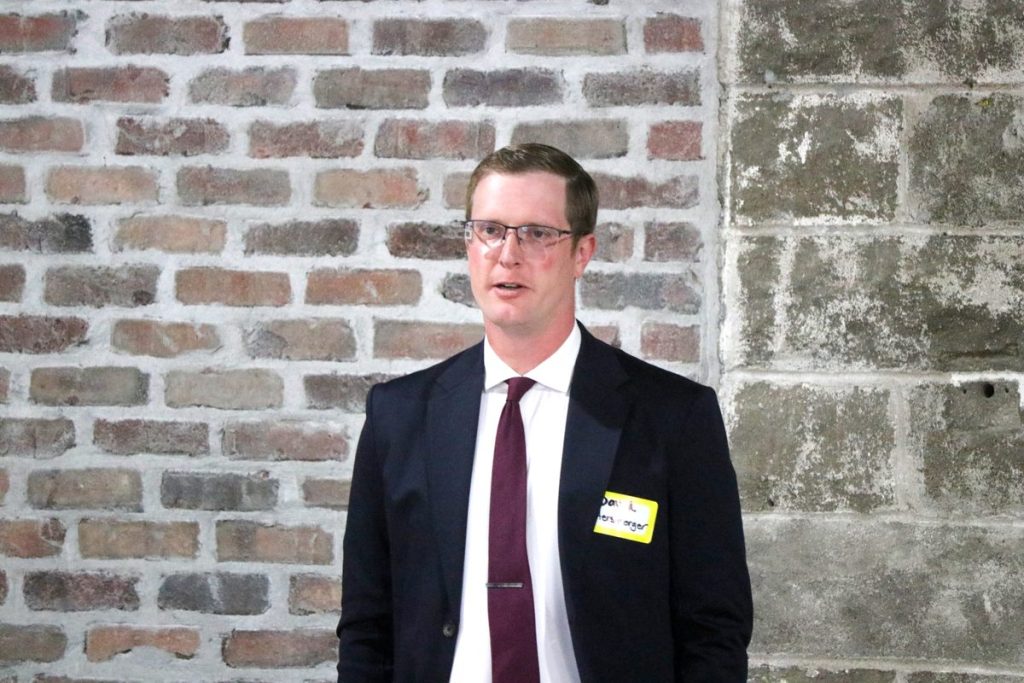
My name is Tina Deiter, I am the Nodaway County Prosecuting Attorney. I was born and raised here in Maryville, graduated from Maryville High School, graduated from Northwest Missouri State University …. I’m married to Kirby Auffert, I’ve raised three children here in Maryville. Austyn is a student at Northwest Missouri State University, she’s 20. (Another daughter) is 16, she’ll be a junior at Maryville High School, and (a son) will be a seventh grader at Maryville Middle School.
I opened a law office here in Nodaway County in 2006 here in Maryville … I represented criminal cases as well civil cases, and then (became prosecutor) in January of 2023.
Some things I think there’s a little misinformation about as far as prosecuting attorney what I can do and what I can’t do, one of those I think it’s important to note that the main priority of the job of prosecuting attorney is to seek justice. Not just get convictions, but seek justice. And that’s sometimes hard to explain and sometimes hard to achieve … but that’s the main goal of the job. (There are also rules of) professional conduct that I have to follow, Rule 4-3.8 states that the prosecuting attorney shall not file a criminal charge that is not supported by probable cause. So I can’t just file a case because your neighbor told you someone committed a crime, or because something was in the newspaper or on Facebook. There has to be an investigation, there has to be probable cause, and then that case may be brought.
I don’t sentence defendants, judges do that. We have Judge Herron here and we have Judge Rice here — they are the ones who sentence defendants. I don’t (decide if a case goes to a) jury trial. That’s the right for the defendants, a defendant’s right to a jury trial. I don’t get to say, “We’re going to jury trial.” That’s their right. So if they don’t want to have a jury trial, we don’t have a jury trial.
David Hershberger
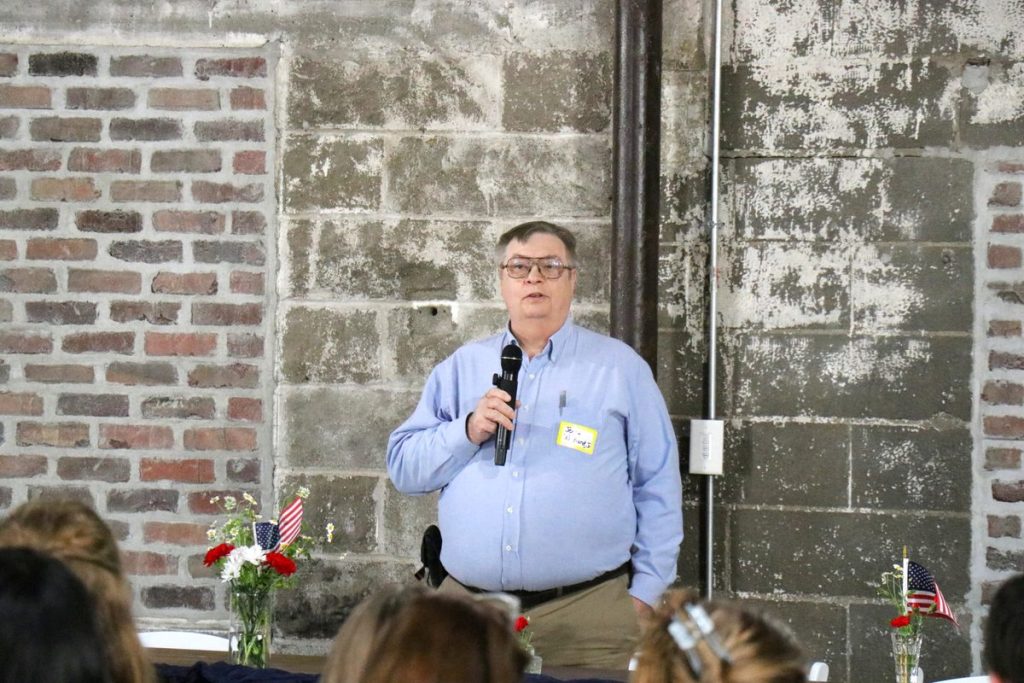
My name’s David Hershberger, I’m running for prosecutor here in Nodaway County. … This is where we chose to raise our girls … we’ve got twin 3-year-old girls and a 1-year-old, Lucy. … So I also thank the babysitter for allowing my biggest supporter to be here tonight, my wife, Rachel. Without her, on these long, hot days when I’m going door-to-door putting signs out and being at events, I don’t have any anxiety at home, I know that my wife’s taking care of my children. I was born in Chillicothe, and then I went to the University of Missouri after getting my (degree) there, my wife and I moved to Washington, D.C. And so for the candidates for U.S. Congress, I don’t know why you’d wanna live there. I went to law school at George Mason University … and I had the unique opportunity there that, in my last year, I was able to come back and work for a prosecutor and handle my first criminal case even before I was a licensed attorney. And then moving back after law school, I did some municipal prosecution in Marceline, Missouri, and then I took cases in a prosecution role in the 43rd Circuit — so that’s Caldwell, Clinton, Daviess, DeKalb and Livingston counties, so Chillicothe, Hamilton, Cameron, Plattsburg, Mexico — and then also the attorney for the juvenile office in those same counties. In private practice I’ve covered all counties from Linn and Sullivan County … all the way to Nodaway and Gentry and Worth County.
I’m running because I believe in being tough on crime. That looks like a lot of things, so I’m hoping that the questions I’ll be able to answer what that looks like. But I’m also running to give Nodaway County a choice this election. The last time that there was a contested election for prosecutor was 2010. And so I don’t know who deserves what, but I know Nodaway County deserves to have a choice this election.
QUESTION 1: What are the top three crimes you see in Nodaway County that you’d like to be sure and prosecute?
Tina Deiter
I think, from what I can tell and from what I’ve seen — well there’s been wild stuff going on the past six months, but hopefully that doesn’t continue. Drug cases are definitely always at the top of the list. Drug offenders continue to reoffend and reoffend and they go to prison and they get back out here. So drug offenses would be one.
Domestic violence is always, always a concern, we have a lot of domestic violence cases. I work closely with victim advocates at North Star as well as with the victim. … There’s issues with the domestic violence cases, always, because it takes a lot for a victim to come forward, it takes a lot for a victim to stay with those crimes and to support and participate in the convictions, the trial, and the things that go on with those.
The third one, there’s a lot of stealing cases that come out of Walmart, I’ll tell you that. That’s a problem that lots of people spend a lot of time having to deal with that and trying to figure out the best way to deal with that. That’s the three cases that I see the most of … here in Nodaway County.
David Hershberger
And I largely agree that those are the big problems here in Nodaway County, as well as across rural Missouri in general. Methamphetamine cases are huge. It is an addictive drug and it is hard to kick, and so we need punishment that matches that. Our goal’s deterrence. So if there is an outcome in a case that will ensure somebody does not reoffend — if probation works for them, it’s up to law enforcement to figure out, is probation going to work? If not, our goal is deterrence.
Property theft is another big one, and I’ll say domestic violence as well. And I put those two together because those both have a very victim-oriented mindset when you look at those — somebody’s the victim. Somebody was either the victim of domestic abuse, or they were stolen from. And I know sometimes victims have a different idea of how a case should be handled. But there’s also a third victim in all of these cases, and that’s the state of Missouri and that’s our local constituents. You all pass laws, criminal laws, by enacting legislation by picking who your legislators are, so by violating any of these laws, whether you see a victim or not, the community is the victim. So I believe in (bringing) all the cases, all the cases need to be prosecuted, all the cases need to be brought in order for us to continue to have authority and respect for our laws and the rule of law. But again — methamphetamine, property theft and domestic abuse, those are the three big issues.
QUESTION 2, DH: (Individual to each candidate) Your campaign slogan is “Tough on crime.” What changes will you make to be tougher on crime in Nodaway County than it has been previously?
David Hershberger
Yes, thank you. It has been incredibly hard to try to find a good slogan to fit on this line that encompasses an entire prosecutorial philosophy. So, “tough on crime.” I’m running for prosecuting attorney because I believe all cases should be taken seriously. It’s not the prosecutor’s job to decide which ones should be taken to court and filed and which ones aren’t. We don’t have policies. We enforce the law, we don’t decide the law. I believe more cases need to be taken to trial, whether that’s a bench trial or a jury trial. That means less plea deals. There’s always an appropriate time for a plea deal, but when you do plea deals, it takes the judgment and who decides appropriate punishment out of the hands of the judge, who you all elected to be there — whether it’s Judge Rice or Judge Herron — or the jury, if you’re selected to be there.
I think all the laws should be enforced consistently, regardless of what law it is or regardless of who a criminal defendant knows or might be connected to. And going back to the plea deals, when we have reoffending criminals for crimes, it’s an indication that our plea deals and punishment is not matching the crime that’s being committed because they continue to reoffend and not being deterred from what they were doing. I believe that’s supporting law enforcement. Law enforcement works long and hard investigating these cases, building the case, getting everything ready to go to the prosecutor — they might spend months in certain cases. I don’t believe there should be anything where those criminals are just immediately turned around, let loose, just to walk the street again.
And then an open-door policy in the prosecutor’s office. All of that — bringing the cases to the court, transparency — that is being tough on crime.
QUESTION 2, TD: Are there any changes you would make if elected to another term?
Tina Deiter
Quite honestly, no. I think since taking office I cut an assistant prosecuting attorney position because it wasn’t necessary. I cut an administrative position because it wasn’t necessary. We’re running efficiently. We have a great relationship with law enforcement, we have a great relationship with judges, other attorneys. We’re getting cases filed, we’re getting cases moved. I mean, things really are going as smoothly as we could. You know, it took the first year, really, it took to adjust and overcome what (had been going on) in the office before, to just kind of get our feet wet, dig our heels in and get going. But we’re good. Our office is good. We have good community connections, we have good connections with the victim advocates in the county, with law enforcement. And I have a good support system, a good group of people that I can go to if I have a question or if I just need some advice or just someone to lean on or someone who has more experience than me, so, no, honestly, I think we are running a good (office).
QUESTION 3: What makes you the right candidate for the job?
Tina Deiter
I think first of all my experience. I’ve been an attorney for over 20 years. I’ve practiced law for 20 years, specifically in the prosecuting attorney’s office as an elected prosecutor, I worked as a child support prosecutor … I have worked closely with the juvenile office when I was in private practice … so I have all that experience.
I’m local. I’m personally invested in this community, I have been since Day 1. My children have been raised here and will continue to be raised here. I don’t wanna think about it, but I would assume my grandchildren will be raised here. My grandparents are buried here, my parents are here, I think that gives you a personal sense of community, and a personal sense of being invested in the community. You know, I started out as a private attorney, I came here and I did the work, and I walked the walk and did the talk, and here I am. And I think I’m the best candidate for the job.
David Hershberger
So I clearly agree, experience is a very important thing, and I have that experience too. Like I said, I’ve been doing criminal cases before I was even a licensed attorney. I remember my first criminal case — it was a vehicle theft case — and that has stuck with me ever since.
Experience in itself doesn’t help, though. You also need a philosophy, you need principles. And I have a very firm grasp on my principles and what I wanna do when I am prosecutor. I want to be able to give all the tools to the judges that I can. You all elected the judges or you will be members of the jury if it gets there. You all trust the judges. When cases are amended down, it hamstrings what the judge is able to do, it restricts what the judge is able to sentence the defendant for. My job is not to decide what the justice is. My job is to get it to the judge so he can decide justice — or a jury.
And my family is here. This is where we decided to move. I know there has been an issue of local versus not local, but I was here in the community of Hamilton for my prior job. We did not move here for the job. If I had wanted to be a prosecutor, there’s plenty of places where there’s unopposed contests for prosecutor. But I live here. I care about my family. I’m looking out for my family, and I’m looking out for yours. I want my kids to be able to go to Mozingo without worries about what they’re gonna find there. I want our kids at NOCOMO to be able to continue working. Those are two cases that I know of that have really gotten gotten fire on, so that’s why I’m the better candidate.
Not only is this an election, this is a performance review. And so the voters on August 4th, you get to do a performance review on your county prosecutor.
STATE AUDITOR
Opening statement
Jerry Wistrand
Hey everyone, my name is Jerry Wistrand, I live in Jackson County, which is a big reason why I’m running for state auditor. I’ve got an accounting degree, MBA … I’ve been an auditor professionally for 38 years, 35 years IT auditing. Prior to that I’ve done financial operational auditing. I’ve been a supervisor in IT auditing; I know how to run a department. It’s not being done appropriately now.
As a professional auditor, we need to represent the citizens for the state. We’ve had failures by the current auditor and with the Jackson County property assessment, (after three and a half years) it has not really gotten easier. He’s made no good recommendations to solve the situation. That’s the biggest reason why I’m running.
But also, he’s been underperforming. He’s had a budget increase for 40 percent during this term, yet his productivity in getting audits done has only been 70 percent. We’re getting less for more. It doesn’t work well that way.
I want to represent the citizens in the state government, give them greater accountability, transparency, all the way around — not just as the state level, but at the county and at the local government as well.
We need more involvement. I intend to go around the state talking to citizens. A lot of times, people from Jeff City stay in Jeff City and don’t get out, don’t get involved. I would get out on a regular basis, hitting the counties all around the state twice a year, explaining what the department has been doing on a state basis, what might be affected locally, explain everything that’s going on, and ask questions and input, so that we can adjust and focus on what the citizens need, not just what is decided by him. People that are more politically focused than professional.
I’ve been a professional, I’ve trained professionals, and I intend to bring professionalism to the department and serve the needs of the citizens. It’s not being done now, and we need to focus on that.
QUESTION 1: What are your first priorities?
Jerry Wistrand
Bring greater accountability and transparency. First with the state auditor’s office. They post the reports out there, but we need to post why we’re doing what we’re doing, basically have a risk assessment and determine where we need to focus professionally from what’s being done across the state as well as the county and local governments.
Then I would make sure to get involved, like I said, around the state, talking to individual citizens and involved with local governments to see what needs to be focused on and go in that direction. …
He’s also understaffed. He’s authorized for 164 — he’s been severely understaffed, he’s at 133 now. He’s still not bringing all the resources that are needed to help support the citizens.
That is one thing not being done, is discretionary audits across the board on local governments. And it’s not just a gotcha, nitpicking thing … we need to help train and explain, why we have controls and how best to implement. In a smaller government environment, segregation of duties and accountability is hard, but you need to work with the individual there. They may not be familiar with that. Work with them, explain it to help eliminate greater potential for fraud, waste and mismanagement. You need to get that involved.
QUESTION 2: How do you plan on keeping politics out of your office?
Jerry Wistrand
My whole focus is to bring focus is to bring focus to the office as a professional environment. Basically … not involve partisan politics, but what do the citizens want? What is showing from previous performance of those areas? Do they have weaknesses that need to be addressed? And help them to address those needs. It shouldn’t be political, but really it has been. But I have had some discussions with a Democrat auditor candidate, and … we wanna bring professionalism to the department, focusing on serving all citizens, including bringing education, like I was saying, to local governments to help make their operation control more secure, more transparent, more accountable.
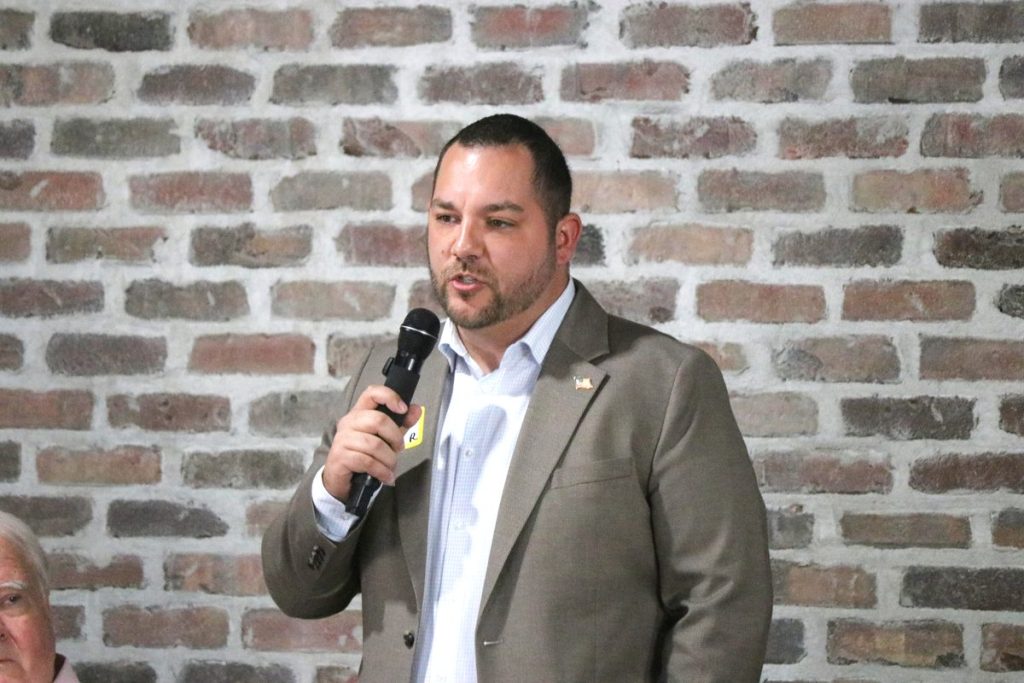
Cody Oshel Republican
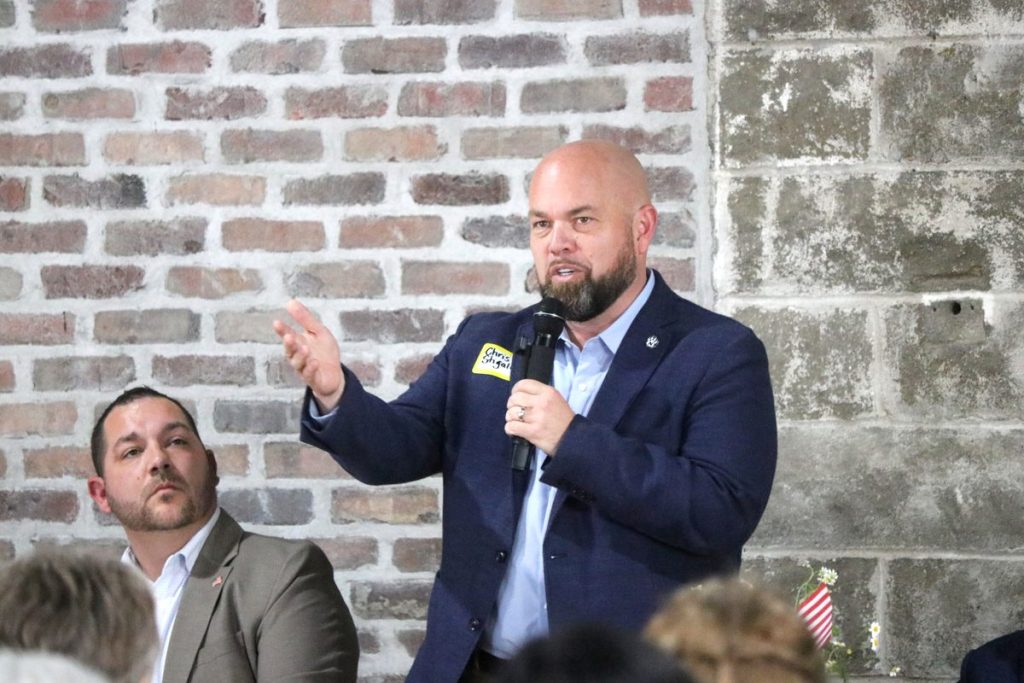
GEOFFREY WOEHLK/THE FORUM
Chris Stigall Republican
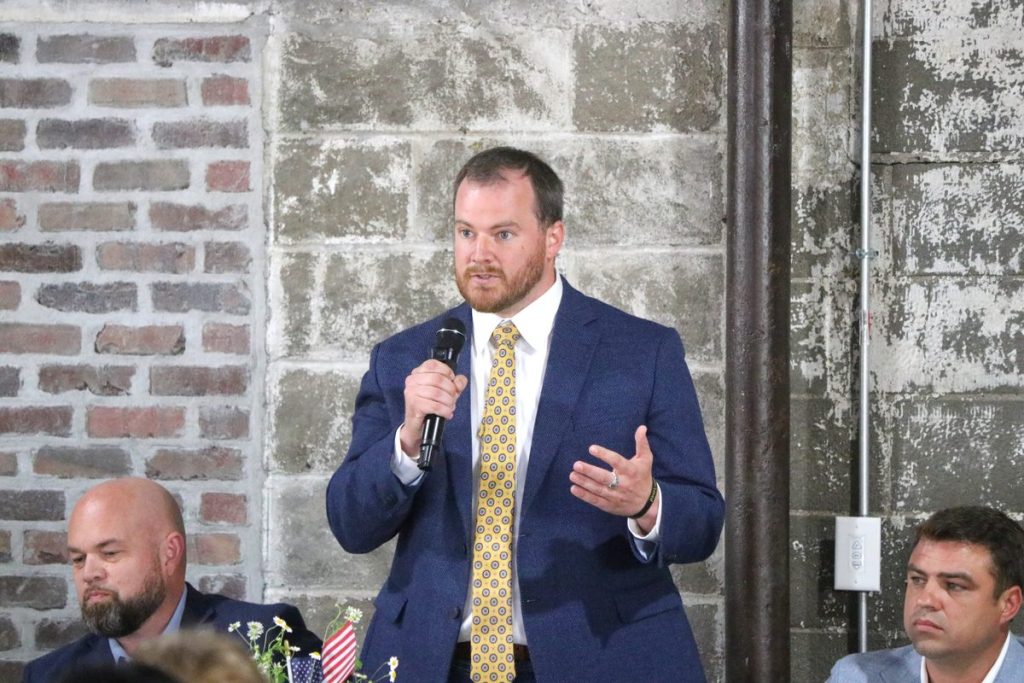
GEOFFREY WOEHLK/THE FORUM
Nathan Willett Republican
GEOFFREY WOEHLK/THE FORUM
Nathanael Schultz Republican
GEOFFREY WOEHLK/THE FORUM
Josh Smead Democrat
Matt Levine Democrat
GEOFFREY WOEHLK/THE FORUM
Tina Deiter Republican
GEOFFREY WOEHLK/THE FORUM
David Hershberger Republican
Jerry Wistrand Republican