Remembering the Nodaway County Bicentennial
MARYVILLE FORUM, FEB. 6, 1976
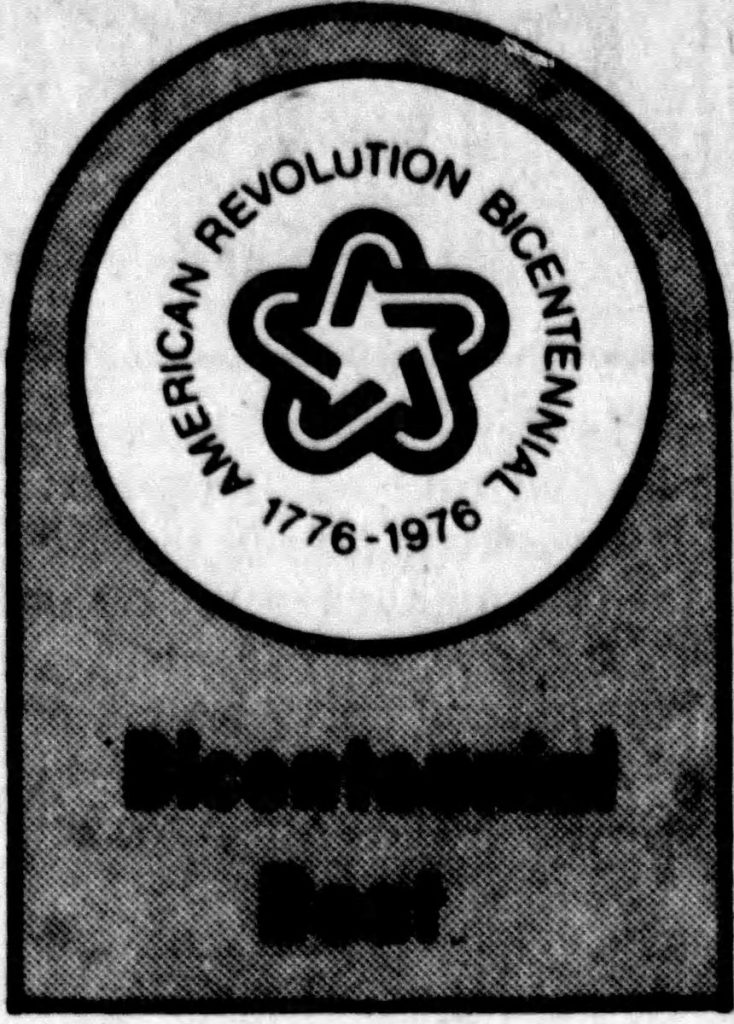
The American Revolution Bicentennial logo and symbol. The Bicentennial in 1976 brought together Nodaway Countians for a wide variety of celebrations.
As we celebrate the 250th anniversary of the United States, the NCHS Museum would like to turn back the pages to the U.S. Bicentennial. This was a celebration throughout the country in 1976, 200 years after the country’s founding in 1776. To celebrate the bicentennial, many different groups and organizations formed to put on events. Plans for the celebration were organized all the way back in the year prior, 1975. Each state had different organizations within it, and they held their own events.
Of all the states, Missouri had the lowest budget for Bicentennial planning. Even though Missouri was last in budget, Nodaway County still made preparations for celebrations that year.
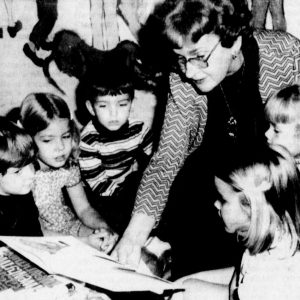
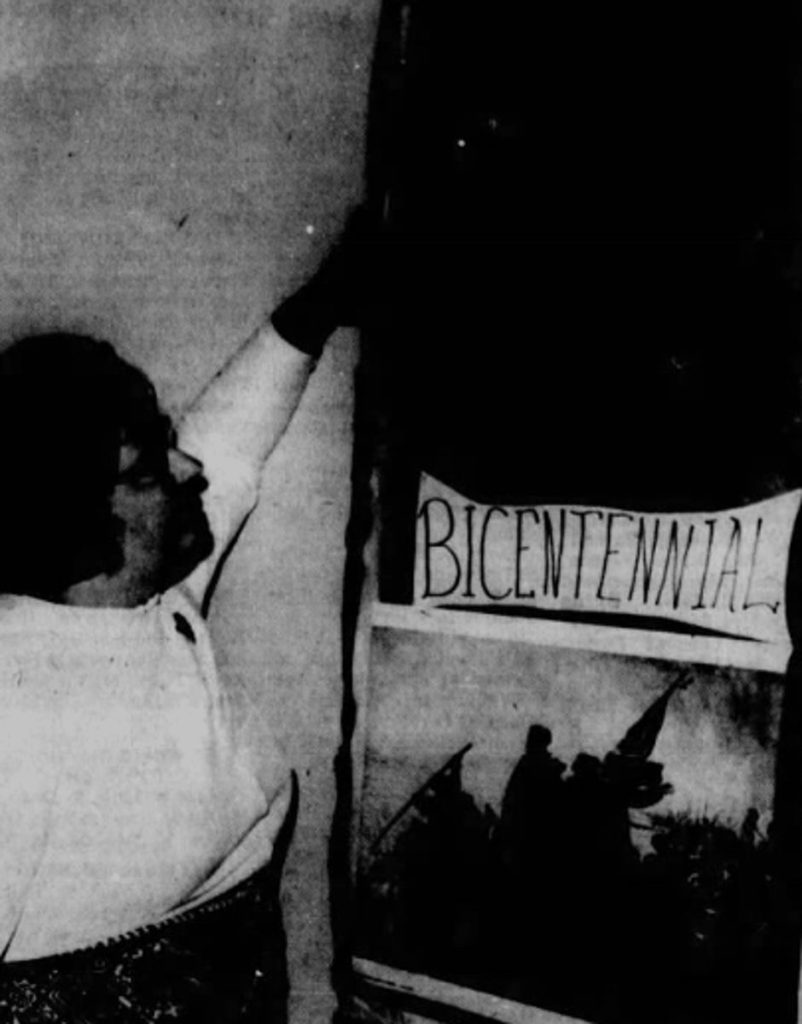
Northwest Missouri State University and the Horace Mann Learning Center hosted the Nodaway County Bicentennial Information Center. The center was led by an instructor of learning resources, Donna Janky. Under Janky’s leadership, the center collected materials and information for the Nodaway County Bicentennial Celebration Committee and the university’s Bicentennial Committee. Both organizations were led by Tom Carneal, who was an assistant professor of history and president of the Nodaway County Historical Society.
The Nodaway County Bicentennial Celebration Committee held their first meeting in September of 1975 in the Bicentennial Center. At this meeting, the group discussed what events to sponsor locally. One of the first events planned was a countywide children’s parade to be held in July 1976. James Johnson, a librarian for the Maryville Public Library, offered supplies and materials for anyone wanting to use them. Esther Knittl discussed various art projects that the upper-level Horace Mann students would complete. James Hurst was the Bicentennial Contest Coordinator for Nodaway County, and he discussed rules for the state Bicentennial contest. Opal Eckert asked for more materials for her upcoming publication “Tales of Nodaway County” published by the Nodaway County Historical Society. Finally, Bill Bateman, a photographer, asked everyone to look for old photos of county events and locations. The group planned their next meeting planned for Nov. 12 and invited any interested community members to attend. While it was still a full year away, Bicentennial celebrations were already in the works in Nodaway County.
One of the activities in the buildup for the Bicentennial was writing records, saving photos and preparing journals to be shared during the U.S. Tricentennial in the year 2076. Cards could be bought for 25 cents, in which people could write messages that would be stored until 2076. The funds raised from this event would be used for the storage of these cards along with gathered photos and other records. Another focus for 1976 was using the Bicentennial as a theme. Food and almost all products available for purchase seemed to be patriotic in nature, and flags were everywhere in Nodaway County.
The month of July in 1976 was the center of the local Bicentennial celebrations, and all the events and buildup finally paid off. The Nodaway County Bicentennial Celebration Committee’s big day was Uncle Sam Day, which was on July 2. The Armed Forces Bicentennial Caravan opened at noon with a ribbon cutting. Over 1,500 people came and toured the vehicles that were part of the caravan. The next major event was the Bicentennial Children’s Parade. More than 300 children participated, and the parade took place on Market Street. Bob Still, an independent performer, played Uncle Sam in an outfit made by Naomi Smeltzer. Still was the parade’s grand marshal and led the parade as it traveled down the street while the Missouri Air National Guard provided the color guard for the parade. Each child who participated in the parade was given a keepsake Bicentennial penny, and winners of each category were given a ribbon and a replica of the Liberty Bell.
The American Bicentennial celebrations brought Americans together across the United States. Nodaway County was no exception, and people from across the county came together to both plan and celebrate the U.S. Bicentennial events. As we celebrate the 250th anniversary of America, let’s both look forward to what is to come in the United States and reminiscence on our past.
Visit the NCHS Museum at 110 N. Walnut St. to learn more about the history of Nodaway County. The museum is open March to December on Tuesdays to Fridays from 1-4 p.m. and on the second Saturday of each month from 9-11 a.m. We also host monthly programs and are free to the public.
Upcoming events include an ice cream social on Saturday, July 11, from 2-4 p.m. For $5 a person, you can enjoy homemade ice cream and baked goods. Learn more about the museum’s work on our website, nodawaycountymuseum.com. You can contact us at [email protected] or at 660-582-8176.
MARYVILLE FORUM, SEPT. 6, 1976
Donna Janky, the director of the Nodaway County Bicentennial Information Center in the Northwest Missouri State University’s Horace Mann Learning Center, points out an upside-down American flag used at Ford’s Theater following the assassination of President Abraham Lincoln in 1865. Photo by Heywood Studio.