Utility scammers strike locally
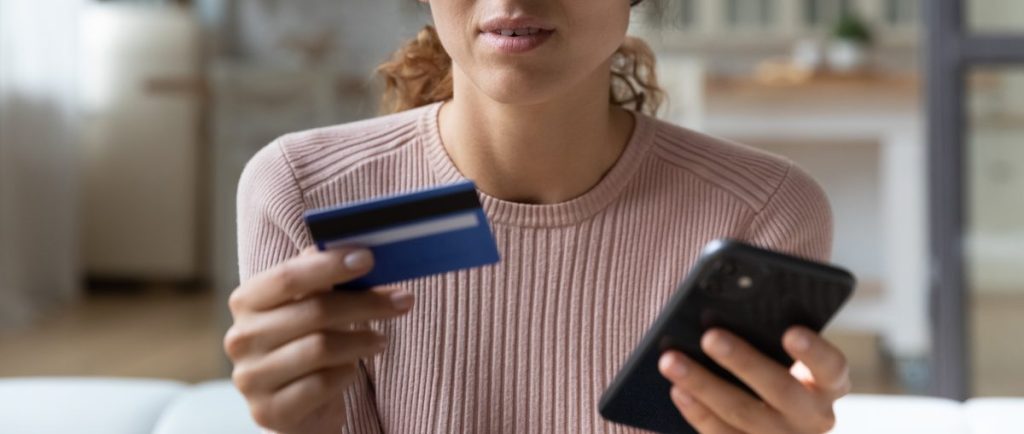
ADOBE STOCK ART
Utility scammers may knock at your door or call you with numerous ways to attempt to part you from your money. Local utilities provide tips to avoid them.
MARYVILLE, Mo. — “Pay NOW to avoid disconnection!” “Click this link to verify your utility account TODAY!!” “You’ve overpaid your electric bill. Provide account information for your refund!”
These are just a few of the numerous ways in which scammers attempt to gain access to your financial information.
They also pose as utility workers at your door, and on the phone threatening service interruptions to obtain immediate payment or more private information like your Social Security number.
“It’s nonstop,” Capt. Austin Hann with the Nodaway County Sheriff’s Office told The Forum on Tuesday about scams.
He said that utility scams aren’t something the sheriff’s office sees often, because they’re not typically reported to the office.
Utility scams were so rampant that in 2016, Utilities United Against Scams began recognizing Nov. 15 as Utility Scam Awareness Day.
The UUAS is a consortium of more than 150 U.S. and Canadian electric, water and natural gas utilities working together to educate the public and expose scammer tactics.
Since then, the UUAS, with the help of customer reporting, has helped to take more than 14,020 toll-free numbers used by scammers against utility customers out of operation.
But it’s still happening.
SERIES INFORMATION
This is Part 9 of The Forum’s yearlong series about scams. With the ever-evolving nature of scams, new AI tech and faster communication, people of Nodaway County and northwest Missouri are falling victim, losing more than a million dollars to scams over the past five years.
The Forum is diving into the specifics of some of the most prevalent scam types being used in Nodaway County today, red flags to look out for and what local law enforcement, businesses and financial institutions are doing to stop the scams before they happen.
Find the previous stories at maryvilleforum.com/news/scams.
Just this month, electric company Evergy warned customers to be vigilant of recent utility scam attempts coming through calls, texts, emails, fake websites and even door-to-door tactics.
“Scammers are posing as Evergy representatives, trying to deceive customers with two recent scam attempts,” noted a news release.
One targets senior citizens. Scammers are claiming Evergy is returning $200 to senior citizens through the company’s Evergy Cares Kansas Fund, then asking for customers’ account information, address and other personal information.
A second recent scam focuses on discounts, claiming Evergy could offer a discount if the customer provides credit card information over the phone immediately.
Since both scams might be difficult for people to recognize, the company put out some tips to help customers:
- Verify the person you are engaging with is an Evergy employee. Ask to see company identification before giving any financial or personal information to anyone who comes to your home, calls, texts and/or sends an email requesting this information about your utility bill. If you can’t verify that you are speaking to an Evergy employee, do not give them this information.
- Be suspicious if you receive an email or text regarding your utility bill if you have not requested online communications from Evergy.
- Never provide personal information via email or click any suspicious links. Even if caller ID says a phone call is from Evergy, it could be a scammer. If something seems suspicious, hang up and check the account online or call the customer service number on your Evergy bill.
- Employees will carry Evergy employee identification. For a service appointment, they may be driving an Evergy vehicle or wearing Evergy-branded clothing. Evergy does not perform door-to-door sales and employees rarely need to enter a customer’s home.
Another local utility provider, United Electric Cooperative and United Fiber, also hears from its members about scams.
Amy Ziegler, chief public relations officer with United, told The Forum that the company hears from members at least once a month questioning a contact they have had with someone calling them.
“The most recent scam was a member who was told he received a free iPad from us via email,” Ziegler said. “It was asking for his information in order to claim the iPad.”
She said the most common scam involves a scammer calling a member saying their bill is past due and asking for a credit card or checking account number over the phone.
“United does not, under any circumstances, take banking information over the phone,” Ziegler said.
She explained that United does not use a third party to contact members or customers.
“The local aspect of our business and the relationships we have with our members is something we take great pride in,” Ziegler said. “With that, we are also aware of the number of potential scams out there and we don’t want our members to question who is contacting them. It is a standard we have set at United to continue that trust we have with our members.”
She suggested if a member or customer feels like a phone call is a scam, to hang up and call United directly.
“We want to prioritize data security to not only protect the customers but also build a foundation of credibility that contributes to our long-term success,” Ziegler said.
The most common utility scams that United Electric deals with include:
- Impersonation scams, where someone posing as a utility representative threatens service disconnection and seeks payment via prepaid debit cards, gift cards or wire transfers.
- Email and text scams, where scammers send fake emails or texts that look like official utility correspondence, but contain links that lead to phishing websites designed to steal personal information or install malware on a device.
- Overpayment scams, where members receive a message claiming overpayment of a bill and offering a refund, and to just give the caller or emailer bank account details to “process” the refund.
- Smart meter and energy efficiency scams, where a scammer claims they need to install new equipment, such as smart meters, or offer fake energy audits, often charging for unnecessary services or equipment.
Common broadband scams that United Fiber deals with include:
- Fake tech support scams, involving a scammer posing as a technical support representative from the broadband provider, claiming there is an issue with the internet connection or a security threat and they request remote access to the computer, which allows them to steal personal information, install malware or demand payment for bogus services.
- Phishing emails and texts, where scammers send emails or texts that appear to be from the broadband provider, asking for verification of account information, updating payment details or to click on a link to resolve an issue. “These links lead to fake websites designed to steal your login credentials and financial information,” Ziegler said in an email.
- Router scams, involving scammers contacting customers claiming their router is outdated or compromised and offering to send a replacement for a fee. “These ‘replacements’ can be fake, or they may attempt to charge excessive fees for equipment that should be free or low-cost,” Ziegler explained.
United suggests members and customers protect themselves from scams by staying diligent in protecting their information. Changing passwords frequently and keeping devices up-to-date will help keep scammers at bay.
“We continuously monitor our system to detect and prevent threats to our users and the entire network,” Josh Gillenwater, United cybersecurity/network engineer, said in a statement. “If you receive unexpected emails that seem too good to be true, they likely are. It’s crucial for users to exercise caution with emails. Recently, we’ve encountered situations where hackers attempted to gain remote access to computers through deceptive pop-up links. Avoid clicking on popups if you have any doubts about their legitimacy.”
Red flags and valid practices
Liberty Utilities, which provides gas to customers in the region, also finds its customers are the frequent targets of fraud. On its website, it provides red flags to help its customers protect themselves against consumer fraud as well as valid practices that Liberty employees will use when contacting its customers.
With regard to red flags,
- Liberty notes that it will not request payment over the phone by prepaid credit card.
- It will also not call on the weekend demanding immediate payment.
- Liberty will not ask to enter your home to inspect wiring or equipment, unless you have called the company first to set up an appointment.
- Liberty employees will have a company identification card and be driving a Liberty vehicle, anyone without this is a red flag.
Concerning valid practices,
- Liberty will not threaten immediate disconnection via phone or email for nonpayment. The company will notify a customer by mail, door tag or phone during normal business hours. A field representative with proper identification may also notify in person.
- A customer’s payment history is available online and can be easily checked to verify any claim of nonpayment. Call Liberty at 1-800-206-2300 for electric and water service account status. Call 1-800-424-0427 to check gas account status.
Liberty suggests that if a customer receives a call or visit that appears suspicious, to end the contact immediately and report it to local law enforcement.
“This is important information for everyone, not just Liberty customers,” according to the Liberty website. “If you have family or friends who may be at risk of falling for one of these scams, we encourage you to discuss these tips with them.”
How to report a scam
Local utilities want to be informed when a scam is being perpetrated upon its customers. The more information a potential victim can provide, the better equipped the utility will be to combat the scam and inform its customers.
- To report a scam to Evergy, visit evergy.com/reportscam or call 1-888-471-5275.
- To report a scam to United Electric, call 1-800-748-1488.
- To report a scam to United Fiber, call 1-800-585-6454.
- To report a scam to Liberty Utilities, call 1-800-206-2300.
- To report a scam to the Nodaway County Sheriff’s Office, call 660-582-7451.
- To report a scam to the Maryville Police Department, call 660-562-3209.