MDC: Leave wildlife wild
MISSOURI DEPARTMENT OF CONSERVATION
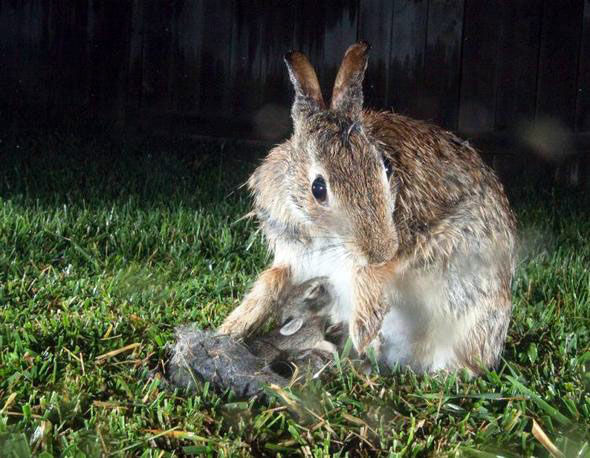
Wildlife parents, such as this cottontail rabbit feeding its young, are afraid of people and will leave their nest locations when people approach. If the baby animals are left alone, the parent will usually return. MDC recommends people leave baby wild animals wild – and where they find them.
MARYVILLE, Mo. — Heading outdoors this spring to enjoy the warmer weather, hikers, mushroom hunters and all outdoor enthusiasts will likely encounter a variety of newborn animals. Young wildlife can pull on heartstrings as they appear to be abandoned, but that’s rarely the case. The Missouri Department of Conservation is reminding the public that interfering with wildlife does more harm than good.
According to MDC State Wildlife Veterinarian Sherri Russell, young animals are rarely orphaned.
“When we see newborn wildlife alone, that means the parents are likely out searching for food and will return,” Russell said in a news release.
A common newborn species people can come across in the spring season is young birds.
“If you see a chick with feathers hopping on the ground, leave it alone because it’s a fledgling and the parents are nearby keeping watch,” said Russell. “Fledglings can spend up to 10 days hopping on the ground learning to fly. If you find one that has no feathers, you can return it to the nesting area if possible, as it likely fell out of its nest.”
Russell also warned against “rescuing” newborn rabbits.
“Rabbits seldom survive in captivity and can die of fright from being handled,” she said. “Even if the animal is injured, it’s best to return it to the nest because the mother will most likely return.”
Human scent does not cause wild mothers to reject their young, and most newborn animals do not survive in captivity.
“It takes a lot of knowledge to care for and rehabilitate wild animals,” stressed Russell. “It requires special training, permits and facilities. Not to mention, it’s illegal to possess many wild animals without a valid state or federal permit.”
Russell also noted wildlife can become dangerous as they mature. They can carry disease, parasites and cause property damage.
“We know people have good intentions, and it can be tempting to take these cute, young animals in our homes, but the best thing we can do for wild animals is to leave them be,” she said.
To learn more about Missouri’s native wildlife, visit the MDC online Field Guide at nature.mdc.mo.gov/discovernature/field-guide/search.
For help with a wildlife nuisance, find a list of nuisance wildlife control operators on the MDC website.
To report wildlife violations or for regulation questions, contact Nodaway County Conservation Agent Kris Smith at 816-261-1245 or the Operation Game Thief Hotline at 1-800-392-1111.