Hilt murder still unsolved after 50 years
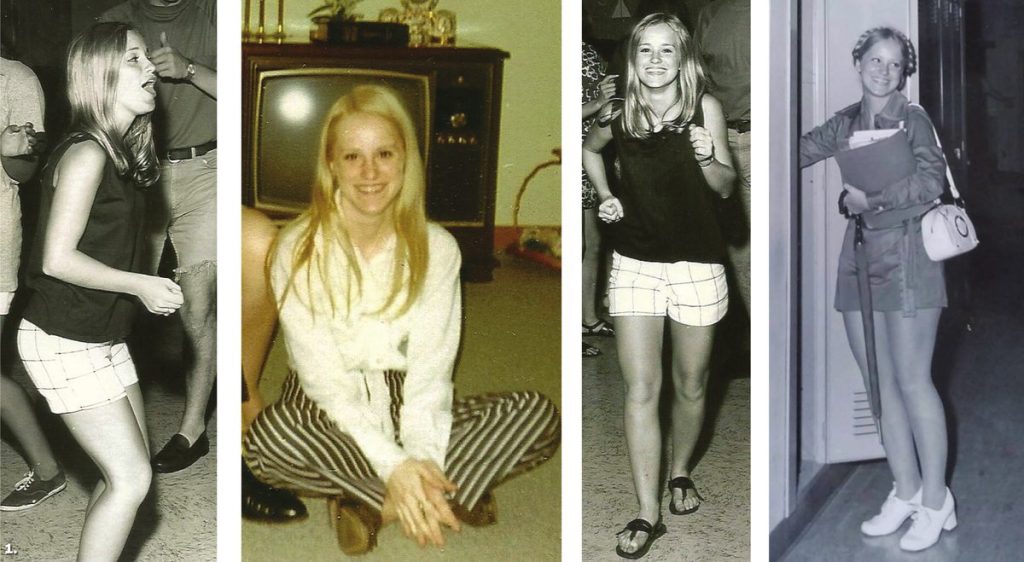
PHOTOS VIA TESS HILT TRIBUTE SOCIAL MEDIA PAGE
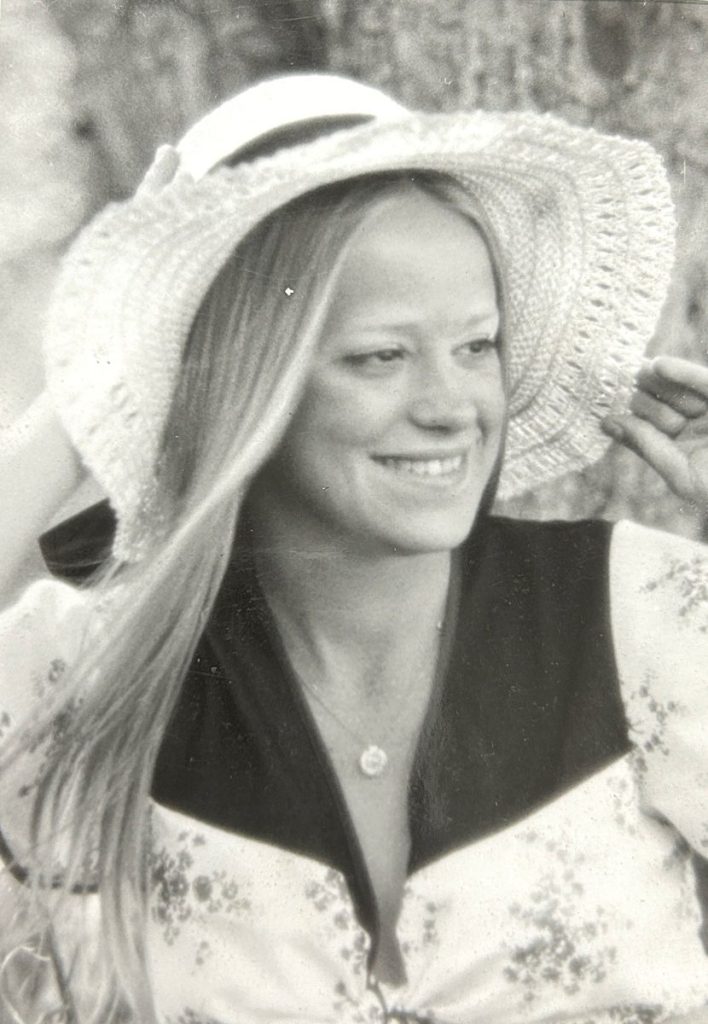
Tess Hilt is shown at various social gatherings in the early 1970s. Hilt’s hobbies included sewing, crocheting, dancing, playing bridge and music. Hilt student-taught music under Gerald Schmidt at Chillicothe High School. “I just want to help people to enjoy music more,” she is quoted as saying in an early 1970s newspaper article.
MARYVILLE, Mo. — For over 44 years, Mildred Hilt kept her hope up that one day she would finally know what happened to her daughter.
Teresa “Tess” Sue Hilt was a 22-year-old from Chillicothe, Missouri, and a student at Northwest Missouri State University when she was brutally murdered in her apartment. She had been strangled and stabbed over 10 times.
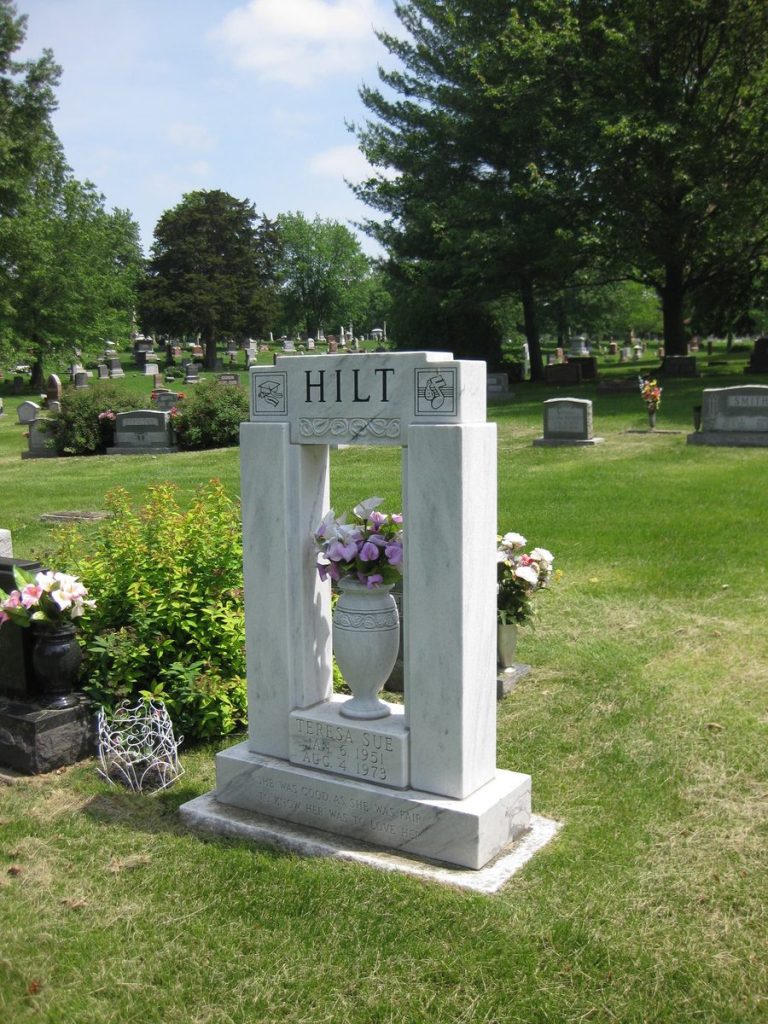
Mildred stayed up to date with the case over the years and was known to give her daughter’s grave extra attention when compared to other plots in the cemetery, keeping it beautifully manicured with extra trimming. It was obvious to anyone who talked with Mildred that the death of her only child weighed heavily on her.
“(Tess’) mother would have done anything if it would have helped,” Maryville Public Safety Detective Ryan Glidden said.
The yearning for answers about who may have killed her daughter is what led her to make the difficult decision to allow the exhumation of Teresa Hilt over four decades after her murder.
1973
The last time Tess Hilt was seen alive
On the night of Aug. 3, 1973, Tess Hilt spent the evening at a party with a group of friends off the Northwest Missouri State University campus.
A petite blonde standing just over 5 feet tall, Hilt was a social butterfly with endless friends and was actively involved in campus social life.
Hilt also played the role of Peppermint Patty in the 1972 university production of “You’re a Good Man, Charlie Brown.”
She was involved in the Delta Sigma Phi Little Sis organization, a member of The Tower yearbook staff and part of the Student Union board. She had been awarded a B.S. in music education and was working on a graduate degree in guidance and counseling.
According to archival articles from The Maryville Daily Forum, it was around 1 a.m. on Aug. 4, 1973, when Tess left the party and headed back to her place at College Garden Apartments, present-day Horizons West.
This would be the last time Tess Hilt was seen alive.
Around 5 p.m. the following day, Ed Happel, a friend of Hilt’s who had plans with her that evening and was one of the last people to see her the night before, went to her apartment after she didn’t answer the phone.
Happel told police he found Hilt’s naked body face down in her bed, covered by a blanket with no sign of life.
She had a pair of stockings wrapped around her neck, had been stabbed eight times in the chest, several more times on her left arm and had numerous other stab wounds to her vagina. Testing was inconclusive on if she had been raped but with the damage to her uterus, officials were confident the murder was sexually motivated, according to news articles from 1973.
During the initial investigation, the knife thought to be the murder weapon was recovered and in the possession of Maryville Public Safety along with other evidence. Authorities spent the weeks following the murder interviewing family members and friends of Hilt’s.
According to Forum archives, on Aug. 9, 1973, polygraphs were performed on Ed Happel and on a man involved in a motorcycle accident the weekend of the murder. Both were cleared of being involved in Hilt’s death. Another lie detector test, also passed, was given to an unnamed individual on Aug. 29 but reports say this individual was not a suspect.
It appears there was not much progress in the investigation throughout the remainder of 1973 and 1974 despite officers continuing to conduct interviews, perform lab tests and seek outside assistance.
One of the struggles for investigators was the time period in which the murder took place. It was toward the end of Northwest’s summer session, which often enrolled students primarily working on their graduate degrees.
“When you have people who need to be interviewed leaving town, that’s another box of crackers,” Sgt. Jim Rhoades, Missouri State Highway Patrol, told The Forum on Aug. 6, 1973. “You just can’t interview people who are not here.”
On Aug. 18, Prosecuting Attorney John Fraze announced a notice had been sent that local officers were looking for a man around 6 feet tall, 185 pounds, with greasy, black hair combed backwards, for questioning. This person of interest had come up when investigators listened to an audio recording of Hilt that was picked up from her parents’ home in Chillicothe.
The case slowed down, at least in terms of how much was reported in the media, by the end of August 1973 and didn’t receive much coverage until February the following year.
Dr. Milton Helpern, medical examiner of New York City, was considered the “world’s foremost authority on forensic medicine,” according to The Forum, and had agreed to review evidence in Hilt’s murder. Helpern had been serving as a medical examiner in New York City for over 40 years, had performed around 70,000 autopsies himself and had been involved in hundreds of murder cases.
If his examinations resulted in any new information, it does not appear it was released to the media.
That same month, The Sunday News and Tribune in Jefferson City reported that Sgt. Bill Wright, Maryville Public Safety’s original special investigator assigned to the case, had completed over 200 interviews and collected more than 150 sets of fingerprints.
Around the one-year mark following Hilt’s murder, Wright said a man suffering from monilethrix, a hair disease that results in a brittle scalp and causes one’s hair to fall out, was being sought for questioning after tufts of hair from the scene showed signs of the condition.
There was very little reporting on Hilt’s murder after this article and within a couple years, the case was no longer an active, open investigation. It’s unclear if any of the previous leads went anywhere.
Mildred would be waiting over a decade for someone to start searching for her daughter’s killer again.
1989
Start from the beginning
It had been more than 15 years since anyone with Maryville Public Safety, or any entity, had devoted resources to the murder of Tess Hilt when Director of Public Safety Keith Wood came to town.
It was 1989 and Wood brought renewed energy to the department and, specifically, to the efforts of solving this murder. Though it occurred over a decade before Wood joined the force, the brutal murder of Hilt still lingered in the town’s psyche with many still wondering who had taken the young girl’s life.
“I think that, for the most part, some of us in law enforcement, whenever you’re encountered with something like that, tend to take it rather personal because somebody has assaulted the community that you live in,” Wood said. “Besides the fact of just wanting to resolve it for her family and friends.”
But from the beginning, investigators ran into issues that would hinder the case for years.
The first step in reopening the Hilt murder case was to sort through the original file and evidence — except there was no evidence.
According to Randy Strong, who worked as an investigator for MPS from 1991 to 2012 and now serves as the Nodaway County Sheriff, evidence for this case and others was stored in an old jail cell under City Hall and the old fire station back in the ’70s and ’80s.
During the stagnant years of the case, fire hoses, some with water still inside them, would be hung on drying racks to drain. Unfortunately, the drying rack was directly above the evidence stored in said jail cell.
“Over time, no one noticed that that moisture was going in there and everything molded,” Strong said. “It just rotted and somebody decided, ‘Well, it’s all moldy, nasty, let’s just pitch it’ — and that’s what they did.”
In addition to the missing evidence, Wood discovered that Public Safety’s original case file had disappeared as well.
Reaching out to other agencies that were involved in the original case, Sgt. Larry Stobbs with Missouri State Highway Patrol Troop H dug through a closet and discovered an old file with Hilt’s name on it.
The slim file had minimal information for the investigators to go off of, with incomplete reports, newspaper clippings and little more. Strong said many of the original newspaper reports were littered with rumors that had spread about the case in the months following Hilt’s murder.
“We started looking at this very seriously, and said, ‘Let’s open this, let’s go back and talk to people,’ and we started doing that,” Strong said. “We had to put it into perspective, and right from the very beginning, we had a conversation. It’s like, ‘This is really poorly done.’ This was done in 1973, but it was really a poorly done investigation.”
There was so little information in the file recovered that was of value to the investigation that the new efforts toward the case would need to start from the beginning.
David Lin, a former MPS investigator, said he worked on the case for a while before leaving the department and joining the Bureau of Alcohol, Tobacco, Firearms and Explosives.
He said many of the details of the case have become fuzzy over the years, but there was one suspect he briefly remembered.
“The strongest suspect in the case that I can recall was, there was a guy from Chillicothe and I don’t even remember his name,” Lin said. “… I can’t even remember why he was a suspect. That was the lead that I remember chasing pretty hard. The other one was, there was a boyfriend that was the last guy that saw her alive.”
With the case reopened and new resources available, investigators decided to reach out to larger agencies for a fresh set of eyes.
In 1993, Wood and Strong traveled to Quantico, Virginia, to present evidence and files to the behavior analysis unit of the FBI, according to Strong. He also said he visited the FBI on another occasion with Maryville Public Safety Detective Ryan Glidden years later, but each time, they left with the same information on the killer as they arrived with.
“Tess Hilt’s case is simply a sexually motivated, disorganized murder,” Strong said. “Those are easy to solve if you look at it that way. Who kills women? Men kill women, generally. And your suspect is probably a young teenage-to-early-twenties male and he can’t control his rage. He’s probably drunk and he just couldn’t control himself and once he started doing something it really got out of hand.”
Having a strong grasp on the type of murder that occurred meant officials could backtrack and re-interview many of the individuals from the original investigation, which they did off and on over the next 16 years.
“At different times, and sometimes when things would get slow with new investigations or whatever Public Safety might have been doing, we would pull it down and blow the dust off and go back through it again, and again, and again,” Wood said.
When 2009 rolled around, another new set of eyes landed on Tess Hilt’s murder file.
Detective Glidden paired up with Strong to investigate the case in 2009 and was actively following leads and conducting interviews through April 2020, when the case naturally started to slow down.
One of the earlier reports Glidden took part in was conducting another interview with Ed Happel, the last person to see Hilt. It wasn’t necessary that Happel was suspicious, but more so that he checked off several boxes for who makes a good suspect.
“One of the places that I think we focused on several times — and partly because it’s just law enforcement logic — you start with friends and family for suspects,” Wood said. “You start with people who may have had a grudge, may have had a problem with her. Then you go to who saw her last, who found her, and in this particular case, the same person filled both of those and so it kind of compounded. It wasn’t like two plus two. It was two times the odds of that happening.”
So Strong and Glidden traveled into northern Iowa to speak with Happel and brought a truth verification device for the interview.
After the interview, Strong and Glidden agreed Happel passed, just as he had done on the polygraph performed on him only days after Hilt’s murder and just as he would do some time after 2009 when the Federal Bureau of Investigation performed one of its own.
“(Glidden) sat there and looked at me and said, ‘Now what do we do?’ because this is who we thought might have done it,” Strong said. “So, it was just really, really, frustrating.”
2012
Suspects over the years
In 2012, the Tess Hilt case made its way onto the internet through a Facebook page started by someone who briefly knew Hilt and attended Northwest at the same time.
Michall Holmes was juggling ideas of what his plan would be when he retired in a couple years and one thing kept coming up.
The murder of Tess Hilt.
“It was like, one of those things that you’re just never going to forget,” Holmes said. “I said to one of the investigators, ‘like the day that Kennedy was assassinated.’ And this young detective looked at me with a blank stare. And I said, ‘what?’ He was too young. He wasn’t even born when that happened. So I said 9/11 and when they flew the planes into the towers. And then he understood because you’ll just never forget.”
Holmes, encouraged by his wife, started the Teresa Sue “Tess” Hilt tribute page on Facebook in the spring of 2012 where he posted news clippings, photos of Hilt and created a space for those who knew Hilt to remember her and submit any tips about her murder.
Even after nearly 40 years, Tess Hilt’s murder was still at the forefront of the minds of those in a small town like Maryville as Wood heard about the Facebook page while at the dentist the very same day it was created and quickly reached out to Holmes.
“I tended to be a little bit more liberal on what I shared with him in terms of maybe the right set of eyes would fall on that Facebook page,” Wood said. “Maybe they weren’t connected, but maybe they were at a party someplace and met a guy that knew a guy that knew a guy. You know, anything to (get) a piece of the puzzle.”
Holmes said he has received hundreds of tips since starting the page, passing each one along to the investigators with Maryville Public Safety. There were a few names that were mentioned to Holmes more than once and a few of them were ones that investigators at some point had looked into.
Ed Happel was a common name mentioned, but he’d been cleared several times through polygraphs and truth verification tests.
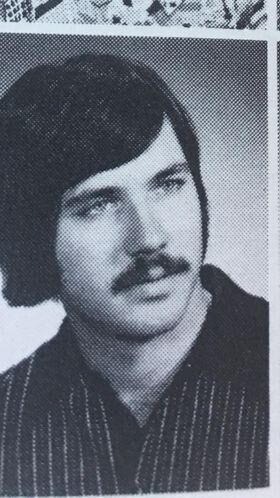
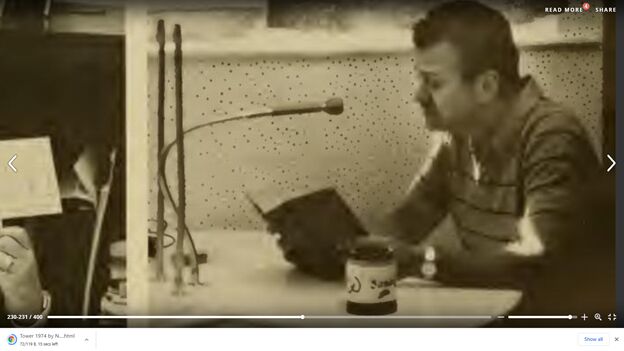
But the two names that seemed to come up the most in tips and in comments on the Facebook page were Michael J. Sparano Jr. and Jared M. Stein.
Sparano Jr. attended Northwest at the same time as Hilt and it’s reported they attended the same fraternity party at some point, according to Holmes. In 1978, Sparano Jr. was accused of stabbing his mother to death but was found not guilty by reason of insanity in 1979 and was institutionalized, according to the Lincoln Star. Sparano Jr. took his own life while at the Lincoln Regional Center in 1985.
Jared Stein has a more direct connection to Hilt as both a professor at Northwest and the director of “You’re a Good Man, Charlie Brown,” which was the production Hilt was cast in as Peppermint Patty the year prior to her death.
Stein was going through a divorce the year of the murder and Hilt was said to have been involved with an older man who she was either afraid of or deeply in love with, Holmes said. Stein left Maryville a few days after Hilt’s murder and was never interviewed by Maryville Public Safety as he had left the country, according to Holmes.
Stein reportedly took his own life in 2008 while living in the Czech Republic.
When asked about Sparano Jr. and Stein, Wood said he was not prepared to talk about either of the individuals, but was familiar with their names. He also said questions were raised about Hilt’s relationships she had with professors and one person high on the person of interest list had moved to another country and was never interviewed.
However, even today, investigators continue to pursue other promising leads, which The Forum has agreed to omit to protect the integrity of the investigation.
2009-2016
“A strong desire to get it done”
Maryville Public Safety reached out again to the FBI once Glidden became involved to see what files it may have from the original case. The FBI has been involved in the Hilt murder investigation more than once in the 50 years since it occurred, including providing profiles of the suspect and being the lone agency to have a copy of a photo of a napkin, taken from the crime scene, with a bloody palm print on it. The original napkin was never discovered.
If any fingerprint testing was able to be conducted off the photo of the napkin, it never resulted in any matches, according to Strong and Glidden. Besides, the origin of the original palm print is questionable itself and Glidden considered it “potentially a piece of evidence.”
“I always question, you know, was it somebody that moved her or something that came there after the fact?” Strong said. “Or was it an officer, you know, that threw it (the napkin) away? I mean, who knows?”
Glidden completed 70 supplemental reports on the case in the 14 years he’s been on the case, on top of all the interviews and research completed by Wood, Lin and Strong. Those 11 years took Glidden throughout Missouri and as far as Colorado, Illinois, Iowa, Nebraska and Kansas to interview persons of interest.
But the further away from Hilt’s murder he got, the fewer people there were to interview, and the less likely it looked like the case might be solved while Mildred Hilt, Tess’ mother, was still alive.
“That was also one of the things that tended to put a little bit more urgency on it,” Wood said. “I think, there wasn’t anything that was telling us we had to get it done, like right now. But there was a … strong desire to get it done while Mrs. Hilt was still alive.”
With the hopes of being able to provide a sense of closure to the still grieving mother, Glidden and other agencies did extensive research before making the decision to exhume Hilt’s body in the fall of 2015, to ensure that there was a chance the case could benefit from it.
After obtaining permission from Mrs. Hilt to disrupt the manicured grave of her only daughter, Maryville Public Safety secured a search warrant and other appropriate court documents to proceed with the exhumation.
The FBI processed the remains, collecting evidence such as scrapings from under her nails that was not originally collected as DNA testing did not exist at the time and officers were not aware it could be valuable in the future.
The exhumation did not result in a suspect being identified and the evidence collected “may or may not be usable,” but it was an avenue Glidden felt was important to follow.
“I think that it’s good that people realize that we went to that extent,” Glidden said.
Mildred Hilt passed away on March 30, 2016, at the age of 88, preceded by her husband’s death in 1996. She never received an answer to the one question she spent her life hoping to hear — who killed her only daughter Teresa Sue Hilt?
Present Day
“Please, please, please come forward”
Now, Glidden said the frequency in which he conducts interviews has slowed down, as many of those previously interviewed have passed away and the suspect pool has slimmed down. However, he’ll still follow up on new leads or tips that come as he thinks it’s “very possible” the person responsible for Hilt’s death has been interviewed at some point.
“You have to remember technology has changed a great deal from 1973 to that date, which was ’89, and then you take another leap from 1989 to today, which is where we get hurt really bad on this thing because we don’t have the evidence,” Wood said. “If we could find anything with any trace, that’d be fantastic.”
Glidden said the process of working a crime scene has changed dramatically since 1973, as well as the process of storing evidence. Everything is collected, packaged and documented with the goal of doing everything possible to preserve the scene and evidence.
If a scene had a bloody piece of clothing, it would be packaged properly before being moved to dry in an evidence dryer, stored and labeled in a paper bag, photographed and then documented in the file.
Even the process of photographing a crime scene is better. In 1973, Public Safety used a local photographer to document the scene. This photographer would turn over all his negatives to the department and in the case of Tess Hilt, the negatives were lost along with all the other evidence.
“Anything we’ve got on this case or cases since then, we keep it, and if it’s something important like a homicide case, we keep most of that stuff forever,” Glidden said. “When we moved into this building, we built a lot larger evidence room and we have equipment to preserve evidence, and … I think the standards, just across the board, have changed probably everywhere.”
So, for most of the officials who have dedicated time to solving the murder of Tess Hilt, the hope is someone, somewhere will confess.
“Somebody, someplace knows what happened,” Wood said. “And if you’re that person, please, please, please come forward. We may not be able to get it solved for Mrs. Hilt anymore, but we can still get it solved for other families that it’s very important to.”

PHOTOS VIA TESS HILT TRIBUTE SOCIAL MEDIA PAGE
Tess Hilt is shown during a 1973 production of “You’re a Good Man, Charlie Brown.” She played the role of Peppermint Patty.
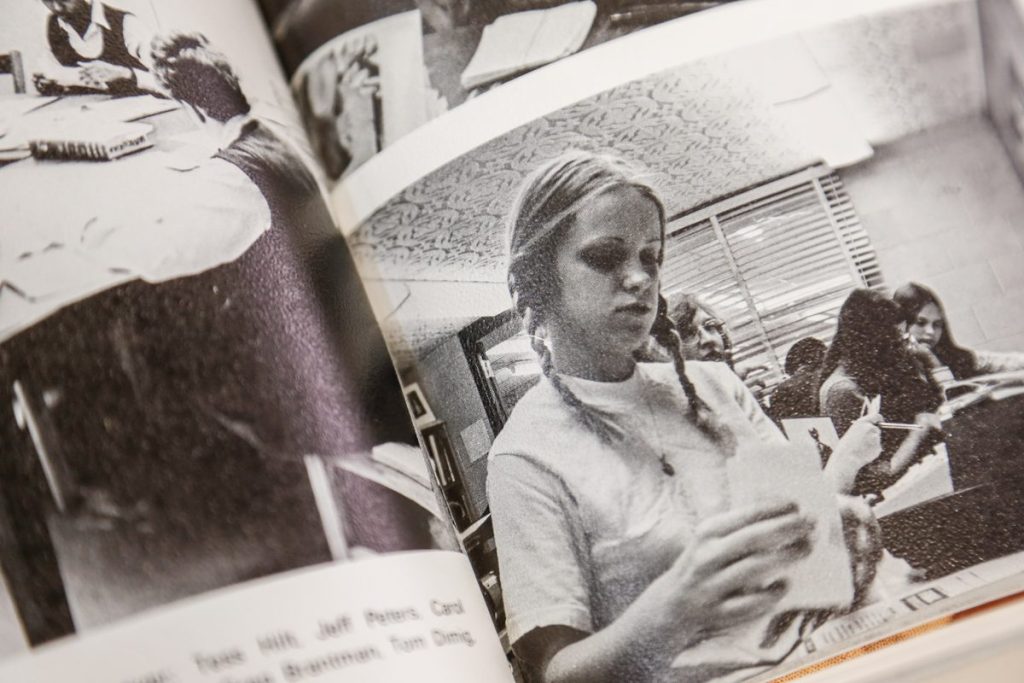
PAXSON HAWS/THE FORUM
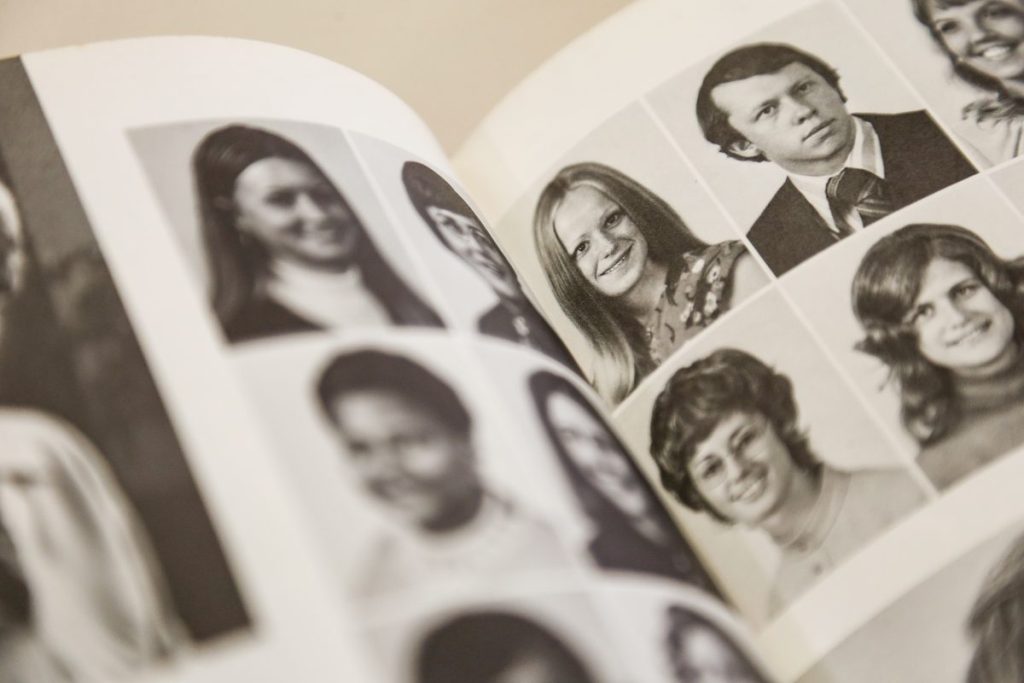
Tess Hilt is shown in the 1972 edition of Northwest Missouri State University’s Tower yearbook where she served as Index Editor. Hilt worked on the school yearbook staff from 1971-1972. After her murder in 1973, a reward fund was established reaching more than $3,000 for tips leading to her killer. The Forum could find no such fund today.
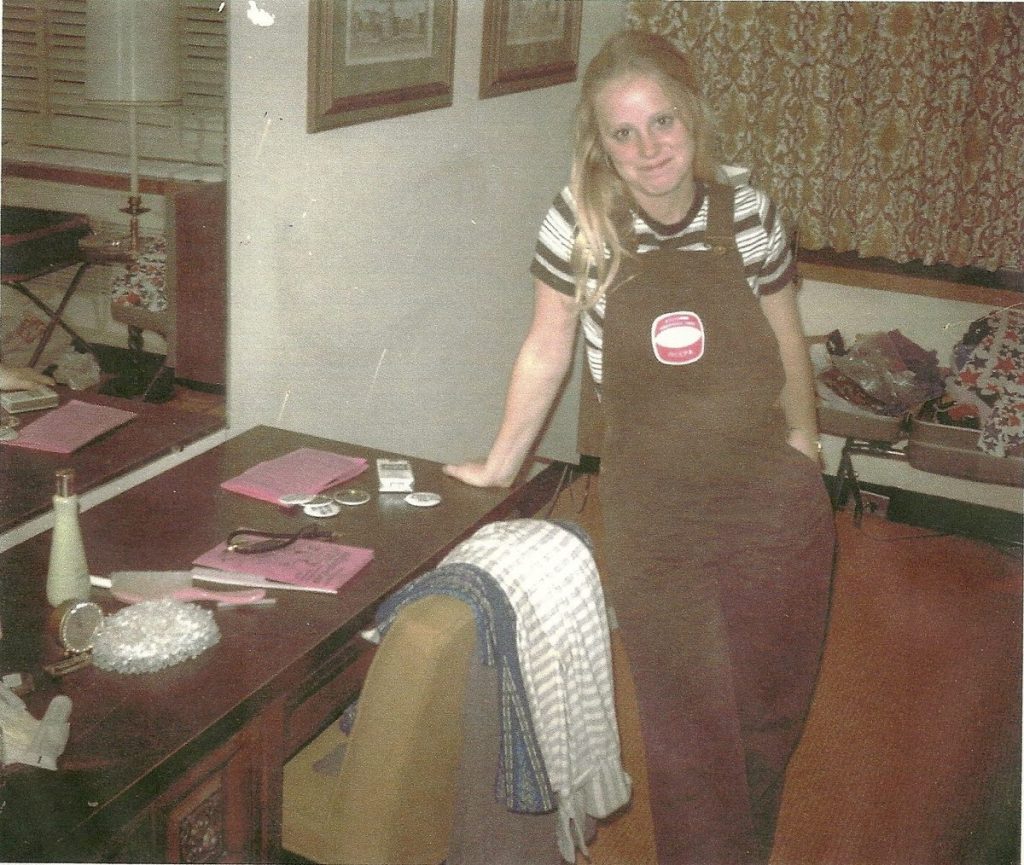
PHOTOS VIA TESS HILT TRIBUTE SOCIAL MEDIA PAGE
This photo was submitted to the Tess Hilt Tribute Facebook page, still actively seeking tips in her murder today.
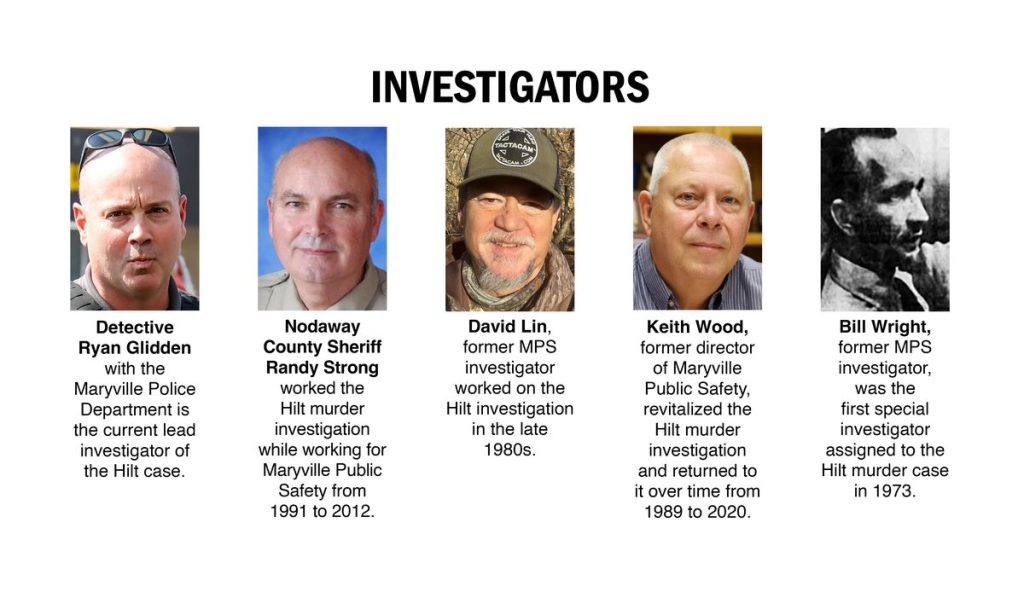
Investigators
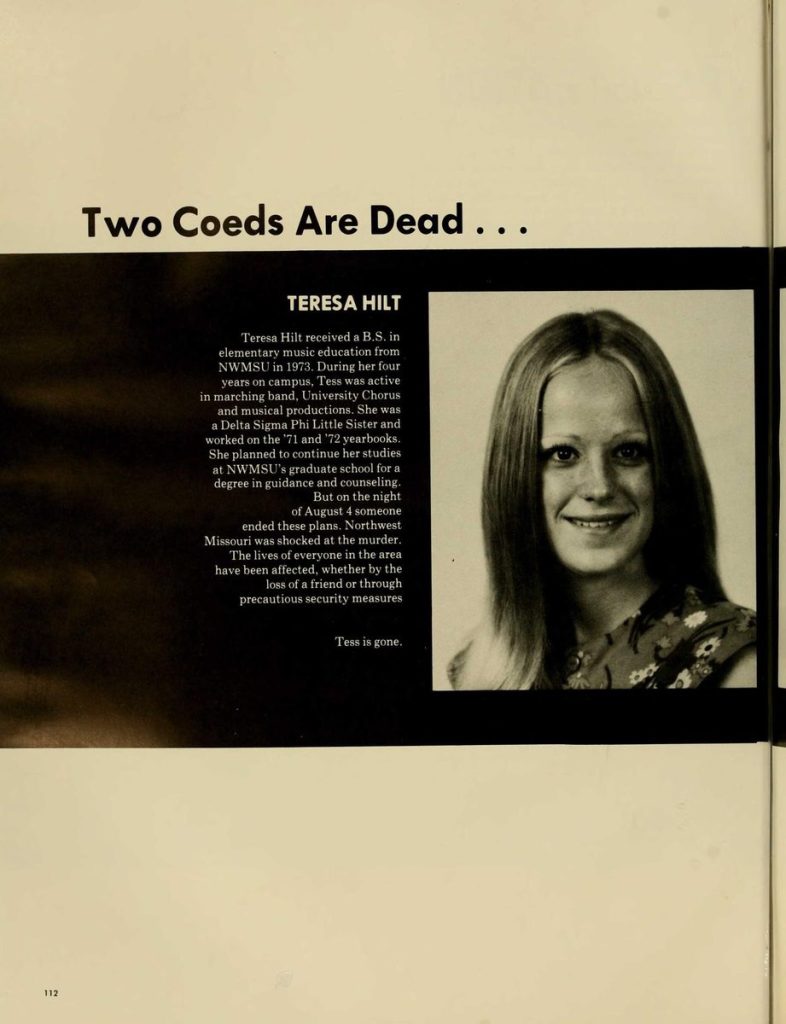
Tess Hilt was mourned in The Tower yearbook after her death in 1973.
PHOTOS VIA TESS HILT TRIBUTE SOCIAL MEDIA PAGE
Michael J. Sparano Jr. was a suspect in Hilt’s murder due to a crime he committed in 1978 in Nebraska.
PHOTOS VIA TESS HILT TRIBUTE SOCIAL MEDIA PAGE
Jared M. Stein, was a suspect in the murder of Tess Hilt in 1973. Stein was a director of the play she was involved in at the time of her death.
PAXSON HAWS/THE FORUM
10-5-23 Tess Hilt 7
PHOTOS VIA TESS HILT TRIBUTE SOCIAL MEDIA PAGE
Hilt’s grave site is shown at the Edgewood Cemetery in Chillicothe. Her mother, Mildred Hilt, was known to keep it well manicured.
10-5-23 Tess Hilt 9
FORUM FILE PHOTO
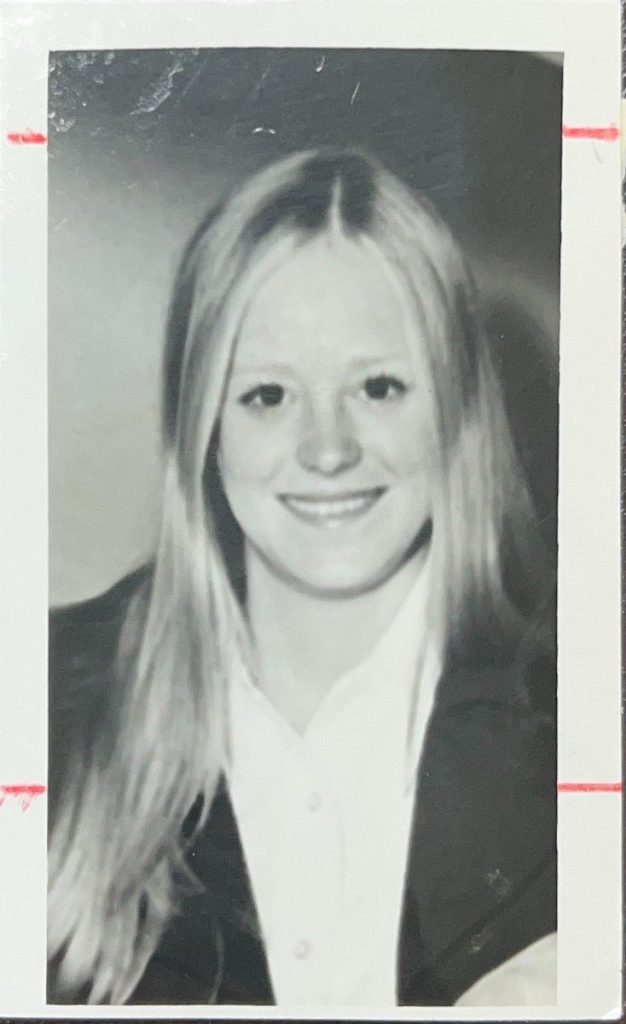
Tess Hilt was brutally murdered in her off-campus apartment in 1973. Her murder is yet to be solved. The investigation is ongoing.

10-5-23 Tess Hilt investigators