MPR makes case for tax increase
Screen Shot 2022-03-31 at 11.20.23 AM.png
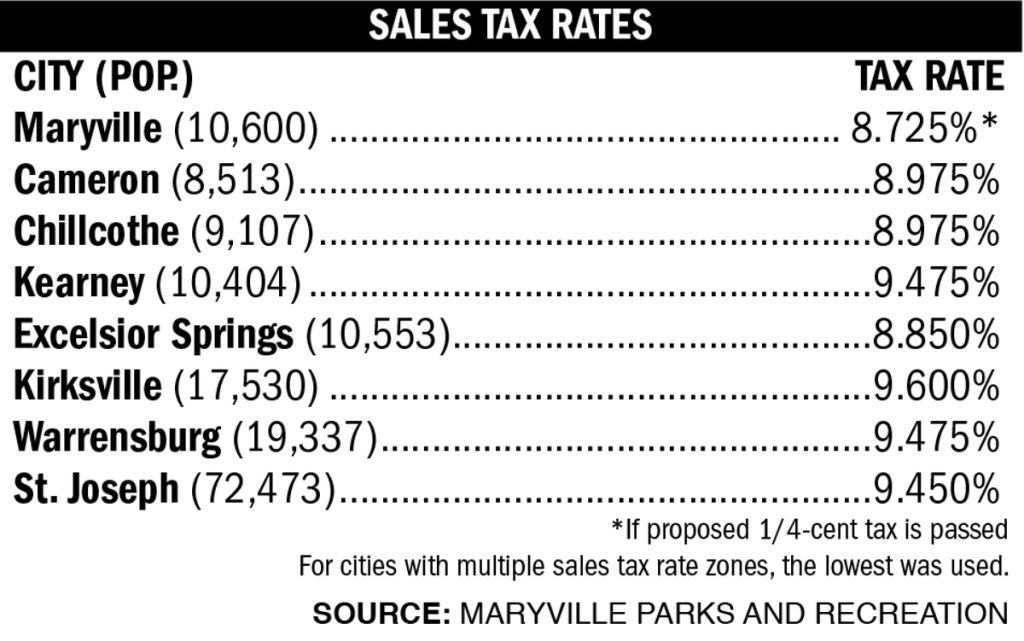
MARYVILLE, Mo. — Maryville voters will decide Tuesday on a 1/4-cent sales tax to fund repairs, renovations and improvements to parks and facilities managed by Maryville Parks and Recreation.
The added funds are needed to maintain the level of services currently provided by the department, MPR Director Jeff Stubblefield said, and over the life of the tax — which would sunset in 20 years — would also allow for overhauls of some parks as outlined in the agency’s 2021 master plan.
Maintaining current services has become increasingly difficult in recent years as the city has added more parks to be maintained by MPR — like the Thomson Splash ‘N’ Play and the Downtown Pocket Park —to now total 12, more than any other city of its size in Missouri, a cursory Forum analysis showed.
And that was before a global pandemic hit the agency harder than most, tanking memberships at the community center and participation in activities that are just now starting to rebound to pre-pandemic levels.
Those issues coupled with rising costs, especially minimum wage increases, and several facilities and park infrastructure in need of significant maintenance projects around the same time, and Stubblefield said he felt MPR had no alternative to asking for an additional tax to keep the parks and facilities in proper shape.
“We’ve got a lot of maintenance issues that need to be addressed, and the only way we can address them is — well, we need help,” Stubblefield said at Tuesday’s candidate forum put on by the Greater Maryville Chamber of Commerce.
Over the 20 years proposed, the tax is estimated to bring in around $500,000 in additional revenue each year. This year’s MPR budget is about $1.4 million in total.
The additional money would be used for three primary purposes: making parks facilities compliant with the Americans with Disabilities Act, major maintenance projects and capital improvements outlined in MPR’s master plan.
ADA compliance
One of the top priorities identified by the Parks and Recreation Board is to make parks ADA-compliant.
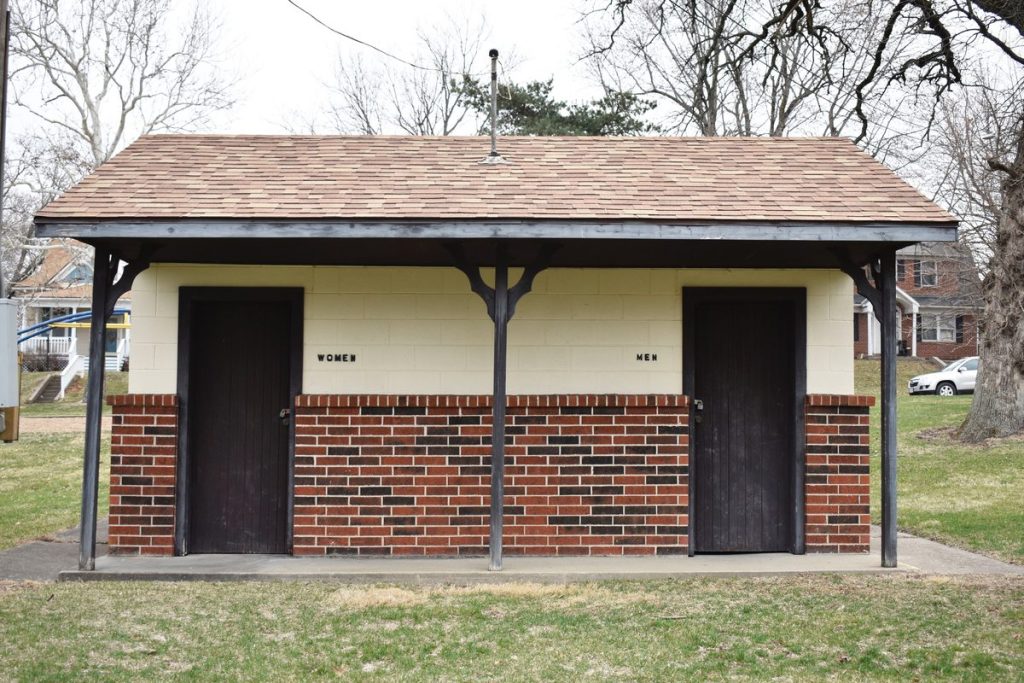
Right now, 80 percent of MPR’s facilities aren’t in compliance, Stubblefield said during Monday’s City Council meeting. Many of the restrooms at city parks were built in the 1980s, before the ADA was passed in 1990, and the parks were not designed for accessibility. Newer facilities are compliant, like Donaldson Westside Park, the Maryville Community Center, the Maryville Aquatic Center and the Splash ‘N’ Play.
Parks like Sisson-Eek and Sunrise, though, offer no paved path to restrooms for someone in a wheelchair, while playgrounds at Beal and Wabash parks are not easily accessible for children with disabilities, Stubblefield said.
But Stubblefield held up Franklin Park as the prime example of an accessibility nightmare.
With no off-street parking, the entire park is curbed, only offering access to a wheelchair via three entry points to sidewalks that extend the length of the south and west sides.
Those paths do not lead to the restroom facility, which is located toward the north side of the park on a slight rise.
“If you had to get a wheelchair to the bathroom, it’s not gonna happen,” Stubblefield said Monday. “And then once you get there, the doors in all these restrooms that were built around the same time — around the 1980s — it’s not even 32 inches wide.”
The ADA recommends 32 inches for door openings.
“And if you’re able to get it in there, you wouldn’t be able to turn it around inside,” Stubblefield said. “And that’s an issue with all the restrooms that we have in most of the parks.”
Maintenance
Stubblefield is anything but shy about the shape of some of the parks and facilities MPR is charged with looking after.
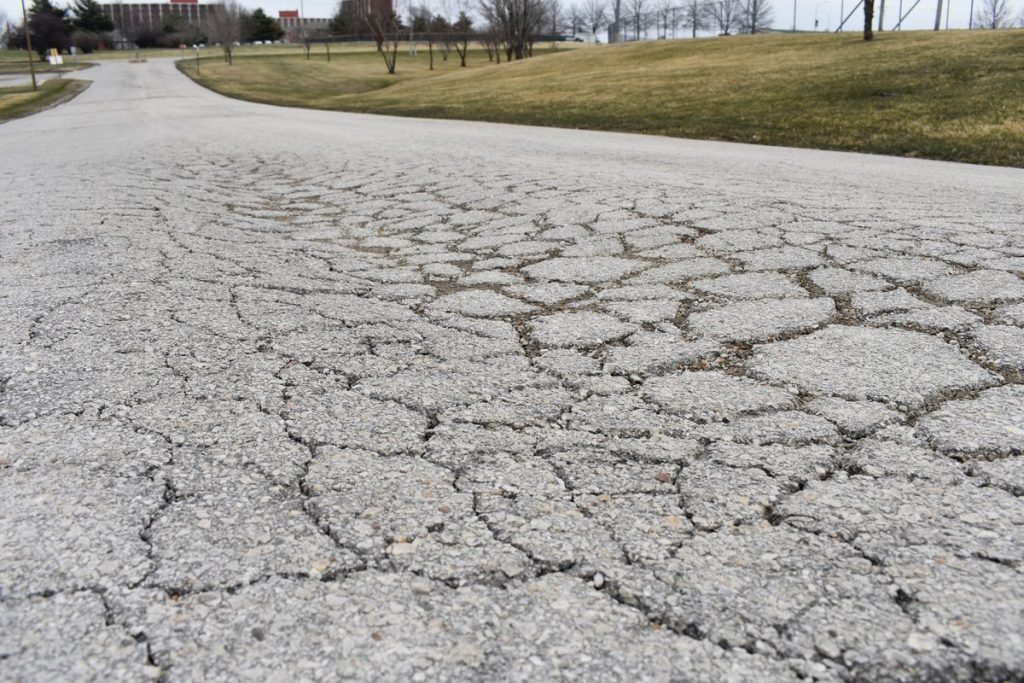
“I don’t know if you’ve driven through Donaldson lately, but … the road in Donaldson is awful,” he told the City Council on Monday. “The east entrance at Beal by the tennis courts is awful. The tennis courts are awful. Judah Park, two of the bridges are just terrible.
“The ballfields are in poor condition — we need to update the irrigation. I understand the irrigation hasn’t been on in over 10 years. … And it’s kinda hard to grow grass without water. So we need to resod those fields.”
And those issues are just the tip of the iceberg.
Stubblefield said that one of the major underlying issues behind many of the most serious problems is that original infrastructure and equipment doesn’t appear to have been installed with foresight for how it would age.
The road leading to Donaldson Westside Park, for example, wasn’t built with a proper base underneath it when it was built about 20 years ago, a contractor told him. Now, Stubblefield points to a five-inch dip in the road as one of the consequences.
Drainage at the soccer fields there has also been a constant battle because, Stubblefield has said, the fields were laid out without proper drainage and in a way that drained water onto two fields that were lower than the others.
At Wabash Park, when safety surfacing was installed at the playground, no drainage system was installed along with it. So when it rains, water stays underneath the surfacing, and in winter, the water freezes and causes cracks.
Others are simply a product of time. The community center is now 20 years old, and so is its heating and cooling system.
“We are — I don’t know how many of you are familiar with ‘MacGyvering’ things — but we are (using) bailing wire and duct tape with a lot of this stuff with the HVAC,” Stubblefield said at Tuesday night’s candidate forum held at the community center.
Last summer, the air conditioning wasn’t able to keep up with the heat, and temperatures in the gym frequently reached 80 degrees.
Fixing that system will likely cost more than $600,000, MPR has estimated. Another $200,000 would be spent on new LED lighting for the parking lot.
The other major facility run by MPR, the aquatic center, is entering its 29th summer of service this year, and has shown its age more and more frequently over the past few years.
In 2018, for example, the MAC closed early because one of the pumps failed and the pool couldn’t continue functioning without it.
And in a study commissioned in 2016 by MPR, third party auditors said, “If the facility does not undergo a substantial renovation within the next five years, the mechanical room will need to see a complete renovation … .”
Six years later, the facility is still dealing with many of the same issues, but with six years more of wear and tear.
The pool needs multiple improvements including pumps, valves and slides, Stubblefield said. The slides haven’t been recoated since the building opened, and doing so will cost about $100,000 per slide.
That’s not including the building itself.
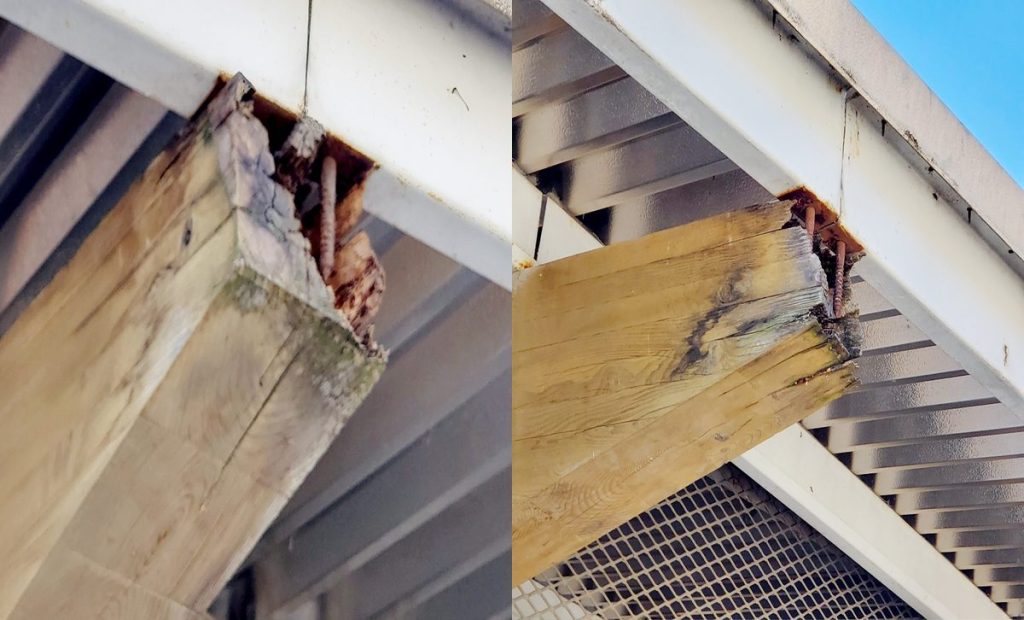
Four structural beams are rotting and in need of repair, which will require “extensive” work, he said, because they can’t simply be removed and replaced without having something to support the infrastructure they’re holding up in the meantime. That project will require an engineering study and then a construction process.
Improvements
Over the 20 years proposed for the tax, MPR plans to work through project by project and park by park to establish a better maintenance rotation for the future — rather than having maintenance needs cluster at one time, as they have now — and to allow for incremental progress each year.
But along with necessary maintenance, MPR will look to shape each park in the system more uniquely to offer a wider variety of uses, and add amenities when possible to its facilities.
Since before a 1/8-cent sales tax expired last year after its own 20-year sunset — it paid for the construction of the community center — MPR officials have worked to build a priority list with a vision for how the parks system would evolve over the next decade.
That was solidified in the agency’s first master plan document in February 2021.
The 448-page plan includes valuable data on park usage and conditions, and calls for about $4.6 million over the next 5-10 years to accomplish the overhauls prescribed by the plan for the parks system.
The park improvements were determined by a community survey of parks needs, which has already had an impact: The No. 1 item requested by the more than 500 respondents to that survey was a dog park.
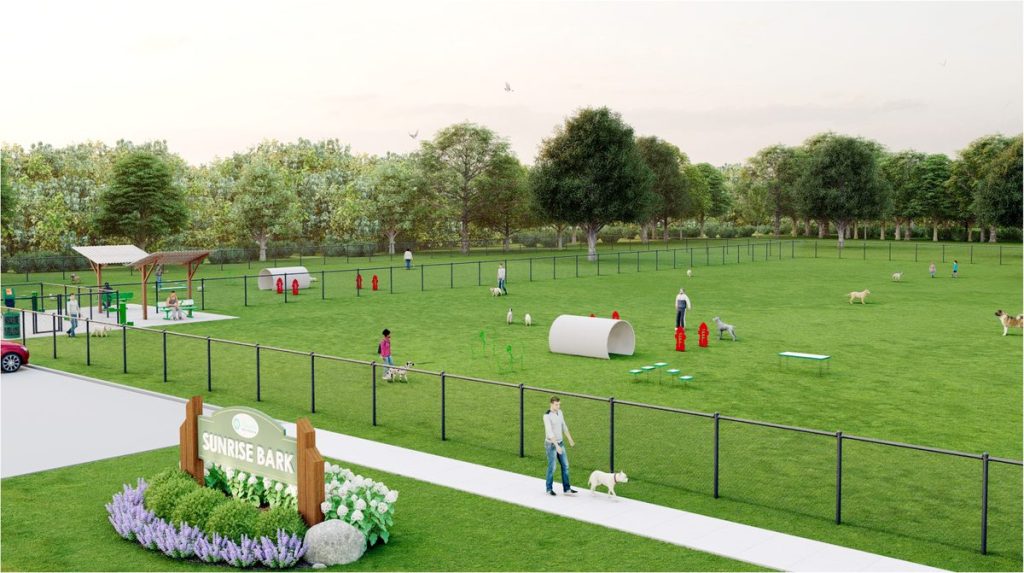
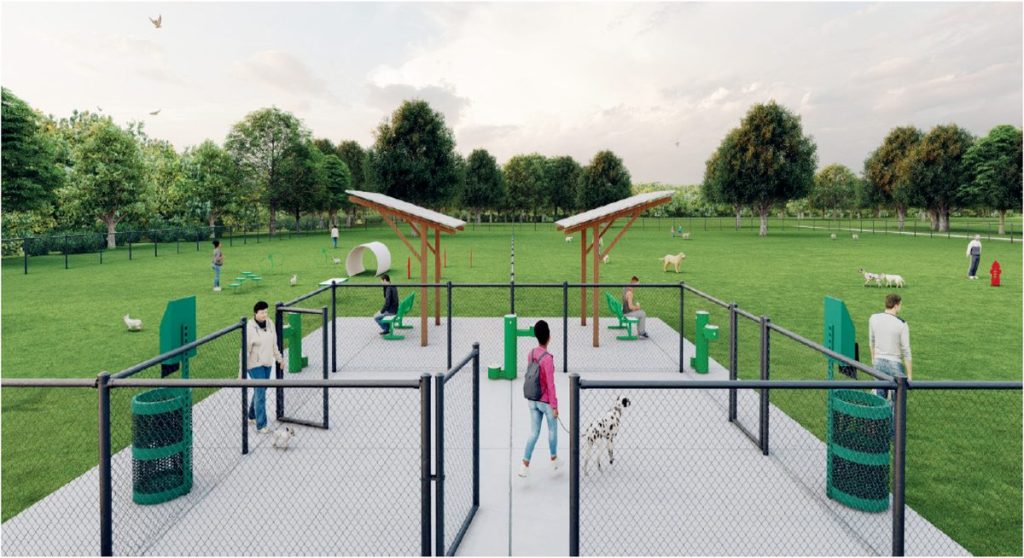
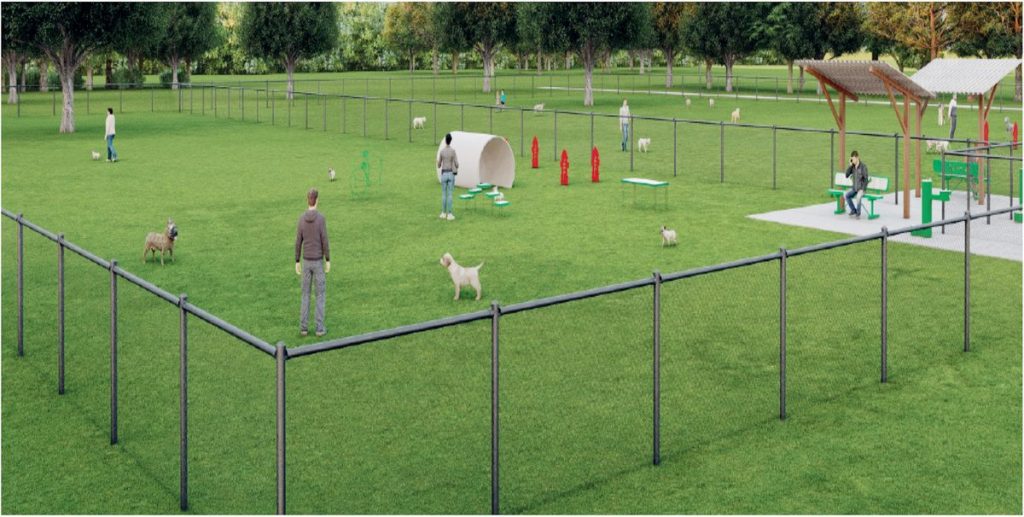
In this year’s budget cycle, the city allocated $75,000 in federal American Rescue Plan funding for the development of a dog park at Sunrise Park across from the New Nodaway Humane Society. Stubblefield said that’s enough to get the park — tentatively dubbed Sunrise Bark by MPR staff — started, but won’t help with ongoing maintenance or with amenities at the park.
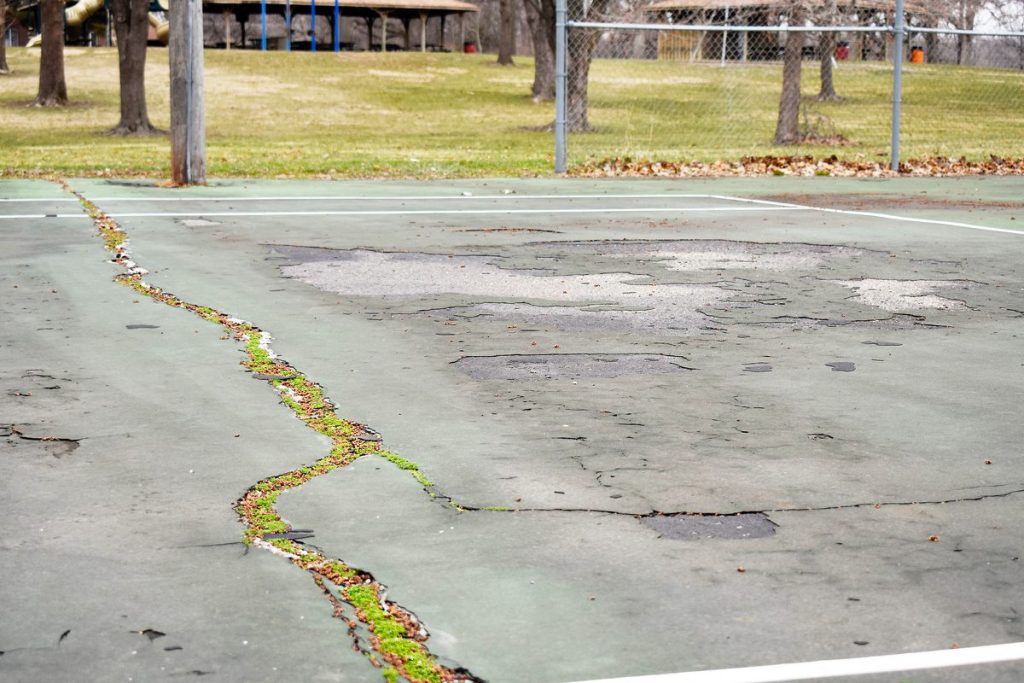
Another highly requested item was pickleball courts, which Stubblefield has mentioned several times as a likely addition to Beal Park if the sales tax is passed. The tennis courts there are in such poor condition, he said at an MPR board meeting this month, that he’s surprised high school players practice there at all. Passage would allow MPR to fix two of those courts and convert two others into pickleball courts as proposed in the master plan.
Ultimately, if the tax doesn’t pass, Stubblefield said, MPR will have to significantly cut services, raise activity rates and continue to fall behind on keeping parks and facilities in quality condition.
“This town has some beautiful history, beautiful parks,” he said Tuesday. “And I just would hate to see us lose what we’ve got.”
More Information
Maryville Parks and Recreation
- Governed by a 9-member, volunteer park board
- Oversees 12 parks and 4 facilities in city limits
- Funded through activity fee revenues and an existing 1/8-cent sales tax
- FY 2022 budget is $1.4 million
- Parks and facilities serve an estimated 93,000 patrons per year
MAJOR proposed repairs
- HVAC system, LEDs, parking lot and sidewalks at the community center
- Structural beams, pumps, valves and slides at aquatic center
- Road to Donaldson Westside
- Ballfield drainage and irrigation systems
What will happen if the tax doesn’t pass?
- Close amenities that are not ADA-compliant
- Raise user activity fees across the board
- Raise entry fees to community center/aquatic center
- Reduce staff and hours of operation of facilities
- Reduce maintenance and upkeep of parks and their amenities
- Drop plans for capital improvements unless funding becomes available
Source: Maryville Parks and Recreation
SUBMITTED PHOTOS
Four structural beams at the Maryville Community Center are rotting and need to be replaced, one of many significant maintenance projects that would be paid for through a 1/4-cent sales tax.
GEOFFREY WOEHLK/THE FORUM
Restroom facilities like the one at Franklin Park were built before the Americans with Disabilities Act of 1990, and are not up to ADA standards. The doorways, for example, are not 32 inches wide as recommended by the act, and do not have enough room inside for someone in a wheelchair to reasonably turn around.
GEOFFREY WOEHLK/THE FORUM
A new 1/4-cent sales tax would go toward infrastructure improvements at existing parks, like repairing the road to Donaldson Westside Park — which MPR Director Jeff Stubblefield said is in “awful” shape.
SUBMITTED/LAMP RYNEARSON
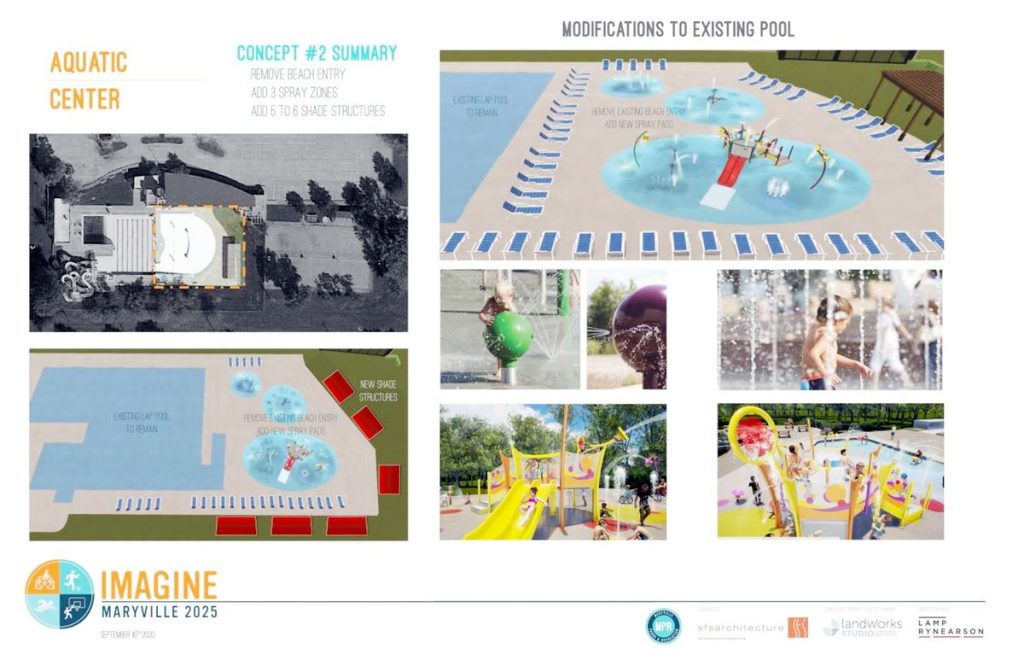
The second option for the aquatic center would eliminate the zero-depth entry of the pool while maintaining the other amenities. The zero-depth entry would be replaced with a spray ground that is more enhanced than the one in the first option.
SUBMITTED RENDERING
A concept rendering of a dog park set to be built in an existing portion of Sunrise Park across from the New Nodaway Humane Society. MPR staff have tentatively dubbed the new dog-friendly hangout Sunrise Bark.
GEOFFREY WOEHLK/THE FORUM
The tennis courts at Beal Park are on the list of items most in need of repair. MPR Director Jeff Stubblefield said passage of the 1/4-cent sales tax proposal would allow MPR to repair two of the courts and convert the other two into pickleball courts — a highly requested amenity in a community survey.
GEOFFREY WOEHLK
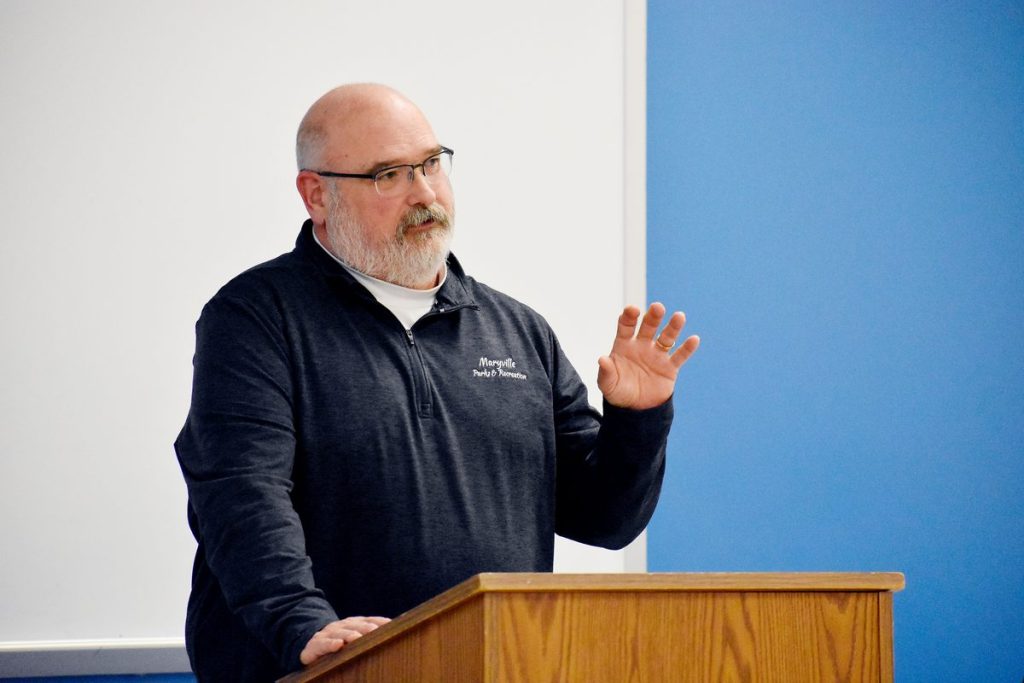
Maryville Parks and Recreation Director Jeff Stubblefield outlined the needs that would be addressed by a 1/4-cent sales tax during the Greater Maryville Chamber of Commerce’s candidate forum on Tuesday, held at the Maryville Community Center. Stubblefield used the building’s HVAC system as a prime example of significant maintenance needs.
SUBMITTED/LANDWORKS STUDIO
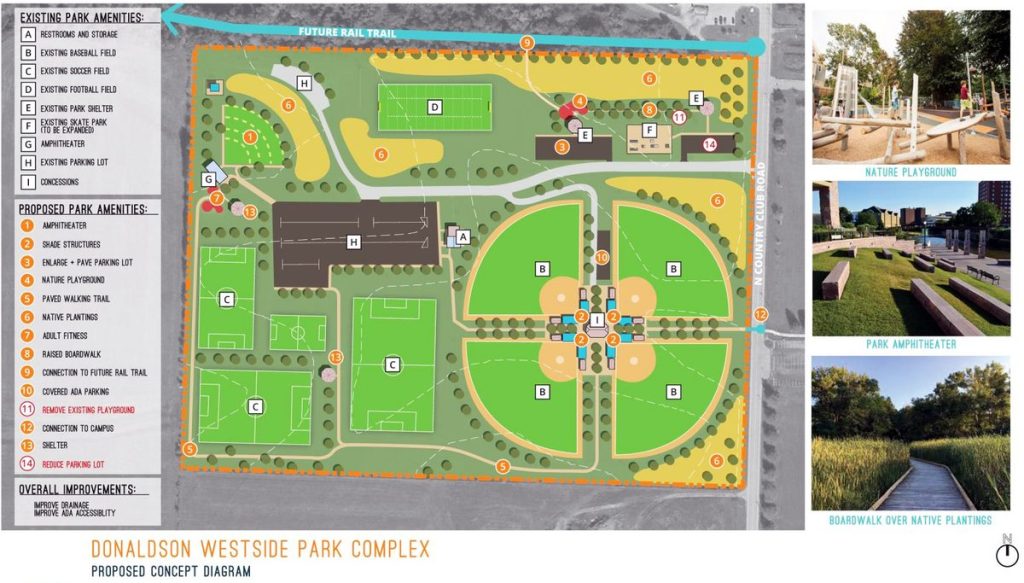
MPR’s 2021 master plan included long-term improvement plans for each park in the system. Donaldson Westside Park’s proposed improvements include renovations to sports fields including improvements to grading and drainage, the addition of shade structures for spectators and seating at the amphitheater, a nature playground to replace the existing playground that floods and a raised boardwalk between it and the gazebo, expansion of the skate park and the parking lot next to it, an adult fitness area, an extensive trail loop within the park connecting to a planned future trail along the east side, a connection to the baseball fields at Northwest Missouri State University and a new shelter.
SUBMITTED/LANDWORKS STUDIO
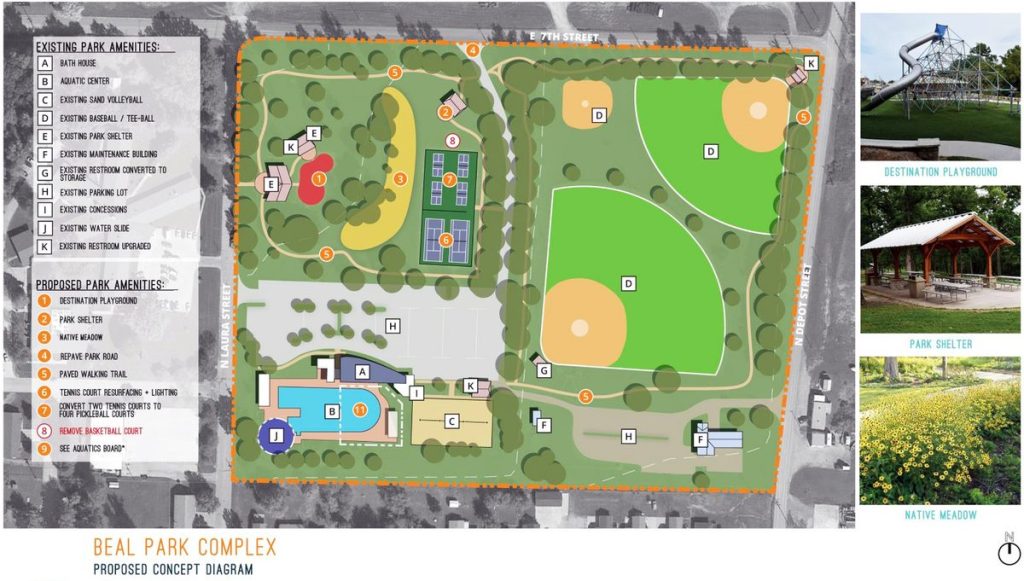
Proposed improvements for Beal Park include improved vehicle access into and through the park from Seventh Street to the aquatic center parking lot, a trail system to connect existing amenities within the park, an additional picnic shelter, a destination playground, replacing two of the existing tennis courts with pickleball courts, removing the basketball courts, accessibility improvements and a nature garden.
SUBMITTED/LAMP RYNEARSON
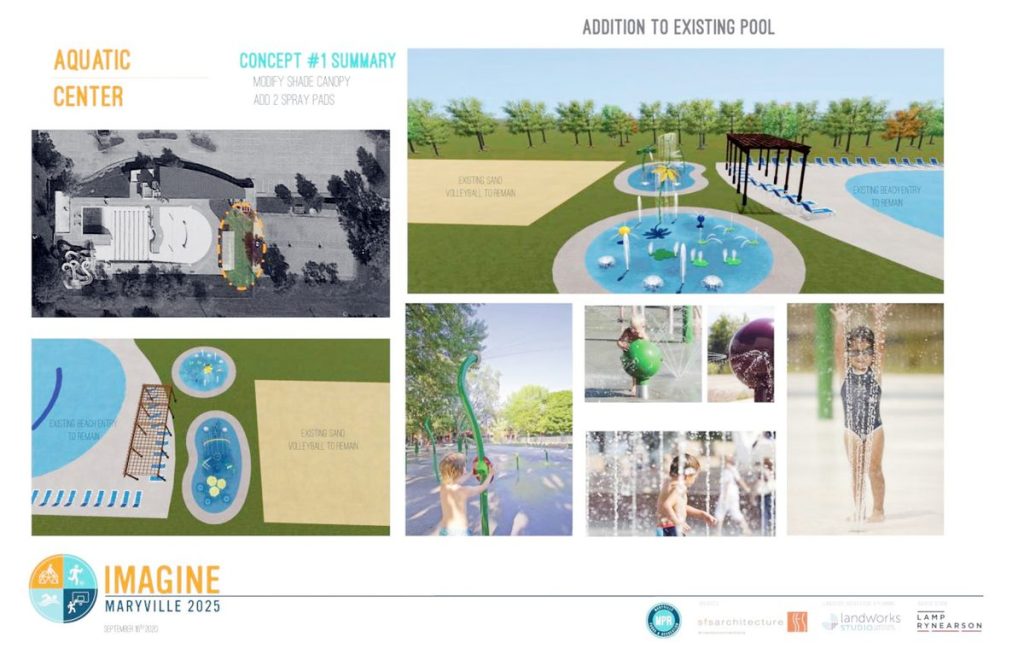
The master plan recommends one of two options for improvements to the Maryville Aquatic Center. The first option would keep the current structure of the pool with all amenities and add a spray ground. Both options call for significant maintenance repairs, along with the removal of “gang” showers to provide for individual privacy and accessibility and the addition of a family changing room between the men’s and women’s changing rooms. Typically family changing rooms would include amenities like a diaper changing table.
SUBMITTED MAP
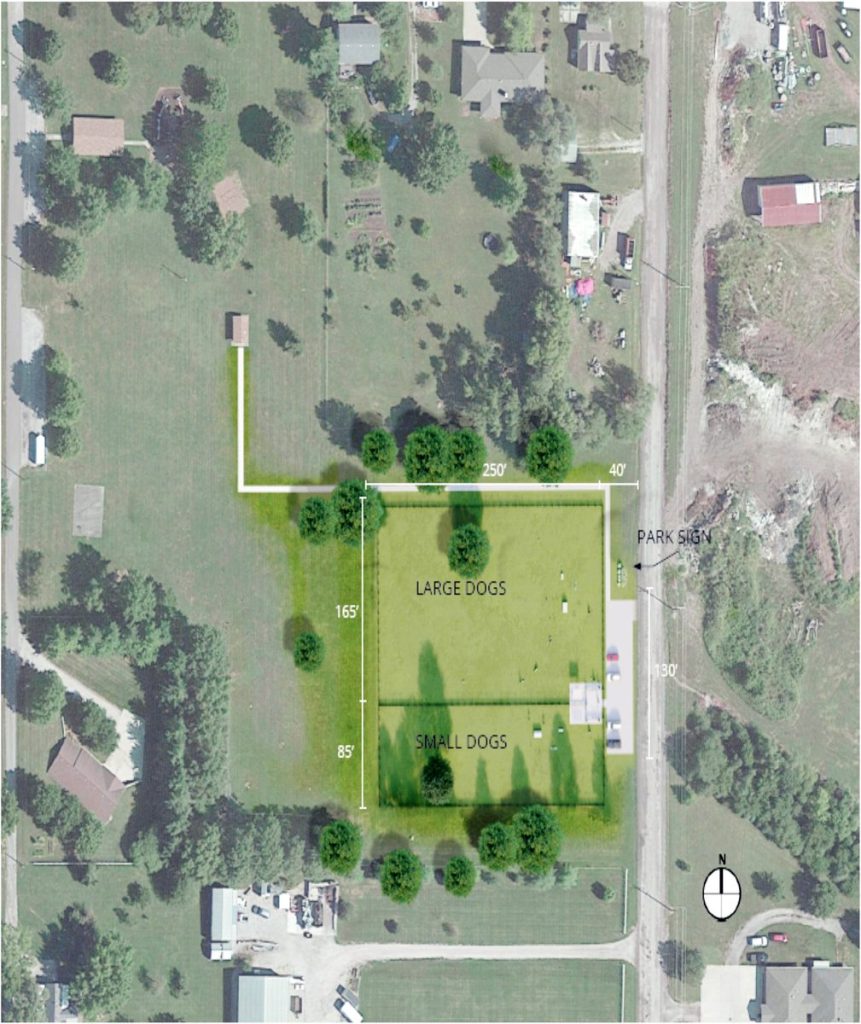
The proposed new dog park would provide two fenced off areas: one for large dogs and one for small dogs. This rendering shows the park’s proposed location along South Depot Street.
SUBMITTED RENDERING
Earlier this year, the city of Maryville allocated $75,000 in American Rescue Plan funding to the dog park project, but MPR Director Jeff Stubblefield said that would only be enough to get the park started with basics like fencing.
SUBMITTED RENDERING
In a 2020 survey of more than 500 residents about parks needs, the No. 1 item requested by community members was a dog park.