GAC adsorber, algicide prove effective
HDR ENGINEERING
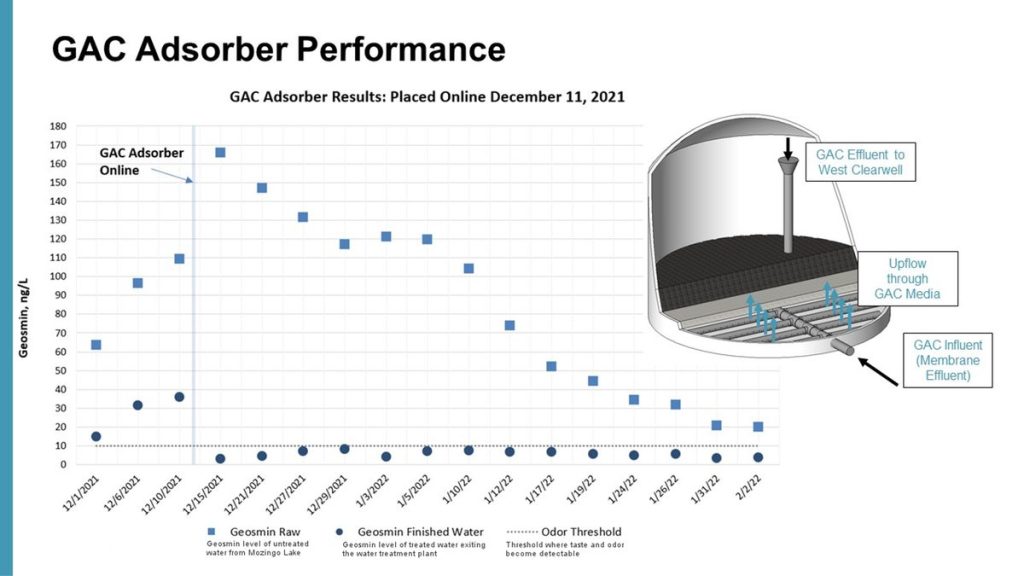
The graph above shows the levels of geosmin, a natural compound that has been a primary cause of taste and odor issues in drinking water, since just before the granular activated carbon adsorber was installed at the Maryville Water Treatment Plant in December.
MARYVILLE, Mo. — Data presented by HDR Engineering last week showed the dramatic effect of mitigation measures the city has taken to address water contamination at Mozingo Lake and in treating the taste and odor issues they cause.
In December, a granular activated carbon adsorber was installed at the Maryville Water Treatment Plant, built to help filter out a troublesome compound called geosmin that had proven difficult to remove for the existing equipment at the treatment facility. The geosmin, a byproduct of cyanobacteria blooms on Mozingo Lake, was making it through the filters into drinking water, causing an unpleasant, earthy taste and smell.
The GAC adsorber is essentially a supersized version of a carbon filter that can be screwed onto a household sink, removing objectionable compounds in the same way, but on a larger scale.
Public Water District No. 1, the city’s largest water customer and the largest water provider to residents in Nodaway County outside of Maryville, partnered with the city to install the GAC adsorber as part of a two-fold response to manage the geosmin. The $1.3 million project was completed and went online in December.
“We saw some delays with materials, but we were able to get that online, just really in the nick of time, honestly,” said Aaron Robison, senior water project manager at HDR, during a meeting with the City Council on Feb. 23.
The installation was just in time because data collected by the city and HDR had shown that the end of autumn usually saw a spike in cyanobacteria blooms on the lake, and a corresponding increase in taste and odor issues.
At that Feb. 23 meeting, HDR showed the results so far after a little more than three months of operation for the adsorber, and the numbers showed that the adsorber had a massive effect, reducing geosmin levels in drinking water significantly.
With geosmin levels on the rise in the treated water, and already well above the threshold for human detection, the adsorber went online on Dec. 11. Four days later, the next weekly reading showed levels well below the detection threshold, where they largely have stayed since, even as the untreated water coming in from Mozingo Lake saw geosmin levels spike higher.
The second part of the city’s short-term strategy to mitigate the effects of the contaminants comes at the lake itself, intent on lowering the level of geosmin and other troublesome compounds that need to be filtered out in the first place. But while the GAC adsorber is ultimately designed to be a short-term stopgap until a new water treatment plant is built that can do the job itself, work on the lake will likely have to continue for some time one way or the other.
Keeping the lake a safe and attractive destination for visitors, including anglers and boaters, is a top priority, and even if the compounds can be filtered out of drinking water, the cyanobacteria on the lake itself could cause problems if left untreated.
The city’s water saga began in earnest when the lake was closed to the public in January 2020 because of dangerously high cyanobacteria levels.
Starting last summer, the city began applying EarthTec, an algicide, to the lake to kill the cyanobacteria. Treatments are applied as needed every few months when levels begin to reach a certain threshold. Records show that each 500-acre batch of algicide has cost the city a little more than $38,000, plus another $13,000-$15,000 for the cost of having a certified contractor actually apply the algicide to the lake.
At last week’s meeting, City Manager Greg McDanel said the city is planning to try to cut that cost down in the future by having city employees certified to apply the algicide themselves.