Northwest hosts ‘I Will Listen’
GEOFFREY WOEHLK/THE FORUM
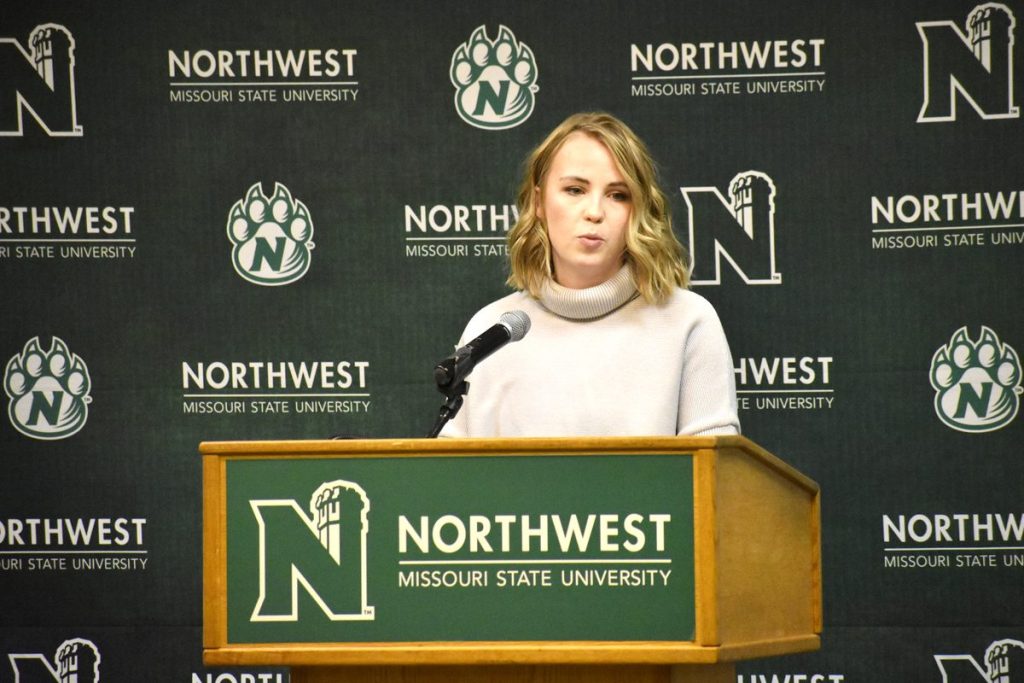
In a speech at the “I Will Listen” event on Tuesday, Northwest Missouri State University senior Olivia Babinski stressed the impacts of finding ways to make a difference in someone’s life, including their own, “I define myself by everything I’m doing — my grades, who I am as a person, who I am as a friend and who I am as a professional — which has stopped me from seeing the authentic version of me: hard-working, dedicated, passionate, loving, a girl with an odd sense of humor and emotional. Seeing myself as the authentic version of me allows for me to make a difference. It is very difficult to remember this in the midst of a storm, but the overemotional, overthinking and worried little self that I am is going to make a difference. I am going to be the one to make a difference. Despite all of the little and big thoughts that are constantly running in my head, making me doubt, fear and feel less-than, I am going to be able to make an impact on at least one life. And what if that one life is only my own? Then that is good enough.”
MARYVILLE, Mo. — When Payton Walker was first diagnosed with schizophrenia and obsessive-compulsive disorder, she decided she wasn’t going to tell any of her friends.
“My mom and I got out of the car, and I told her that I wanted it to be a secret,” Walker said Tuesday. “I didn’t want them to think that I was weird.
“And then it hit me: This disorder has been a part of me. And if people can like me before my diagnosis, they can like me after — and I shouldn’t be ashamed.”
Walker, a high school senior at Nodaway-Holt, was one of the featured speakers at “I Will Listen,” an event sponsored by Active Minds, the Behavioral Science Association and Wellness Services at Northwest Missouri State University on Tuesday. The event, which included speakers, activities and an art exhibition, was built around the idea of reducing mental illness stigmas and promoting mental health discussions.
“We end stigma through education and empathy,” said Monica Zeigel, coordinator of Hope 4 All, the mental health branch of Northwest’s Wellness Services. “The more you learn, the harder it is to have negative opinions of those with mental illnesses.”
Zeigel said that of the 1 in 5 people in the U.S. likely to experience a mental health condition during their lives, more than half will not seek treatment due to factors like a lack of resources and the stigma attached to having mental illness.
“Stigma can make a person feel fearful, ashamed, rejected, hopeless or angry,” she said at Tuesday’s event. “Often they’re most fearful of the reaction of family and friends. And that’s where we come in. So everyone here is a mental health advocate — because you’re here. You’re doing something. And it’s up to each one of us to fight the stigma whenever we encounter it.”
Once she did decide to share her diagnosis with them, it was that reaction from her own family and friends that led Walker to the stage on Tuesday.
“Seeking out help for mental health should be as normal as seeing a doctor for a sprained ankle,” she said. “… Our mental health does not define us, it is simply a part of us. Those with schizophrenia and many other mental health disorders are normal people who can live highly successful and productive lives.”
Olivia Babinski, a senior at Northwest and president of the Behavioral Science Association, also stressed in her address the importance of supporting others, from old friends to new acquaintances.
“Be the one to make a difference,” she challenged the audience. “Have coffee with a friend. Ask them how they’re doing. How they’re really doing. … Hold the door open for a stranger. The day you hold the door open for them might be the day that they don’t feel strong enough to pull open a door. But you were able to make a difference.”
Other event speakers Nicole Harnisch, a certified mental performance consultant; Isaiah McBride, a functional family therapist; and Chris Dawe, assistant vice president for health and well-being at Northwest.
In addition to the speakers, the event also hosted an art exhibit featuring drawings, paintings, graphic designs, pottery, sculptures, photography, mixed media work and poetry submitted by Northwest students and employees, students from area K-12 schools and community members.
“Everyone needs to educate themselves about mental health, how to recognize problems, where to get help and end the stigma surrounding mental illness so people aren’t afraid to get the help they need,” Zeigel said in a press release. “Managing mental health isn’t just for those who are struggling. It’s also a proactive measure. Just as we exercise and eat right to take care of our bodies, learning how to manage mental health can make it easier to face challenges in the future.”
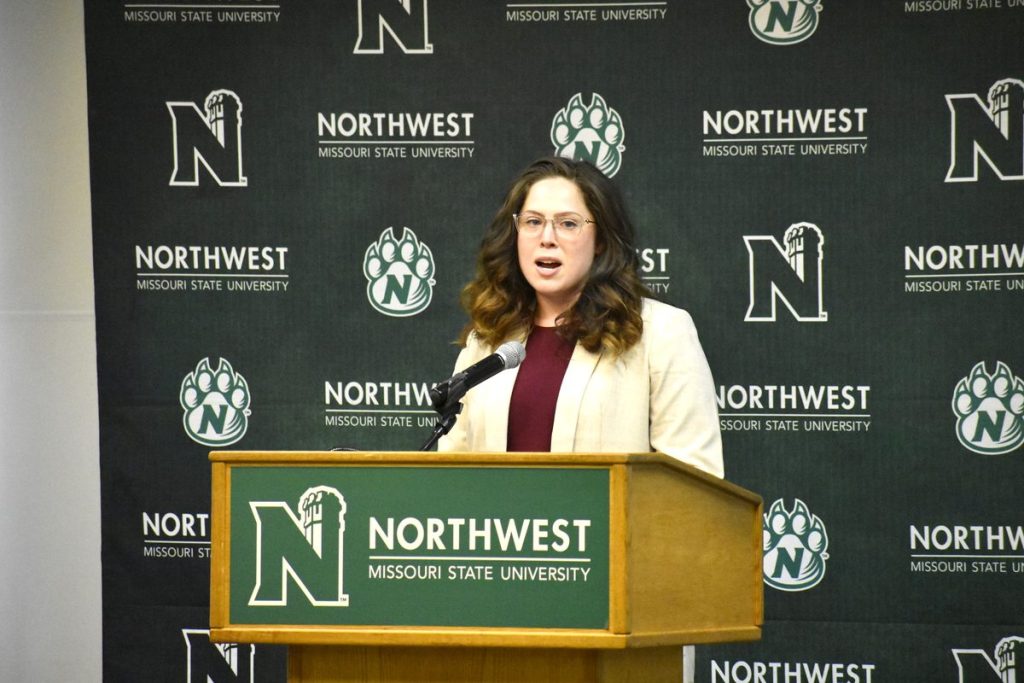
GEOFFREY WOEHLK/THE FORUM
Nicole Harnisch, a certified mental performance consultant, spoke from her own experience both as an athlete and treating athletes. “There’s a huge stigma over mental health in general, and then an extra layer of stigma for athletes. … They live their lives trying to be tough, and the amount of times that an athlete has heard someone tell them to be ‘mentally tough,’ but not actually show them how to do it or support them in the moments that they need some support — it’s wild,” she said.
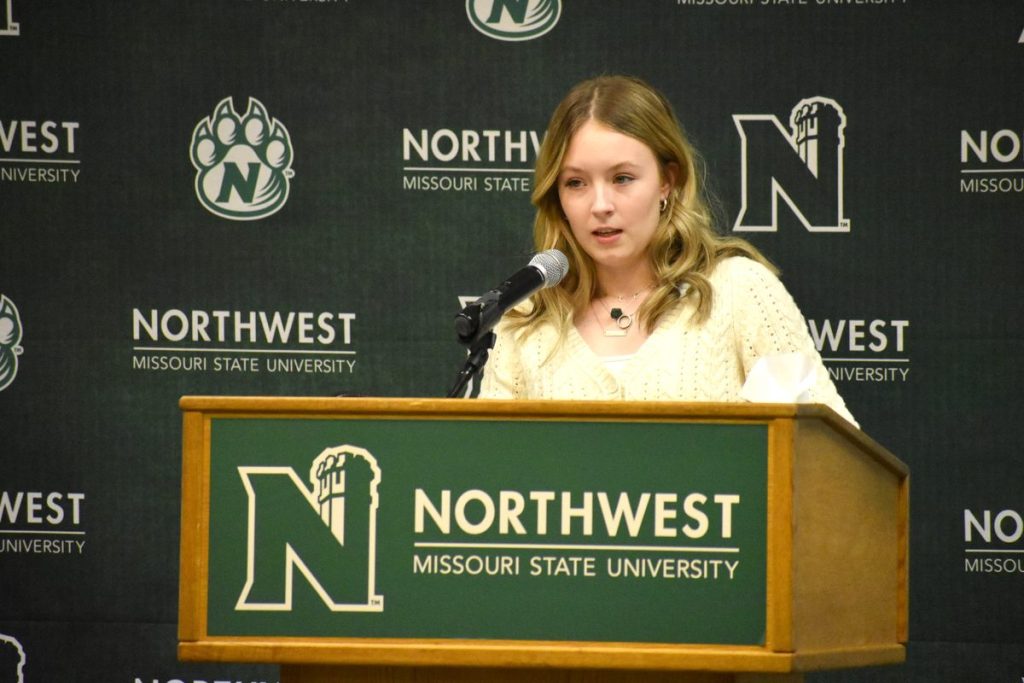
GEOFFREY WOEHLK/THE FORUM
“When I told people what my diagnosis was, the most common response was, ‘You don’t seem schizophrenic,’” said Nodaway-Holt High School senior Payton Walker. “What does that even mean? Am I supposed to act crazy? Am I supposed to be unable to function? Just because I don’t act the way it’s portrayed in the movies doesn’t make my diagnosis less than. People with mental illnesses are just as strong as those without. We are strong, and we do not let our diagnosis dictate our lives.”