
GAC adsorber goes online
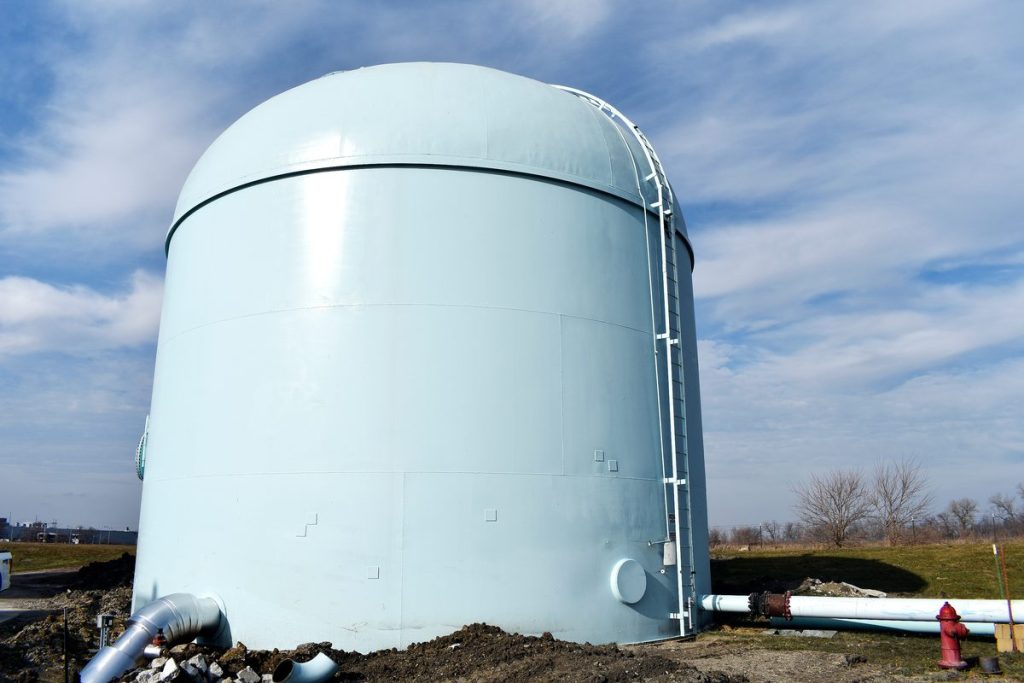
GEOFFREY WOEHLK/THE FORUM
A clearwell tank at the Maryville Water Treatment Plant was converted into a granular activated carbon adsorber that began operation last Friday. The adsorber will more effectively filter out problematic compounds, like geosmin, that cause taste and odor issues with drinking water.
MARYVILLE, Mo. — The newly installed granular activated carbon adsorber went online last week, and city officials said the new equipment has already made a difference in the water treatment process.
The $1.3 million adsorber, the cost of which was split nearly down the middle with Public Water Supply District No. 1, will help filter out substances that adversely affect the taste and odor of drinking water. A former clearwell tank at the Maryville Water Treatment Plant was converted into the adsorber over the summer and fall.
Although the adsorber wasn’t set to go online until Monday, City Manager Greg McDanel said that PeopleService — the contractor that operates the city’s water treatment plant — and David E. Ross Construction — the contractor that built and managed the project — made a “valiant effort” to get the adsorber online last Friday instead after geosmin readings at Mozingo Lake rose significantly last week.
Since the compound geosmin was identified as a major culprit of the aesthetic issues with the water about a year ago, PeopleService has been using near the maximum amount of powdered activated carbon allowed at the water treatment facility in an effort to filter it out. But PAC was not as effective as needed to completely mitigate the taste in some cases, and also increases wear and tear on the water treatment membranes.
Once the adsorber went online last week, though, “immediately our plant operator noticed a difference in the taste,” McDanel said. “And so we are fully covered for taste and odor at this point.”
Additionally, the GAC adsorber will allow the city to dial down the frequency of algicide treatments to Mozingo Lake, which help kill the cyanobacteria that produce unwanted byproducts that result in the taste and odor issues. Instead, the adsorber will be able to remove the offending constituents during the treatment process.
Prior the adsorber, the city had been applying algicide treatments when regular monitoring of the lake showed cyanobacteria concentrations of around 20,000-30,000 cells per milliliter. Now, the city will likely only need to apply treatments if levels approach 100,000 cells per milliliter, which is the state’s threshold at which a recreational warning would be issued.
The adsorber is an interim measure to help mitigate the long-running aesthetic issues with drinking water while city officials assess the feasibility of a long-term solution like a new water treatment facility.




