NRCS pitches Mozingo Lake watershed conservation practices
SKYE POURNAZARI/THE FORUM
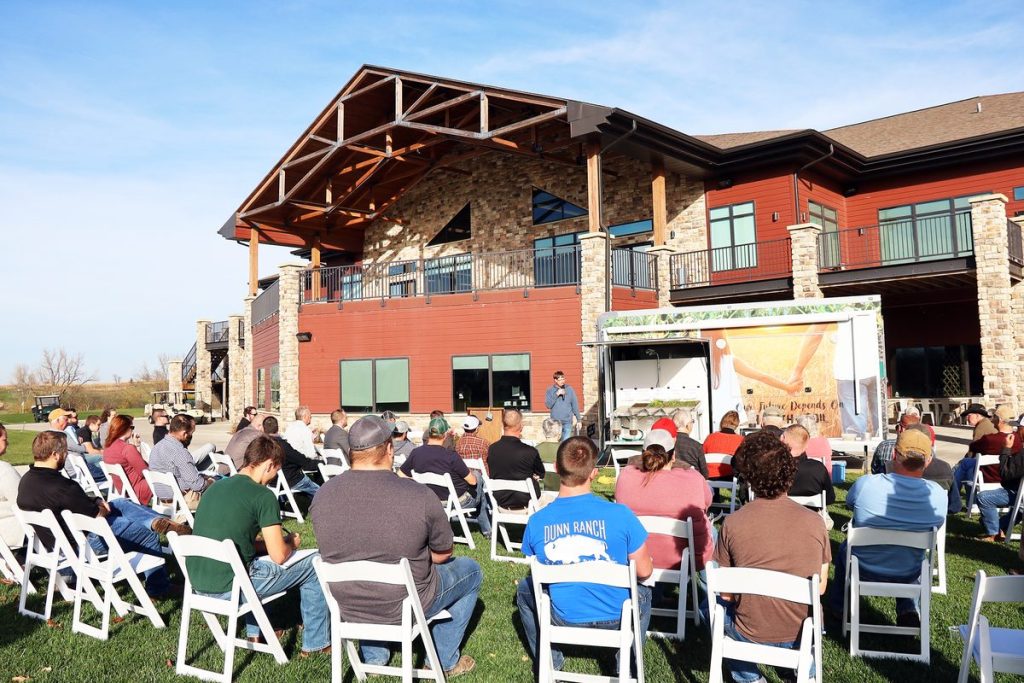
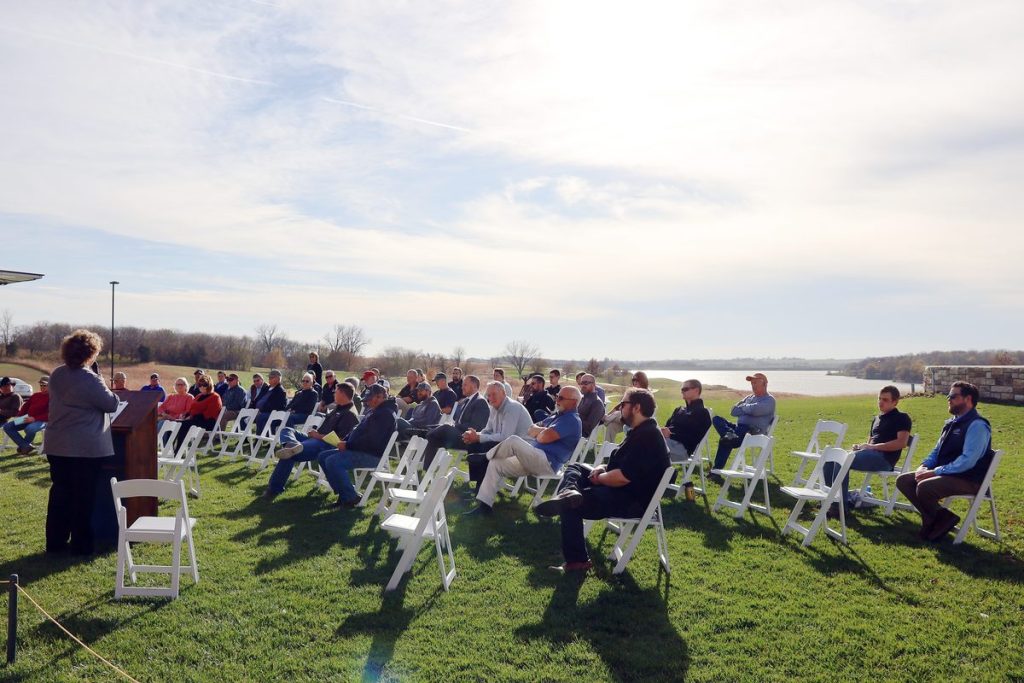
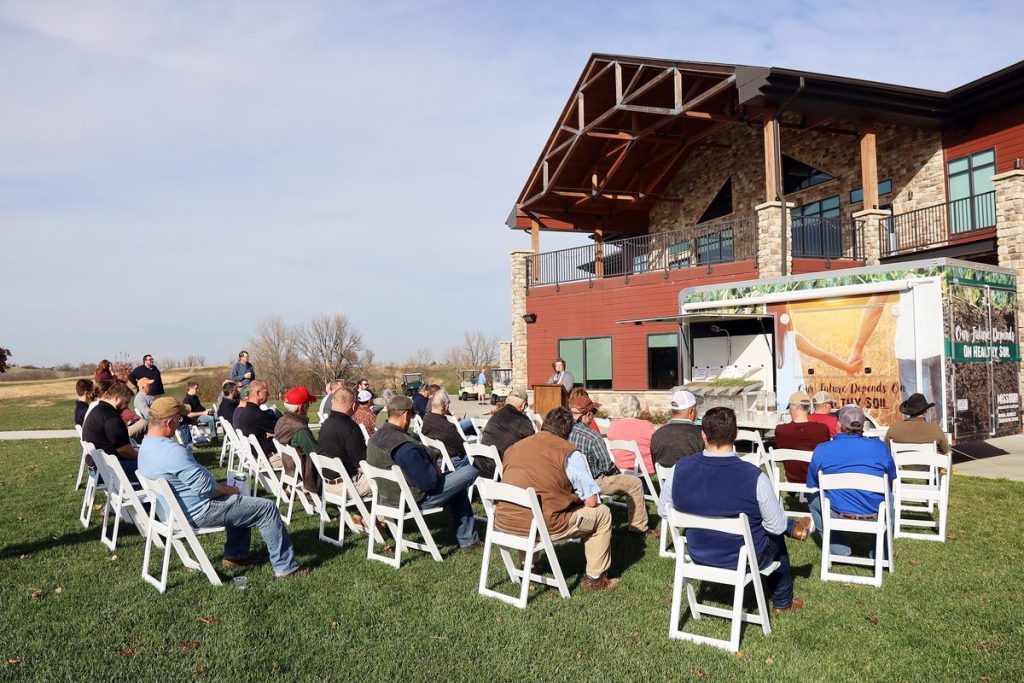
A large crowd of Nodaway County landowners and representatives from local, state and federal organizations gathered Tuesday afternoon at the Mozingo Event Center to learn about programs to help curb nutrient runoff into Mozingo Lake.
MARYVILLE, Mo. — Representatives from several state and federal agencies met with landowners who own land in the Mozingo Lake watershed area Tuesday afternoon to discuss programs designed to reduce runoff into Mozingo Lake.
Sediment and nitrate and phosphate nutrient runoff are the leading causes of blue-green algae blooms like the ones that have begun to pop up seasonally on Mozingo Lake over the past few years. Those algae blooms, in turn, cause the taste and odor issues that have been present in drinking water derived from the lake, experts have said.
One of the ways the agencies are assisting with the city’s water problems is through partnerships with landowners in the surrounding watershed area, where much of the excess nutrient runoff comes from.
The host agency of Tuesday’s event, the U.S. Department of Agriculture’s Natural Resources Conservation Service, provided landowners with information on several different grant and partnership opportunities to incentivize new conservation practices.
“Now we have a thousand-acre catch-basin, basically — it’s collecting everything that’s coming through the watershed,” said Scott Edwards, State Conservationist for the NRCS in Missouri.
By developing different practices, especially on farmland, the agencies aim to trap more of the water in soil, rather than letting it make its way to the lake as it does now.
After a few years of encouraging more cover crops, adjusting systematic grazing practices, adding or adjusting waterways and other efforts, the experts present at Tuesday’s meeting, held outside the Mozingo Event Center, said they’re confident the lake will see a significant difference in improved water quality.
But to get there, Edwards said about 50 percent of the 13,000-acre watershed would need some kind of conservation treatment. The best way to do that, he said, is to get landowners, farmers and producers who are already implementing best practices through the incentive programs to share with their neighbors and help get more buy-in among property owners.
“It’s a voluntary program that we offer — we’re not going to twist your arm to do it,” said Kurt Boeckmann, director of the Missouri Department of Natural Resources’ Soil and Water Conservation Program. “But there’s a lot of landowners I know, that when they see the results of what we get out of good stewardship of the land and doing these practices, then we’ll have something to show for that.
“I think three or four years from now, we’ll be able to show the city of Maryville and others what we do in agriculture is important, and the fact that by implementing these practices, we’re getting a benefit: We’ll have better drinking water for the city of Maryville.”
Earlier this month, the NRCS announced a $1 million federal initiative to implement conservation practices in the Mozingo watershed over the next four years through the agency’s Mississippi River Basin Healthy Watersheds Initiative. Edwards said that although the initial outlay is for $1 million and four years, if the program sees significant participation, it could grow further.
“We have the commitment now from the agency, from the state, to provide the funding and the technical assistance,” he said. “Now, we just need everybody to get together and join us to help improve the lake.”
Applications through the MRBI are due by Friday, Nov. 19.
Other programs available through the NRCS to Mozingo watershed landowners include the Conservation Stewardship Program and the Environmental Quality Incentives Program.
Applications and more information for those programs are available at nrcs.usda.gov, or by stopping by the NRCS office at 502 W. South Hills Drive, Suite 101, in Maryville.
The federal programs are the latest in a string of initiatives from state and federal agencies to assist in reversing the problematic trends at Mozingo Lake. The NRCS has already committed $200,000 to best management practices incentives in the watershed area alongside a matching $200,000 cost-share program authorized by Missouri’s Soil and Water District’s Commission.
In August, Missouri DNR announced a partnership with the U.S. Geological Survey on a multi-year, over $370,000 monitoring program to collect and track data from Mozingo Creek in the watershed. And last year, the USGS began mapping the bottom of Mozingo Lake to get a clearer picture of the effects of sediment and its composition.
SKYE POURNAZARI/THE FORUM
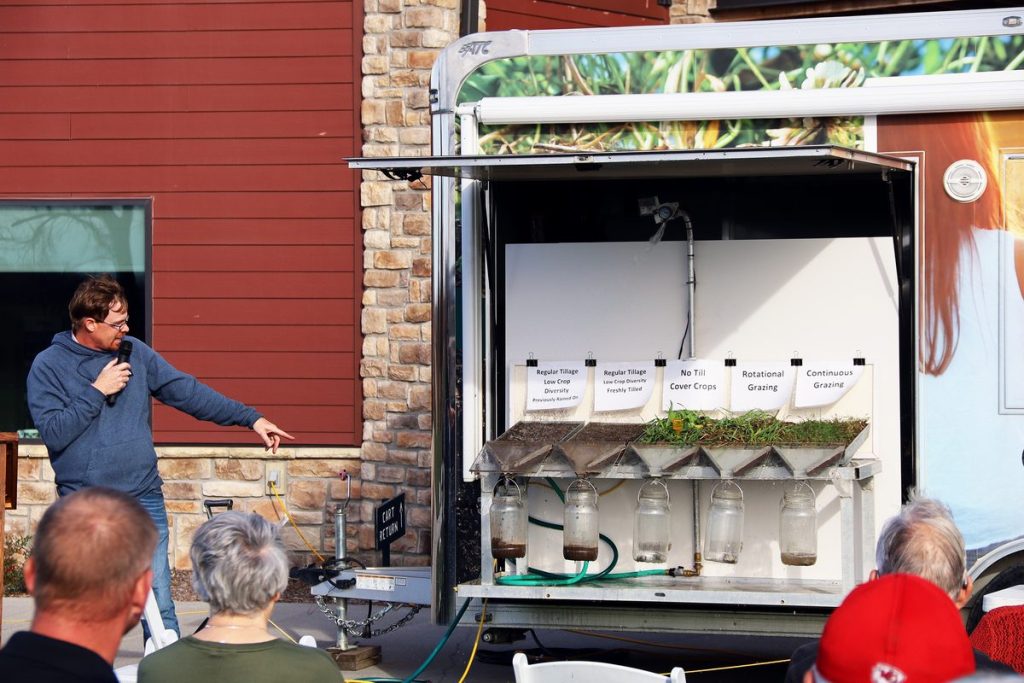
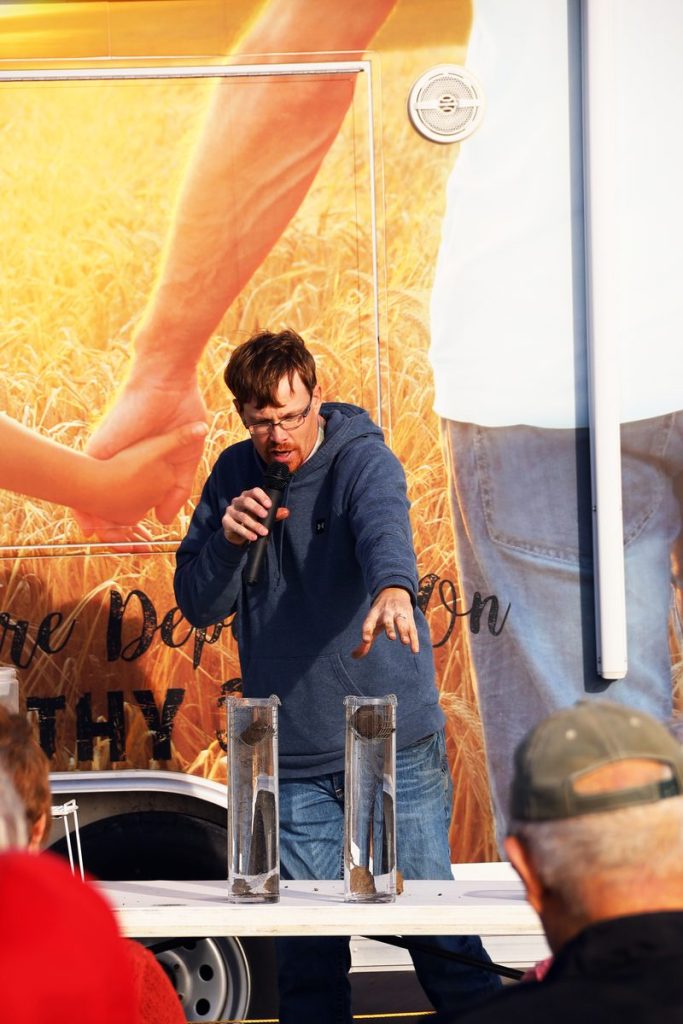
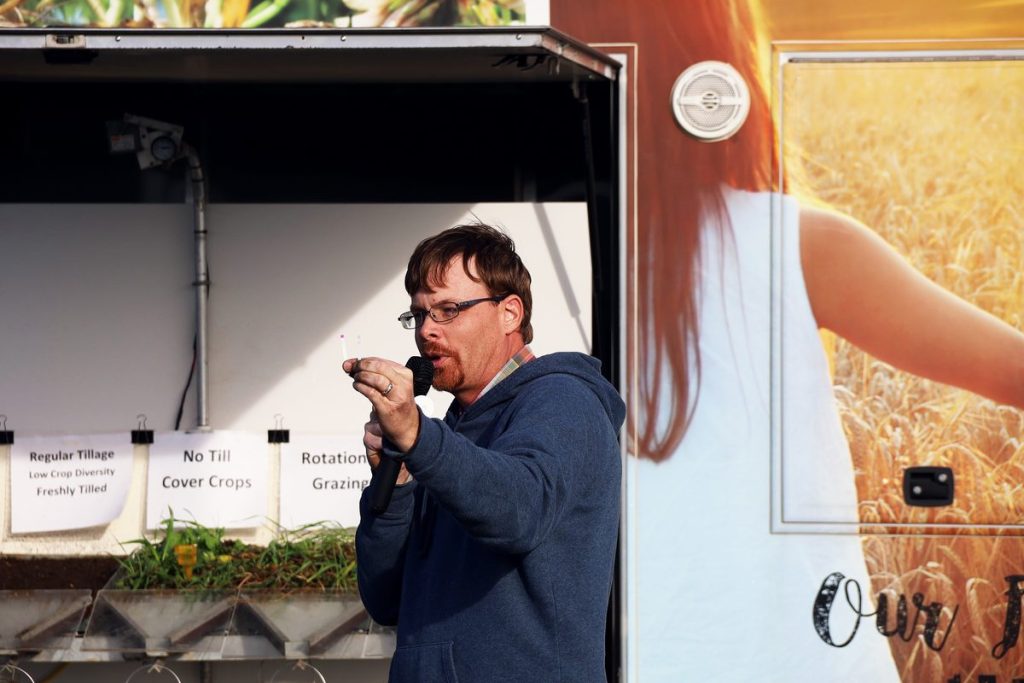
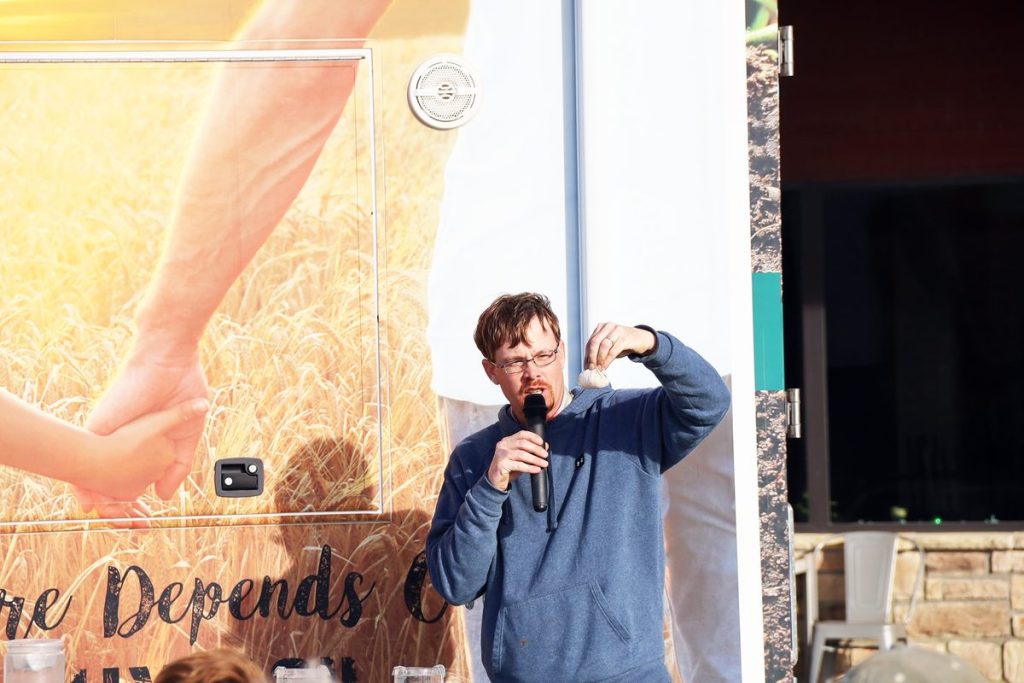
At left, Luke Skinner, Soil Health Specialist NRCS under USDA, demonstrates the difference in water runoff on various types of land for landowners and representatives of local, state and federal organizations gathered Tuesday to discuss programs to slow nutrient runoff into Mozingo Lake.
SKYE POURNAZARI/THE FORUM
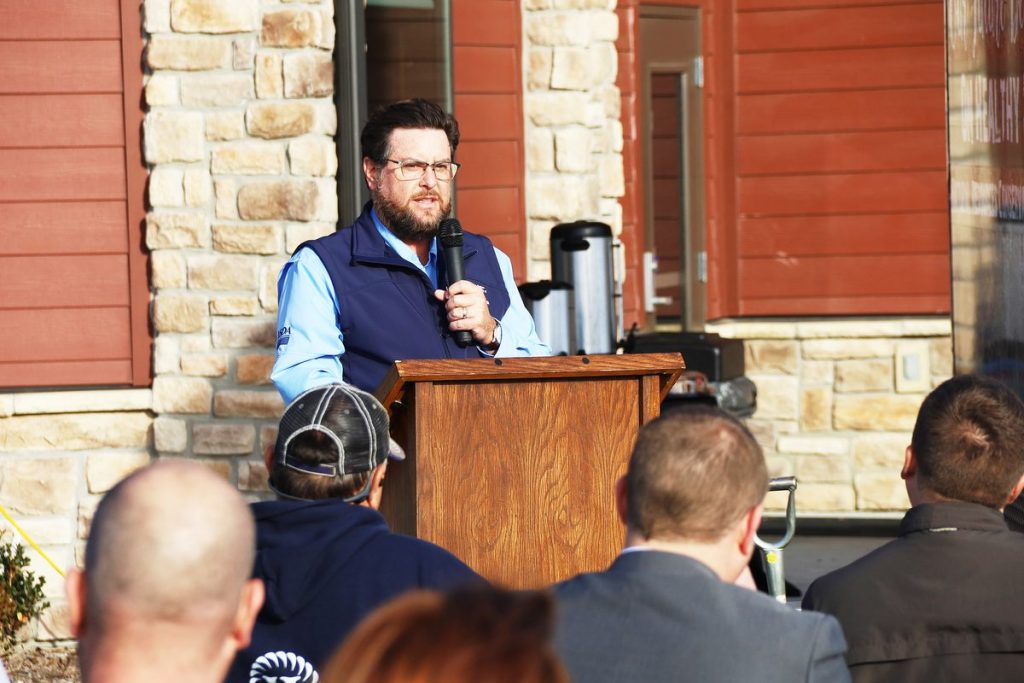
Scott Edwards, state conservationist for the USDA Natural Resources Conservation Service in Missouri, explains that about 50 percent of Mozingo Lake’s 13,000-acre watershed would need some kind of conservation treatment to see a significant difference in improved water quality. He along with representatives from state and federal agencies met with landowners on Tuesday afternoon at the Mozingo Event Center to discuss several optional programs for land owners to help cut their nutrient runoff which have a tendency to cause algae blooms water.
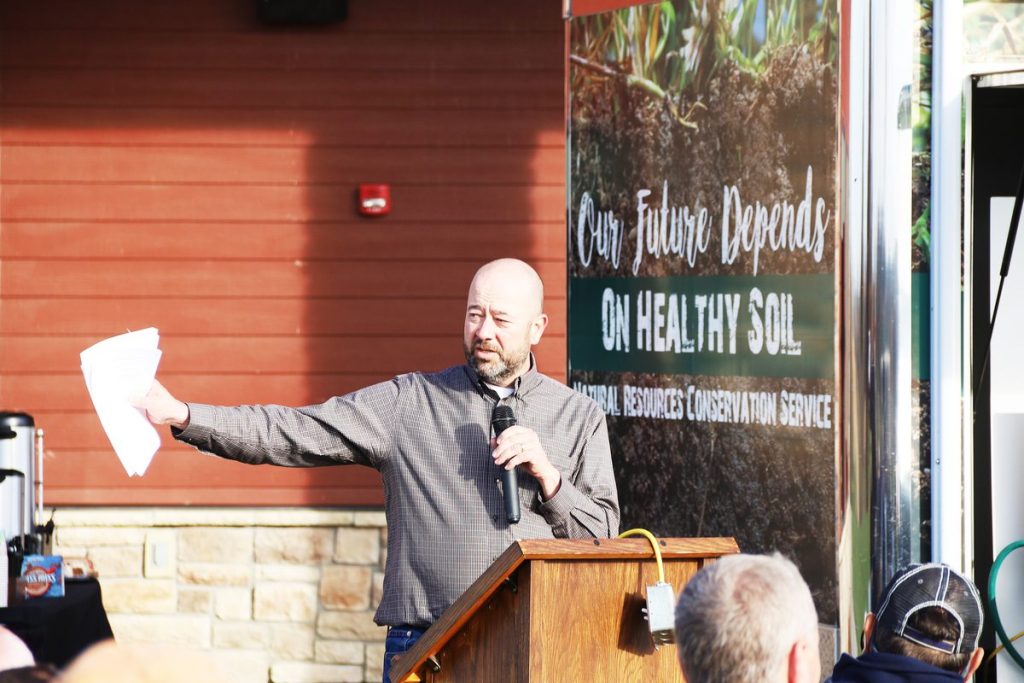
SKYE POURNAZARI/THE FORUM
Kurt Boeckmann, director of the Missouri Department of Natural Resources’ Soil and Water Conservation Program, gestures toward the Mozingo Lake watershed area Tuesday afternoon during a meeting held at the Mozingo Event center.
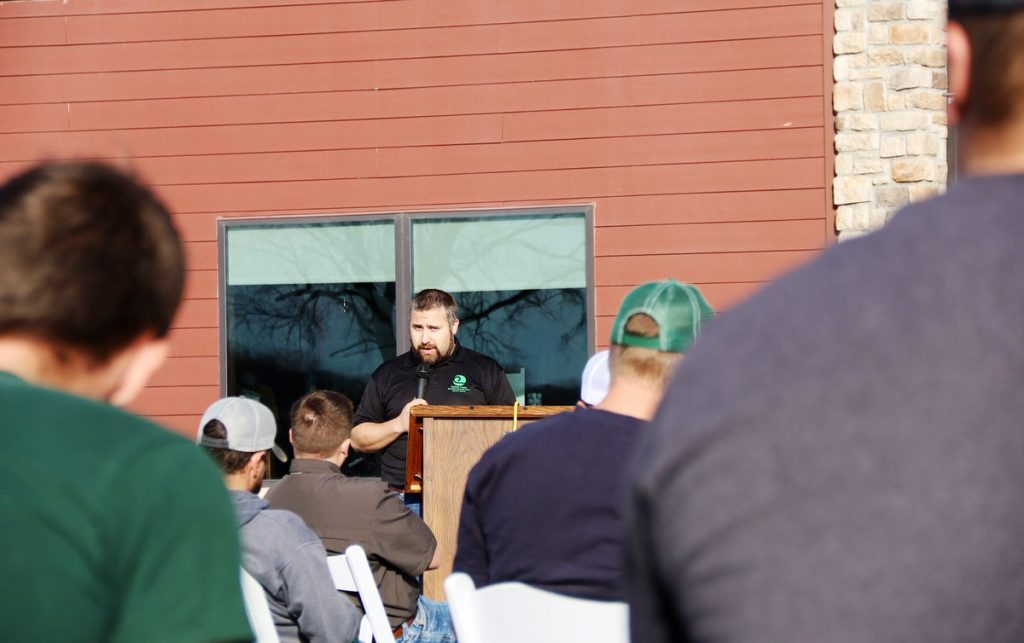
SKYE POURNAZARI/THE FORUM
Colton Coffelt, Nodaway County Soil and Water Conservation district manager
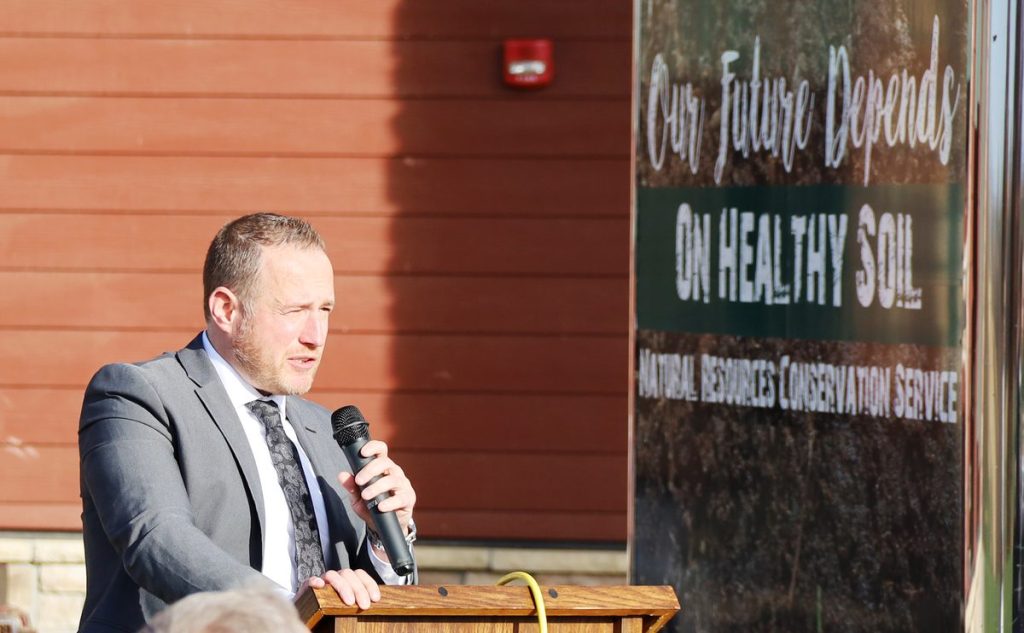
SKYE POURNAZARI/THE FORUM
Maryville City Manager Greg McDanel
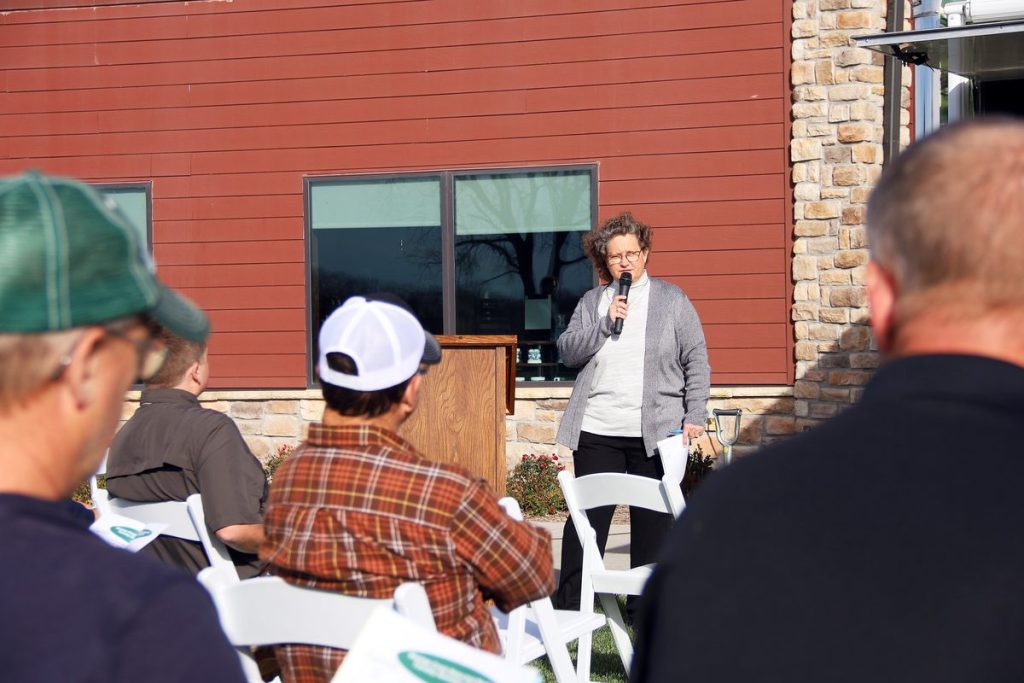
SKYE POURNAZARI/THE FORUM
Diane Bradley-Redden – Missouri District Conservationist
SKYE POURNAZARI/THE FORUM
Luke Skinner Soil Health Specialist NRCS
SKYE POURNAZARI/THE FORUM
Luke Skinner Soil Health Specialist NRCS
SKYE POURNAZARI/THE FORUM
Luke Skinner Soil Health Specialist NRCS
SKYE POURNAZARI/THE FORUM
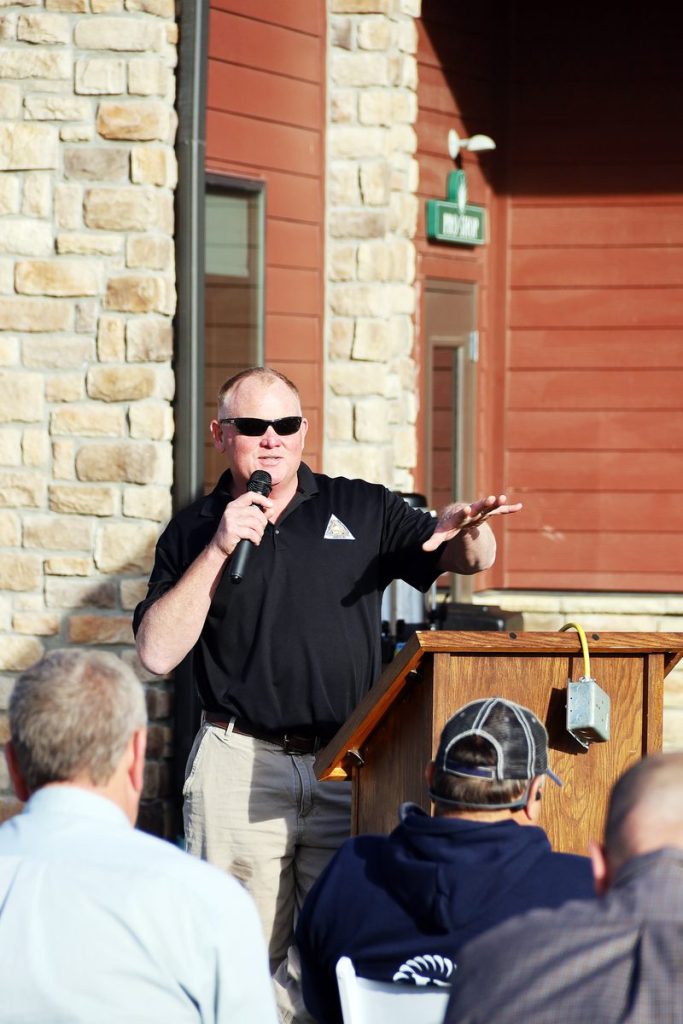
Tory Mason MDC Fisheries Management Biologist
SKYE POURNAZARI/THE FORUM
Wide Shot 2.jpg
SKYE POURNAZARI/THE FORUM
Wide Shot 3.jpg