What defines you?
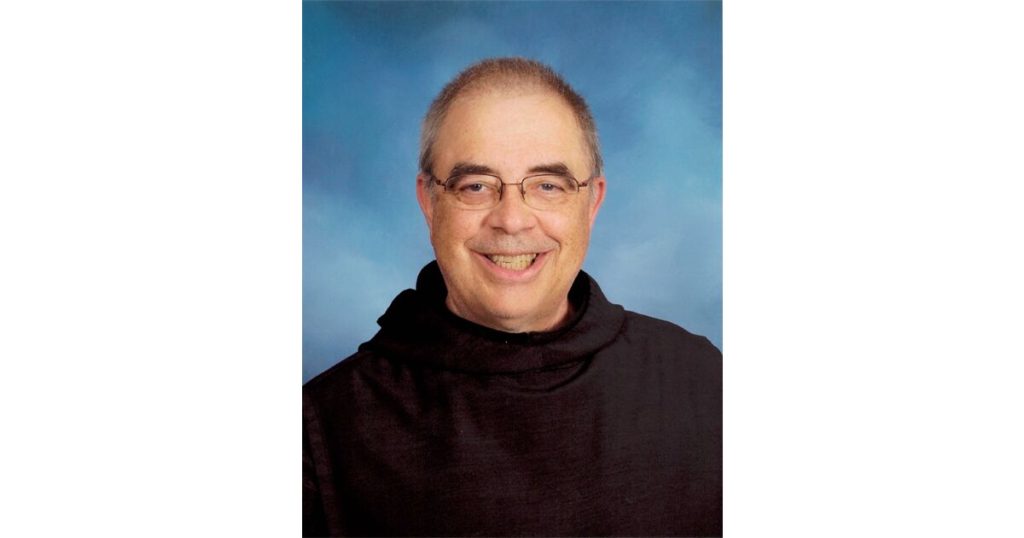
Father Albert Bruecken St. Gregory’s Catholic Church
Against the Baltimore Ravens the Chiefs’ running back Clyde Edwards-Helaire fumbled the football within field goal range at the end of the game, costing the Chiefs a chance to win. It was reported that Patrick Mahomes advised him, “Don’t let this moment define you.”
The comment led me to muse about what defines a person — both in his/her own mind (a personal narrative), and in the perception of others (a cultural narrative, often fashioned by the media). I think that Mahomes gave him good advice, which I am sure Mahomes follows himself. But the question still remains: into what narrative do you place yourself? Does Mahomes, for example, see himself as the guy who won the Super Bowl and set records, or as the guy who lost the Super Bowl? Does he see himself as the father of his baby daughter, the fiancé of his girlfriend, the son of a former baseball player, an entrepreneur who is seeking to build an empire of wealth? Who is he and how does he prioritize his roles?
I grew up memorizing the Baltimore Catechism No. 2. There was one key question which shed light on the meaning of our lives: “Why did God make you?” The answer gave us in principle the purpose of our lives according to the Christian narrative: “God made me to know him, to love him, and to serve him in this world, and to be happy with him forever in heaven.”
Put more simply, through Baptism we are children of God, and we have the capacity to have God’s spirit dwell in us. No one can take that privilege away from us (Rom. 8:35, “Who will separate us from the love of Christ?”). There is nothing as important as being a child of God.
There are assumptions in this statement: that humans are both physical and spiritual (they have a body and an eternal soul); that there is a God; that God created each of us; that God loves us and became one of us in order to redeem us; that we can know, love and serve God, just to name a few assumptions. As a result, our lives have a greatness to them that comes from our connection to our creator. Our lives have eternal consequences, we are loved, and we have a lot to live for. There is a transcendent dimension to our lives which gives us order and meaning.
In contrast, not all these assumptions would be granted by the current secular cultural narrative. There are those who put their faith in progress, hoping that science and human intelligence will solve our problems. Some have concluded that God is irrelevant as a factor to be considered in human history. As a result, the ultimate solution to the world’s problems comes about through politics, science, economics, etc. As a result of the perceived disappearance of God as a factor in our lives, we lack purpose or meaning in life, except as we ourselves assign it. For instance, some people strive for freedom in the sense that they can do whatever they want.
For those, winning the lottery might be a goal, so that they don’t have to be beholding to anyone. But then, where does one find room for making a commitment, which limits one’s choices?
The secular world view strikes me as considerably less interesting, perhaps even boring and a little chaotic. And the question remains, how do we unite people without a transcendent value to which all might aspire?
So what is the narrative which defines you and with which you make sense of your life?