North Nodaway to put propane buses into service
GEOFFREY WOEHLK/THE FORUM
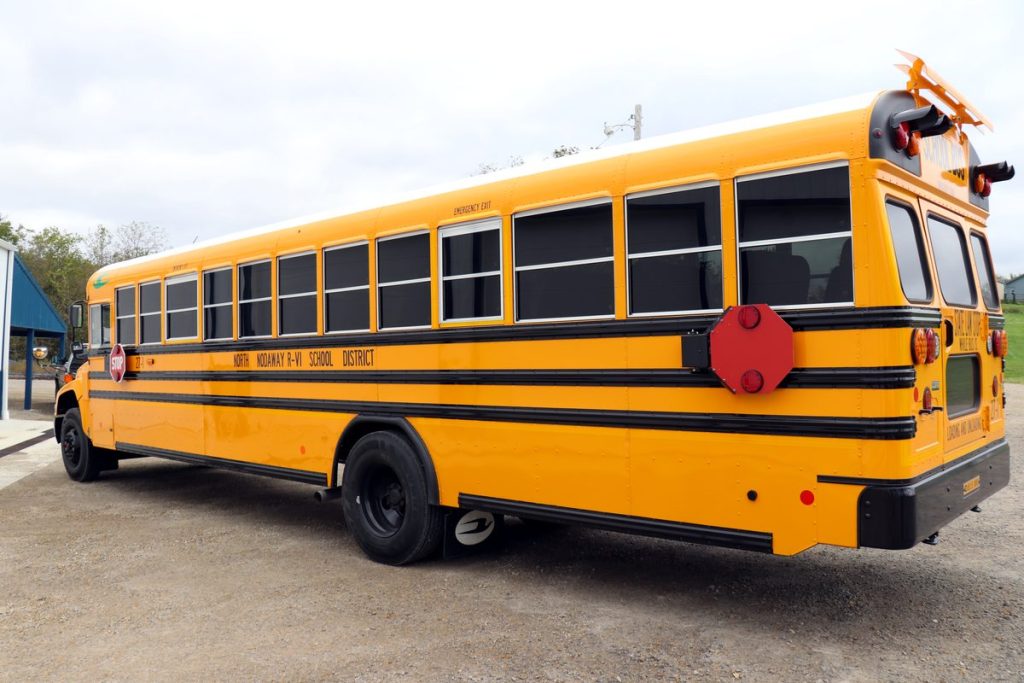
North Nodaway R-VI received two propane school buses last week that are expected to go into service in mid-November. The district utilized a state grant program to purchase the 71-passenger buses and install a pump station next to the bus barn in Hopkins.
HOPKINS, Mo. — The North Nodaway School District will become the first in the county to integrate propane school buses into its fleet next month.
The district received two propane-powered buses earlier this month that will likely go into service in mid-November, Superintendent Chris Turpin said.
The school board approved the purchases in May for a little over $284,300 total, with a state grant program kicking in $100,000 of that along with another $25,000 for a pump station that has been installed outside the bus barn.
The 71-passenger propane buses will replace two aging 65-passenger diesel buses in the district’s fleet. Propane is becoming a more popular alternative to diesel than electric buses because of a number of factors working against electric, like their difficulty running in cold weather and adverse conditions, maintenance issues, a pivot by the Trump administration in federal program funding and the bankruptcy of a major electric bus provider in Canada.
Propane, Turpin said, has none of those issues.
The buses feature gas engines with an internal converter. The biggest difference, Turpin said, is the way the bus starts up: once the driver turns the key, it takes a few seconds for the propane conversion to begin, and then the bus starts up.
On the road, Turpin said there should be little difference, though the propane buses are quieter. Earlier this year, Turpin and Bo Hansen, the district’s maintenance supervisor, made the trip to Hannibal Public School District No. 60 in eastern Missouri, which has converted its entire fleet of 10 buses to propane. The buses didn’t quite have the same “get-up-and-go” as their diesel counterparts, Turpin said, but didn’t have any problems traversing the Hannibal hills.
In the winter, drivers won’t have to leave them running to prevent the fuel from gelling, and the buses will also heat up faster.
“So a diesel bus, it takes a long time … for the heat to circulate and really get going,” Turpin said. “And on propane buses, it won’t have to do that.”
Turpin, who is always looking to stay on the cutting edge, started considering propane buses last year primarily because of the cost savings. Last month, the district paid between $4.92 and $5.69 per gallon on filling up one of the diesel buses that will be replaced by propane, he said. The district locked in a bid from MFA Oil to provide the propane at 98 cents per gallon. Additionally, the district will utilize a federal alternative fuel tax credit to knock that price down another 20 cents or so, Turpin said. The propane buses get about 6-7 miles per gallon while diesel buses get about 8, he said.
For now, North Nodaway’s propane buses will only be used for routes, not for trips. But Turpin said that MFA, which is providing the propane for the district, agreed to help facilitate getting the buses fueled if they need to go somewhere.
“Nobody wants to be the school that doesn’t try to be the leader, and we definitely try to do that here,” Turpin said. “And I think this is just another example of that.”
GEOFFREY WOEHLK/THE FORUM
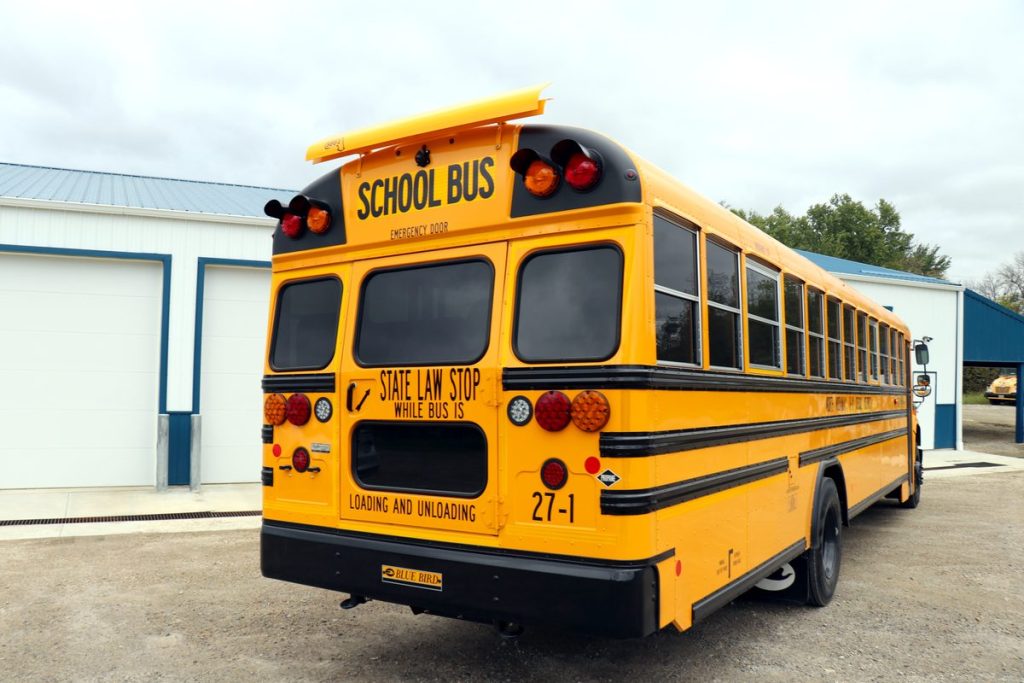
The rear of North Nodaway’s new propane buses sport air foils that redirect airflow, keeping the backs of the buses cleaner from debris like mud, gravel and snow that might kick up on rural roads.
GEOFFREY WOEHLK/THE FORUM
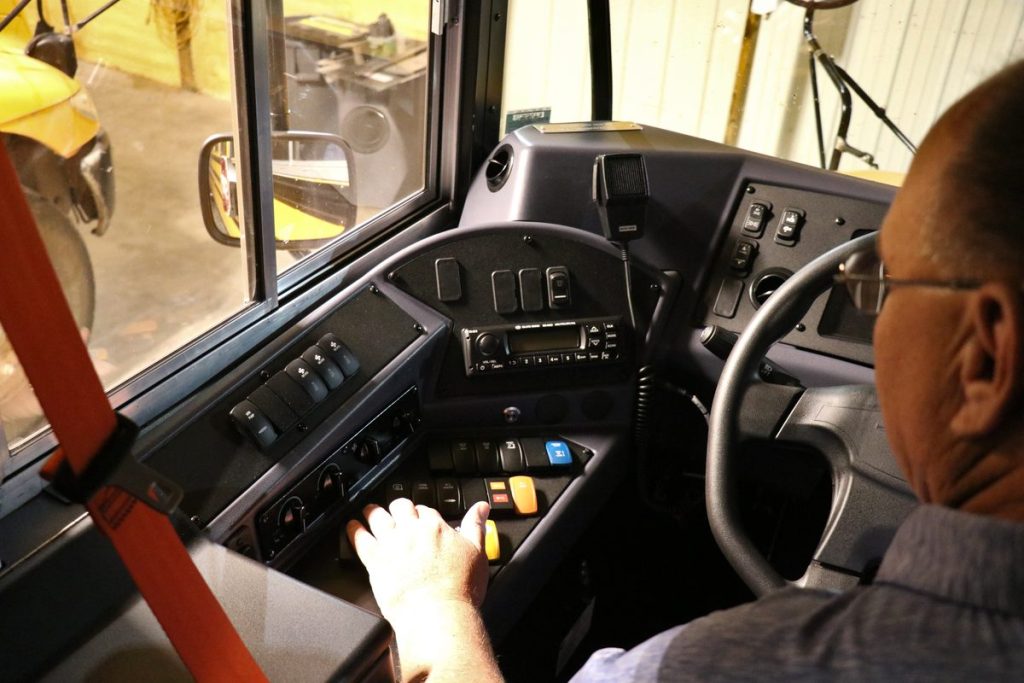
North Nodaway Superintendent Chris Turpin sits at the controls of one of the district’s new propane buses on Friday, Oct. 16. The buses have more controls than the older diesel models they are replacing, including automatic doors.
GEOFFREY WOEHLK/THE FORUM
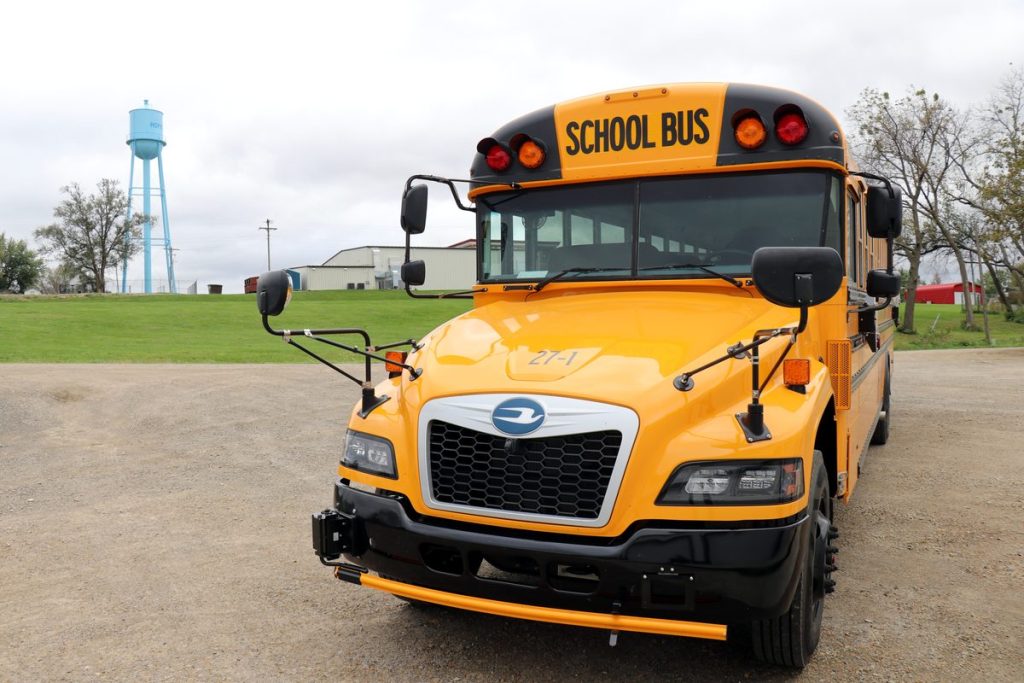
North Nodaway purchased two 2027 Blue Bird Vision 71-passenger buses from Central State Bus in Fulton that were delivered last week. The propane buses also come with more modern safety features than the diesel buses they are replacing, including four exterior cameras that allow the driver to see 360 degrees around the bus.