
Council votes to keep wake boat ordinance unchanged
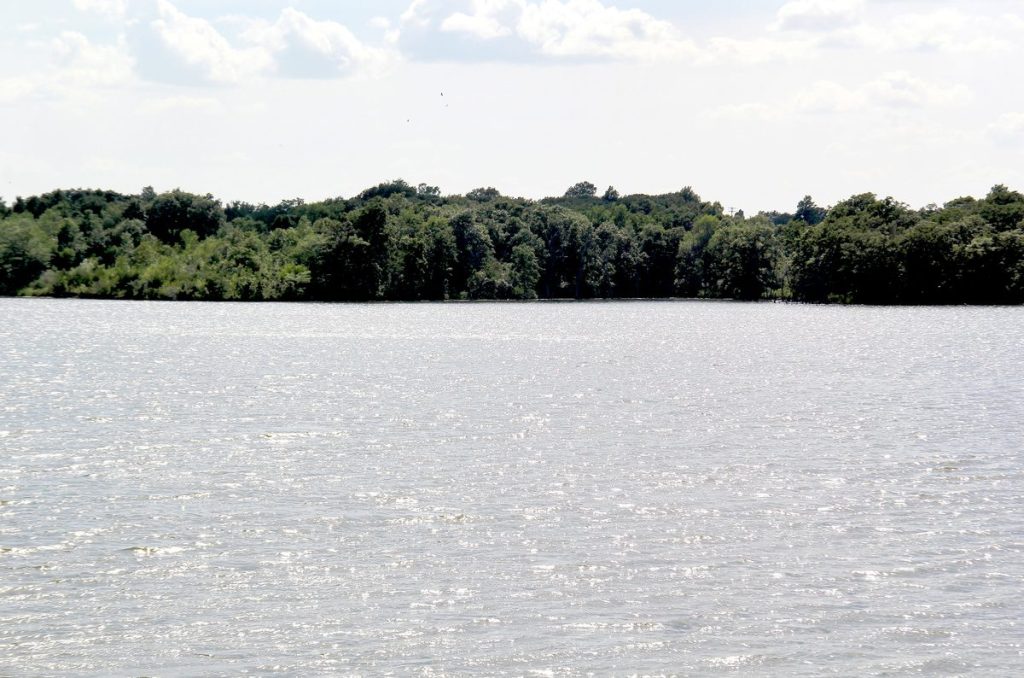
FORUM FILE PHOTO
Mozingo Lake (copy)
MARYVILLE, Mo. — The Maryville City Council on Monday voted 3-2 to keep the recent wake enhancement ordinance in place at Mozingo Lake.
The council revisited the topic following public feedback about the regulation change that the council passed unanimously at the end of June. The ordinance does not prohibit wake boats, but requires that ballast tanks and ballast bags be empty when operating on the lake. Wake boats typically feature a ballast or bag that, when filled, leaves a large wake behind the boat.
The ordinance also bans active wake shapers, fins and other wake enhancement devices, and prohibits artificially bow-high operation of boats.
The change was made following recommendations from the Mozingo Advisory Board.
During the public comment portion of Monday’s regular council meeting, Dan Billings, a member of the Mozingo Advisory Board, reiterated to the council that the change was chiefly about trying to mitigate erosion of the shoreline. Mozingo officials were approached by the Missouri Department of Conservation about the effects of wake enhancements on the lake, officials have said previously.
“And with the higher water, we have actually experienced a lot more erosion than we have in the past several years,” Billings said, “which is what drove us to try to put something in place to try to prevent it, really, to protect the lake.”
Monday, city officials pointed to studies that found the effects of wake boats to be significant drivers of shoreline erosion and that enhanced wakes can stir up the lake floor, reintroducing sediment and substances that can cause accelerated algae growth like nitrogen and phosphorous — a specific issue the city has been looking to address through a multipronged approach since cyanobacteria blooms prompted the Missouri Department of Natural Resources to briefly shut down the lake in 2020.
The studies found that the harmful wake effects were significant in areas shallower than 20 feet and within 600 feet of shore.
Heiland said that the city did not have an exact depth map of the lake, but that the average depth is 10.5-11 feet.
According to a map produced by the city and shared with the council Monday, most of the lake is also within 600 feet of shore, except for a southern section that stretches approximately from the city boat ramp south to the dam.
Billings said the advisory board might be willing to revisit the ordinance if riprap were installed around the entirety of the shoreline. About 5 miles of the around 26 miles of shoreline have riprap, which is made up of small limestone rocks that help slow erosion.
“I don’t think there’s anybody that sits on this board that wants to belittle anybody’s fun on the lake,” Billings said. “I don’t think we want to take away from anyone’s experience, both residents and non. But we felt that this was something that needed to be done.”
Heiland said all 5 miles of riprap were done in the past 13 years. Some of that may already need to be replaced, Billings added. Heiland said the city plans to add riprap to the golf course cove area this winter as well.
Although she agreed that the wake enhancement ban is an appropriate short-term measure, council member Erin Allen said the wake enhancement ordinance is not an actual solution for the very real erosion problem.
“What I don’t want is to sit here and say, ‘OK, yep, it contributes to the issues — no wake boats,’ and then we’re not gonna do anything else. That’s irresponsible, and it can’t happen,” she said. “… There has to be a commitment to take care of this watershed and not tell the wake boat owners that they’re going to take care of the watershed for us, because that won’t solve anything.”
“I agree with you, this isn’t a silver bullet,” Heiland said. “There needs to be numerous things that are done at the lake to reverse what has already occurred over the past 30 years.”
According to city data presented Monday, about 2.8 percent of all season-long boating passes at Mozingo are for wake boats. But city officials said they do not collect that information for day passes.
Council member Benjamin Lipiec, who brought the issue back to the council on Monday, said that with so little time left in the season, he would like to see “a compromise” that continues to allow wake enhancements in certain areas at certain times. Then over the winter, the city could come up with a different solution.
Lipiec proposed that city staff draw up language for a new ordinance that would allow wake enhancements from the city boat ramp south to the dam on weekdays and after 3 p.m. on Sundays, except for Labor Day weekend. He and Dannen Merrill voted in favor, with Merrill noting that the measure was only to have staff write up an ordinance, not to approve the change itself.




