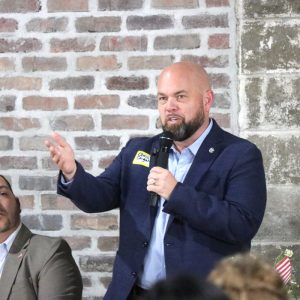
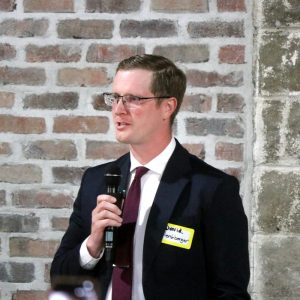
Candidates speak to voters at chamber forum
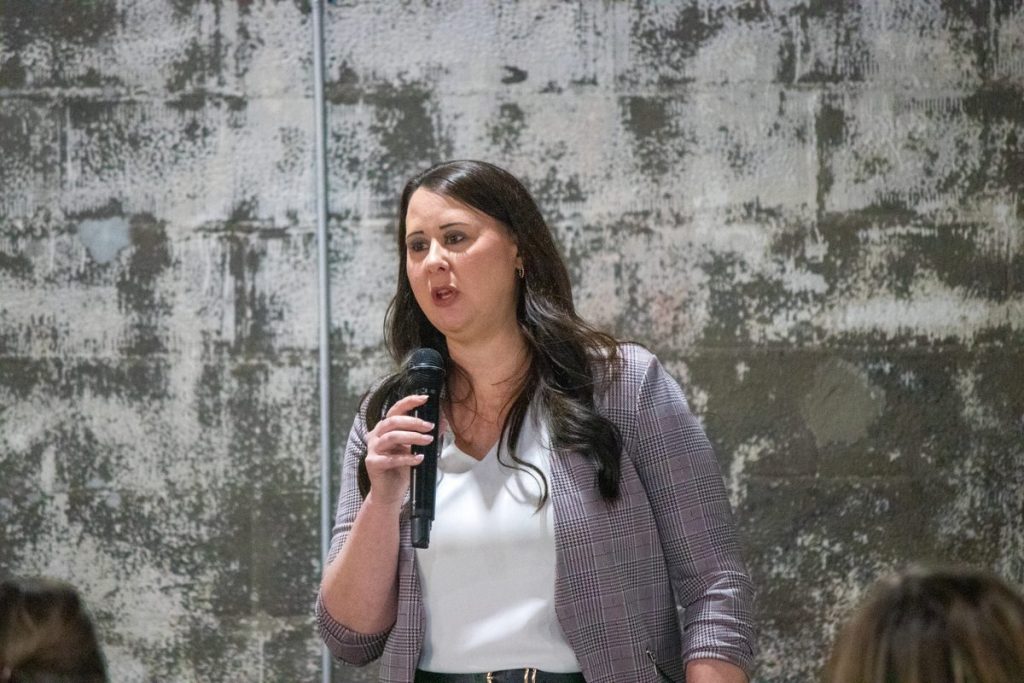
GEOFFREY WOEHLK/THE FORUM
DeAnn Davison Maryville R-II school board candidate
MARYVILLE, Mo. — Candidates for Maryville R-II school board and Maryville City Council made their pitches on Tuesday during the Greater Maryville Chamber of Commerce candidate forum at the Rose Hill Acres Event Center.
Ahead of the April 7 municipal election, five candidates for school board and two candidates for City Council fielded questions from Forum Managing Editor Jon Dykstra and former Nodaway News Leader owner Kay Wilson.
Below is a short summary of each candidate’s responses to a selected question posed by the moderators. Full answers to each question are all the way at the end.
School board
All five candidates for school board attended the forum, and the theme of the night was teacher pay. Each of the candidates talked about the importance of recruiting and retaining quality teachers. Other topics included the role of technology and AI in learning.
Q: Share one thing that you are proud of that’s happening in the school district right now, and one thing that you think needs improvement.
DeAnn Davison
Davison pointed to the district’s buildings and infrastructure as a point of pride.
“Definitely when you look at recruiting a new teacher, a new family moving into the community, the very first thing they’re gonna look at is what these buildings look like,” she said. “When they look well taken care of, that automatically gives a great first impression.”
As an area of improvement, Davison said she likes collaborative efforts with the community like through the building trades class at Northwest Technical School, but would like to see even more of those types of programs that get students out into and invested in the community.
“I do a lot of working with volunteers and I see what they can bring to the community, and so if we can get students engaged at a younger level that really take pride in their community, even if they happen to go away, they still have a very special place for their community that they’ve been so involved (with). And then also when looking at fundraising and trying to support those students, people are more likely to support students that they know. So if they’ve been working with them, seeing them out in the community, then that just builds strong relationships.”
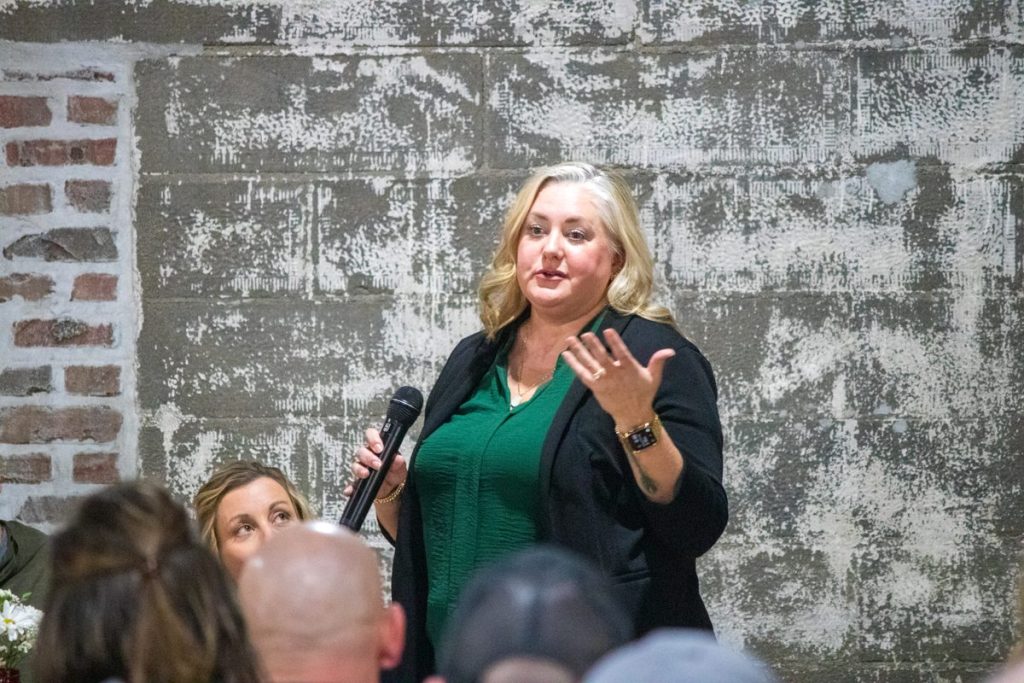
Tamara Lynn
Lynn said she thinks school district personnel are something to be proud of.
“One thing that I think we’re doing really well right now — we have a lot of passionate leaders and teachers in our classrooms,” she said. “And I think one of the questions that’s gonna come up over time is how do we (keep) those people passionate?”
One area Lynn would like to see improved is communicating with the public more about good things happening in the classroom.
“Community members talk about things, and one of the things that I have noticed over the past several years as our students have gotten older is they said, ‘I didn’t know that was happening,’” Lynn said. “And I’m like, ‘Well I just found out yesterday.’ So, improving that communication as a district as a whole and (being open) to others sharing their ideas and moving forward in that way.”
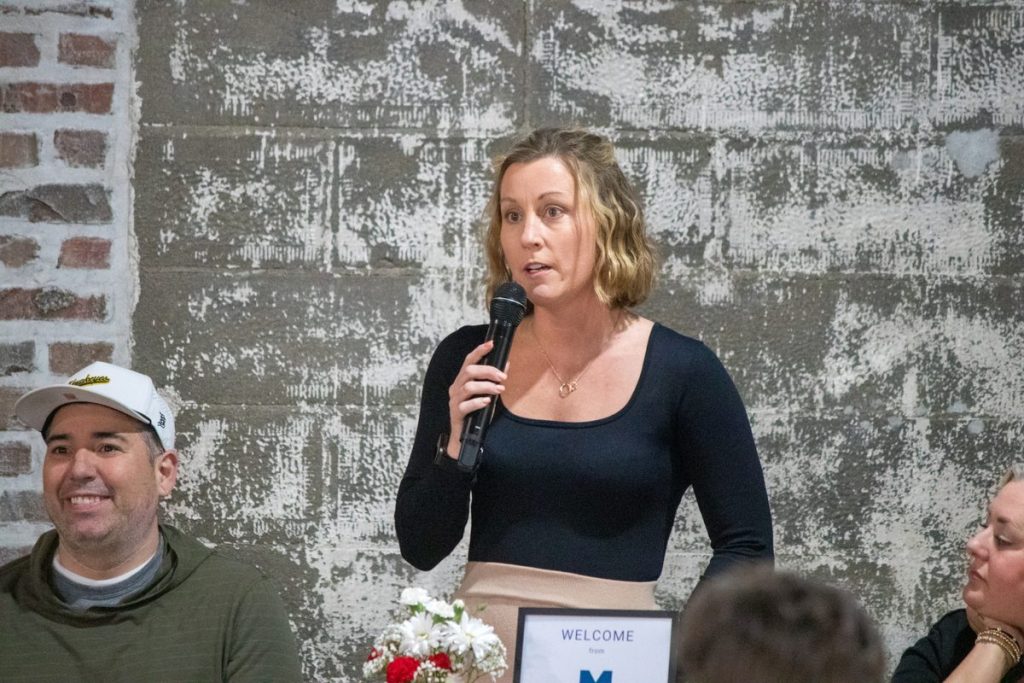
Amy Ziegler
Ziegler cited teachers and staff as something to be proud of.
“The teachers and the staff, I mean, you can call — I think (attendance secretary) Ms. Chloe Hann hears from me on the daily,” Ziegler said. “And just the support staff that we have there — teachers, staff, administrators — I think that’s something we have going very well for us.”
An area of improvement Ziegler would like to see is in keeping those staff members when Maryville is competing for keeping teachers with larger cities like St. Joseph that offer higher wages.
“My concern is retaining these people and keeping them,” she said. “… So I’d love to dive into that and see how we can retain these good people that we have and keep them here.”
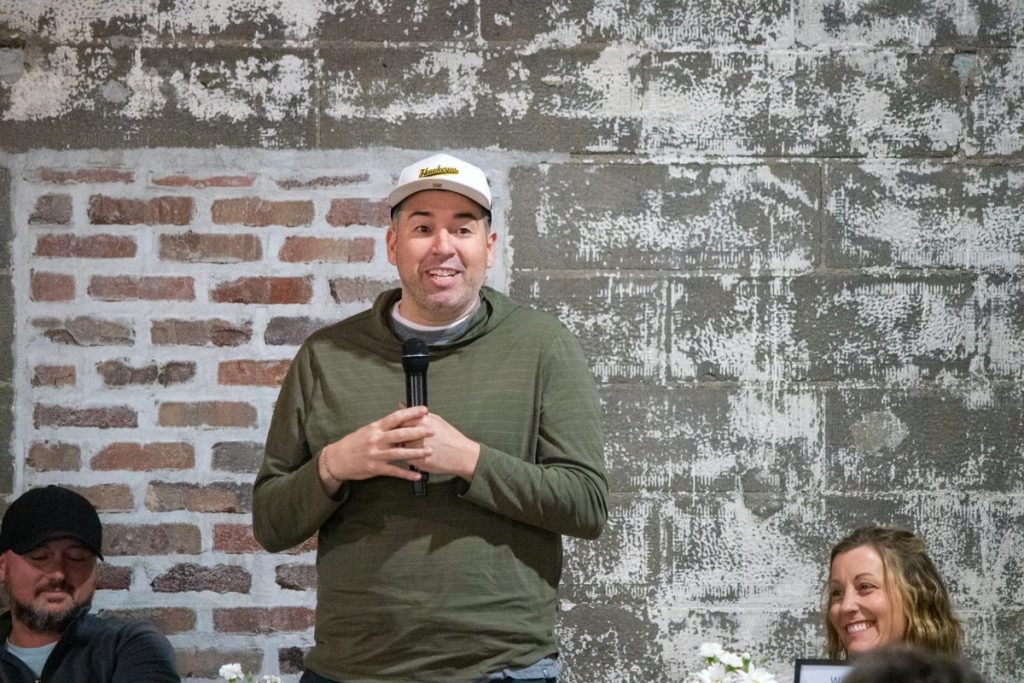
Dale Baker
Baker said the district’s leadership is something he’s proud of.
“I think really what we’re doing well is we’ve got the right guy at the head,” he said. “And I try not to say this because he’s in the back there and he’s a friend of mine who likes coffee. But he really is, if you get the guy at the top right, it makes a huge difference, it shifts culture, it changes culture…. I think that’s something we’re doing well.”
What the district needs to improve on, Baker said, is how to handle the proliferation of AI.
“AI is here,” he said. “And we need to figure out, how do we use it as kids, how do we use it as teachers, (and as part of the curriculum). Not to use it as a cheat, but to use it for our advantage as a resource.”
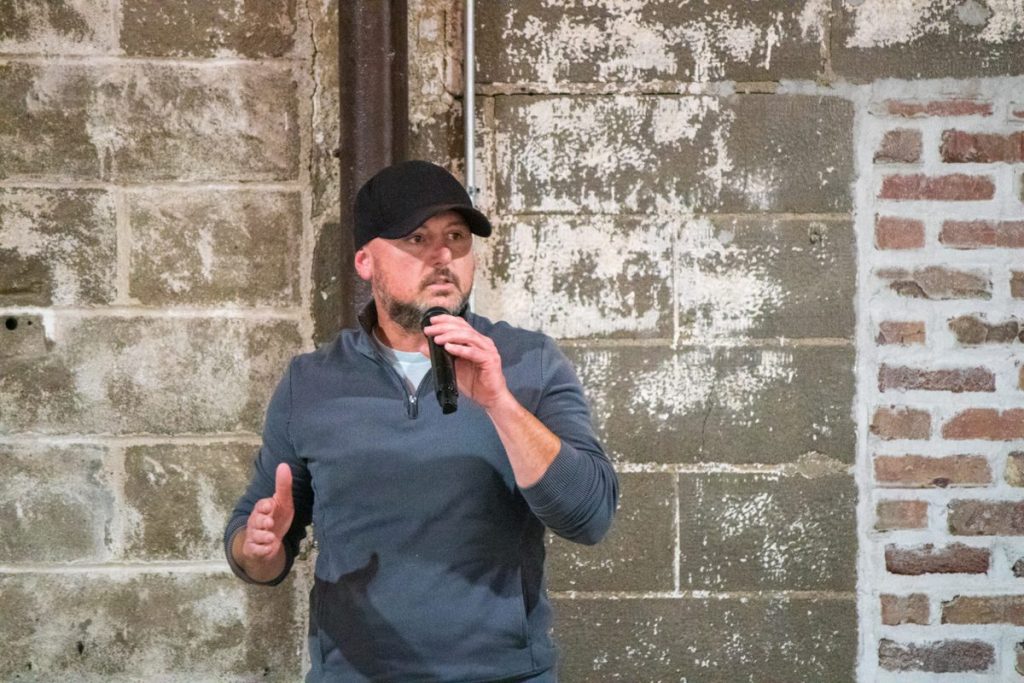
Isaiah Korthanke
Korthanke said he’s proud of how seriously the school board has taken paying teachers, which he said is a priority of his. The Proposition C rollback on the ballot, he said, is a prime example of how the district is looking for ways to better compensate teachers.
“With Prop C, the reason that we’re bringing that to the voters is that we’re tired of hearing ‘teacher pay, teacher pay, teacher pay,’” he said. “Everyone talks about it, but we wanna do something about it. So the positive I see with this board, and just the school district in general, is that we are wanting to pay our teachers what they deserve.”
As an area of improvement, Korthanke said schools lean too much on screens and dismiss the value students gain from face-to-face socialization.
“What homeschool can’t provide, we provide. We provide that free, unstructured play that teaches kids how to solve problems among themselves,” he said. “That’s what we provide and we need to highlight it, and we also need to do it more often. … Fifth graders should have more recess. They should learn how to coexist with each other.”
City Council
Four candidates are on the ballot for Maryville City Council, but only three are running in a contested race. Benjamin Lipiec, who did not attend the event, is running for a seat formerly held by Tye Parsons. That seat only has two years remaining on the term, and Lipiec is running unopposed. The other three candidates — Erin Allen, Stephanie Campbell and Bryan Williams — are running for two seats with regular three-year terms. Williams did not attend the forum because he was at work, event organizers said.
Q: The city is working on an updated strategic plan. What is an area of strength that needs to be continued in this next plan, and what is an area that needs improvement?
Stephanie Campbell
Campbell praised Maryville Parks and Recreation as a major area of strength, along with projects that are reshaping the look and feel of downtown Maryville.
“Those were priorities that were in the previous plan and continue to be in this plan going forward, is to continue to strengthen our parks and continue to strengthen the heart of our community,” she said. “So that’s something that I think we’re doing well, and we can continue to improve on.”
Campbell said the biggest area for improvement is housing, which she said is essential to any kind of growth the city hopes to see.
“We have to have places for people to live, and we’ve gotta have places for people to live in every life cycle,” she said. “And so we have to tackle that challenge.”
Erin Allen
Allen pointed to strengths and areas of improvement as two sides of the same coin. She agreed with Campbell about strengths like parks and also with the need for improvement in areas like more walking trails and housing. But she cautioned that taking on too much too quickly could overextend the city and have consequences down the line.
“And we need to make sure that we don’t get too far out ahead or too far behind that,” she said. “We probably tended toward being behind it for a long time. So it’s great to see that advancement, but let’s also maintain pause and make sure as we move into that next (city comprehensive plan), how do we maintain affordability? How do we try to attract employers (and promote affordable housing)?”
Following are the answers given by candidates during the candidate forum on Tuesday. Statements have been lightly edited for clarity; they should not be taken as a 100 percent accurate transcript.
Maryville R-II Board of Education
Opening statements
Isaiah Korthanke
My name’s Isiah Korthanke, a resident for about 16 years. My wife and I moved here from Hiawatha, Kansas, where I’m originally from. I have four kids in the district: pre-K, first grader, third grader and fifth grader. Most of my experience with the district has been with the elementary school; I know them really well. But moving on with the fifth grade this year, I’m getting more experience with the staff and everyone there. I do property management here in town for mostly college kids, and also do some residential construction.
I’ve been on the board for three years now. The biggest thing I’ve learned while being on the board is really collaboration. You don’t really have any idea of what it’s like until you get in there and … come to realize that you’re one of the school board members. Even though you have a big agenda or you have a big idea of what’s gonna happen, you really have to be able to convince those others to come along too. …
Dale Baker
All right, my name’s Dale Baker. So I’ve been on the school board for three years as well, and my family and I moved here about six and a half years ago right before COVID hit, and so that was sort of a “welcome to Maryville,” if you will. But like I said, I’ve been on the board for three years, and I’ve learned so much just being on the board. You know, you kind of sit back in the back and kind of throw stones at people and the decisions they make, but to be on the board and really know what happens and just the decision making, the ins and outs — you know, the state comes in and says, “Hey, you’ve gotta do blank.” And so I’m learning that and just learning about school finances has been huge.
But I have four kids as well: I have two kids in middle school — seventh and eighth grade — and then I have two kids in high school — ninth grade and 11th grade — and so they’re involved in a whole bunch of activities there. And then my wife teaches also in the middle school … and so when we’re sitting there in school board, I’m not just thinking about policies. I’m thinking about my kids at the dinner table, I’m thinking about my wife and how these things, these policies will affect children and the people who love them. So it’s been an honor, really, to serve the community ….”
Amy Ziegler
I prepared a speech, but I wish I could just go off the cuff like these guys did. Hi, I’m Amy Ziegler, I’m running for Maryville R-II school board. When I decided to run for school board, it didn’t come like this. It was a very thoughtful, thought-through process — lots of prayer, reflection and talking to the people that I trust the most. In the end, I decided it was time for me to step out of my comfort zone a little bit and give back to the community that has given so much to me and my husband. I grew up in Stanberry for a while — go Bulldogs. I learned after I graduated that a successful school doesn’t just educate the students. A successful school is the future of the community, and that’s what I see for Maryville. I’ve lived here since 2003 — almost half my life — and when I came here, it was like you feel something when you come here. You feel that sense of energy, a sense of pride. You feel that Spoofhound tradition. It’s not something I think you just feel, you can actually see it. And that’s kind of stayed with me ever since. I’m not running because I have all the answers, I’ll be honest. I’m not running just to hold a position. I’m running because I feel I can add some value to the board and listen and put our students at the forefront of our decisions.
So by doing that, what I like to focus on is one, student success — I think that’s academic success, any type of success, at the center. Respecting and supporting our teachers, which is a huge thing right now. Being transparent and communicating with the community and being accountable to the community. I think we are very blessed with what we have now, especially compared to the surrounding areas that we have. But I truly feel that the candidates up here and anybody running are here for the right reasons. And that’s actually comforting to know. They’re not here for political agendas or personal grievance against the school. They’re here because they love the students and the communities they live in.
So I bring 15 years of experience in communications and public relations. I am the chief public relations officer at United Electric and United Fiber. So to me, that means I’m gonna listen, I know how to bring people together and I know how to communicate effectively. And I hope to use those tools if I become a school board member.
I’m gonna close with this, because I’m talking too long. Our children have been part of all three schools in their lives. And the little girl you see back there is our soon-to-be-preschooler at Eugene Field this fall. What the school district has given to my kids is not something I can repay. It is completely made them better humans, it has supported them — the teachers, the staff, everybody. So that’s not something I can repay to the school, but I can serve. And so that’s why I’m running for the school board and I would appreciate your vote.
Tamara Lynn
My name is Tamara Lynn, I am, like everyone up here who has already shared — I am someone who moved into the community, and that was about 20 years ago. And we just really fell in love with the community and we never left. I am a career educator, I have served in urban school districts as well as local rural and as well as Maryville R-II. I was a … teacher and administrator here within the district, and one of the things that has led me to wanting to do this was to give back and serve in the community and use my experience in that way. I currently teach at Northwest; I train future teachers, and so I feel like I have a little bit of perspective that I can bring.
So about 20 years ago, I was a paraprofessional sitting in the school library, and I remember we were getting ready to have a school board election as well as a levy issue for teacher raises. And they said, “here’s your call list, you’re gonna start calling people in the community and start really kind of rallying and doing that as a school employee.” And I remember as we were having those conversations and kind of preparing for that, that someday I really think that I was going to serve on a school board. I didn’t know where or when that was going to be, but I felt like when we moved up here and decided this was gonna be our home — we’ve lived here longer than anywhere else — that this is the right place. So I’ve been sitting back for about, I don’t know, eight years or so, waiting for the time when I felt it was right.
Our kids, like several up here, have been in the Maryville school district since they entered as preschool students — we have a son who is graduating this year and a daughter who is a sophomore — and so we’ve been in all of those buildings, but also I’ve served in those. And I think one of the things that I would like to have seen years ago was somebody who could bring that teacher perspective and voice to the board, but also have that parent role. So I think one of the things I hope to share a little bit more tonight is a little bit about how my perspective is going to be a little different. I’ve been in each of those roles, and just kind of see, you know, maybe I can share why we’re thinking about decisions the way they are. Like everybody here, just looking forward to the opportunity to serve and would appreciate your vote, so thank you.
DeAnn Davison
Hi, my name is DeAnn Davison, and I am originally from Marceline, Missouri. I moved here in 1999 to attend Northwest Missouri State, and then after that — many of you may know me from my work at the hospital, I worked at the front desk at the clinic for about seven years so I see a lot of familiar faces from that time. And then I spent another seven years, also at the hospital, working in the media relations department. So a lot of collaboration, a lot of partnerships, so got to be a part of a lot of different efforts in the community, and I think that’s where my real love of volunteering started. So I’ve been on the Parks and Rec board, I’ve worked with Today’s Civic Women, I’ve served on boards, I now am the tourism director for the city of Maryville as well as the executive director for Downtown Maryville. So I answer to boards as well. So I think that gives me a little bit different perspective as far as what a successful board may look like, what budgeting and strategic planning — what those efforts look like, I’ve been through both of those processes many, many times — and so I just really want to give back to the community and use my knowledge in those areas and help our kids.
I have two children that have been all the way through the school system — not quite all the way. I have a junior, and she is actually not here tonight, she’s working at Kris and Kates, so please go ask her for some ice cream — she’ll love that. And then I have a seventh grader as well in middle school. So we’ve had a great experience and I just wanna see the school district continue to be progressive and look for new ways to really support staff, support students and really make this an even greater community ….”
Q: Just within the next term of your election, what do you think is the biggest challenge (facing the district)?
Tamara Lynn
First, I think it’s important — and I think (other candidates) have shared that — as board members, you don’t come into this role, or shouldn’t come into this role, with an agenda. Our job is to be kind of that liaison with the community to hear their concerns, and also to be informed enough to ask really good questions when you’re in that board meeting and making that ultimate decision as is recommended to you by your administrators. So I don’t want that to be construed as if that was my agenda, but you know, like what was mentioned up here, I do think we’re gonna be talking about technology usage. It’s something that we’re working on at Northwest, and we kinda step back and look at it as, “My parents were in the early days of cellphones, what are these things?” You know? And you had the one that was plugged into the car and all of those different things and you had to drive down the road — they never dreamed we’d be taking it everywhere. And so then you get to this point now where like, we have AI — how are we gonna use it? We have stepped back and looked at, how can we design assignments that actually require students to critically think to a higher level than what they are now? So we give them some parameters, they put that into AI and it gives them an output, and then they have to verify, “How do you know that that’s correct?” And those are the skills that we’re wanting to teach students.
…I think about, you know, coming up we’re gonna be talking about teacher funding, but my full-hearted belief as being a teacher in the classroom, that pay attracts teachers — but that’s not what retains them. It’s the other things, it’s the culture of the district, it’s feeling supported, knowing there’s accountability for things, and so that is the first step and so … we’re supportive of that. We need that to be competitive with our regional school districts, but I think something that we’re gonna be talking about is also, how do we keep those good teachers here? (Teacher retention is a topic to be discussed with administrators as well.)
Amy Ziegler
Well, after hearing Isaiah say they’ve had work sessions on the teacher retention, that is comforting to me, because that means we’re progressing. So I will, if I were elected … that would be something (that I would want to continue). So instead of staying stagnant, there’s school districts that are probably going through the same thing, but they don’t have an option like we do with the Prop coming. So I think that that’s something that’s very doable in (the) term, is, like he said, looking at the teacher pay and keeping them here. Any teacher that’s here for a short amount of time I feel like feels that culture, feels that community aspect. When they leave, I don’t think it’s ever an easy decision, unless it’s something that, you know, they were asked to leave. But I think the pay obviously is something that we can work towards. But I do think that when you’re in the community and you work for the school, you feel that sense of community, that sense of pride. So I think we’re doing very well at that.
The other thing, I know (outgoing school board member) Ms. (Kelley) Baldwin did an excellent job with the communication aspect of keeping us all informed. I think that’s something that we can continue, so (community members) stay informed. It’s easy to get on there and read the minutes, but it’s also — I communicate every day for a living, sometimes when I don’t want to. So there’s different aspects to communicating with the community that we could bridge the gaps of the unknowns or the things that might be uncertain to people, so I think that’s something that could easily be done in the term.
Dale Baker
I don’t wanna sound like a broken record, but (within a term the board could focus on significantly raising teacher pay).
Isaiah Korthanke
I would concur with Dale here, but … for me, this next coming year, I’ll have a sixth grader. And so what I’d like to see more is us — yes, we can use technology, but get away from using it all the time. And also making sure that we are injecting that free, unstructured play in sixth grade, where they are learning those executive function skills. Part of that, too, is us leading and not having the state just tell us what we do next. You’ve seen it a lot the last three years with the cellphone issue, you’ve got one coming up now (looking to limit screen time).
But I think that is one that I want to push — that I would like to see us kind of get away from technology all the time and really use it as an enhancement and not more of an everyday use. I know that my fifth grader, he’s on the computer a lot at school, and then when he comes home to do homework, he’s on the computer once again. Not a lot of writing on papers. And so they say retention is 10 percent more if you’re writing it down as it is when you’re typing it out. So for me it would be kind of not leaning on technology as much as we do now and really getting back to the things that all of us did when we were in school.
DeAnn Davison
I definitely think that if I was allowed to be on the board, kind of the way I look at it is definitely just talking to teachers and administrators and staff and, from the outside looking in, having different thoughts and definitely seeing what big projects are for them, what they would really like to achieve. And I just know from talking to some different parents and families, just the prevalence of what seems to be happening with homeschooling and why children and families are looking to leave the school district and kind of trying to maybe identify some of those things (about the variety of reasons) that that’s happening. But when kids are leaving the school district, it starts to affect how planning works and different things, so I was curious to kind of dive into that a little bit more, to kind of reach out to those families. And the communication aspect is — are they not being supported? Are there just programs we don’t provide? What does that look like and see if there’s some steps we can take to make that just a better environment for all students.
Q: What are your thoughts in regards to public school funding, particularly in regards to public money going to private schools?
Amy Ziegler
So I did a lot of research on the public school funding and what (state) Senator (Rusty) Black and Governor (Mike) Kehoe — well those are the two names that come up. It worries me, honestly. Not necessarily for Maryville, because I feel like that Maryville is the place that people are gonna wanna be if these small schools close. I’m not sure how Senator Black things this is going to work. But just looking at it … it’s not. So my concern would be more, when these schools close, they’re gonna be coming here. And then if you have a kid in Jefferson school district that has to come to Maryville, how’s that kid gonna get here if they can’t drive? They’re gonna be on a bus, or their parents are gonna be driving them. So there’s so many factors that go into this.
Again, very concerning. It’s also concerning that he’s running unopposed. Because he’s on the task force for this. I’ve talked with Senator Black several times over the course of his terms, and I never would have thought that this is where he would be, as a former schoolteacher. So yeah. It concerns me, it does. But I do think that Maryville is in a strong position, a strong location. I also think that knowing these things are gonna happen — and funding’s gonna go down, I think that’s probably something that administrators prepare for. So just being proactive and being prepared for those. No different than my job when you have contingency plans if — well, now we know that the oil prices are gonna skyrocket. So I think just having those contingency plans in place and being prepared for when things like this could happen. I do think Maryville is in a much better spot than the other (districts).
Dale Baker
Yeah, very real concerns (about) what’s happening with public funding …. It’s not one person on the board that makes decisions, and so with our administration currently, right now I can tell you we’re having talks about it and being informed on what’s coming down and what’s being said. And so I think the main thing is just being proactive, being proactive in that and then I think the most important thing is (staying true to) what Maryville is, right? Maryville is that small classroom size, personal, teachers know the students. And I think trying to help maintain that would be the goal as the school board.
Isaiah Korthanke
For funding, Maryville is in a different spot than a lot of other schools. In a given year, 65 to 70 percent of our school funding is local. And so we’re in an odd place. If you homeschool your child, Maryville would lose … (about $6,000 per student in state funding). But since we’re so high locally, even though you lose a student, the amount you spend per student would go up. So we’re in a position now where, no matter what happens with state and federal funding, we’re in a really good position. If we gain attendance, we get a higher volume of money. If we lose a little attendance, the amount of money per student goes up.
So it’s not necessarily a huge deal for us when it comes to what the state’s doing. (And they) don’t care what the board thinks. They don’t ask us. They’re not calling us to say, “What do you guys think about this?” Our job is to react to what the state says, “Hey these are the parameters (you must follow),” and our district is really good at that. You tell us what we need to do, all right, we’ll figure it out and we do it. … So the way I look at it is, if St. Greg’s and (Horace Mann Laboratory School) at the university, if they closed tomorrow, our district would be in a world of hurt. They do help us. They’re educating kids — those kids’ parents, are paying taxes that go to our school. And so they’re relieving some of the burden. Now, we could absorb them slowly, but if it was tomorrow, if we had to educate every kid in the district, we would be in a lot of hurt. And so for me, our main concern is just figuring out how to adjust to what the state tells us we’re gonna do. And I’m comfortable with the leadership we have that (we will).
DeAnn Davison
I think probably as several people have already said, just remaining proactive. I think the articles that The Forum has run (has explained) where some of this money is going, how things are being transferred, has really shed light on a subject that a lot of people didn’t realize. And so again, for me, proactive, making sure that you’re following what is happening in the legislature and being proactive before these decisions are made. So definitely asking questions of Senator Black and other decisionmakers and really letting them know how important our local rural schools are and how detrimental it will be if those funds get sent to private schools where you cannot necessarily maintain the same standard that public schools are held to.
Tamara Lynn
I have some concerns with some of those discussions … around vouchers, school choice, private parochial, some of those things. I think from the school district’s perspective, we have to be advocating. We can be proactive we can be reactive, but there’s a difference in being an advocate. And that’s making trips to Jeff City, and there should be somebody on the school board that’s appointed by that structure to spend some time in Jeff City meeting with their legislators. I think that’s really important and really to understand why he’s had that shift in perspective and what he really is proposing.
So with that said, like several up here, I do have some concerns with that because when I was the director of the local area cooperative, that was about the time when many of these little school districts were looking to co-op for school sports. And some of the discussions, the heated arguments, just talking about the logistics — what color jerseys are they going to wear? — all of those things were huge issues. So you can imagine what that is going to be like if some of our rural schools close, and now we have to figure out, now our bus time for some students is what, 45 minutes one way? And those are our students who are in the Maryville school district? What’s that going to look like if we had to just work on the bus schedules for students? What does that look like if you take in from several schools and we need to outfit each of them with Chromebooks? What does that look like from a staffing perspective? How does that change the class sizes that our teachers have? … So there is a lot of concern around how that’s going to impact us, and I really think it’s important that we’re having some conversations, not only with our local legislators, but making visits down to Jeff City and just talking with them just so we know, “What are you thinking and what’s coming down the pike?” before it gets put out in the news as “This is a new thing, this is what we wanna focus on.” That would be something that I would like to do.
MARYVILLE CITY COUNCIL
Opening statements
Stephanie Campbell
I’m a business owner, a stepmom to two very busy young men — teenage boys here in Maryville — and someone who has built my life and my business right here in the city. Over the past couple of years, my husband and I have invested greatly in our downtown, not just financially, but with a vision. We believe that downtown Maryville is the heart of our community, and we know how strong and amazing the heart of this community is, so it’s been our pleasure to do that. And that vision for us is that Maryville can be somewhere that people don’t just live, but they build, they belong and they may even come back. So, I also understand that the role of City Council is not to run the day-to-day operations of the city. We have a wonderful city manager and city staff that takes care of those things and that’s their responsibility. Our job is to collaborate, to be support and to help steer the future of the city of Maryville so that the decisions that we’re making today outlast us and allow the city to continue to thrive.
That’s where I think I can contribute. And that’s really the reason I decided to run. As somebody who has served in a variety of capacities in my little bit over a decade in town … I have learned so much about this community and, again, its heart, and what it takes to see a community thrive. And I’ve had a front-row seat to that. And we have opportunities to grow here. And I’m really excited to see that happen and see it continue, really. I bring a perspective rooted in real experience. I spend every single day in a small business in the heart of our community with all of you every day. And from that, I have learned that collaboration, listening and really investing in your community — and trying to leave things just a tiny little bit better than you found them — is really where we can make a real difference.
So if elected, I would focus on supporting smart, intentional, measured growth of our community, strengthening our local economy, and ensuring that the decisions, again, that we make today are gonna put Maryville in the position to succeed well into the future. I’m ready to show up, I think I’ve shown you that I’ll do the work, and I’m really just ready to collaborate and be a positive voice in the room. This is an exciting opportunity, and I wanna thank everybody again for coming tonight. I’m excited to sit next to Erin, and thank (the moderators) for doing this for us.
Erin Allen
My name is Erin Allen, and I was just kind of snickering when Tamara (Lynn) was up here saying that she was a little more nervous than she thought she’d be. I’ve probably stood in front of hundreds of councils all over the country presenting. But it’s a little bit harder to present in front of the people you’re around every day and grew up with. So I was born and raised here in Maryville. My husband … and I are in the last couple years of raising our three children here. I serve on the City Council now due to an appointment in August of 2025 to fill a vacant seat. I graduated from St. Gregory’s, Maryville High School, twice from Northwest Missouri State, I have a bachelor’s in management information systems and a master’s in business administration. I’ve spent most of my career with … public and private utilities. Over the last 15 years most of that was focused on municipalities where I provided consulting and support in setting up and executing asset management programs for water, sewer …. So I’ve had the unique opportunity to see the good, the bad and the ugly how … bodies work together, how they manage finances, how they work together, and ultimately how their decisions affect the community as they deal with budget constraints and increasing costs. One thing that’s interesting about traveling around just in the three-state area is that frequently it happens that I tell people I’m from Maryville — you’d be surprised how many people know where Maryville is, and most of the time they’ll say something positive about our community.
So I think what’s great about Maryville is we have a variety of strengths that you don’t see in a non-metro area. For the size that we are, our public safety is very strong in this community — it’s a safe place to live and raise a family and grow old. Our police department just earned the Blue (Shield) designation for the second year in a row, so congratulations (Maryville Police) Chief (Mike) Stolte …. We also have a great health care system, amazing schools between pre-K all the way to college that serve as wonderful employers. So I think that it speaks (volumes that Maryville has resources to support people from birth to retirement). So when the school board was up here, a lot of people were talking about funding. … We get that by raising the tax base. So making sure that we are looking for consistent growth that can support a higher tax base while also keeping the unique things that make Maryville special and attract people that want to be a part of this community. … So I encourage you to vote and I appreciate your consideration. … (There are great opportunities to execute important projects like the water treatment plant) and it’s very important to me to figure out how to balance that budget and that revenue so that we can take care of all those assets and maintain them. And I do believe that that is probably less glamorous, that’s where my (professional experience) comes in, is figuring out how do we best take care of our buildings and our aging infrastructure to keep our infrastructure from deteriorating. We’re significantly behind on taking care of the water distribution system, and I wanna make sure we’re set up for those opportunities and economic development (opportunities).
Q: The city is working on an updated strategic plan. What is an area of strength that needs to be continued in this next plan, and what is an area that needs to improvement?
Stephanie Campbell
OK, I love this because I actually served on that planning committee for the strategic plan. So we’ve spent the last, I think about 18 months we’ve been working on this, 12-18 months, and it’s getting really close to finished. There’s so many strengths to identify. I will tell you that the last strategic plan that was done for the city of Maryville, literally they checked off almost every single box. And that’s incredible. That document for the city of Maryville does not live in a notebook that sits on a shelf. It actually gets used. And that’s been a really incredible part of the process, to see how far the city has come since the last time that process was done.
So I would say definitely, I mean, you can look around and see the strengths. Our parks and our recreation department are literally just knocking it out of the park. … You just look and see all the things that have been done from a parks perspective, we are really just — we’ve got a dog park opening, I’ve just heard about our pickleball courts that are about to happen, an incredible complex. The things they’ve done over at Donaldson, the splash park, just so many things happening. And, again, my heart is in the downtown corridor, but as you can see, man, downtown is gonna look a lot different six months from now. Those were priorities that were in the previous plan and continue to be in this plan going forward, is to continue to strengthen our parks and continue to strengthen the heart of our community. So that’s something that I think we’re doing well and can continue to improve on.
There were several things that we highlighted that I think you guys will all know there’s some weaknesses, the biggest one being our housing. Erin’s right, and I talk about it too, smart sustainable growth for our community is really critical for its future, and we have to have places for people to live.
And we’ve gotta have places for people to live in every life cycle. And so we have to tackle that challenge. And the other piece of that is, while our parks our doing really great things, we are not a terribly walkable, livable community in a day-to-day lifestyle thing. That’s something that was highlighted when we talked to the community, the community said that over and over again: We need bike trails, we need walking trails, we need to connect the city. Because as you know, the cities that are progressing into the future, people are living longer and they’re a lot more active. So we have to give them safe, reliable places to do that work and to continue their lifestyle …. I live in Parkdale, so, you guys know coming out on South Avenue, and every time my sons wanna ride their bike I have a near aneurysm. So we’ve got to fix some of those things, so that our citizens that are here can feel safe as they move throughout the city.
Erin Allen
I’m gonna jump on housing … but it’s not just Maryville, it’s across Missouri. There are a lot of communities probably that are in worse shape than we are, trying to (provide places for people) to live in the community where they work. Stephanie mentioned trails, I was not aware of that … I think trails are a great addition. … I think that one of the things that we need to be cautious about, or careful about, is that it’s great to have parks, it’s great to have trails. Those things do come at a cost, too. And we need to make sure that we don’t get too far out ahead or too far behind that. We probably tended toward being behind it for a long time. So it’s great to see that advancement, but let’s also maintain pause and make sure as we move into that next strategic plan, how do we maintain affordability? How do we try to attract employers (and promote affordable housing)? So, again, it’s not glamorous, but (there needs to be a plan to make sure) things don’t deteriorate and are taken care of.
Q: In your opinion, what issue will present the biggest challenge to the city during the upcoming term?
Erin Allen
The water treatment plant, for sure. It’s the largest infrastructure project that the city’s ever undertaken. I know (City Manager) Ryan (Heiland)’s probably rolling his eyes because I’ve been horribly critical and asked a zillion questions, which is probably not going to change. We are one party of a three-party agreement to build the plant in a different place than we told the taxpayers we were going to try to build it. That has not been an easy pill to swallow. It’s made a lot of people uncomfortable. It’s made us uncomfortable. So we’ve really had to go back over and over again and figure out, what is going to do this and how do we get this project done and still get quality water long-term for our city. So babysitting that project — which, we don’t run day-to-day, so that’s Ryan and his staff’s responsibility, and it’s a big responsibility. I will compliment Ryan — he stepped into this a year ago when he took over this project (has not been easy), and so I look forward to what (can be accomplished), getting that plant online and continuing the process of updating the (water distribution system).
Stephanie Campbell
So I would absolutely echo exactly what Erin said, it’s a humongous project and it is extraordinarily complex. And I’ve just scratched the surface of understanding it because I’m not a part of council yet and have just really been asking questions of everyone I can as much as possible to talk to you. Our infrastructure is so important. The majority of our infrastructure prior to the last few years is older than so many of us in the room. And that’s incompatible with the future. So we definitely have to tackle these projects while figuring out how to stay affordable, how to balance a budget, how to keep good staff, retain our incredible city staff that is doing this work so well and complex, and to continue to look forward to the future and not get ahead of ourselves. I echo Erin’s concern about that as well. I hold a master’s in public administration from the University of Kansas, and when I got that degree and spent that time, I was older — I didn’t do that after undergrad, I did that in my 30s. … But we talked a lot about how you communicate, what’s happening in your city and how do you strategically plan for the things that are challenges. And that’s where we’re at right now. So it’ll be incredibly important for this next council to be a support to the city staff as they go through this very complex project that will run our term. So it is a very big obstacle, and you will elect, I know, a good council that can support the staff (throughout) that.
Q: What experiences do you have and what experiences do you wish you had to serve the citizens of Maryville best?
Stephanie Campbell
So … I think I hold a similar degree to our current city manager, actually, so my education is around doing this exact type of civic work. Since I’ve been in this community for the last 11 years, I think I made it about eight months before I was on a committee. So I learned really quickly that people here roll up their sleeves and work, and I was really proud to be a part of that. I’ve served on the chamber board, I’ve served on the tourism board, I’ve served on the downtown board of directors as well as board president for several years. I have a degree in accounting as well, and I’m a small business owner. And I would be one of two small business owners on the council, which I think is critically important. The heart of a community like Maryville is made up of people that are in the trenches doing the work every day. And you’ve seen small businesses come and go in your community for a very long time. I don’t need to tell you that story, I don’t need to tell you what downtown used to look like. So I think I bring a different perspective because I’m doing that work every single day. And we can sit in an office, or we can sit in a boardroom and we can talk about what that’s like, but until you’ve eaten what you’ve killed every day and figured out how to survive a pandemic — I’m on my third or fourth presidential election now, tariffs, wars, you name it. You say small business owners pivot, but I feel like I’ve been dancing for the last decade. And it’s not always fun, so I definitely bring that perspective.
Now, what do I wish I had? Definitely I’m not experienced in the city, right? I’m the newbie, I’m the one that’s only been here for a decade. So sometimes certain things are lost in translation for me because I didn’t experience them. I have to rely on you to teach me, to tell me, to help me. So it’s really critically important that I listen, that I ask questions. And that’s what I’ve been doing for the last decade, is, “How can I help? What can I do?” And I will say whether I am your next councilwoman or not, I will promise you that I will keep my sleeves rolled up and keep helping and keep asking what I can do.
Erin Allen
The strengths (I have) are, I’m not afraid to ask difficult questions, I’m not afraid to disagree with people. I try really hard — and I think I’m successful most of the time — in doing that in a way that doesn’t cause any more confrontation than it needs to. I sometimes can be a lot. And I wanna make sure that just because we haven’t asked questions of the staff previously or just because we haven’t explored difficult things or new ways of solving problems, that’s not a good reason not to do it now. But at the same time we need to — I’m pragmatic and can look at how we solve problems. What our staff is asking for support in, what they say works well and (when not to) come mess with a system that has already been successful. So balancing that requires a lot of education. (We’ve all seen) those council members who open up their packet right as they sit down and start reading and they haven’t really paid attention. I don’t ever want to be like that for the community. I don’t want anyone else to be like that for our community.
I would say as far as things that I need to work on, I don’t have a big strength in economic development. It’s not something that comes natural to me, I’m not a small business owner. I do recognize because of the professional position I’m in that it seems like there’s some areas for improvement in all of our elected officials on both school board and City Council to become more active with our state representatives as well as with the Missouri economic development, with the chamber (that supports us here). I get all those emails every day and it seems like — today there was a big announcement in Liberty, and we’re seeing things like that. (And if we want to see that here, we should develop) ways to advocate for ourselves.
GEOFFREY WOEHLK/THE FORUM
Tamara Lynn Maryville R-II school board candidate
GEOFFREY WOEHLK/THE FORUM
Amy Ziegler Maryville R-II school board candidate
GEOFFREY WOEHLK/THE FORUM
Dale Baker Maryville R-II school board candidate
GEOFFREY WOEHLK/THE FORUM
Isaiah Korthanke Maryville R-II school board candidate
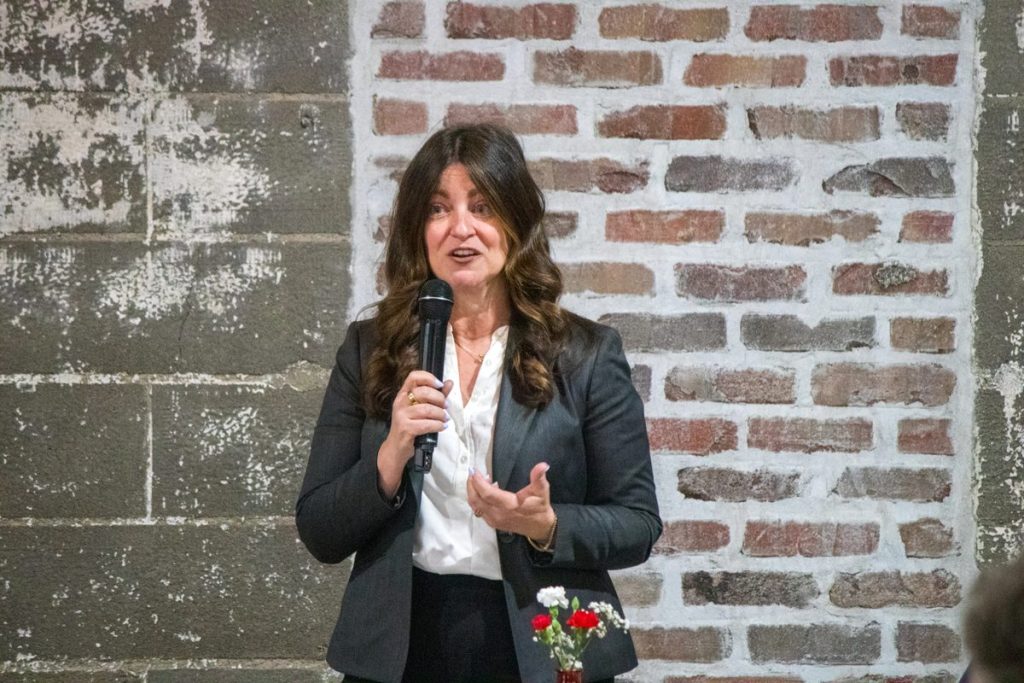
GEOFFREY WOEHLK/THE FORUM
Stephanie Campbell Maryville City Council candidate
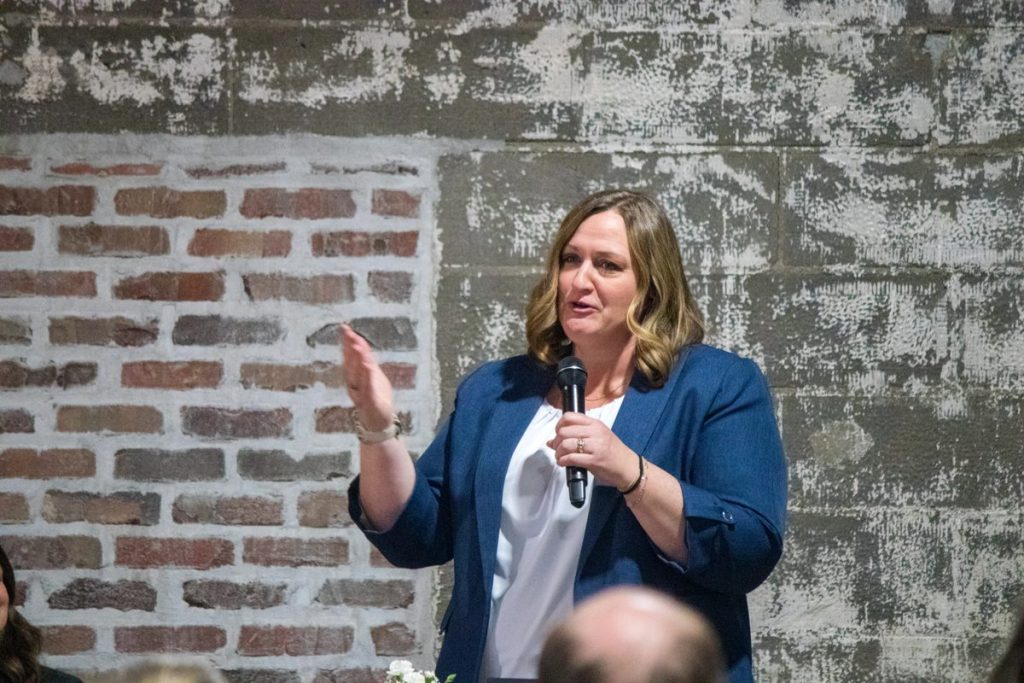
GEOFFREY WOEHLK/THE FORUM
Erin Allen Maryville City Council candidate
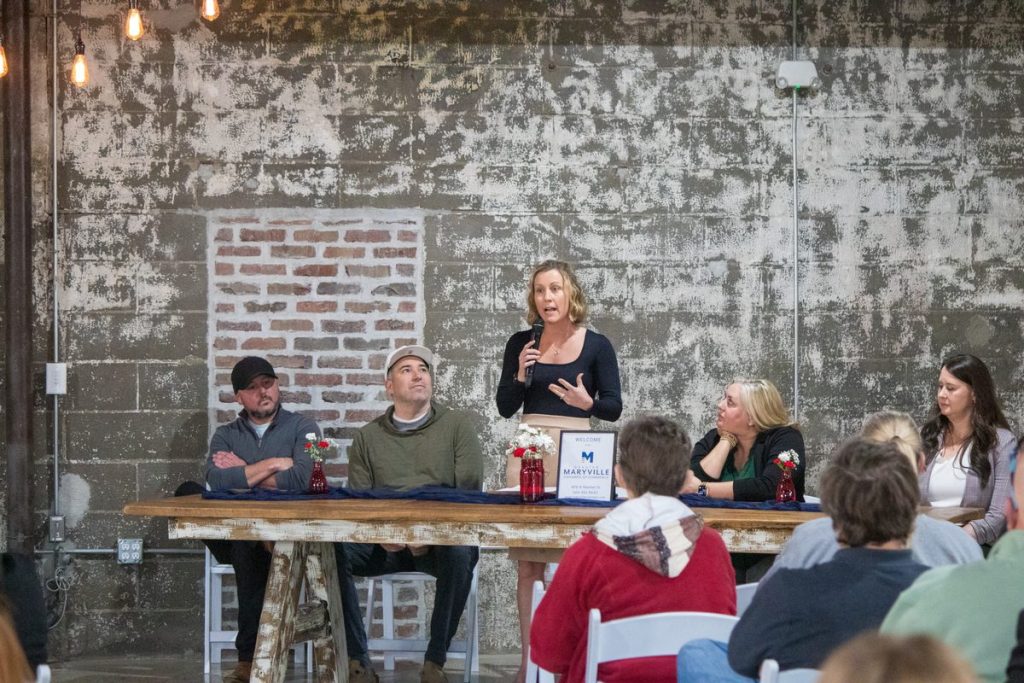
GEOFFREY WOEHLK/THE FORUM
Candidates running for Maryville City Council and Maryville R-II Board of Education spoke at the Greater Maryville Chamber of Commerce candidate forum on Tuesday evening at the Rose Hill Acres Event Center. Pictured is school board candidate Amy Ziegler speaking surrounded by her fellow candidates, from left to right, Isaiah Korthanke, Dale Baker, Tamara Lynn and DeAnn Davison.