City looks at water rate increases for treatment plant
CITY OF MARYVILLE
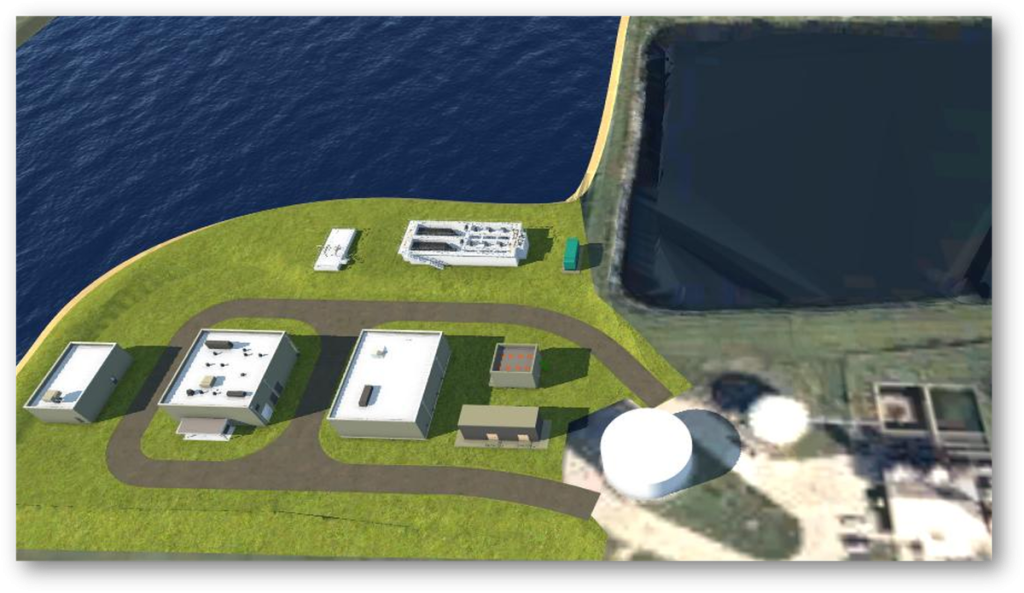
A rendering of a planned new water treatment facility that will be built at the site of the current water treatment plant that was constructed in 1958. Construction could begin on the new ozone and biological active filtration plant in May with an eye toward completion in October 2028.
MARYVILLE, Mo. — The Maryville City Council is weighing how much to increase water rates to pay for a new treatment plant and maintain the city’s water infrastructure into the future.
During a special City Council meeting held Monday, the council was briefed on multiple options for rate increases to pay for the new water treatment plant that will be built on the site of the current, aging facility which was built in 1958.
The new ozone and biological active filtration plant will be the first of its kind in Missouri, designed to address ongoing taste and odor issues caused by compounds like geosmin in the city’s water source, Mozingo Lake. A timeline presented Monday showed that construction on the new plant could begin in May with a final completion date in October 2028.
Crossland Heavy Contractors locked in its guaranteed maximum price for the project, bringing the total, including prior design work, to just over $52.1 million. The city secured a $50 million, low-interest loan through the Missouri Department of Natural Resources’ State Revolving Fund and a $2.5 million Disadvantaged Community Grant that will cover the cost of the project.
The city may pay back the SRF loan over 20 or 30 years, and as part of the agreement, must keep its water rates at 110 percent of its water operations and maintenance expenses.
Council members generally expressed a preference for paying the loan back over 20 years rather than 30 because the city would pay less in interest in the shorter time period and because in 30 years, the city may need to look at significant repairs or replacements to the plant.
The options presented to the council on Monday would all raise rates to meet the required 110 percent threshold. But what most council members seemed to view as the most responsible choice also would be the most expensive, leading them to worry aloud about whether residents would agree.
Choices
The plan preferred by city staff would pay for future major water infrastructure replacements and maintenance, raising $1 million annually to be used specifically for that purpose. City Manager Ryan Heiland said that over the next 20 years, the city will need to address a host of significant issues, including water tower maintenance and replacing water meters and outdated water mains that struggle to allow through enough water for fire trucks to use in emergencies.
“From my past experience, we have water mains that you could poke a rod through,” said council member Bryan Williams, a volunteer firefighter and former city water maintenance worker. “We need to replace our water mains. It needs to happen.”
This plan would build that cost into the water rates going forward instead of relying on future loans to pay for projects piecemeal, Heiland said.
Under that plan, water rates would go up by 50 percent in each of the next two years. The combined monthly water and sewer bill for the typical Maryville customer would rise from $69.95 this year to $83.40 next year and $102.23 in 2028 should sewer rates not increase, according to a study by NewGen Strategies and Solutions, which performed an updated rate study this year.
POTENTIAL WATER RATE PLANS
Option 1: Would fund future water system replacements and maintenance. Typical bill assumes water user of 400 cubic feet per month and includes sewer charge.
Typical Bill
- FY 2026: $69.95
- FY 2027: $83.40
- FY 2028: $102.23
Option 2: Would not fund future water system replacements and maintenance. Typical bill assumes water user of 400 cubic feet per month and includes sewer charge.
Typical Bill
- FY 2026: $69.95
- FY 2027: $80.89
- FY 2028: $93.19
Another option is to budget a much smaller amount for yearly maintenance — $250,000. That plan would not include enough money for major projects like water meter and main replacements or water tower maintenance.
Under that scenario, water rates would go up by 40 percent next year and 35 percent the year after that, bringing the typical customer’s bill to $80.89 in 2027 and $93.19 in 2028, should sewer rates not increase.
Both plans would continue to see marginal increases of about 2 percent each year after 2028 until 2035.
The city raised rates only incrementally since around 2012, leading to a scramble in 2021 when a rate study projected the water and sewer fund would run out of money by the next year. Since that point, rates have risen more significantly, but still not quite enough for water revenue to match water expenses.
“There’s a long time where we didn’t raise rates, that we didn’t invest in the system,” said council member Erin Allen. “You can get away with that until you can’t get away with it anymore.”
Council members generally expressed a preference for the plan with the higher water rates because it would help provide certainty and security for the future, rather than trading it for slightly cheaper rates now. But most council members also said they expected blowback if that’s the route they go down.
“There is definitely a need to invest in our overall system. It’s a good investment for the community. I agree it’s not an easy (position) for you all to be in, but long term, it would provide great benefits to the community.”
The council is expected to vote on the water rates by the end of the month.