
Guest Editorial: Will we fight for Missouri?
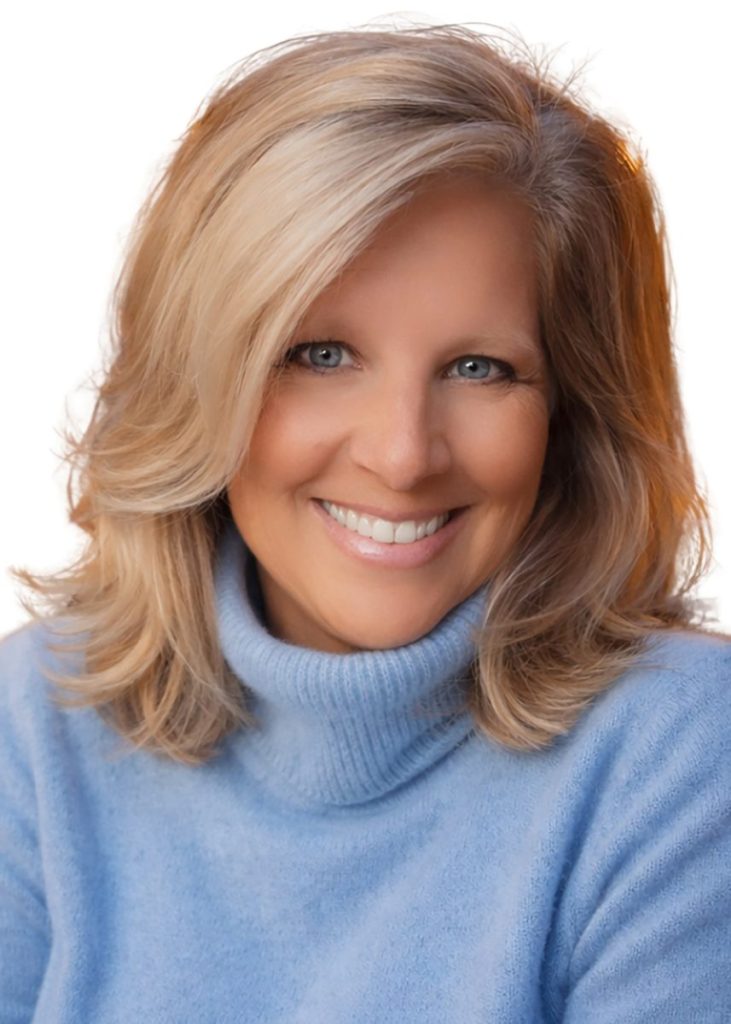
Kelley Baldwin
Guest Editorial: Will we fight for Missouri?
Fellow Americans, I know it sometimes feels like we’re screaming into the void. However, NOT saying anything feels like a betrayal to those who don’t have a voice or a seat at the table. Speaking up is my duty as a woman, a mother, a wife, a friend, a co-worker, a community leader and a Christian.
I serve on the Maryville R-II board of education in the northwest corner of rural Missouri. I am deeply concerned about the direction of education and financial policy in our state — particularly for rural communities like mine. Like many across our state, I have watched growing frustration turn into outright distrust of state leadership. When legislators tell constituents they are “putting the cart before the horse,” they miss the point. People aren’t upset because they’re impatient. They’re upset because they’ve watched voter-approved initiatives overridden and public education steadily deprioritized. Trust has been eroded, and in many cases, already lost. The real question now is whether our leaders are willing to earn it back.
One of the clearest examples is the continued expansion of programs like the Missouri Scholars Program and tax-credit initiatives that divert public tax dollars to private schools — all packaged as “school choice.” These programs overwhelmingly benefit suburban and higher-income families. They do little for rural or lower-income students, yet they draw from the same limited pool of funding desperately needed by public schools — often the heart of rural communities.
I want to be clear: my concerns are not about families choosing private education. Our own son attended a private school for several years. That tuition – about $3,300 a year and less than a monthly car payment — was a priority we chose for our family, and one we could afford. We never expected nor would have used public tax dollars to subsidize that choice. At the same time, we paid our taxes to the public schools and I served on the board of the Maryville R-II Educational Foundation, an organization that supports our local public schools. Because we understood our shared responsibility to a public system that serves everyone and benefits the entire community.
Legislators point to last year’s $500 million investment in public education as proof that schools are being supported. But much of that funding was tied to transportation aid – something rural schools desperately need simply because of geography. Missouri still ranks near the bottom nationally in education funding, which includes teacher salaries. Meeting a constitutional obligation is not a bragging point, especially when public dollars continue flowing to private schools that are not held to the same standards of accountability, transparency or student protections as public schools.
Public trust is further eroded by the governor’s new education funding task force, which includes multiple members with professional or financial ties to private or charter education. Pair that with an executive order streamlining a school report card system where private schools can opt in only when it benefits them, and the message is clear: the rules are not the same for everyone. If taxpayer dollars are involved, standards should be uniform for ALL schools. That’s not radical – it’s common sense.
Beyond education, proposed financial policies raise equally serious concerns. Eliminating the state income tax while Missouri faces extreme budget shortfalls is fiscally irresponsible. Sales taxes alone cannot replace that revenue without disproportionately harming lower- and middle-income families — many of whom live in rural districts. These are families already stretched thin.
The recent property tax cap law raises additional red flags. While some state leaders have focused on administrative logistics as being the reason for pushback, school and county leaders are more worried about the legality of the law itself, which has been challenged in the courts, as well as lost revenue. Revenue that funds schools, emergency services and infrastructure. The question remains unanswered: if that funding disappears, who is expected to make up the difference?
I also urge transparency regarding the governor’s proposal to take over MSHSAA (Missouri State High School Activities Association). As a member-driven organization of more than 700 schools, any state intervention should be clearly justified and carefully considered. I sincerely hope this isn’t a knee-jerk reaction to the state’s investigation launched in November. Best practice would be for the organization’s own membership – the schools themselves – to decide how they’d like to proceed with regard to the selection of at-large positions. This makes much more sense than the government wrestling control and adding another task to its over-burdened plate.
One area where I am grateful is that Missouri has not weakened school vaccine requirements following recent CDC changes. Keeping students safe must remain a priority, and that includes supporting proven, safe vaccines that protect entire communities.
I ran for and serve on my local school board for the same reason I believe most people seek public office: to serve their community — especially those without wealth, influence or access. Rural public schools and communities are not an afterthought. They are the backbone of Missouri.
Silence is easy. Speaking up is hard. The question before us is simple: will we fight for us, or will we stay silent and let others decide our fate?
I know where I stand. I hope you do too.
Respectfully,
Kelley Baldwin
Maryville, Missouri



