Column: How to read the news these days
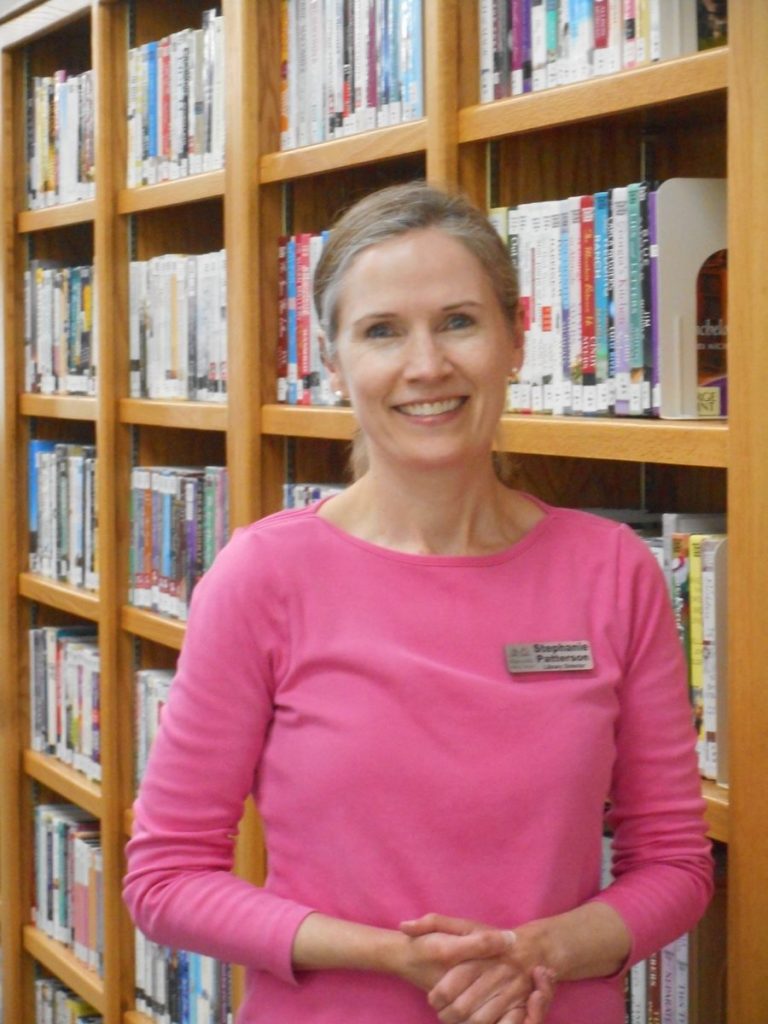
Stephanie Patterson Maryville Public Library Director
Three simple tools to discern true and false reports.
I’m at my most mistaken when I start to perceive others through the distorted lens of some recent headline, so this could be a year of great folly on my part. Here are some tips that can help anyone during this election season:
1. Use Factcheck.org.
This is the website to check after any nationally televised debate or midterm State of the Union. Factcheck.org closely examines the spoken claims of both candidates, and routinely reports exaggerations and false statements from leaders of both political parties. Articles on Factcheck.org are free and rich in useful data on topics such as labor force participation, consumer price index changes and drug seizures reported by U.S. border security. Their headlines are responsibly written and their statements are linked directly to primary sources. If there are any national news items worthy to share on social media, these would best qualify. Factcheck.org has been doing its work since 1993, funded primarily through an endowment from the late businessman and media investor Walter H. Annenberg.
2. Practice “Lateral Reading.”
This is a technique of verifying national or international news by cross-checking across multiple sources. Events that are both significant and true will likely be covered by more than one news agency, and it can be insightful to see how both right-leaning and left-leaning news sources cover each event so differently. If an article lacks a byline by a real person, and describes an event not mentioned in competing news outlets, you may not be reading something trustworthy. The same goes for online photographs of candidates and other celebrities. Nothing is gospel truth but the gospel, and as the Lord Christ himself provided a variety of named witnesses to the best news we have, this may be a good standard to which all of our news sources can be held.
3. Local and state sources.
The effects of presidential administrations, and other national and state officeholders, eventually trickle down through our state agencies and local governments, materializing in capital projects, water quality standards, and in sections of our local school budgets. Those effects can be slow and laborious to track, so our local news sources can play a vital role in helping readers trace local developments back to years-ago decisions made in Washington, D.C. and Jefferson City. Our best reporters cite every source, carefully provide historical and mathematical context, and gather quotes from more than one point of view. Likewise, your local public library can help you find print and digital resources to research a topic more broadly. Aside from holding books by authors with a variety of political opinions, Maryville Public Library offers NewsBank, a keyword-searchable database of regional news articles that can be read at home with a full-access library card. We also review specific book requests from our cardholders every week.
I hope this list is helpful for readers who are overwhelmed by the headlines and questionable photos they are seeing, and may our Thanksgiving family dinners have peace! For more information about services provided by Maryville Public Library, please contact me at [email protected].