Mizzou alum hosts inclusion, equity lecture at Northwest
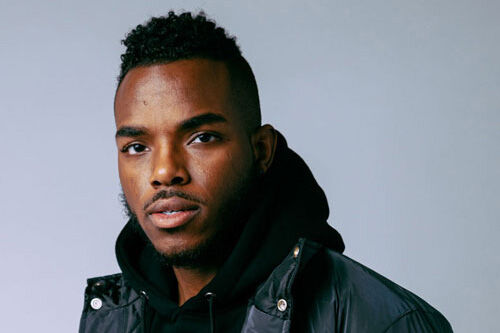
Payton Head
MARYVILLE, Mo. — Payton Head, a University of Missouri alum, spoke last week at a Northwest Missouri State University Student Activities Council lecture, recounting his time as student body president and efforts made toward inclusion and equity on college campuses.
A Chicago native, Head began his journey toward activism during a time when tensions around race relations were especially heightened, particularly in the wake of the 2014 Ferguson riots. While the 2015 protests at MU marked a turning point for race relations across the country, Head emphasized that the issues ran much deeper. During the lecture, with more than 70 predominantly white students in attendance, Head shared that he personally experienced racial harassment during his sophomore year at Mizzou. He recounted being targeted with racially charged language and finding himself without a community or representation to help him navigate those challenges.
“I had to make a distinct decision on what I was going to do about it,” Head explained during the lecture. “Was I going to sit around and take it, or take action into my own hands?”
Rather than succumbing to fear or silence, Head chose action. He decided to run for student body president during his junior year, determined to become the representation he had once sought for himself and other students of color. His campaign platform, built on “pride and progress,” resonated with students, and he was elected as Mizzou’s third-ever Black student body president with the largest voter turnout at Mizzou to date, at a time where 77 percent of the student population was white. As Head noted, his election was a significant moment on campus that challenged the longstanding racial dynamics and sparked a broader conversation about privilege and representation.
“We saw many different walkouts on our campus amidst everything happening in Ferguson, Missouri, where everybody, in so many different ways, from different backgrounds and beliefs, came together to say that enough was enough, and these students were brave and they were strong, and they are today still some of my best friends,” Head said.
He reflected on the pressures he and his vice president faced as they led protests that landed them on the front page of The Columbia Missourian.
“It helped us recognize the power of privilege that we stood on,” Head said.
He spoke about the people who supported his cause and worked for a more inclusive campus. The football team went on strike. Jonathan Butler’s hunger strike until Mizzou President Tim Wolfe resigned. Head mentioned how other colleges from around the country stood with them, which showed that racism wasn’t just an issue in Mizzou, but around the world.
“A lot of times people think that this is just a Mizzou issue, or this is just a racist state,” Head said. “It’s important to recognize the entire context of our country and to know the history of it, to know that this is not just a Missouri thing, this is an everywhere thing. And so when the media was trying to tell this as a uniquely Mizzou story, it was students like you, all from all over the nation and all over the world, who stood up and said, ‘This not only happens at Mizzou, but this happens here, too.’”
After sharing his experiences during the Ferguson protests, Head discussed the importance of connection even during one of the most trying times in his life. Despite being threatened and doxxed, Head told the audience that during this time there was so much love as well.
His leadership contributed to creating more inclusive spaces on campus, such as offices for Diversity, Equity and Inclusion, along with cultural organizations and events that provided community for underrepresented students. Beyond Mizzou, Head has spoken at more than 40 institutions and co-authored an inclusion guide for student leaders.
Head’s words and impact resonated with Northwest students, including Amaira Peterson, a member of the 102nd Northwest Student Senate and a board member of the Black Student Union. Peterson expressed how she related to Head’s experiences, particularly as someone who had also navigated predominantly white spaces.
“I could relate to what he was saying, especially with some of my experiences in high school,” she said. “Being in a predominantly white high school, there was a lot that I went through.”
When asked about the significance of inclusive spaces like the BSU and the Office of Diversity, Equity and Inclusion at Northwest, Peterson emphasized their crucial role in fostering community.
“The Office of Diversity, Equity, and Inclusion directly builds a community every day — all day, every day,” she said.
She also noted that partnerships between different clubs and committees could further improve cross-cultural communication and inclusivity on campus.
Alora Bucey, the civic service co-chair of the student senate, said that she found the speech very relatable and personal to her experience. Bucey also liked his statement about race issues being something that happens everywhere because it adds a sense of comfort to know other people are working to fix these issues too.
“I went ahead and I got his contact information, so I’m hoping to follow up later and work a lot more on voter registration events,” she said, while explaining what the SAC might have taken away from the lecture. “I know in the past, what we did was a Jeopardy a couple weeks ago that was just kind of like a voter’s information and it was really enjoyable, and it went off without a hitch. So hopefully I can get some information to help with that, especially with what he’s mentioned about TurboVote being a really good research resource.”
Head met with students after the event and answered other questions the students and faculty had.
Falge and Stolley are freshmen at Northwest Missouri State University taking an Introduction to News Writing course.