
City, MDC partner on Mozingo wildlife plan
MISSOURI DEPARTMENT OF CONSERVATION
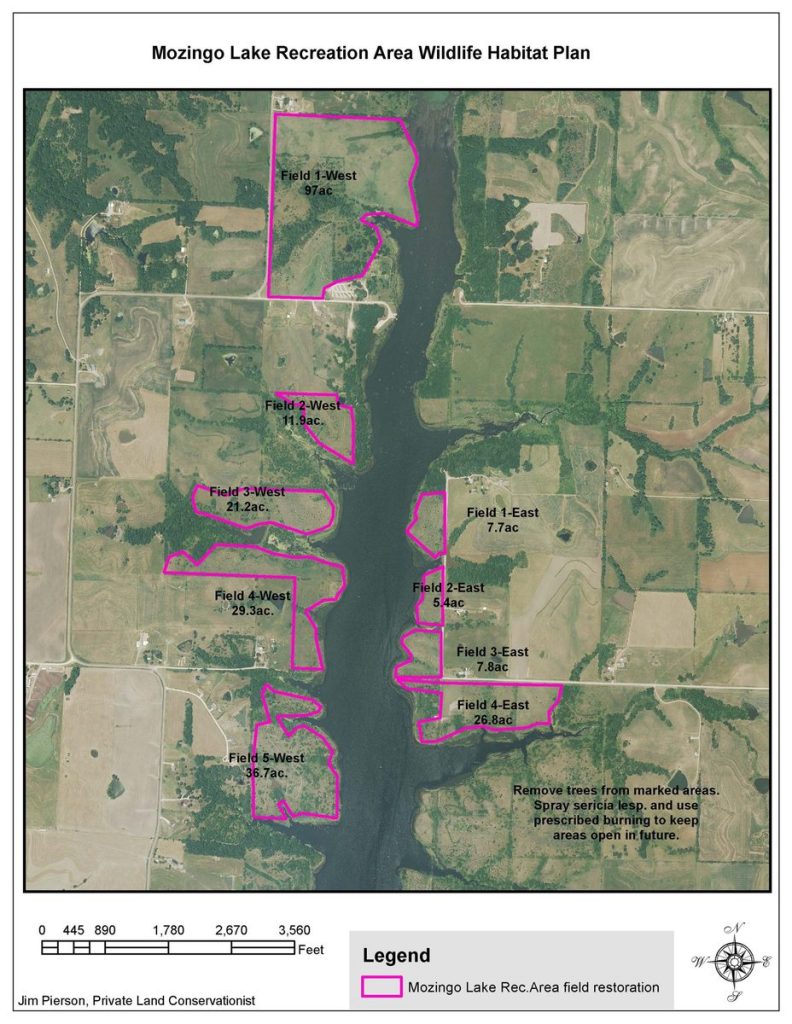
The map shows nine proposed fields, totaling about 244 acres, in the Mozingo Lake watershed area that the Missouri Department of Conservation is targeting as part of a wildlife management plan. The project will start with the removal of woody invasive species in fields 1, 2 and 3, as approved by the City Council on Monday.
MARYVILLE, Mo. — The Missouri Department of Conservation and the city of Maryville finalized a partnership and cost-sharing arrangement on Monday to implement a wildlife management plan for the Mozingo Lake watershed that the conservation agency says will restore natural habitats and help to improve the general health of the lake.
The plan includes prairie restoration, invasive species control, prescribed burning and timber stand improvement across about 244 acres. The project will move forward in stages as both city and MDC funds become available. To start, the city approved on Monday a $29,000 bid from Waldeier Land Management to eliminate non-native trees throughout about 22 acres on the east side of Mozingo Lake, just north of Mozingo Outdoor Education Recreation Area. Removal of the non-native trees, primarily cedars, will allow for reintroduction of native prairie grasses, according to the wildlife plan.
The $29,000 cost approved on Monday will be split between the city and MDC, with MDC reimbursing the city for 75 percent of the cost — $21,750. The MDC’s share of the cost is weighted so highly because the agency has made community-owned habitats, like the city’s at Mozingo, a high priority, said Tory Mason, MDC fisheries biologist, who attended Monday’s City Council meeting.
“We’ve been waiting to get this started for a long time and it’s a huge priority,” Mason said. “And there’s gonna be more dollars in the future for future projects, and they want us to spend it. … It’s gonna be a priority — it’s been a priority — and I can’t wait to see it.”
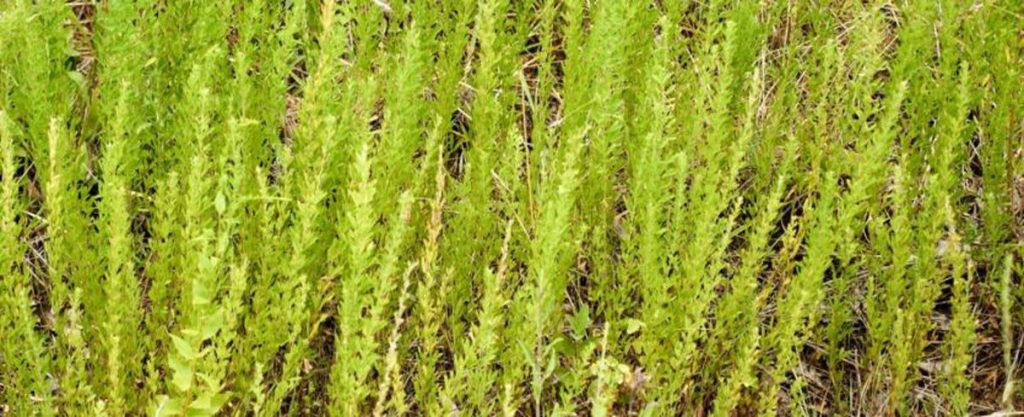
According to the wildlife management plan — which MDC has been working with the city to assemble since 2019 — another invasive species MDC aims to eliminate is sericea, a non-native legume which has become more and more common in northwest Missouri prairies.
“It spreads rapidly by using luxury consumption of water therefore creating drought conditions for any plant growing adjacent to it,” the wildlife plan says. “It then can drop some of the up to 20,000 seeds it produces each year into the drought area for expansion.”
It may take several years to remove it with herbicide spraying, the plan states.
To restore the prairie grasses, MDC will look to reverse some of the natural succession of wildlife that has occurred over the past few decades.
“At first, annual plants flourish on newly disturbed soil, then herbaceous perennial plants will move in to dominate,” the plan states. “With time and no management, woody plants like blackberry, wild plum, dogwood species, honey locust trees, eastern red cedar, elms, etc. will become the main species in the environment.”
As that happens, less and less water infiltrates the soil.
“With the tree species creating a canopy of branches, the sun loving prairie species will decline in number. The beautiful wildflowers and prairie grasses will no longer be able to thrive.”
Then, native forbs (sometimes referred to as herbs) and grasses will be reintroduced. Prairie grasses have long, deep roots that help rainfall “to infiltrate the soil instead of carrying sediment, pesticides and herbicides into water bodies after running across the landscape,” according to the plan. Plus, the water will be used by many microflorae and microfauna which helps to naturally filter the water some before it reaches the lake.
The plan will be completed in stages across multiple years. The city will have to reapply each year for a cost-share with MDC on the specific projects aligning with the wildlife management plan. The exact share percentage could change year-to-year, but Mozingo will remain a high priority for the agency, Mason and Jim Pierson, who wrote the plan and is the MDC private land conservationist for Atchison, Holt and Nodaway counties, said.
The wildlife management plan is the latest in a wide-ranging effort by the city that has brought in multiple state and federal agencies that have all appeared to make Mozingo a high priority, especially in providing incentives and projects to help improve the watershed area around the lake.
“There is a lot of entities with a lot of money throwing into the watershed with farmers and all the water quality stuff,” Mason said. “I’ve been up here, like, 21 years, and I’ve never seen so much focus on the Mozingo watershed — the help, the dollars that people (are contributing). And it started with the way the water tasted and that kind of thing, but it’s pretty encouraging.”
Multiple state and federal agencies — MDC, the Missouri Department of Natural Resources, the U.S. Department of Agriculture’s Natural Resources Conservation Service, the U.S. Geological Survey and various sub-agencies of some of those entities — have committed around $2 million in funding and incentives for conservation practices in the watershed, monitoring programs and studies at the lake itself since 2020, in addition to taking active roles in working to improve the health of the lake and surrounding area.
“You’re right, the big picture is, we’ve brought so many different partners to the table to address our lake and our watershed and our water quality,” said Mayor Tye Parsons. “And it just gives me a lot of encouragement to think that we’re going to get this problem solved and we’re going to do it the right way so that it benefits the recreation aspects, and the fishing aspects, and the drinking water aspects and everything else that goes along with making Mozingo the great asset that it is.”
MISSOURI DEPARTMENT OF CONSERVATION
Sericea lespedeza is an invasive species of plant that will be on target of the wildlife management plan for the Mozingo watershed.
FORUM FILE PHOTO
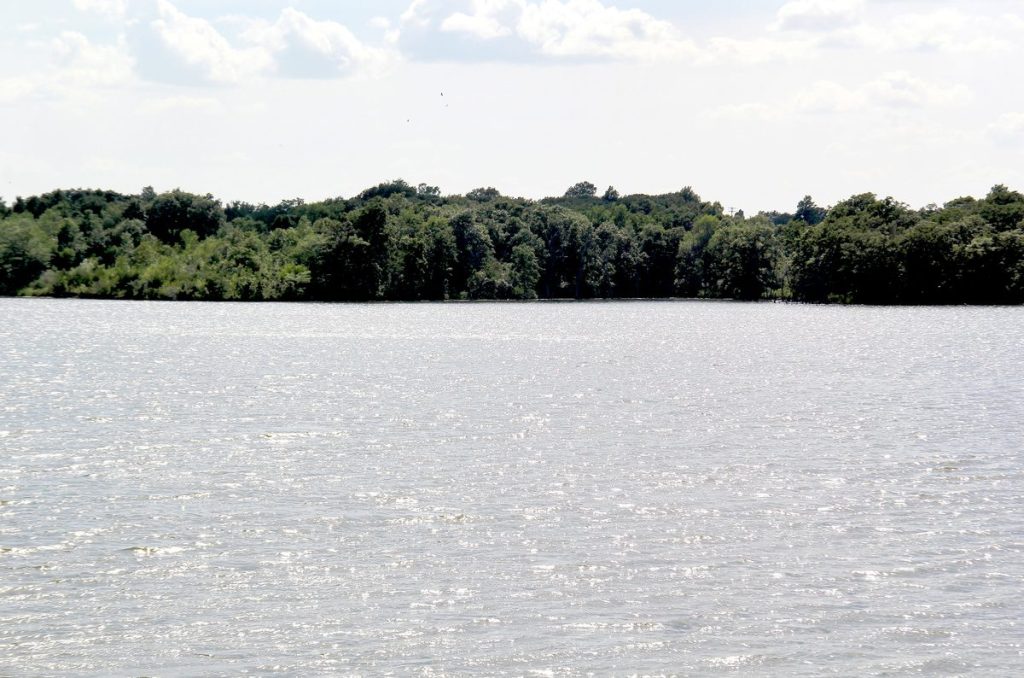
Mozingo Lake (copy)




