Nodaway County Senior Center losing funds each month

FORUM FILE PHOTO
The Maryville Host Lions and the Nodaway County Senior Center celebrate a new walk-in freezer with a ribbon cutting last year. The $84,000 project was largely paid for by a Hunger Grant through the Lions Club International Foundation. The grant required a local match of 25 percent, or about $21,000, which W.R. O’Riley, Maryville Host Lion and Past International Director, said was raised with the help of about 25 other organizations across the community. Pictured, O’Riley cuts the ribbon with Senior Center board member Joe Baumli, along with other Host Lions and senior center board members. The center has received much funding from community members since 2017 when it lost federal funding. This has helped it continue to offer a place for seniors to find community and a hot meal. Now the center is losing about $10,000 per month serving its patrons and it is asking for assistance.
MARYVILLE, Mo. — It’s not news that the Nodaway County Senior Center relies heavily on volunteers and donors in order to offer local senior residents a place to not only find a meal, but also a social community of people enjoying similar interests. What is news is just how desperate the financial situation has become at the center.
Senior center board member Joe Baumli reached out to The Forum, with the goal of putting out in the public eye the state of the center’s finances.
“We’re struggling,” he said. “We are struggling financially.”
Years ago, the senior center had received federal funding from what is now called Young at Heart Resources, one of 10 Area Agencies on Aging across the state that provide resources for seniors.
In 2017, the center lost that funding — which ranged between $100,000 and $150,000 each year — for failing to meet required standards. Since then, the center has relied on the kindness of friends, families, passersby, service organizations, the community, and yes, even strangers.
And the community has rallied around the center, supporting its cause of providing services such as Meals on Wheels to homebound seniors throughout the county. Local service organizations helped to fund a new freezer for the facility just last year. A local angel program, which was set up to follow federal poverty guidelines, helps fund meals for seniors who cannot afford them. Numerous organizations, churches and local businesses find ways to help the center financially through grants and even donations collected during their meetings. Nearly every year, the center is a partner of the United Way of Nodaway County, receiving significant funding from it. It is clear the community values the facility.
But it hasn’t been enough — the center is still losing $10,000 a month, Baumli said.
“We’re losing,” he said. “We’re going backwards about $10,000 a month, and have been. I mean it’s non-sustainable. … This cannot continue.”
The center, a 501(c)(3) nonprofit that is not tied to a local city or county government, receives some annual funding from the Senior Citizens Special Tax Fund Board, which meets annually in January to divide up revenues from the countywide senior services tax, levied at 5 cents per $100 valuation.
Last year, the senior center requested $85,000 and received an award of $95,000 from the board.
The center’s operating budget last year totaled $412,000, according to new Administrator Mia Nelson. Included within that, labor costs total $170,000, for outside route drivers, janitorial, kitchen staff, administrator and assistant.
“Minimum wage went up last year as well as this year and we also had to give our full-time employees a small raise to be somewhat comparable to other jobs in this area,” Nelson said in an email to The Forum. She explained that the raises were necessary to even get people to apply, let alone retain them.
She said the center is on the low end of wages and isn’t able to offer any benefits like health insurance or retirement benefits.
“This is a much-needed resource for our community,” Nelson said. “The Senior Center is a safe place for patrons to come in, have a hot, nutritious meal and socialize, play cards, do puzzles, shoot pool or just check in with one another.”
She said the home-delivered patrons receive a hot, nutritious meal, but also the drivers check in with them to make sure they’re doing OK and not in need of medical attention at that moment.
“Many times, we are the only source that the home delivered patrons have to communicate with and see on a regular basis,” Nelson said. “Our goal here is to empower independence, so that our patrons can remain in their homes as long as possible.”
While the center offers a place for seniors to gather, she said it is the seniors themselves who have put in the hard work and effort to build up the community.
She said there seems to be a misconception out there that the center is somehow government funded, which is only partially true, with the center receiving annual funds from the countywide senior services tax.
“We rely on donations and grants from the community, civic groups and other organizations,” Nelson said.
The center and its board are doing what they can to stave the flow of its around $300,000 in reserves, which Baumli noted, at this rate will run out in only 30 months. But there’s no way they can get to that point without making some major adjustments first. If the funding situation isn’t much better, it will be fewer than 12 months before he believes the center may have to consider shutting down rural meal delivery routes. The drivers of those two routes are paid and receive mileage. He said the board is already going to be looking for possible misuse of the angel program.
“I am under the impression that there’s many people that are perhaps abusing (it),” Baumli said. “We’ve tried to point that out in the past and perhaps we’ve been too lenient.”
And some people request multiple extra meals without paying extra for them. While the 32 participants in the angel program are asked to pay anything they can, only five do. Baumli provided an example that one participant makes sure to send the center $50 each month, even though it must be difficult for her.
Referring to records dating back to 2017, he said there are some people who have been receiving meals who haven’t paid a dime even though they may exceed the income requirements to qualify for free meals.
“At $6 a day, that’s a long time,” Baumli said. “That’s a lot of money, which is an example of why we are struggling.”
Nelson agreed, saying they’re in the process of revamping the program since funds and donations are running low.
“Our food costs, utilities, supplies and all expenses just continue to go up,” she said. “We do our best to try to cut costs as much as we can control, unfortunately we do not have control over a lot of the costs that the Senior Center endures.”
Noting that the cost of everything from food and supplies to electricity and utilities has increased, Baumli said the center is increasing its meal prices in this month to $7 for people 60 years old and older and $9 for people 59 years old and younger.
“The less people we serve every day, the less we get out and help people, the less money we lose a day,” Baumli said. “Isn’t that awful? … I’m frustrated. I’m losing sleep over this. I don’t know what to do. I mean I really don’t know what to do other than just get the word out to people.”
He said center staff will be seeking grant funds and grant writers to help find any funds available to help keep the center open so it can continue its service.
FORUM FILE PHOTO
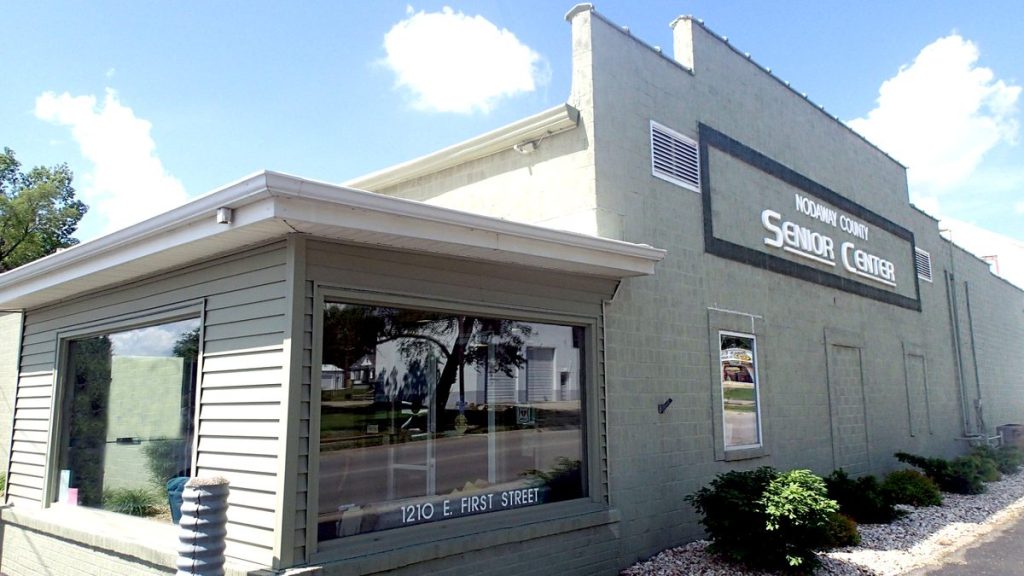
The Nodaway County Senior Center is shown in 2018. The facility is struggling financially and is asking the community for support.