Maryville was ‘very close’ to mandatory water restrictions
FORUM FILE PHOTO
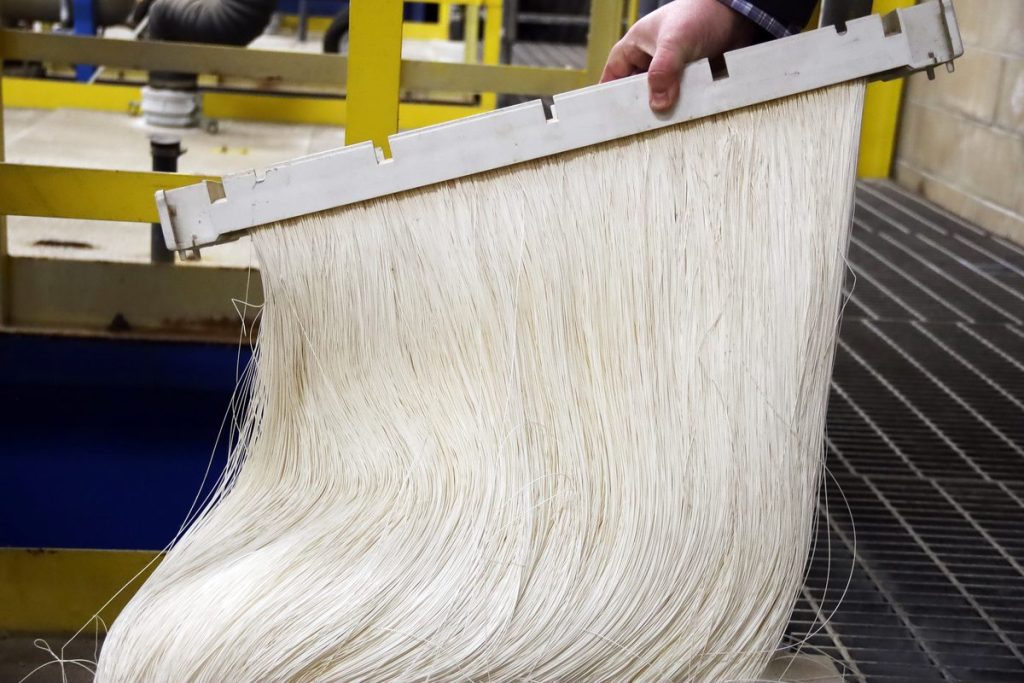
Water filtration membranes like this one, shown during a tour of the Maryville Water Treatment Plant in 2020, use negative pressure to force water through what are actually fine, hollow fibers that filter out any particles too large to enter, leaving only water. New membranes were purchased and installed that year.
MARYVILLE, Mo. — Maryville could have been only hours away from implementing mandatory water restrictions last week were it not for quick repairs made to the water treatment plant.
Although the voluntary water conservation measures for all users didn’t begin until Thursday, Jan. 18, City Manager Greg McDanel said that the dominoes had been set in motion on the weekend prior.
The Maryville Water Treatment Plant uses membranes that allow water to pass through them while filtering out particles during the treatment process. But during cold weather, water doesn’t flow as quickly through the membranes, lowering the production rate of clean water. It also means they require cleaning more often so that water can continue to pass through efficiently.
“In extreme cold weather, it’s hard also to take those membranes offline and do an acid wash, which helps break up the pores and the gunk — for lack of a scientific term — that gets built up on the membranes,” McDanel said. He said removing a membrane, acid washing it and reinserting it probably takes about 24 hours. “So we have been, weather-wise, in a period of time where we couldn’t physically pull the membrane off to clean it and help it produce even more. And so that’s when the capex building backup filter becomes critical.”
The “capex building” — a nickname for the building that apparently comes from the abbreviation for “capital expenditure,” though no one on city staff is quite sure why it’s applied to the structure — is one of the ways the city and PeopleService, the company that operates the water treatment plant, have managed the cold weather in the past. The filters in the small, ancillary building on the north side of the water treatment plant complex are used as a backup to help pick up the slack during periods like last week when the membranes were struggling to keep up.
But during the extreme cold weather on Saturday, Jan. 13, the backup filters in the capex building went offline, McDanel said, because of a frozen air line and a failed heater, causing further problems — chiefly, what was later diagnosed as two vacuum valves that were inoperable. On Sunday, when PeopleService attempted to clean the main membranes and activate the backup filters in the capex building, the backups wouldn’t start. The next few days were spent troubleshooting the system and unsuccessfully attempting to get the backups back online.
During that time, though, the main membranes and were falling further behind as the temperatures remained frigid. McDanel estimated that the water system’s users typically use about 1.6-1.7 million gallons of water per day. But by Thursday, the plant was only on pace to produce about 1.2-1.3 million gallons per day.
“Then it becomes a math problem of how much storage capacity you have if you’re not able to produce more than that,” McDanel said. “And so we were doing everything to try to get the demand closer to (the production capacity) to give us more time to get the repairs done.”
It’s not abnormal for usage to outpace clean water production, McDanel said, especially during winter. To help mitigate the issue, the plant operates 24 hours a day to make up some of the shortfall and refill the water towers overnight. Peak hours are usually when people get off of work around 5 p.m. or, he said, on weekends — which is what worried city officials as the weekend approached.
By Thursday, McDanel said, water tower levels were below 50 percent capacity at the north and south towers, with the Edwards Street tower at 60 percent. City staff and PeopleService met to “discuss emergency plans” as they were now “concerned about getting through the weekend,” he said.
On Thursday evening, the city implemented Phase 2 of a city code for water conservation that puts voluntary water conservation in place for all users. The code outlines six phases for water conservation in cases where the city is facing a greater demand for water than it is producing over a certain period. The first phase is voluntary water conservation for the system’s largest users, and the third phase is the first mandatory restrictions, starting with outdoor uses that wouldn’t apply during cold weather and getting more restrictive from there.
“It’s easier to restrict water in the summer because we can ask people to not wash their cars or water their grass,” said Mayor Tye Parsons during Monday’s City Council meeting. “It’s a little bit tougher in the winter.”
McDanel said the city also contacted the largest water users — like Public Water Supply District No. 1, Northwest Missouri State University, Mosaic Medical Center – Maryville, Kawasaki and Nucor — and praised their willingness to help by reducing their usage where possible.
Still, despite those measures, McDanel said the city was “very close” to calling for mandatory measures.
“The gameplan was, Thursday we kind of knew the totality of the issue and kind of had an estimated time frame of concern,” he said. “And we were hopeful that if we could get to Friday afternoon and get a technician on site in the morning and get it addressed, that we wouldn’t have to go to the next step — the higher alert.”
Although not required by city code, which allows the city manager to make the decision on their own, McDanel said that if a technician had not arrived on Friday morning, the City Council would likely have met in emergency session on Friday afternoon to vote on mandatory water conservation measures. McDanel said he kept in contact with Parsons and kept the City Council informed during the process.
Luckily, a technician from Veolia Water Technologies was in southern Missouri and able to make the trek north to Maryville by Friday morning, despite dicey, frigid weather. Working with remote technicians as well, the technician was able to diagnose and fix the problem by Friday afternoon.
“We felt comfortable that we were in a good place and that if we just simply asked people just to continue to be mindful through the weekend, that we would be OK,” McDanel said.
The voluntary water conservation measures were lifted on Monday afternoon after the plant had returned to normal production and the water towers were nearly full.
McDanel said that the city has made some plans to streamline their processes should something similar happen in the future, and is looking to purchase new heated, self-cleaning skid units that hold the membranes. That equipment would reduce the offline time for cleaning from about 24 hours to about six hours.
But ultimately, McDanel said that the aging water treatment facility is prone to these kinds of problems because of its age and its imperfect fit for the current situation: When the plant was first constructed in 1956, it was built to treat river water from the One Hundred and Two River, not water from Mozingo Lake.
A new water treatment plant, which McDanel said the city is still “knee-deep” in the process of working toward, would be located at Mozingo Lake and designed for just such a purpose, along with modernized technologies that are being tested by a pilot plant in operation at the current water treatment facility. A new plant with those technologies, McDanel said during Monday’s City Council meeting, “would eliminate this from ever being an issue.”
During Monday’s council meeting, Parsons thanked city staff for addressing the crisis quickly and residents for effectively implementing the voluntary water conservation measures.
“It’s a problem that could have been much worse but for the quick action of Greg and (Public Works Director) Matt (Smith) and all of (their) staff,” he said. “… We know that we had an impact, that those conservation measures worked, and we were able to make a potentially bad problem go away.”
FORUM FILE PHOTO
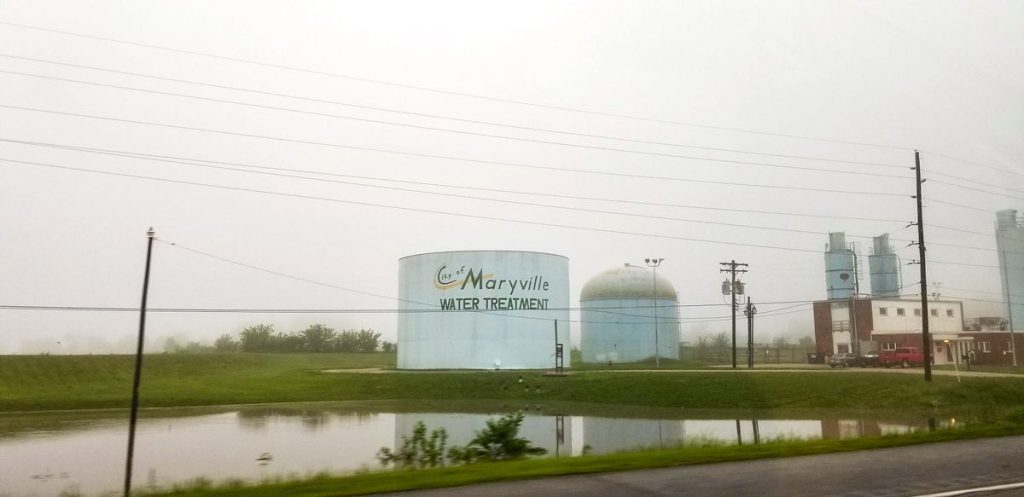
The Maryville Water Treatment plant is shown in 2019. Over the weekend, the city asked residents to voluntarily decrease water usage.