911 sales tax likely to be on April ballot
FORUM FILE PHOTO
The Joint 911 Oversight Board gave preliminary approval to a plan to put a sales tax on the April ballot to fund consolidated 911 dispatch operations.
MARYVILLE, Mo. — The Joint 911 Oversight Board agreed in principle last week to put a sales tax measure on the April ballot to create a dedicated fund for the consolidated 911 dispatch center.
By state law, there are three ways to create a dedicated tax for 911 dispatch operations: through a tax on landline phones, a tax on cellphones and through a sales tax of up to a half-cent.
Currently, Nodaway County residents pay a landline tax, which had been the most common way of funding such operations, but revenues from that type of tax have fallen shorter and shorter of the costs required to run dispatch operations as the number of landlines dwindles. Earlier this year, an oversight board subcommittee studied which method would be best to proceed with going forward and recommended that the board pursue a sales tax.
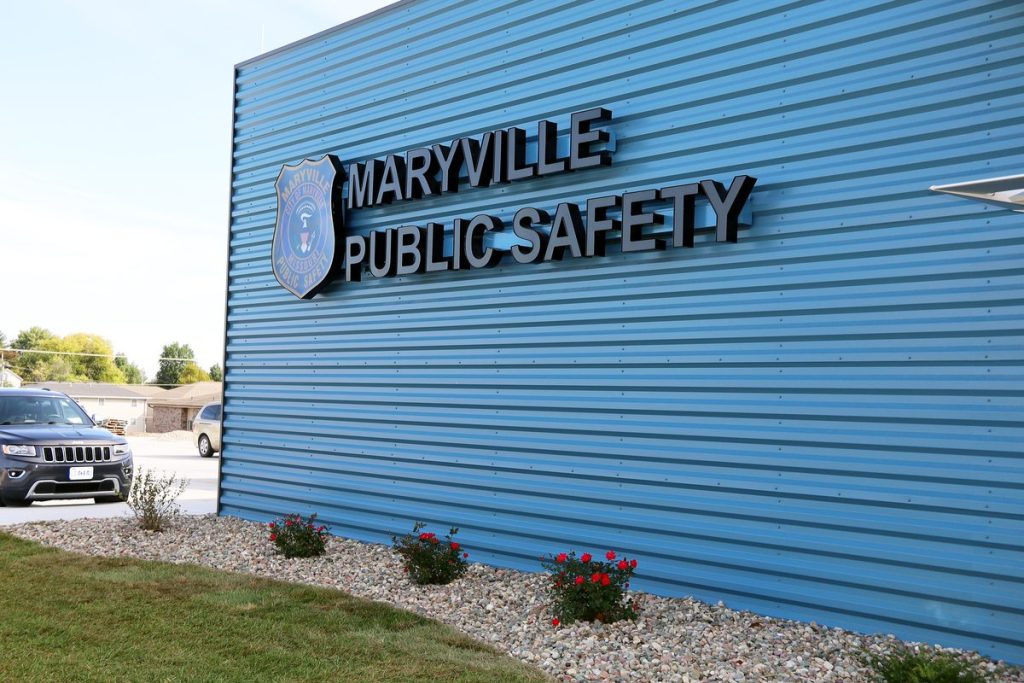
The agreement passed by the oversight board during its Oct. 19 meeting would authorize up to a half-cent sales tax across the county that would fully fund the Northwest Regional Communications Center, the 911 consolidated dispatch operation housed at the R. Keith Wood Public Safety Facility. Maryville City Manager Greg McDanel said that the initial levy would likely not be the maximum half-cent immediately, since a lower amount would still fully fund the approximately $900,000 annual cost of the center, but the item proposed to be placed on the ballot would authorize raising the levy up to the half-cent.
Currently, the city and county governments are using general funds to split the approximately $900,000 annual cost to run the center.
To get a sales tax passed, board president Chris Burns, North District County Commissioner, said that educating voters on the importance of securing a foundation for the long-term future of the county’s emergency communications will be key.
“This is longevity, is why we’re putting this on there,” he said.
By law, the sales tax funding method also requires the creation of an independent oversight board to administer the center. A memorandum of understanding approved at last week’s meeting outlined the creation of the board — the Nodaway County Emergency Services Board — and the intention to keep things running as they are. To do that, the newly created board could contract with the city of Maryville, which would continue to run the NRCC as it does currently.
The agreement passed by the oversight board now goes to the city and county governments for review. That process could result in some changes to the specifics of the memorandum of understanding, which outlines the parameters of how the new board would function, the roles of the local governments and some operational details. But the central gist of the agreement — to put a sales tax on the April ballot — is unlikely to change since the board is made up of representatives from the city and county governments and a representative from the Nodaway County Ambulance District.
Text-to-911
When the city and county were setting up the consolidated dispatch center in 2019, they purchased equipment for the NRCC designed to operate with newly available technologies, like the ability to text 911.
However, due to remaining contract constraints with the telephone carrier formerly used by the city’s dispatch center, the NRCC wasn’t able to implement the system immediately and had to return grant money it had been awarded for the purpose, NRCC Dispatch Supervisor Jessica Rickabaugh said during last week’s meeting.
Now that the contract has lapsed, the NRCC has been awarded the grant again through the Missouri 911 Service Board’s Next Generation 911 grant program, which is funded by a portion of the state’s federal American Rescue Plan dollars. The grant award will pay for 90 percent of the $33,444 cost of implementing the text-to-911 system, while the city of Maryville will pay for the remaining 10 percent through its own Rescue Plan funds.
When implemented, texts sent to 911 will come in just like phone calls, Rickabaugh said, with the same information available to dispatchers about the texter’s location. Dispatchers will follow the same process as with any 911 contact, but through text instead of voice.
Rickabaugh said Northwest Missouri State University is particularly “excited about this opportunity. They do a lot via text with their population right now.” And the ability to text instead of call 911 could be especially helpful in situations where the texter doesn’t feel comfortable making an overt phone call or saying something out loud.
“Also our hearing- and speech-impaired population currently have to purchase systems that are specially compatible with phones, and they will be able to use the cellphone they already have to make those connections, so that will be a positive as well,” Rickabaugh said.