City targets August for pilot water plant
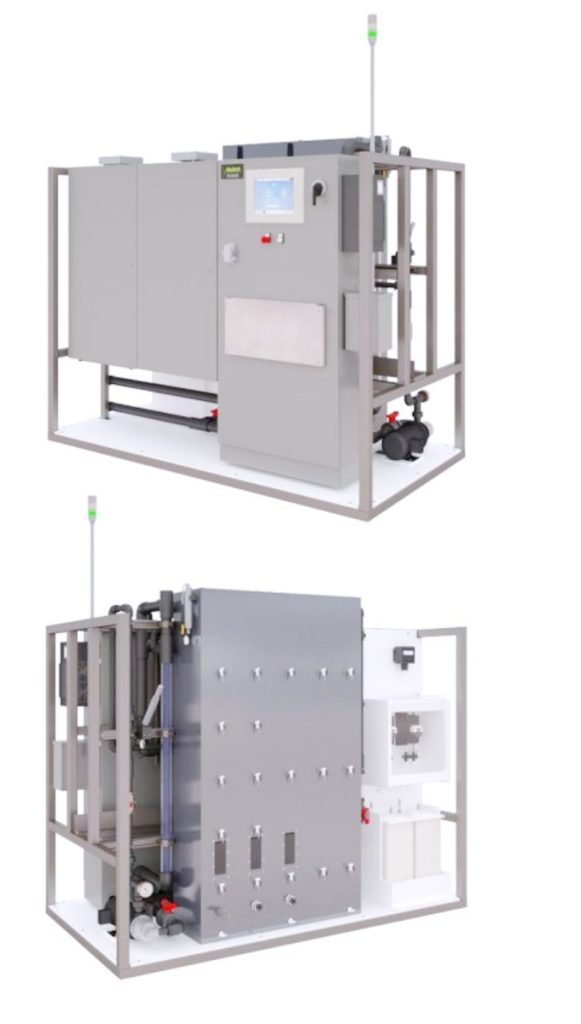
INTUITECH ARTWORK
In addition to granular media, another skid will use ozone to treat raw water. The data will be used to determine the best methods for a new full-fledged water treatment facility.
MARYVILLE, Mo. — The city of Maryville will lease equipment for a pilot water treatment plant later this year, putting it on track to get a clearer picture of what a new, full treatment facility will cost.
At Monday’s City Council meeting, the council approved a lease agreement with Utah company Intuitech for pilot plant equipment that follows recommendations given by HDR Engineering, the firm that has been advising the city on water treatment options since 2020.
The $146,723 agreement will secure the equipment for the city for 35 weeks, running from Aug. 15, 2022, to April 17, 2023. That period is roughly when algae blooms on Mozingo Lake — the city’s water source — are at their peak, making it the most important time to test treatment methods.
A pilot plant is a step required by the Missouri Department of Natural Resources before the city can move forward with a new water treatment facility. The pilot plant will likely operate for 9-12 months, McDanel said, and the results will inform the specifications and requirements that a new, full-fledged plant will need to fulfill.
An analysis last year presented by HDR estimated the cost of a new plant to be around $32 million, but the pilot plant will narrow that figure down.
“At this point next year, once this data is collected in coordination with MDNR, we should have a pretty firm grasp of how much that water treatment plant is gonna cost,” McDanel said at Monday’s meeting.
The next step will be hiring an engineering firm to operate the equipment and analyze the data. HDR is expected to be a leading candidate for that bid.
The cost of the lease agreement will come from $1 million the city budgeted for pilot plant costs this year, with half coming from the water and sewer fund and half coming from the city’s allotment of federal American Rescue Plan funds. McDanel said the city is also continuing to work with Public Water Supply District No. 1 on ways to distribute and share costs, including both the pilot plant and an eventual permanent water treatment plant, to make it as equitable for residents as possible.
Maryville Mayor Tye Parsons said the pilot plant will be “another big step” in the more than two-year, step-by-step process the city has gone through to address taste and odor issues in drinking water.
“So I’m really happy to see this moving forward so we can start collecting some data and move it on down the road,” he said.
As recommended by HDR, the most likely spot for a new plant would be near Mozingo Lake. The current water treatment facility, located on the east side of Maryville, was originally constructed in 1956 and was designed to treat water from the One Hundred and Two River. Now, the raw water must be transported from the lake to the plant, and then out to customers.
A new treatment facility has been the city’s long-term goal roughly since the taste and odor issues with drinking water moved to the forefront after the closing of Mozingo Lake in January 2020. In the meantime, the city has taken a considered approach to determine the best options for both the short-term and long-term, including partnering with PWSD No. 1 on a granular activated carbon adsorber that went online in November. Data from HDR showed the GAC adsorber has been extremely effective in filtering out one of the primary offenders that causes taste and odor issues, the compound geosmin.
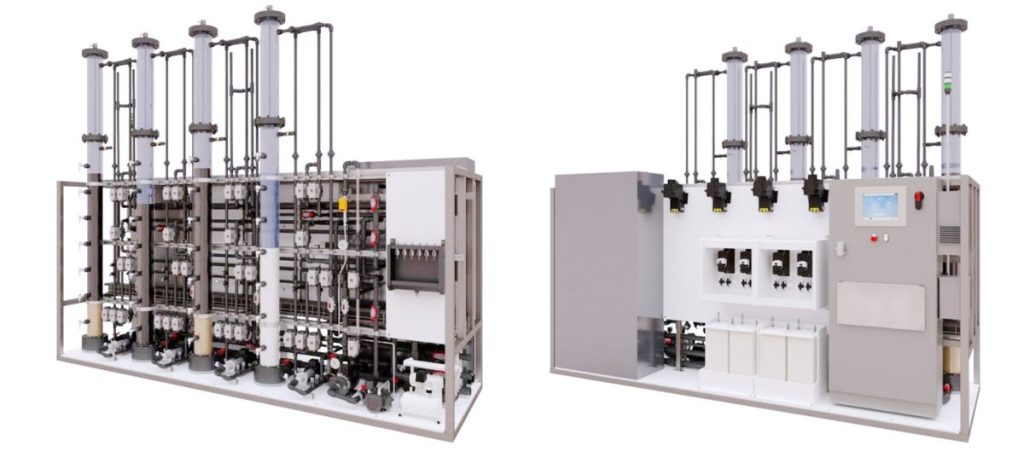
INTUITECH ARTWORK
A granular media skid is one of the pieces of equipment the city of Maryville agreed to lease from Intuitech for a pilot water treatment plant. The plant will use different treatment methods to inform what combination will work best in a full-sized plant down the line.