Lewis teaches art as an emotional outlet
GEOFFREY WOEHLK/THE FORUM
Starting with kindergarten, art teacher Robin Lewis helps students find ways to articulate their feelings and work through internal struggles by expressing them through their artwork.
GRAHAM, Mo. — Robin Lewis’ favorite color is yellow.
“I’m sure that we had bad wood floors or something in our house, I don’t know, but my mom painted my floor like, sunshine yellow — the brightest yellow you could (find) — and when you walked up the stairs, that was my room, that was the flooring,” she says. “And so that’s my first vivid memory of yellow.”
By now, students in her class know her favorite color by heart, and not just because it’s a frequent extra credit question. Even for a newcomer, it would take one look around the classroom for it to hardly be a surprise — yellow is everywhere.
One of Lewis’ favorite exercises for her art students at Nodaway-Holt R-VII is to ask them in turn: What’s your favorite color?
“And then I have them close their eyes and think about, why is that your favorite color?” she says. “And a lot of times they don’t know, and I’ll say, OK, I want you to think about your house, I want you to think about grandma’s house — and, it never fails, they’ll be like when I was little, you know, this was that color. And it comes to them.”
For as long as she can remember, Lewis says, she’s loved art, especially painting and drawing.
“You can ask any one of my coworkers — if we’re in a meeting, I doodle,” she says. “And it’s not because I’m not paying attention, it’s just it’s very calming for me and it just kind of opens me up. … I’m always doodling.”
One of her first memories is of winning a third grade Easter drawing contest at school in Stanberry, where she grew up.
“I’ve always loved art, and it was important to me,” she says now. “And I think it was how I dealt with things. … For me, it’s just, it was my release. From everything, you know? From stresses, from anxieties — and, as I got older it just became what I do. It’s what I love to do.”
Teaching, though, wasn’t always in the cards, even if art was.
But for more than 20 years, while raising five kids of her own, Lewis spent time long-term substitute teaching, working as a paraprofessional and working with preschoolers — and realized her place was in the classroom.
“I even taught preschool for years, and even just that, giving them the introduction to art and different things was super important to me,” she says. “And so as the years went on, I just, I knew it’s what I wanted to do.”
Once her own kids were grown up and getting ready to head out on their own, Lewis went back to school to get certified as a teacher.
With art teachers in particularly short supply even compared to other types of teachers, Lewis didn’t even have to wait for that — she started five years ago at Nodaway-Holt while still finishing her degree.
One of the first things she noticed when she first started teaching — what was impossible not to notice, Lewis says — was the anxiety in students of all ages.
Unlike when she was a student, kids now have instant access to — and a certain obligation to consume — an overwhelming amount of information and social contact every day that never goes away and never lets up.
“And so they’re scared. All the time,” she says. “… why wouldn’t they be anxious?”
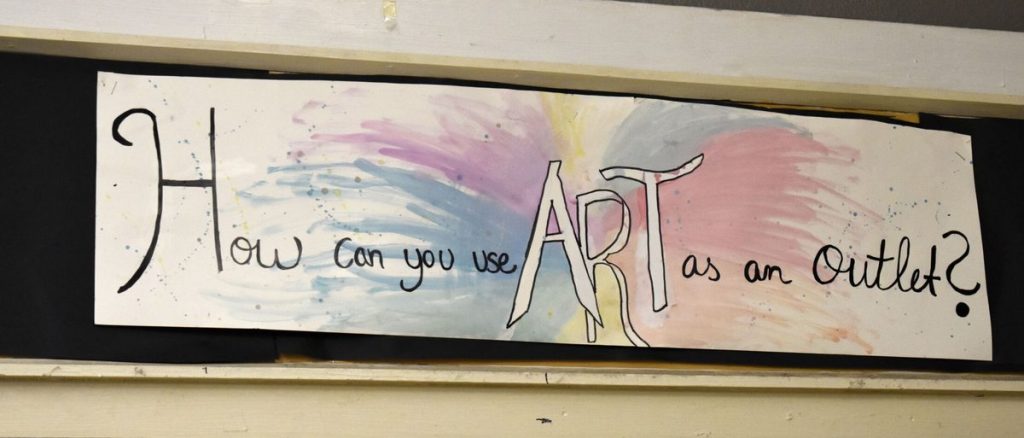
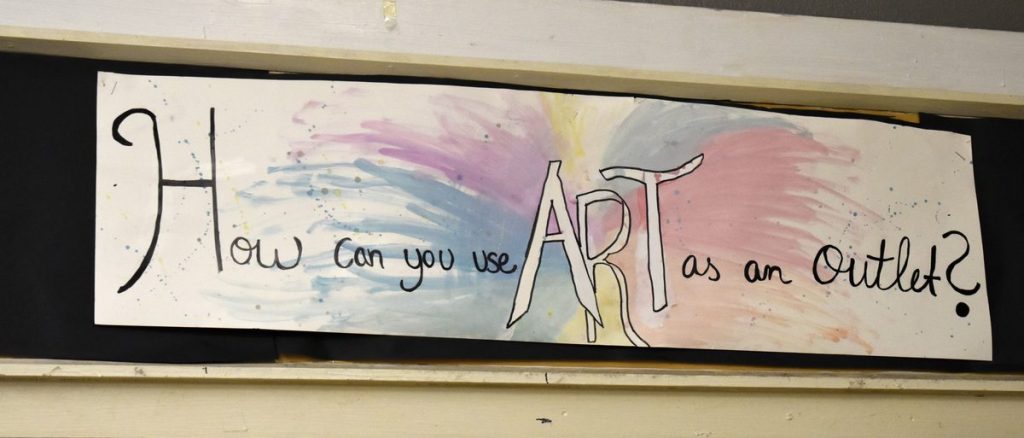
On the front wall of Lewis’ classroom hangs her mission statement, a sign painted by one of Lewis’ students from that first year of teaching as a reminder for every subsequent class: How can you use art as an outlet?
Art as an outlet
Two high school students, finished with hanging posters in the hallway, grab their backpacks from the art room and walk out the door, done for the day.
“Thank you girls, I love you both,” Lewis tells them. “Make good choices.”
Being an art teacher in the 21st century, Lewis says, isn’t about training artists who can produce artwork worthy of an art gallery. And encouraging kids to articulate their feelings through art from an early age isn’t about that either.
“They may never be an artist,” she says. “That’s not the point of it.”
Parents, Lewis says, shouldn’t be afraid to give their children crayons, paint and Play-Doh, even if they find out they aren’t scrubbing out stains made by the next Van Gogh or Michelangelo.
“Give the kids the messy stuff,” she says. “Because when kids are allowed to be themselves and create, it just opens up a whole new world. And maybe they’re not gonna be super good at it — they don’t have to be good at it. They just have to be allowed to express themselves.”
Instead, she sees her first priority as developing relationships with her students and getting to know them, whether through their artwork or not. And letting them know teachers care — not always something students can take for granted at home.
Students in Lewis’ classes turn in weekly sketchbooks, drawing to a prompt, or using emotional inspiration from their own lives. No one sees the sketches but the student and Lewis.
The result is a kind of emotional diary for some students, putting on the page elations, frustrations or just the daily ups and downs that come with being a kid.
Some of the sketches have indicated more serious issues. A student contemplating suicide. An elementary student struggling with a divorce that teachers knew nothing about. A child who didn’t have a bed to sleep in at night.
“I always say the kids who have a good home life come to school to learn,” Lewis says. “And the ones who don’t, come to school to get the love.”
Last month, Northwest Missouri State University held an annual event, I Will Listen, to bring awareness to the stigmas surrounding mental illness. It also featured an art exhibition centered around expressions of mental health. No school district had more submissions than Nodaway-Holt.
Lewis says she tries to make sure students don’t see talking about their feelings or emotional state as something that should be taboo.
“That’s what I tell them — it’s OK,” she says. “It’s OK to feel the way you’re feeling.”
It’s a frequent topic of focus in her classroom.
“I in my past have struggled with some anxiety and depression, and I’m not embarrassed to say that, I’m not embarrassed for people to know that,” Lewis says. “And I tell my own students that because I do see that, especially when you get to the junior high and high school age.”
Lewis encourages students to articulate those internal struggles through their artwork.
“I, again, just try to teach them how to put those things on paper,” she says. “And we talk about like, what does it look like, you know? It can look really pretty and really ugly at the same time, because some of you are really struggling on the inside but you put that smile on for the world to see.
“So, you know, we talk about that and we talk about how you can show that.”
Putting those complicated feelings into their art is, predictably, a complicated process. It requires students to be reflective about their feelings and their root causes, and find ways to turn those feelings — some of them conflicting — into shapes and colors.
But the products speak for themselves, and, Lewis hopes, lead to more constructive ways of expressing those feelings than through more unhealthy routes like drinking, drugs or self-harm.
Developing that kind of artistic lexicon for emotions starts in kindergarten. For those younger kids, their first tasks might be just picking an emotion and drawing it, helping to articulate feelings that previously had been bottled up, unable to be described through words or pictures. Now, those feelings can be associated with something like a color that a child can use to show what they’re feeling.
“… we talk about, what does ‘angry’ look like? What color is angry?” Lewis says. “And so they’ll tell me, angry’s red. OK, angry’s red. And so we practice making angry marks on the paper. And so they can, if they’re angry, they know, I can really get that out of me. And if they’re calm, what does ‘calm’ look like? What color do we think calm is? We usually end up with green. Green is a calm color.”
Most of the time, students in her classroom agree on what color they associate with happy, too.
Happy, they say, is yellow.
EDITOR’S NOTE: March marks Women’s History Month and The Forum is celebrating historic women past and present in each issue. In each issue this month, The Forum will profile women making history today in different ways, as nominated by readers and staff. To nominate a woman making history today in Nodaway County, send your suggestion to [email protected] for consideration next year. All Women’s History Month profiles, including last year’s, are available at maryvilleforum.com/features/whm.
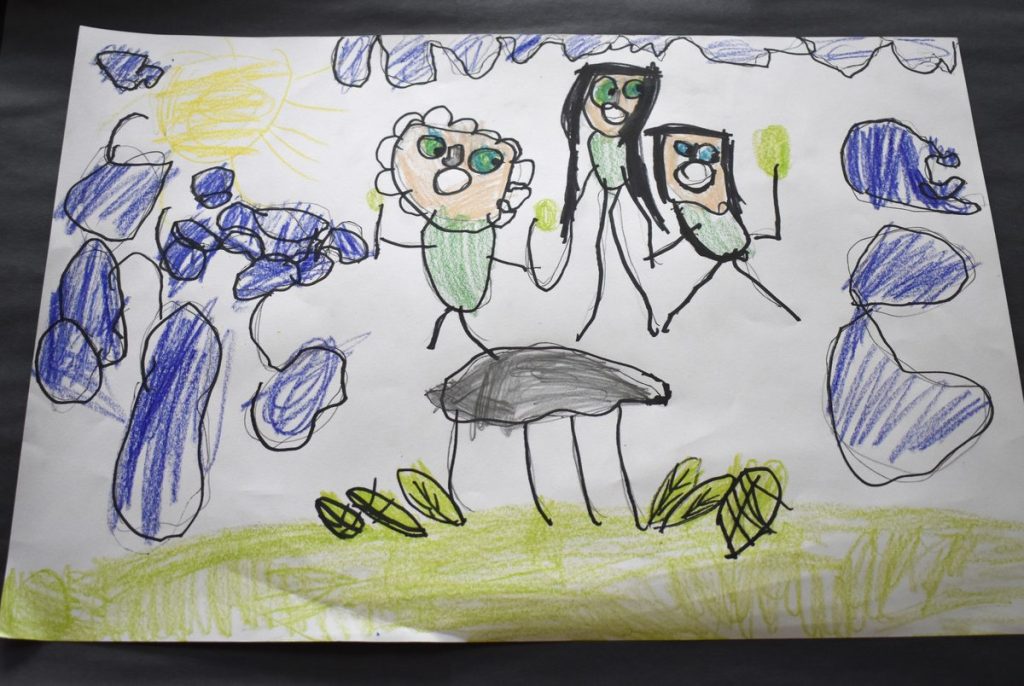
“Family Makes Me Calm,” by a Nodaway-Holt kindergartner, was one of the many pieces submitted to the “I Will Listen” exhibition at Northwest Missouri State University last month. Colors like green are often associated with calm by her students, Nodaway-Holt art teacher Robin Lewis says.
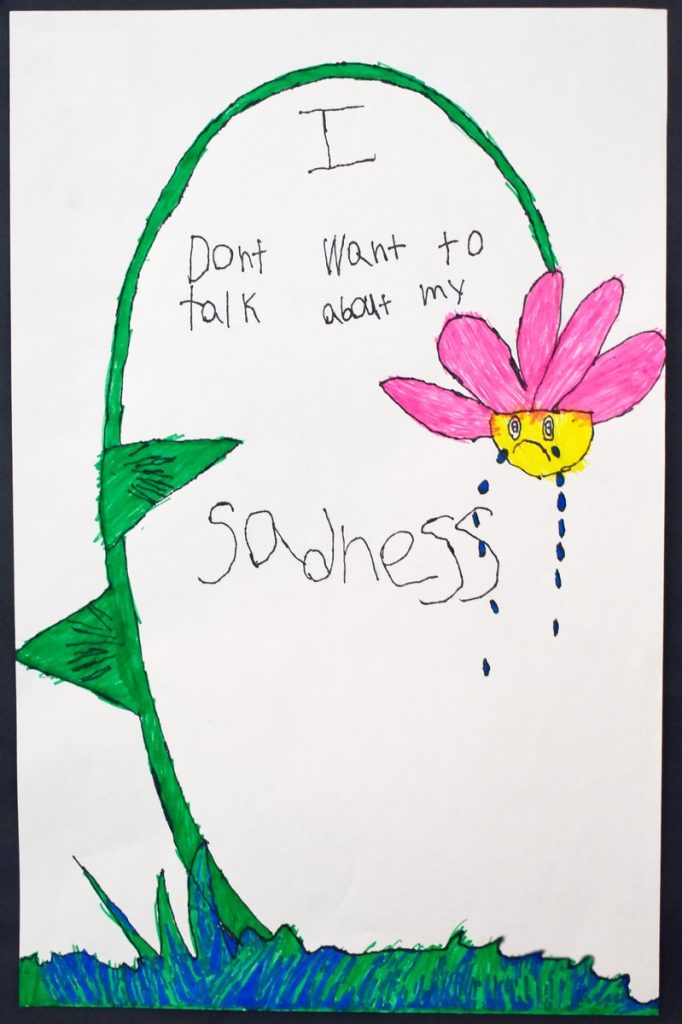
A sixth-grade student at Nodaway-Holt drew “Sadness.” Art teacher Robin Lewis said students often are able to express their emotions through art in ways they aren’t able to otherwise.
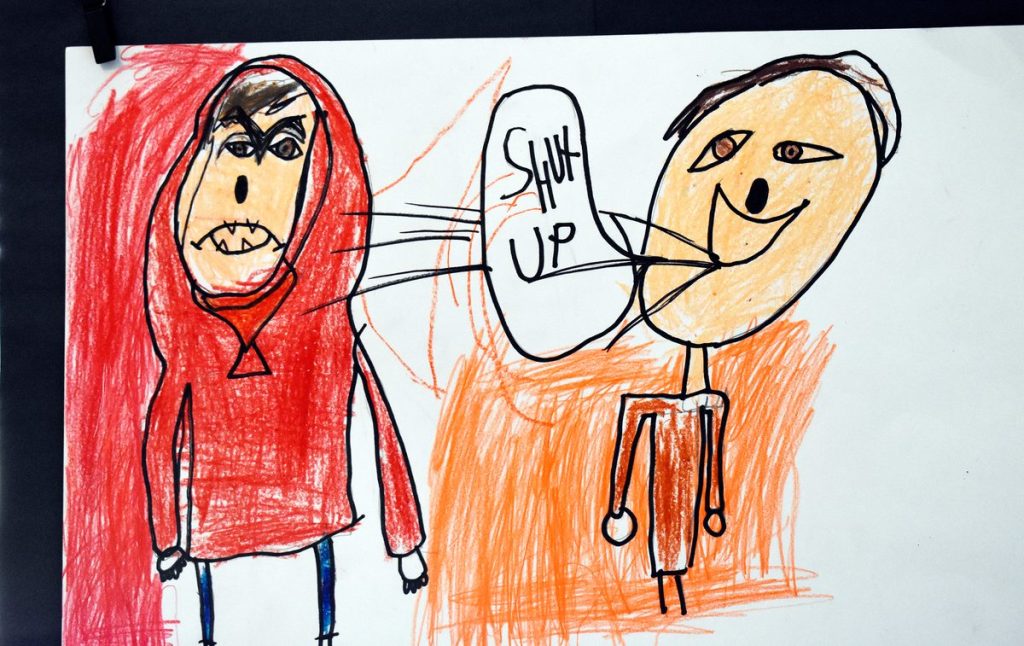
Elementary students in Robin Lewis’ art class at Nodaway-Holt learn to express emotions through art, including by associating colors with certain emotions — like red with anger. This piece, titled “Don’t Yell at Me!” was drawn by a third-grade student.
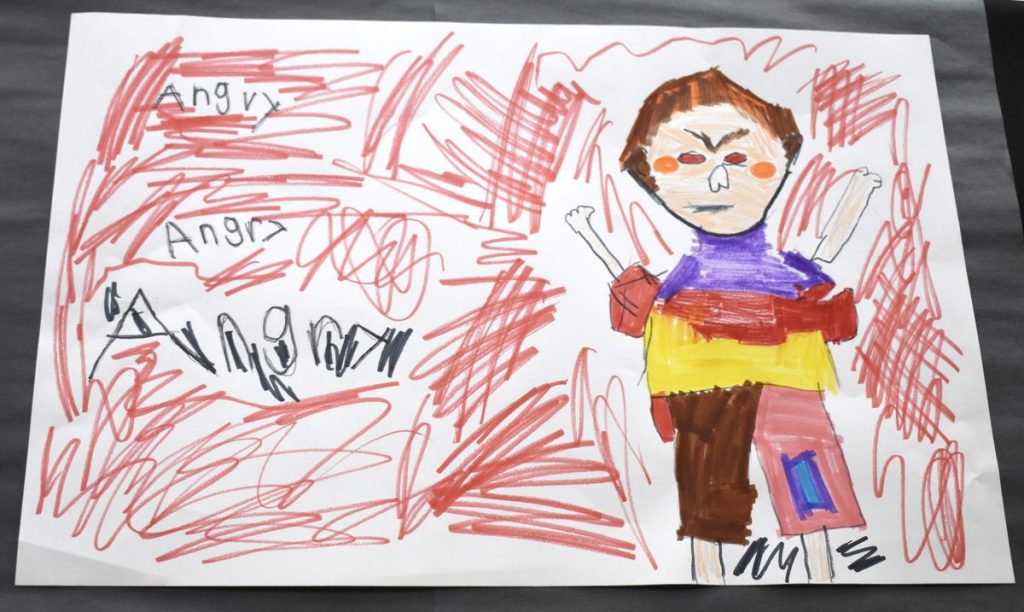
One of the earliest exercises in getting younger students to put their emotions on the page could be having them make angry marks, like these made by a Nodaway-Holt second grader in “I Am Angry.”
GEOFFREY WOEHLK/THE FORUM
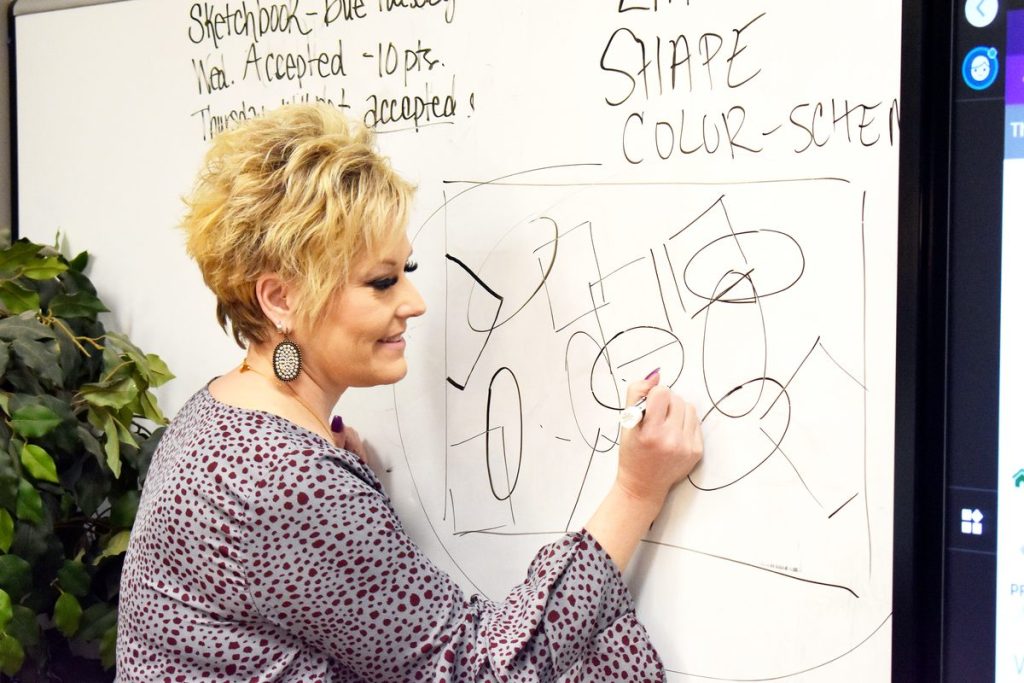
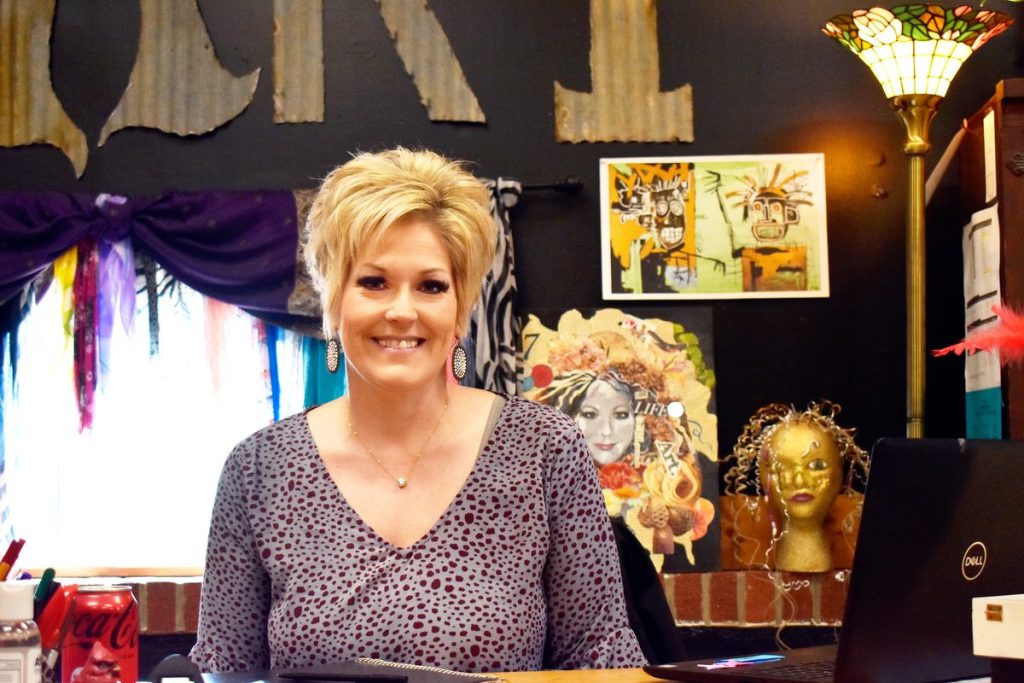
Robin Lewis, art teacher at Nodaway-Holt, emphasizes art to her students as a healthy outlet for their feelings.
GEOFFREY WOEHLK/THE FORUM
Made by a student from her first year teaching, Robin Lewis’ unofficial motto for her art students hangs at the front of her classroom.
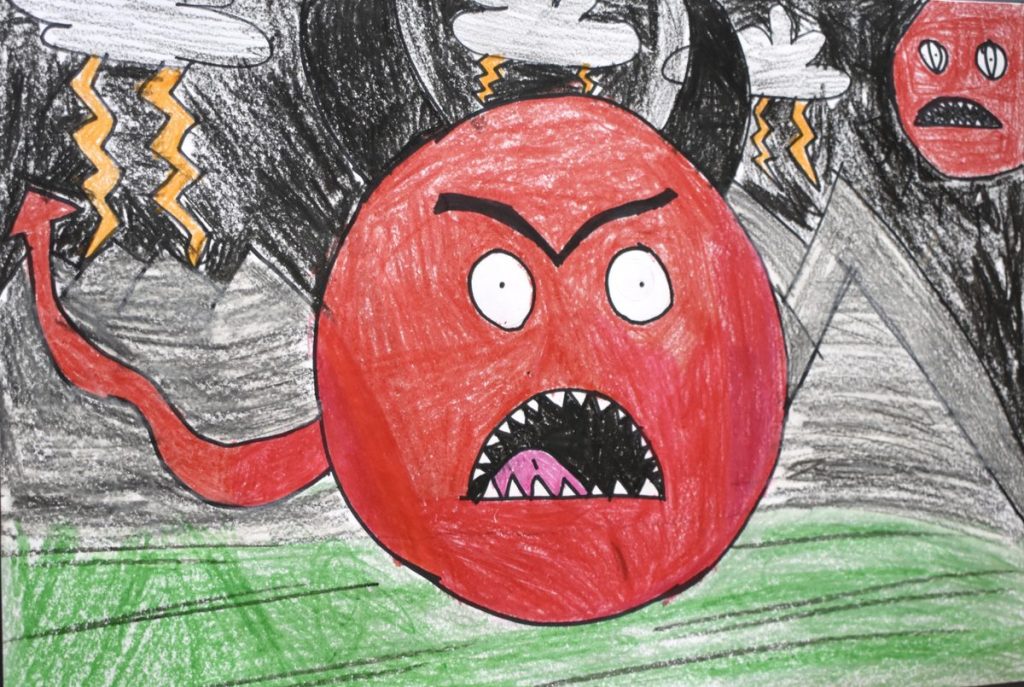
Nodaway-Holt art teacher Robin Lewis helps younger students find a common artistic language for expressing emotions, asking questions like, what does “angry” look like? Pictured is “I’m Angry Like a Monster,” by a fourth-grade student at Nodaway-Holt.
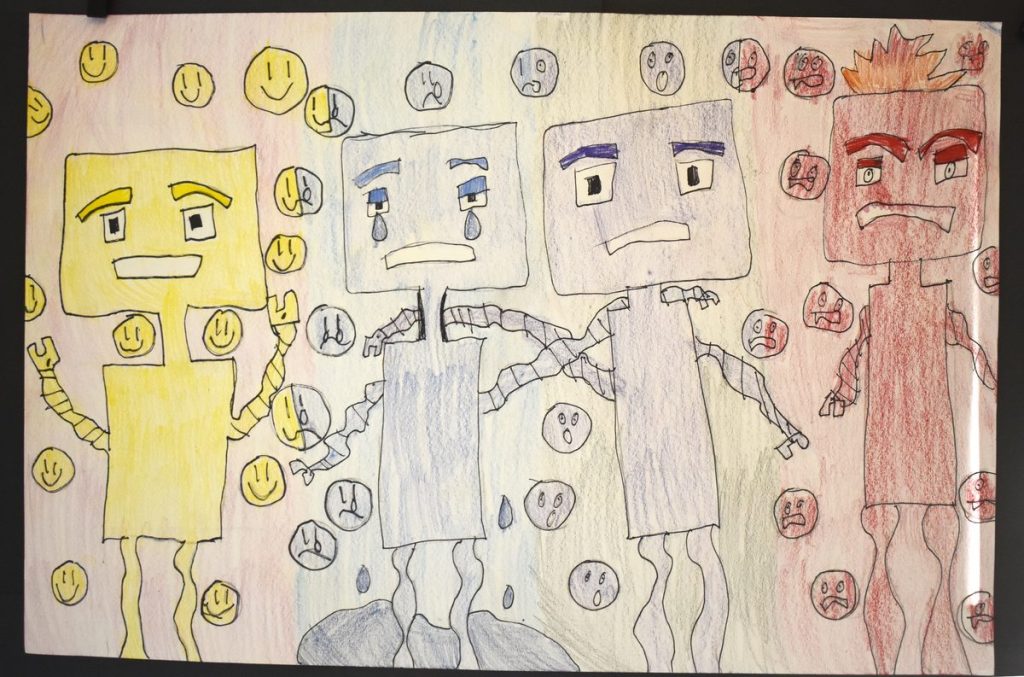
For the youngest kids, says Nodaway-Holt art teacher Robin Lewis, “I just let them pick an emotion and draw it for me. And some of them may do all of them, and some of them may just choose one.” Emotions are often color-coded by students, like in this work, “Feelin It All,” by a Nodaway-Holt fourth grader.

3-10 WHM – logo.jpg