NCED moves to bring more workers to Nodaway County
Annual average labor force in Nodaway County
MARYVILLE, Mo. — Last week, the Nodaway County Economic Development Corporation announced the launch of the Your Way Nodaway campaign, an initiative designed to attract residents to the county to fill job openings and create new ones.
The campaign, centered at YourWayNodaway.com, signals a shift in priorities from NCED, which like similar organizations across the country, faces a job market that’s short on workers.
“It’ll continue to be something we’ll face in the future, but that’s what every community is facing — you can go anywhere and they’re facing a tight labor market,” NCED Executive Director Josh McKim said.
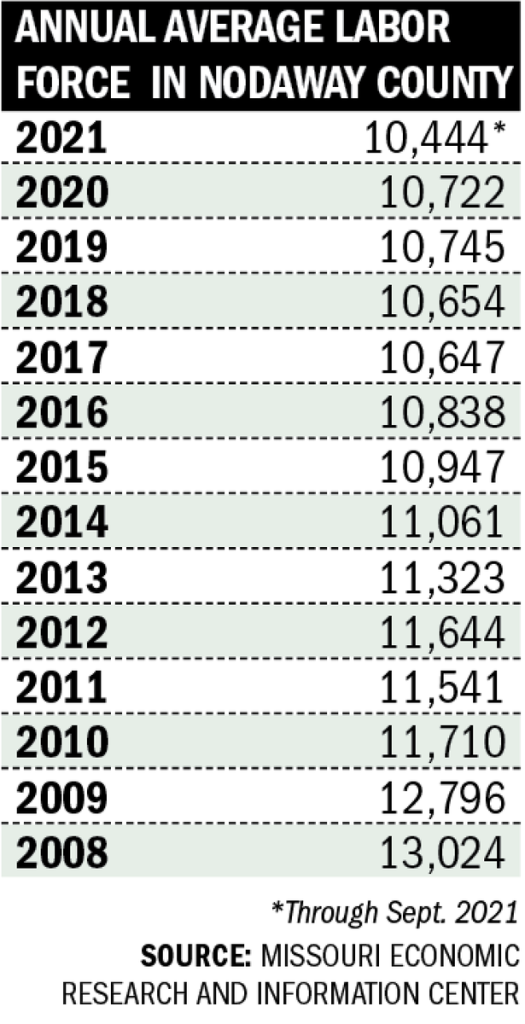
So far in 2021, Nodaway County’s average monthly labor force size is 10,444, according to data from the Missouri Economic Research and Information Center. The labor force is the number of people who have a job or are actively looking for a job.
That would be the lowest annual average labor force recorded in Nodaway County over the past 30 years — as far back as the online records go.
That’s not news to employers in the county, who, like their counterparts across the country, have struggled to fully staff their businesses as pandemic restrictions have relaxed, especially in retail and food service.
As the employment data from MERIC shows, McKim said the labor force in Nodaway County has been steadily shrinking since the Great Recession in 2008. That was one of the years in which more people were involved in the labor force in Nodaway County than any other since 1990 — but has dropped significantly since.
The unemployment rate, meanwhile, has plummeted to lows not seen since the late 1990s when unemployment was sometimes as low as under 1 percent. In September, the most recent data available, the unemployment rate in Nodaway County dipped to 1.8 percent. In only three months of the 2000s has the county’s unemployment rate been under 2 percent: April 2000, October 2018 and September 2021.
Compared to September 2019, the most recent pre-pandemic September, the losses in the labor force seem to come mostly from the number of people employed — over 260 fewer in 2021 than in 2019, while the estimated number of unemployed individuals dropped by less than 80.
Consequently, employers are scrambling to find workers, and sometimes, looking elsewhere entirely.
Kawasaki Motors, the county’s largest employer with more than 1,100 workers at its Maryville facility, announced last month plans to open a new location in Boonville that will create about 270 new jobs.
Anita Coulter, the Maryville plant manager, told The Forum at the time that the company had looked at instead expanding in Maryville. But the plant here was already understaffed and employees working overtime.
“We still have over 100 open positions we’d like to fill,” Coulter said in October.
That’s why economic development groups like NCED have shifted their focus from aiming to bring in businesses that will attract workers, to trying to recruit workers that will attract businesses.
The top two factors businesses look for when selecting a location, McKim said, are a quality workforce and transportation access.
“So if you’ve got a great transportation hub, but you don’t have a quality workforce, that hurts you,” he said. “If you have a great quality of workforce but you don’t have any transportation, that hurts you. Our weakness has been, we have a very tight labor market. That’s not a surprise to anybody. You can go drive down through the town and see all the hiring signs. A lot of other places have that as well.
“We’re looking at, how do we alleviate that?”
Cue Your Way Nodaway. McKim said it’s been in the works for more than a year, funded through grants from Evergy, United Electric and the Maryville Industrial Development Corporation.
With the new campaign, McKim hopes to add to the workforce with four distinct types of new residents: those looking to fill an open job, start a new business, buy an existing business or work remotely at a job they already have.
That last point, working remotely, is one where Nodaway County and Maryville may have a unique advantage over other areas, with far-reaching access to high-speed internet and an appealing quality of life.
“If the COVID pandemic taught us anything, it was that younger professionals are interested in living their lives in areas with a lower cost of living, higher livability factors and in less populated areas,” McKim said in a press release.
Begun long before the pandemic, Missouri’s age demographics have not worked in favor of rural economies like the one in Nodaway County. Younger residents leave the state, McKim said, especially their rural hometowns. On the flip side, Missouri sees high inflow of people over 35 — but not to the places younger people are leaving, like Nodaway County. Over the past 10 years alone, the county shrunk by more than 2,000 people, and fewer people live in Nodaway County now than at any time since 1870, according to U.S. Census data and data compiled by the Missouri Census Data Center.
Working with candid, a Kansas City marketing firm, NCED has begun the first element of the campaign, “Circle Back.” Through that initiative, NCED will target area natives, Northwest Missouri State University graduates and others with a connection to Nodaway County who may be interested in returning, and pitch them on what Nodaway County has to offer.
Although all rural areas are struggling with the same issue, McKim said he thinks Nodaway County has a leg up on the competition.
“I’ll say this, I think Nodaway County and Maryville itself are uniquely situated,” he said. “We use that word ‘unique’ a lot here, because we do, we think we are very unique from many other rural areas.”
First and foremost, McKim said, the presence of Northwest has a “major impact” on small communities like Maryville, providing cultural and economic opportunities, and serving as a consistent magnet for young professionals and soon-to-be-professionals.
Also, Nodaway County has an advantage geographically over most other rural regions with Kansas City, Omaha and Des Moines relatively close by.
“I’m a member of the Omaha Zoo because it’s a quick two-hour drive up there to go to the zoo and see a world-class zoo,” McKim said. “We’re a member of the Nelson Art Museum in Kansas City so we can go see world-renowned art, and it’s just an hour and a half away. … I can have a great, smalltown life and smalltown experience, but if I need a little more … wildlife or whatever, it’s really pretty close.”
The Circle Back initiative is just one part of the larger Your Way Nodaway campaign, but McKim said he hopes young professionals who have moved away from the county will find a reason to reconnect, and at least ask themselves, “why not come back here?”
“Why not come back to your roots, invest in your hometown, let your kids experience the same kind of growing up you did — of a wonderful hometown experience?” McKim said. “Why not?”
MORE INFORMATION
How is labor data collected nationally?
Beginning in 1940, the federal government has conducted the Current Population Survey (CPS) to measure national unemployment every month. During each monthly survey, the U.S. Census Bureau contacts 60,000 eligible households selected to make up a representative sample of different parts of the country and asks about the household’s labor force activities (jobholding and job seeking). The chances are 90 out of 100 that the monthly estimate of unemployment from the sample is within about 300,000 of the figure obtainable from a total census. Because the total number of unemployed typically ranges from about 7-15 million, the possible error resulting from sampling is not large enough to distort the total unemployment picture.
What about at the local level?
The Local Area Unemployment Statistics (LAUS) program publishes monthly estimates of employment and unemployment for all states, counties, and cities of 25,000 people or more. The LAUS program combines available data from the CPS, the decennial census, state unemployment insurance systems and some other data compiled by the U.S. Bureau of Labor Statistics to build a model that estimates local unemployment figures. The smaller the area, the more variance there may be between the actual figure and the estimate.
TERMS TO KNOW
Labor force – Defined by the Bureau of Labor Statistics, the labor force includes all people age 16 and older who are classified as either employed or unemployed. In other words, the number of people who are either working or actively looking for work.
Employed – Individuals who when surveyed met any of these criteria:
- Worked at least 1 hour as a paid employee
- Worked at least 1 hour in their own business, profession, trade or farm
- Were temporarily absent from their job, business, or farm, whether or not they were paid for the time off
- Worked without pay for a minimum of 15 hours in a business or farm owned by a member of their family
Unemployed – Individuals who when surveyed met all of these criteria:
- Were not employed
- Were available for work during the survey reference week, except for temporary illness
- Made at least one specific, active effort to find a job during the previous four weeks, or were temporarily laid off and expecting to be recalled to their job
Not in the labor force – Individuals who when surveyed were not employed and had not actively looked for work in the previous four weeks.
SOURCE: U.S. BUREAU OF LABOR STATISTICS
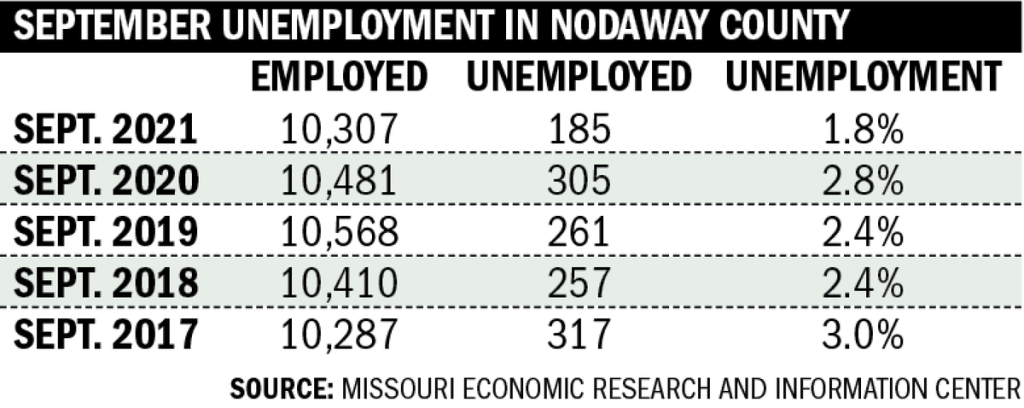
September unemployment in Nodaway County
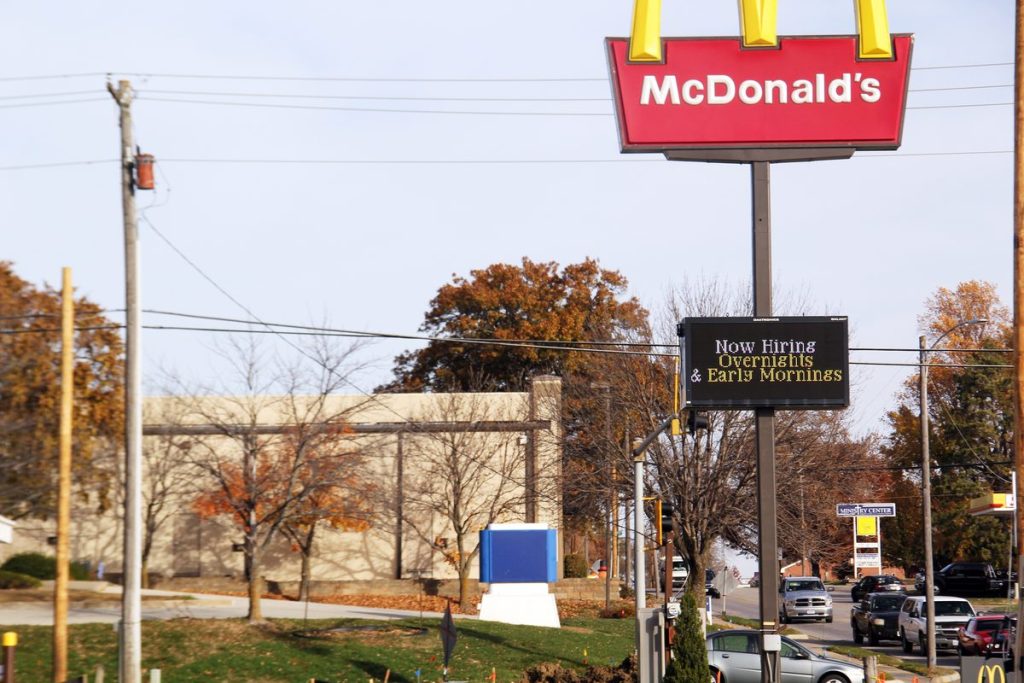
GEOFFREY WOEHLK/THE FORUM
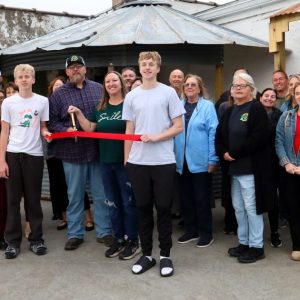
Businesses across Maryville, like many across the country and especially in rural areas, have had trouble filling the many jobs that have come open in recent months. The Nodaway County Economic Development Corporation announced a new initiative last week that aims to bring more people to Nodaway County to fill and create jobs.