Mozingo monitoring may shed light on nutrient runoff
FORUM FILE PHOTO
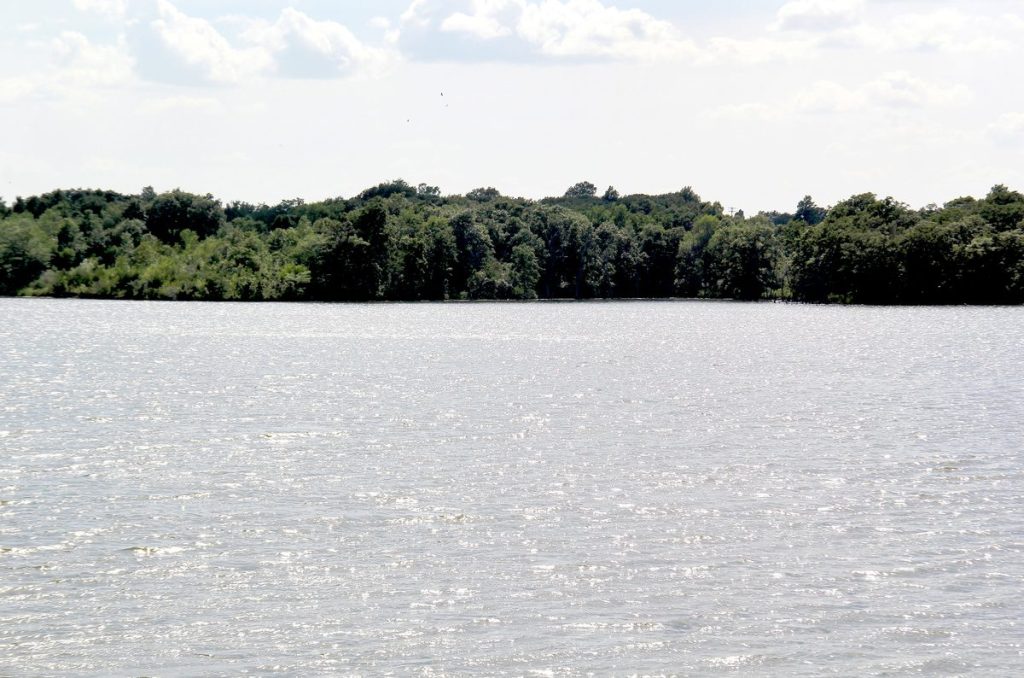
The Missouri Department of Natural resources announced in August a partnership with the U.S. Geological Survey to install a monitoring gauge in Mozingo Creek to measure various parameters over the next three years. That monitoring may shed light on nutrient runoff causing algae blooms in the lake.
MARYVILLE, Mo. — Officials hope that a water quality monitoring program will help answer questions about the leading causes behind algae blooms at Mozingo Lake that have affected drinking water across the area.
Typically, algae blooms like the ones that have become more and more frequent at Mozingo Lake are caused by excess nutrients, like nitrogen and phosphorous. Buildup of those nutrients in other locations have been linked to runoff from nearby farms — especially from chemical fertilizers or manure.
However, specific data on exactly where those nutrients are coming from in Mozingo’s case is scarce, leading some landowners in the surrounding watershed area to express some skepticism about a link.
“We could not prove to the landowners or prove to the public that soil erosion was coming off of the landowners’ farms and coming into the lake, therefore causing an algae bloom in the lake,” said Jeremy Redden, environmental manager with the Missouri Department of Natural Resources’ Soil and Water Conservation, at a briefing of the Nodaway County Commission last week. “So, we thought, OK, we need to have a monitoring project to be able to prove this, or to be able to show people this … data.”
In August, DNR announced a partnership with the U.S. Geological Survey to install a monitoring gauge in Mozingo Creek, the largest tributary to Mozingo Lake. Over the next three years, the gauge will measure turbidity, temperature, dissolved oxygen and nitrate levels, among other parameters.
Particularly in the northern part of the watershed, Redden said his agency felt it was missing crucial runoff data.
“Without data, you can’t say yes or no, and there’s a lot of things being said that I think they’ll find out may not be happening,” said Rod Barr, director of School of Agricultural Sciences at Northwest Missouri State University, who was also at the Aug. 26 meeting.
It’s possible, Redden said, that monitoring could instead show that nutrient runoff is unlikely to be a primary cause of the uptick in algae blooms. That would also be a valuable outcome, he said.
“This is very good news, and I am very excited about it,” said South District Commissioner Scott Walk. “I know several people in that watershed district that I talked to that went to the initial (stakeholder) meetings and they were skeptical.”
Walk said that no matter what the data shows, it should help paint a clearer picture of how to proceed.
Originally, the DNR and the county were moving forward with the possibility of using a federal grant to pay for a monitoring program, which would have also required a significant local match. But last month, Redden said, DNR freed up money to pay for the initiative itself, committing $231,000 to the project, with USGS putting in another $141,300 in federal funds. The combination of state and federal money means that no local funds will have to be spent on the monitoring program.
“I’m pretty excited about it, to be honest with you, just so at the end, we can say, you know, ‘Yes, sediment’s coming down the river,’ or ‘No, it’s not,’” Redden said. “And then we can adjust our conservation practices in the watershed as needed.”
In addition to the automated monitoring on Mozingo Creek, Redden said the USGS also will be hand-drawing samples from other tributaries throughout the life of the partnership.
“I hope we find some results,” said North District Commissioner Chris Burns. “That’s the main focus, is to figure out if we have a problem, how to solve it.”