Health dept.: Only 0.3% of county tested so far
GEOFFREY WOEHLK/THE FORUM
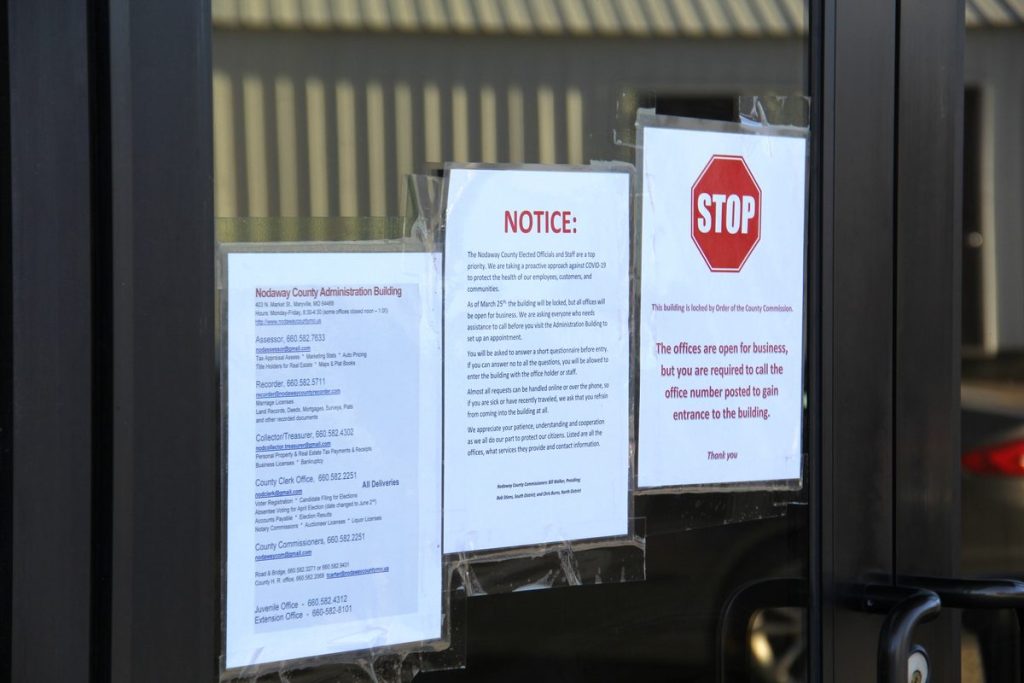
New signs are shown on the Nodaway County Administration Center detailing information for access and other information regarding the COVID-19 health crisis.
MARYVILLE, Mo. — As pressure builds in some parts of the nation, state and county, Nodaway County health officials cautioned Tuesday that in rural areas especially, testing still isn’t representative enough to even get an idea of how bad the COVID-19 outbreak is currently, much less how bad it may be in the future.
“We have only tested 0.3 percent of Nodaway County,” said Tabitha Frank, public health nurse supervisor at the Nodaway County Health Department, during a weekly briefing of county officials. “Which is a really low number.”
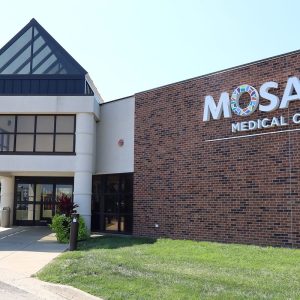
As of Monday, that equates to 105 tests from Mosaic Medical Center – Maryville, 73 of which were Nodaway County residents.
Rapid testing services are getting closer — literally — with a test that can return results in under 15 minutes available at Mosaic Life Care in St. Joseph.
“We’re very close to having that here,” said health center administrator Tom Patterson. But, he said, tests first go to areas that already have higher concentrations of positive test results, followed by more highly concentrated population centers, and then what’s left comes to areas like Nodaway County. Still, it could be as soon as next week that the first rapid tests become available here.
Both officials applauded local social distancing efforts that they said have made a difference in keeping the coronavirus from spreading more widely, but just how much of a difference it will make still isn’t known without more testing available.
Currently, testing is still restricted based on proximity to other known positive cases.
In Nodaway County, three positive cases have been confirmed so far, though Patterson said that as testing becomes more widely available, obviously those numbers will go up. Just how far, though, is what health officials aim to find out, ideally while shelter-in-place orders remain in place.
Governor Mike Parson’s statewide order is in place until May 3, and he has not indicated if it will be extended in some fashion afterward.
Meanwhile, pressure from small business owners, who have been squeezed the tightest and who largely have still not received the loans from the federal government promised under the CARES Act, mounts at the doorsteps of local officials who have been left to plan for every eventuality without much in the way of answers.
But still without enough testing to get a handle on how bad the outbreak may be in rural areas like Nodaway County, answers remained few and far between.
Test kits aren’t the only supplies in short supply. At the Nodaway County Ambulance District meeting last week, Phil Rickabaugh, Maryville Fire Division Captain, said the rescue squad had received four protective masks for emergency responders from the federal stockpile, but that all four were under recall.
In the meantime, Frank and Patterson said individuals should continue to do everything they can to social distance effectively, including wearing masks in public when six feet of distance isn’t guaranteed.
“There are a lot of asymptomatic people out there who may be spreading the virus,” Frank told the commission.
Quarantine vs. isolation
Frank also took the opportunity Tuesday to explain what happens when someone in a household tests positive.
After someone tests positive for COVID-19, they are isolated. That means that if possible, they are separated from anyone else in the household, including using a different bathroom. Isolation is for people who show symptoms.
Someone in isolation will stay isolated until they have been fever-free for 72 hours and have seen a reduction in symptoms over the past 7 days. At that point, the isolation is lifted and they will likely enter quarantine.
Quarantine is what happens to anyone else in the household who may be in contact with the person who is sick. Quarantine is for people who do not show symptoms, but have been in contact with someone who has tested positive or is in isolation.
Someone in quarantine will spend 14 days at home without outside contact. If no symptoms present during that time, then the quarantine is lifted. That includes members of the household of someone who is isolated. If a family member is quarantined with someone in isolation, that family member’s “quarantine clock” won’t begin until the person in isolation has stopped showing symptoms.
That means a significant portion of time could be spent in quarantine for family members who live in close quarters.
But after quarantine, that person should be safe to return to work, and if requested, the health department will provide documentation to an employer saying that they have completed quarantine procedures and can return to work.
Editor’s Note
COVID-19 has been declared a pandemic by the World Health Organization. To help our community combat the outbreak, we are providing this content for free. Please consider supporting our efforts in providing local coverage by subscribing to The Maryville Forum.
FORUM FILE PHOTO
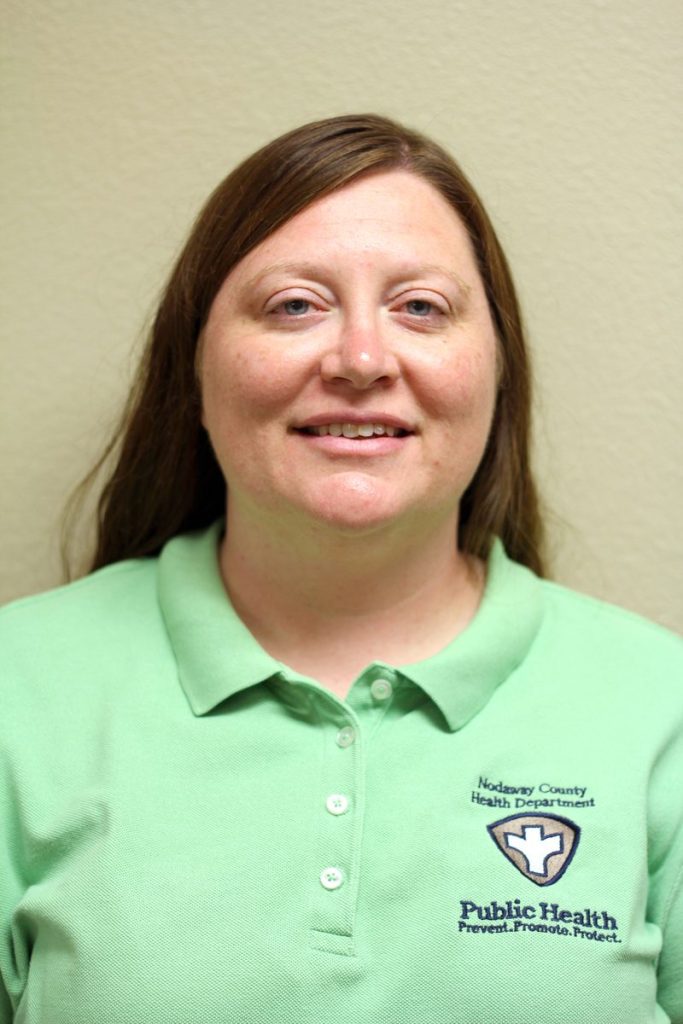
Tabitha Frank Nursing Supervisor Nodaway County Health Center