Cemetery cleanup restores link to past
SUBMITTED PHOTO
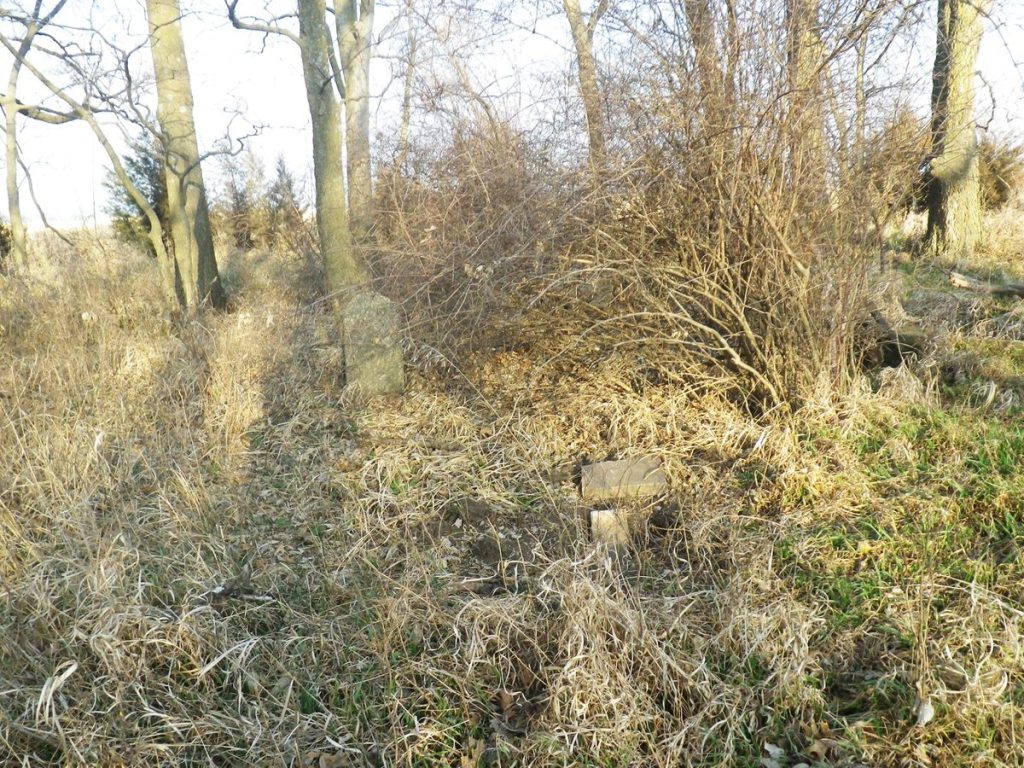
Baker Cemetery on March 26, 2018, overgrown with trees, grasses and poison ivy. The group sprayed “hundreds and hundreds of gallons of weed-kill” to help clear the grave sites enough to be mowed.
MARYVILLE, Mo. — On Sept. 22, around two dozen people squeezed into the historic Barnard train depot to get a peek into their past, connecting across generations to both long lost relatives and strangers alike.
The attendees gathered to hear about — and see, though forced by rain into a slideshow rather than a visit,— the progress of the Baker Cemetery Restoration Project, a cleanup effort aimed at restoring Baker Cemetery, which sits just off U.S. Highway 71 near Barnard. For more than a year, volunteers have braved bad weather, relentless overgrowth and poison ivy to uncover 20 previously unrecorded graves, and restored dozens and dozens of others to properly mark their namesakes’ final resting places.
Beginning in early 2018, a group of extended family members, led by cousins Terri Heastan and Debbie Snyder, started the painstaking process of reclaiming the cemetery from decades of disrepair.
“She is our historian,” Snyder said of Heastan. “And she learned about this Baker Cemetery, which was supposed to be around Barnard. And her great-great-great-grandfather is a Baker.”
Heastan came up with her husband from St. Joseph, Snyder said, looking for the cemetery after doing research on where that great-great-great-grandfather, Losson Baker, had been buried.
“They came up and walked from the Barnard road through cornfields and ditches, and they found a grove of trees … and at that point in time, you could not get into it,” Snyder said at the depot. “You’d put your hands above your head and try to get in and it was so (thick with) poison ivy and everything that you could not get in. But they saw two stones back in there, and so they knew they were at the right spot.”
Later, the Heastans came back — with chainsaws — to liberate the nearly two-acre swath of burial ground that nature had overtaken. A month after that, Snyder started to lend a hand, and by March, there was a full-fledged volunteer operation working on clearing out the vegetation to get at the graves.
The first grave, Heastan said, was dug at the cemetery in 1857, and the last in 1908, leaving the land in a state of uncertain maintenance for more than a century. Public records obtained by the group indicated that 83 graves were counted at the site in 1941, the first such tally in the public record, and 86 in 1989.
After Heastan and the group’s work over the past year and a half, that number is up to 104, with another three headstones that they have not been able to identify.
To get at the graves, the group spent months mowing unruly grasses, killing poison ivy and clearing out trees.
“We sprayed hundreds and hundreds of gallons of weed-kill,” Heastan said. “I would go home covered, absolutely covered (in poison ivy rashes), every (day). Didn’t clear up for months.”
Over the decades, trees had also grown between — and sometimes around — the graves and their markers.
“We cut over 200 trees from the cemetery,” Heastan said. “It still could probably use another hundred out. But we cut out that many just to be able to have access to mow it.”
Once the site was cleared, the real work began.
Restoring history
“On our fourth trip there, we actually found my great-great-great-great grandparents,” Heastan said. “Absolutely shocked. Nobody had ever seen their stone, they had never been photographed, and by poking the ground with a poker, we located their stones.”
It was a technique that the group, which at times swelled to a couple of dozen people helping out, used to find all the graves in the cemetery, especially ones that had never been recorded before.
“(We) made pokers, and you just simply went around the ground poking until you heard a ‘clink,’” Heastan explained. “And then you knew that it was a stone and to start digging.”
Group members spent their days poking the ground down to a foot or so, moving methodically — inches at a time — across rectangular grids Heastan had overlaid onto the site. And they’re still finding more, unearthing another stone in September.
“Every day that we were there, we were locating stones,” she said. “It was so much fun, it was like a treasure hunt.”
And like buried treasure, many grave markers sat beneath a century’s worth of dirt and grass — the stones up to two feet underground, much less the graves themselves. Others, meanwhile, had toppled long ago and splintered into several pieces, providing an even bigger challenge for the amateur group, especially markers that were large and layered.
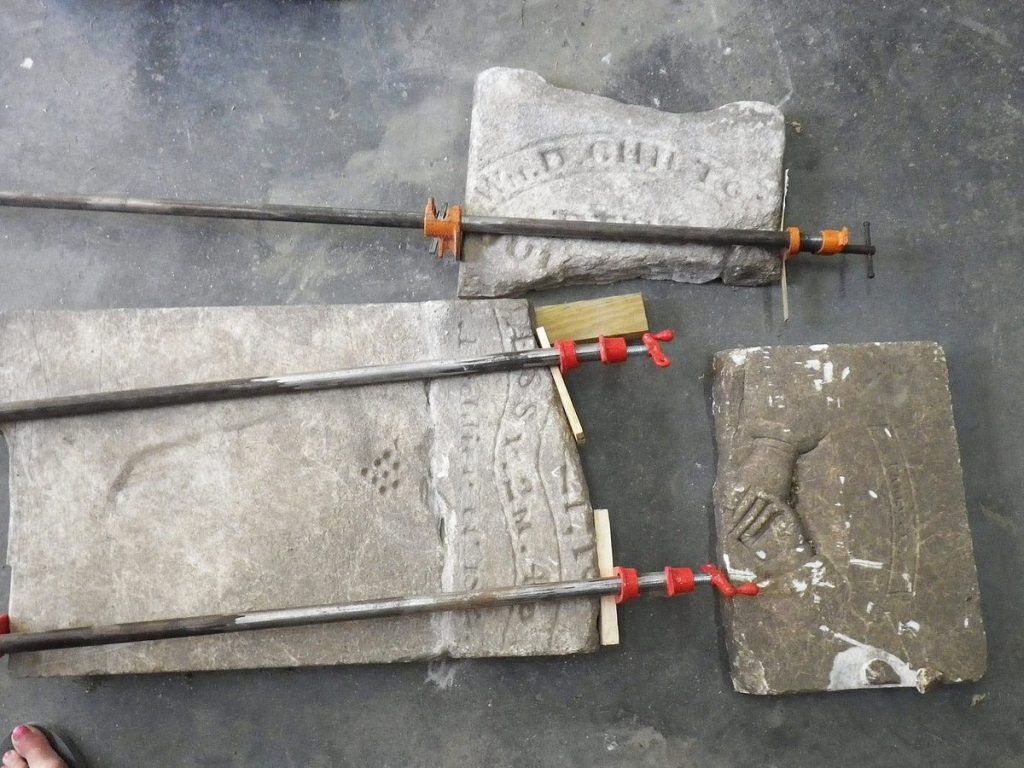
Heastan and her husband, Terry, then set to work restoring as many of the damaged headstones as they could, and put them back at the burial site — laboriously hauling each stone to their truck, then to their garage in St. Joseph for repair, and finally back to the cemetery when completed.
And all of that, of course, required knowing just how to repair a headstone in the first place — not exactly shop class 101.
“(We’d) never done this before, didn’t have a clue,” Heastan said. But, as in most pursuits, Google searches turned up the right mixtures and technique. “Since these stones were all made out of the old limestone and sandstone, I found an actual mixture recipe that (uses) white Portland cement, lyme and very fine sand.”
That resulted in an effective way to put pieces of headstones back together, but the final piece of the puzzle — so to speak — was to use a nail file to shave off a small part of the existing headstone and mix it back in with the new adhesive to get the colors to match.
For cleaning, Heastan said she settled on something simpler: Wet & Forget spray off the shelf at Walmart. That cleared out the years of grout and dirt, and, with a dash of flour, made the headstones more readable than they’d been since the turn of the last century.
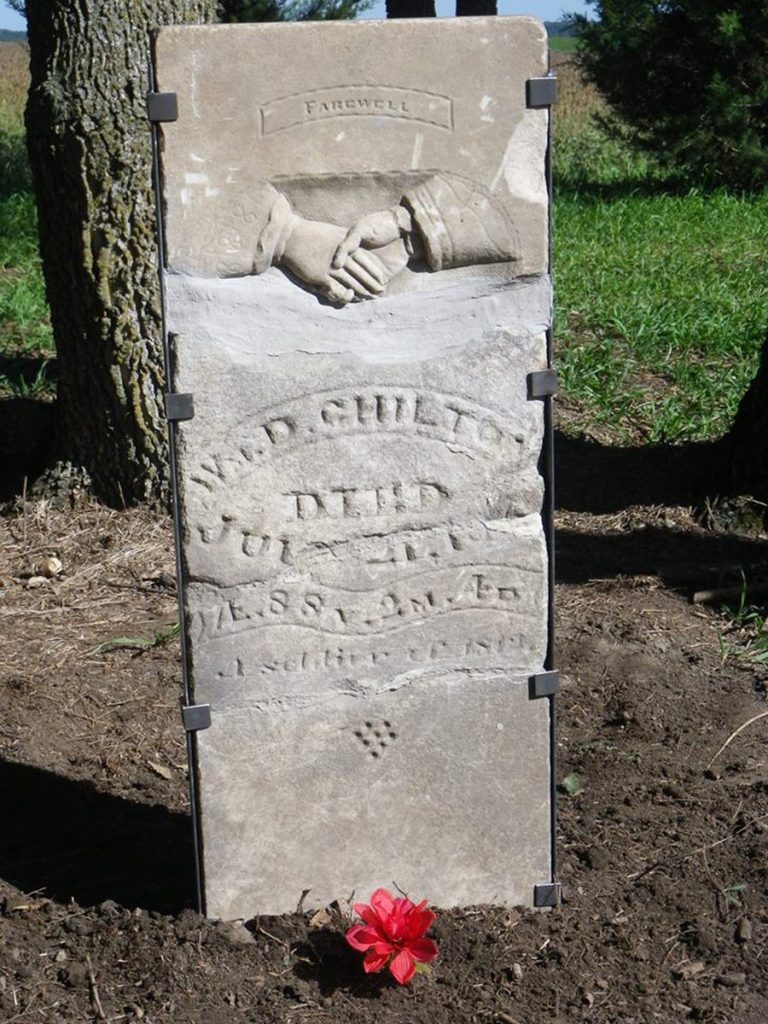
To put especially damaged headstones back in the ground, like one belonging to War of 1812 veteran William Chilton who was interred in 1871, the Heastans in some cases used metal braces to keep the stones upright when not enough was left of them to stay that way on their own. The rest received freshly mortared bases.
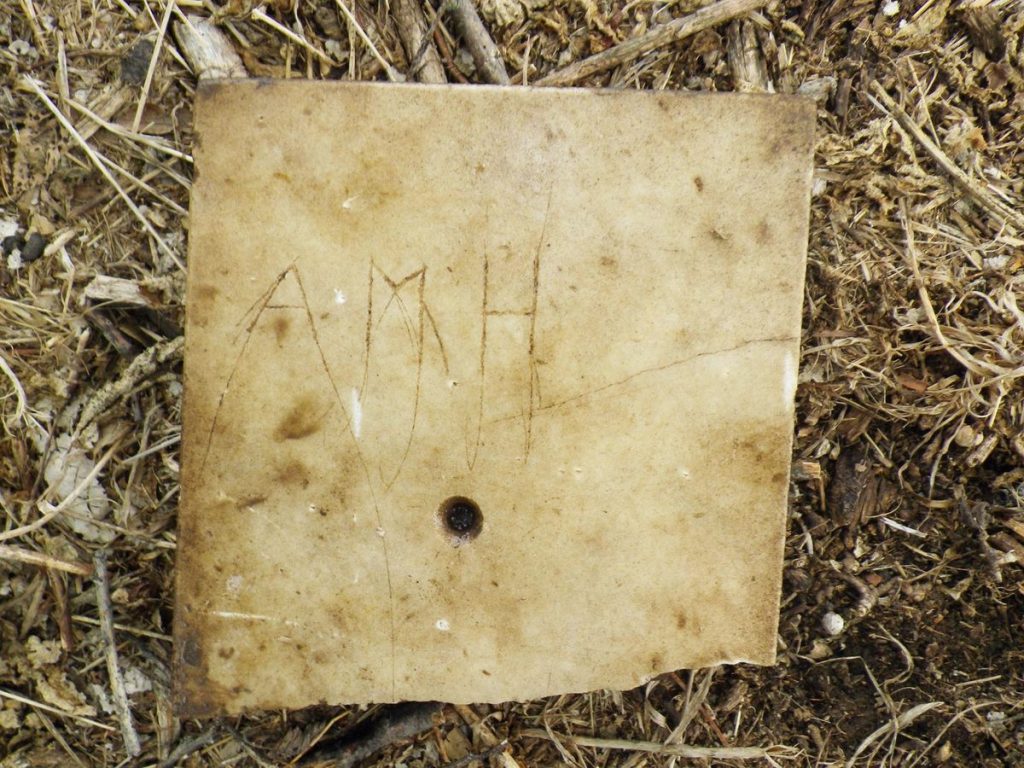
‘AMH’
One consistent trend that raised the group’s eyebrows was the number of graves belonging to infants and babies, and the detailed grave markers and remembrances for each.
“We were just so surprised throughout this whole thing — all of these little babies, two-month-old babies or one-week-old babies, had beautiful, beautiful stones,” Heastan said. “And I’m just amazed because back then, I’m just surprised they had money to buy these headstones.”
One grave in particular caught everyone’s eye.
“Deb was poking, and actually thought that she had found a stone because it kept clinking,” Heastan said. “And, it wasn’t. It was a mason jar, with these two little porcelain dolls.”
The jar, and the two porcelain dolls contained inside, were in a grave marked only with a hand-carved stone etched with “AMH.” Heastan said it’s possible the jar belongs to Amelia Harman, who is recorded to have been buried in the cemetery, but whose grave has not otherwise been found. One of the figurines, then, could belong to Amelia’s daughter, Sophia, a 3-month-old girl buried alongside.
“These (dolls) were literally an inch tall, and you can still see the little bits of pink rouge on the cheeks, and the little boy, he had a little bit of blue on his chest to show a boy and a girl,” Heastan said. “I just couldn’t even imagine, that small and they buried that. That would’ve been their little treasure to bury with their little daughter.”
While the jar was intact, the lid had rusted into two pieces. Heastan replaced it with an older porcelain lid that would last longer.
“So we brought that up and put everything right back in it, and buried this down with the little girl where it was supposed to be.”
Going forward, Heastan and the group continue to take care of the cemetery, and to unearth grave markers. Relatives from across the country have come to help, and to connect with their ancestors buried near Barnard.
The group regularly updates progress on the Baker Cemetery Restoration Project Facebook page.
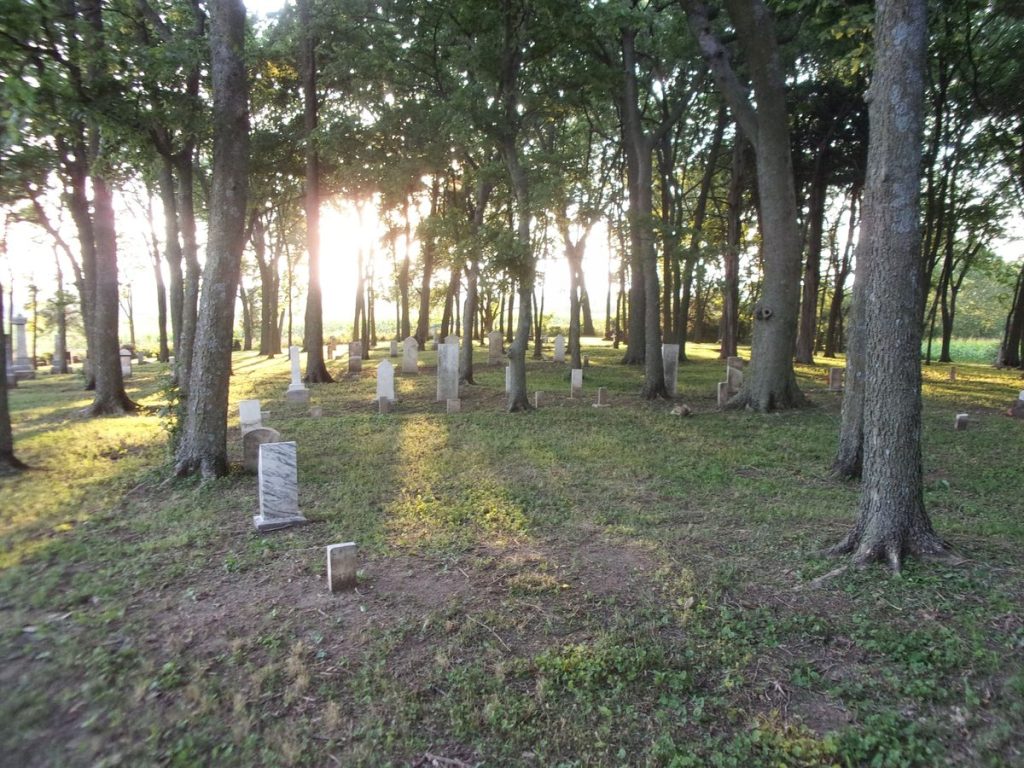
SUBMITTED PHOTO
Baker Cemetery on July 25, 2019. About 200 trees were cleared off the site. The city of Barnard allowed the group to dispose of sticks and twigs at the city’s disposal site.
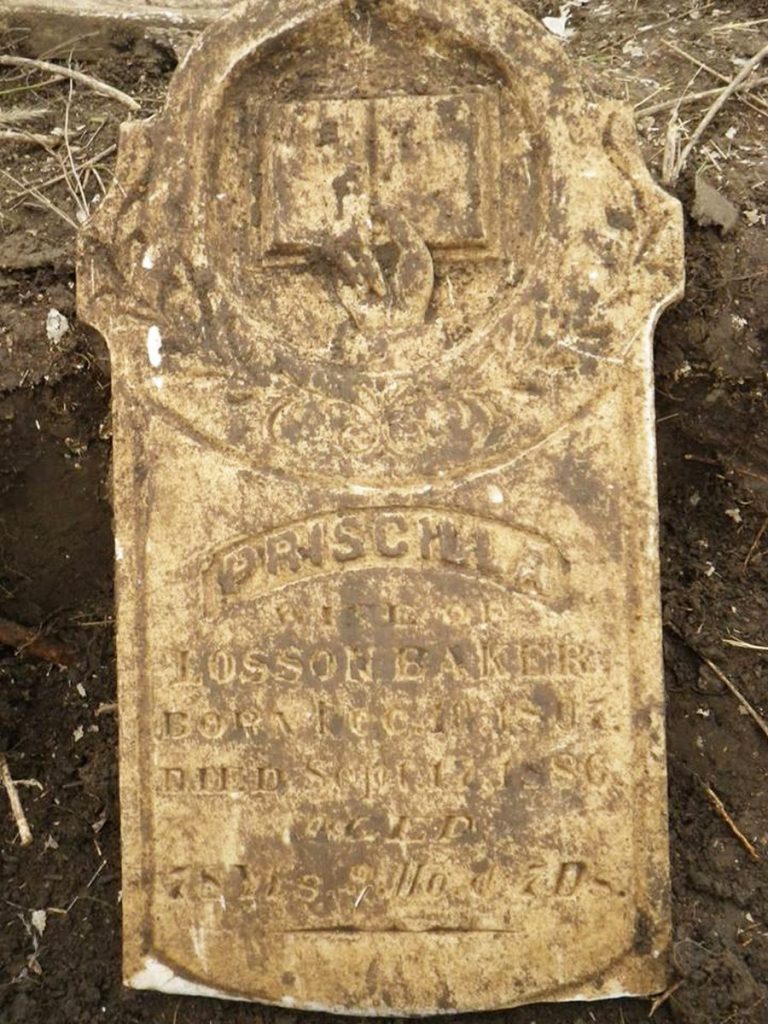
SUBMITTED PHOTO
Headstone for Priscilla Baker, the great-great-great grandmother of Terri Heastan, that was unearthed on April 11, 2018, along with her husband Losson’s.
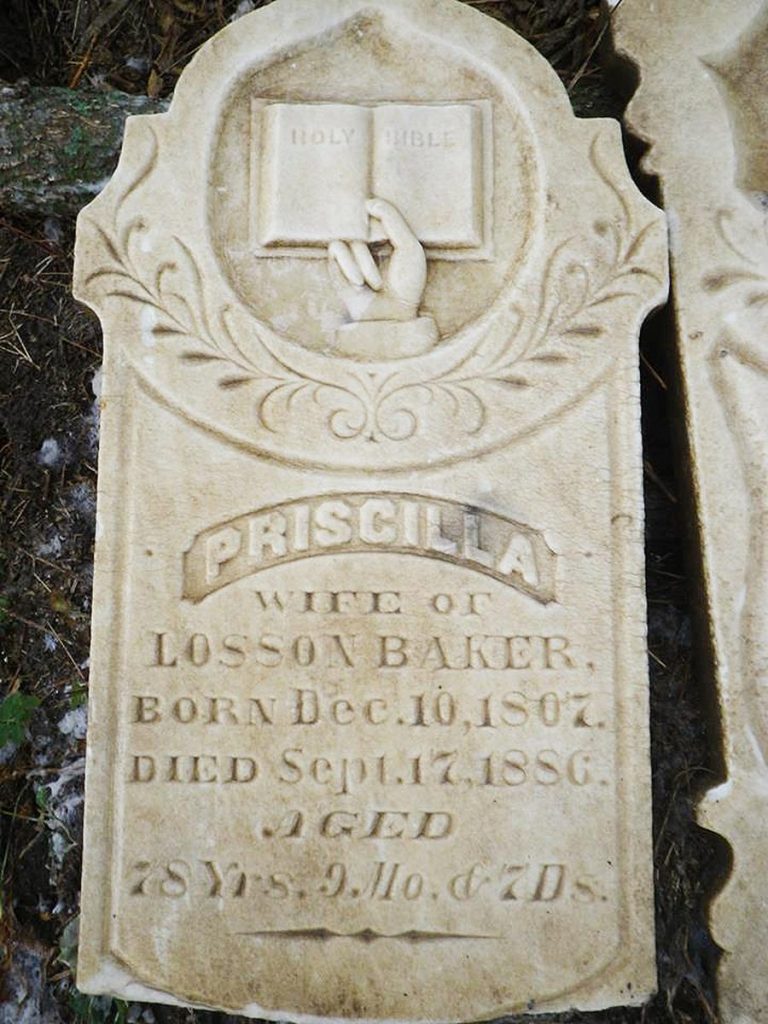
SUBMITTED PHOTOS
The Priscilla Baker headstone after being cleaned.
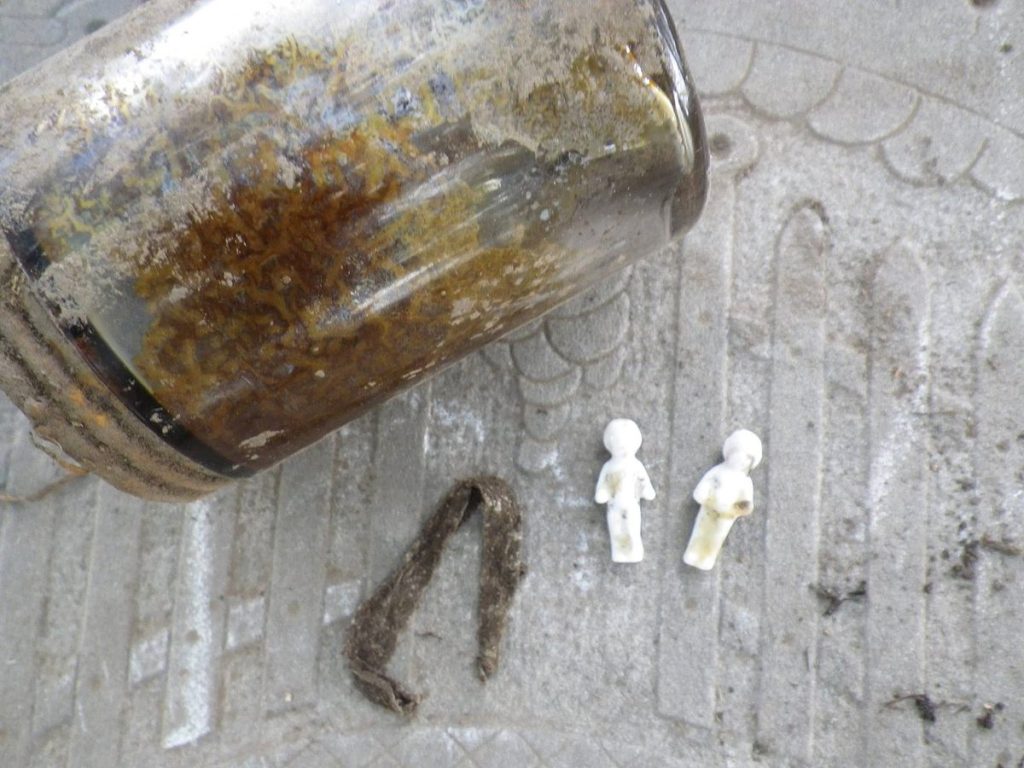
SUBMITTED PHOTO
Two porcelain dolls found inside a mason jar in the grave marked by hand with the initials “AMH.” The grave may have belonged to Sophia Harman, a three-month-old girl buried in the cemetery.
SUBMITTED PHOTO
Hand-carved gravestone with initials “AMH.” The grave may belong to Amelia Harman, who is reportedly buried at the site.
SUBMITTED PHOTO
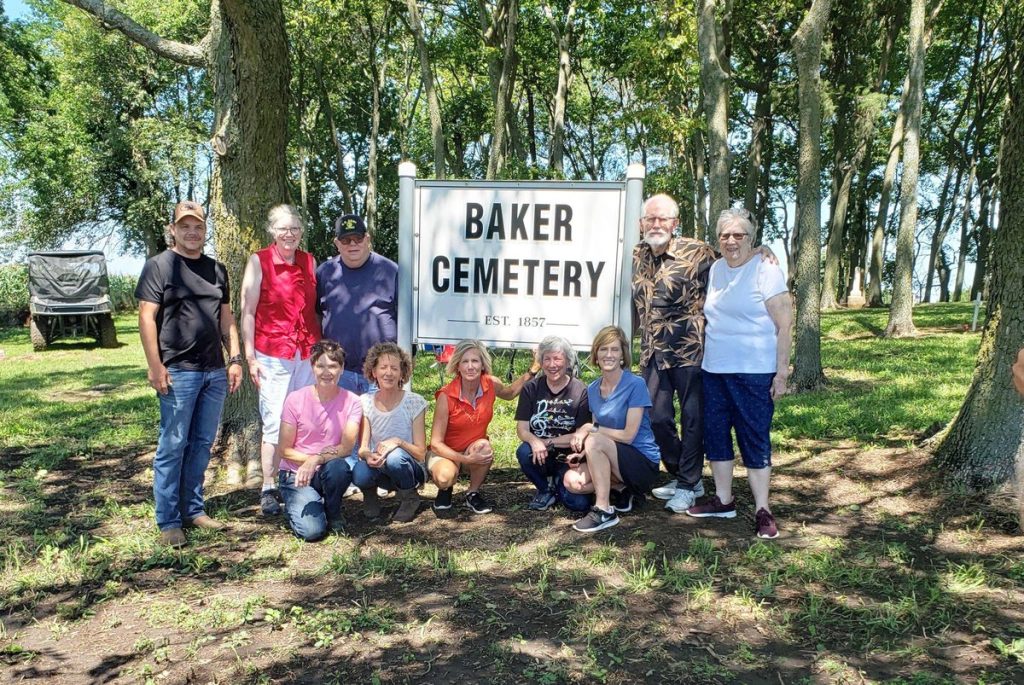
Volunteers that are part of the Baker Cemetery Restoration Project pose next to a sign for the site on Aug. 19. The sign was donated by Gerald Crail.
SUBMITTED PHOTO
Terri Heastan and her husband, Terry, took broken gravestones back to their home to repair, but had to learn the process from scratch. Some, like the one pictured which belongs to War of 1812 veteran William Chilton, needed metal supports to keep them upright in the ground once replaced.
SUBMITTED PHOTO
William Chilton’s headstone repaired and replaced at his gravesite in Baker Cemetery.