
Capitol Report: Highly productive session ends
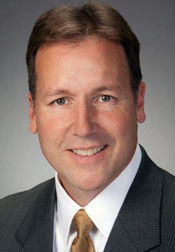
State Rep. Allen Andrews
As the clock hit 6 p.m. on Friday, May 17, members of the Missouri House and Senate reached the conclusion of a highly productive legislative session that saw a number of important policy reforms cross the finish line. After months of work, legislators were able to pass more than 70 bills and send them to the governor’s desk. The bills that received final passage include a number of priorities outlined by House leadership, as well as issues supported by the governor.
One bill approved by House and Senate members would create economic incentives meant to create and retain jobs, and implement a workforce development program to train Missourians to fill jobs in areas of high need. The legislature also approved the Missouri Stands for the Unborn Act, which is one of the strongest pro-life bills in the nation. Additionally, lawmakers gave final approval to bills that will protect some of the state’s most vulnerable citizens, make substantive reforms to Missouri’s criminal justice system, encourage agricultural development and ensure food security, and improve the state’s legal climate.
The legislature’s efforts during the 2019 session also include passage of a fiscally responsible state spending plan. The $29.7 billion budget provides a record level of funding for K-12 education and fully funds the school foundation formula for the third year in a row. The spending plan also provides funding boosts for state scholarship programs and for the state’s institutions of higher learning. Additionally, the budget funds repairs for the state’s deteriorating transportation infrastructure.
• Fast-Track – SB 68is designed to fill workforce gaps in high demand industries by providing financial aid for adult learners. Fast Track will give adults whose income is below the Missouri average an opportunity to gain skills that boost their earning potential and prepare them for work in high-demand occupations. The program will provide short-term training in fields like manufacturing, nursing, welding, and information technology. It will also help students complete degrees in majors that prepare them for work in high-demand fields.
• Missouri One Start – Another provision of SB 68 would allow the Missouri Department of Economic Development to improve and consolidate its workforce development programs. Missouri One Start is meant to improve Missouri’s workforce programs that help businesses recruit and train large numbers of job applicants during major expansions. The changes made to the programs will make them easier for businesses to navigate. They will also enact performance-based funding for training providers, and claw back protections for taxpayers.
• Missouri Stands for the Unborn Act – HB 126 referred to as the Missouri Stands for the Unborn Act, the bill would prohibit physicians from performing an abortion after a fetal heartbeat or brain function is detected, which is typically around 8 weeks gestational age. Because similar provisions have been struck down in other states, the bill contains additional clauses to protect the lives of the unborn. Should the fetal heartbeat requirement not stand, the bill has a tiered approach that would then enact bans at 14 weeks, 18 weeks, or 20 weeks. Additionally, the bill contains provisions that would expand the existing tax credit for pro-life pregnancy resource centers.
• Fighting Sex Trafficking – HB 397 is meant to protect underage victims of sex trafficking from prosecution. Lawmakers endorsed the change to ensure young people who are forced into prostitution aren’t further traumatized by facing criminal charges. Current law in Missouri makes it an affirmative defense for a minor charged with prostitution to have been acting under coercion at the time of the crime. House Bill 397 would remove the coercion requirement and make it an affirmative defense that the defendant was under the age of 18.
• Hailey’s Law – Another provision in HB 397is meant to better protect children by improving the state’s Amber Alert system. The bill is known as “Hailey’s Law” in honor of Hailey Owens, who was abducted and murdered at the age of 10 while walking home from a friend’s house. The legislation would require the Amber Alert System to be tied into the Missouri Uniform Law Enforcement System (MULES), which is the computer system that allows all law enforcement in Missouri to communicate. That means once an officer enters information about a missing child into MULES, it would at the same time be available to the Amber Alert system.
• Simon’s Law – HB 397andHB 138would also prevent do-not-resuscitate orders from being issued for Missouri children without a parent being aware. Commonly referred to as “Simon’s Law”, the legislation would prohibit a health care facility, nursing home, physician, nurse, or medical staff from putting such an order in a child’s file without a parent’s permission. That permission may be written, or given orally in the presence of at least two witnesses.
• Nathan’s Law – Another provision in HB 397 would make unlicensed day care facilities safer for Missouri children. Known as “Nathan’s Law,” the provision is named in honor of Nathan Blech, who died in 2007 after suffocating at an unlicensed day care. It was later determined the day care operator was watching more children than recommended. Nathan’s Law addresses the problem by limiting the total number of children allowed at an unlicensed day care to six. This includes a maximum of three children under age two. Children who live in the caregiver’s home and who are eligible for enrollment in a public kindergarten, elementary, or high school are not included in the total.
• Creating Consistent Farm Regulations – SB 391 will provide consistency in the way farm operations across the state are regulated. The bill addresses a problem in current state law that has resulted in inconsistent regulations placed on farms throughout the state by county commissions and health boards. The bill will not block county ordinances or restrict local control. Instead it will ensure regulations on concentrated animal feeding operations are consistent and not more stringent than state laws. The bill is designed to create a uniform agriculture policy that will encourage agricultural development, protect jobs, and ensure food security. SB 391 also establishes the Joint Committee on Agriculture. The committee will study the economic impact of Missouri’s agriculture industry, as well as efforts to improve environmental stewardship while improving the economic sustainability of Missouri agriculture. The committee will also look at incentives to encourage best practices to scientifically address Missouri’s carbon footprint.
• Wind Farm Tax Revenue – HB 220 This is legislation I sponsored that would ensure tax revenues generated by wind farm projects will stay local whether they are owned by public utilities or privately owned. The passage of this bill will help secure the future of our rural communities, our rural schools, fire districts, and ambulance districts by mandating that millions of dollars of tax revenue will stay home.
As always, it is an honor to represent you!
Representative Allen Andrews, District 1, Missouri State Capitol, Room 407, 201 West Capitol Avenue, Jefferson City, MO 65101
Allen Andrews is the First District State Representative.



