Linked by music, two Maryville women define ‘extraordinary’
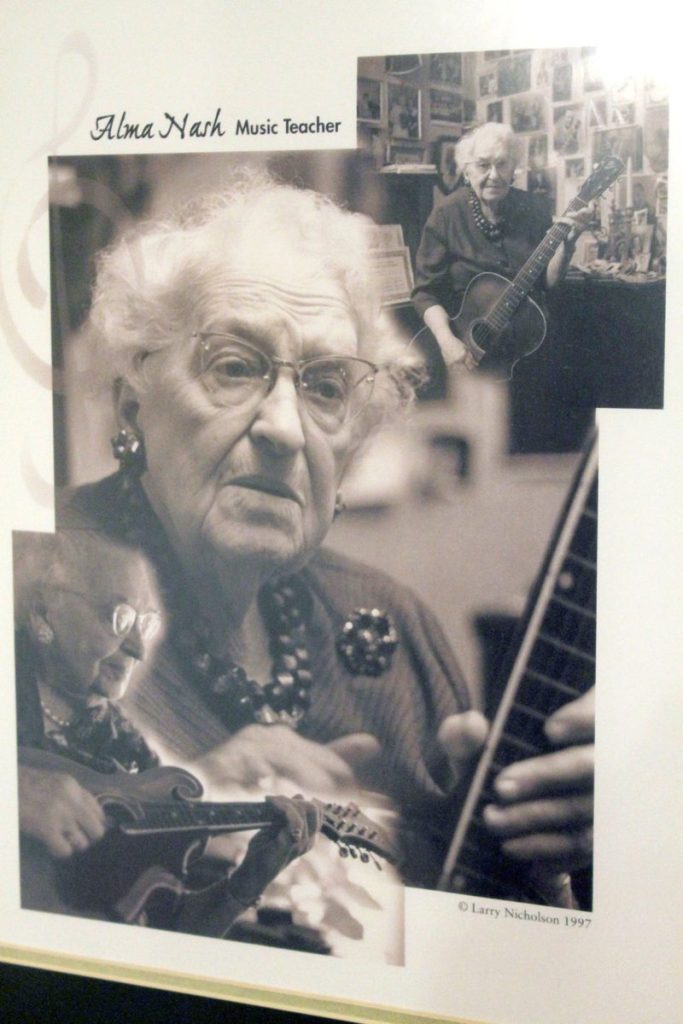
FORUM FILE PHOTO
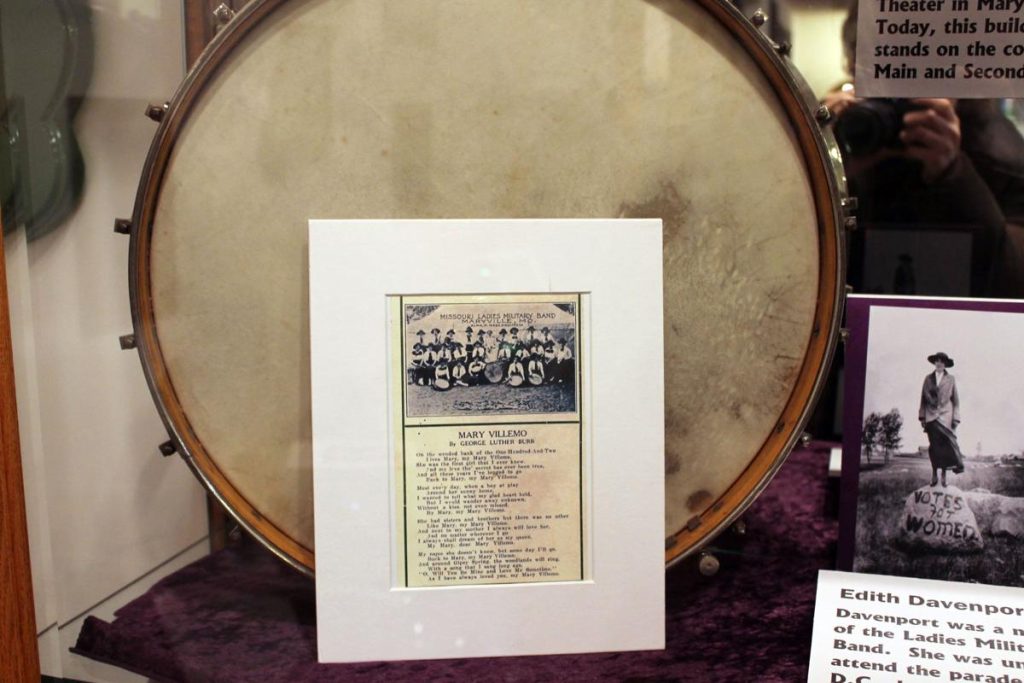
Alma Nash, later in life, from a display at the Nodaway County Historical Society Museum. Nash taught an estimated 4,000 students as a music teacher in her lifetime.
MARYVILLE, Mo. — It’s perhaps fitting for two women in particular, linked by hometown, conviction and music — though separated by time, personality and choice — to come first in remembrance and celebration this week, the first of Women’s History Month.
They probably wouldn’t have had it any other way.
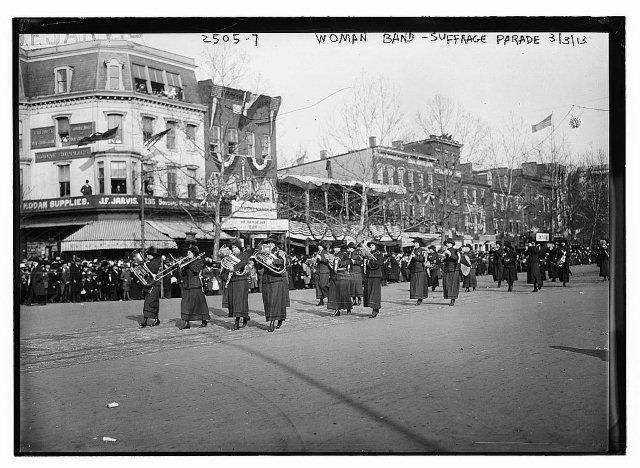
This week, 106 years ago, a Maryville woman was first in a sea of more than 5,000 marching up Pennsylvania Avenue in the Women’s Suffrage Procession.
Eleven years later, also this week, also in Maryville, one of opera’s biggest personalities and trailblazers was born. She would lead a group of only three others, so far.
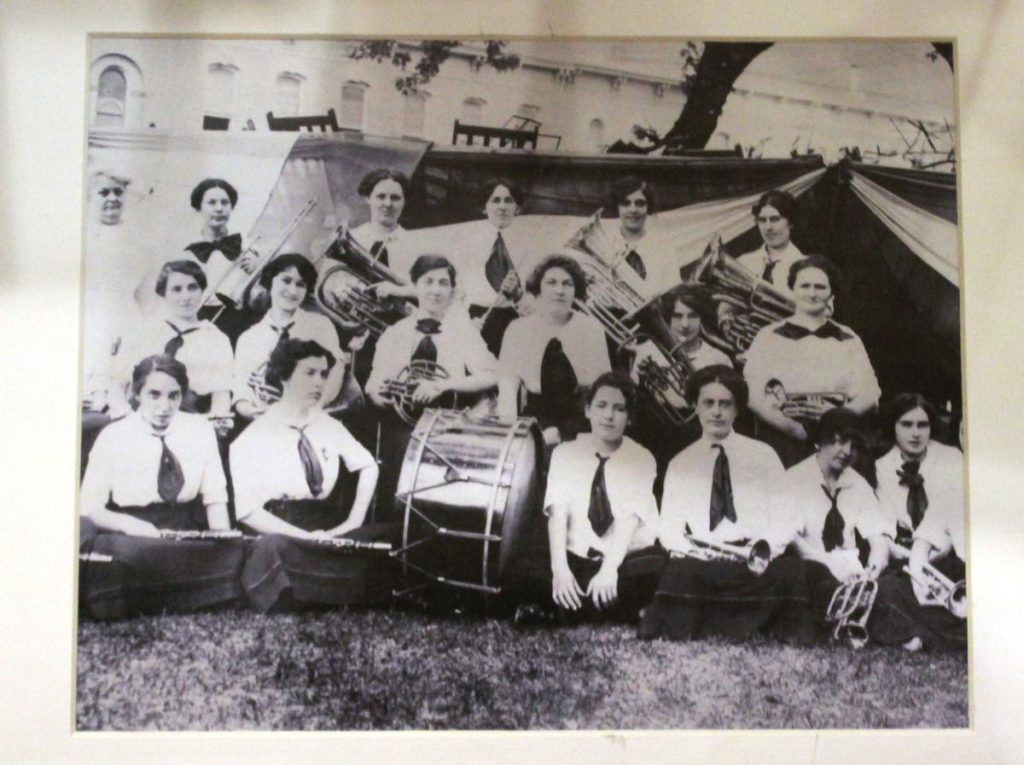
In 1913, Alma Nash, who would celebrate her 30th birthday later that year, directed the Missouri Ladies Military Band, a 22-member, all-female ensemble that had only performed as a concert band, not as a marching one. Nonetheless, they piled onto a train that March and headed for Washington, stopping once along the way to practice playing while marching.
When they arrived, they weren’t supposed to be in the lead. Upon her return to Maryville, Nash instead chalked up their historic positioning to necessity.
“We were not right in the lead when the parade started; a number of women escorts, a number of walking officers of the National Equal Suffrage Association, with our band following, was the order when we first started,” she said at the time. “We had gone but a short distance ahead. One of the suffrage officers came rushing back to us and told us to march on ahead and lead; that it would be necessary for the band to open the way proved true.”
Her passion for music never waned, playing and teaching it for the rest of her life, teaching 4,000 music students until her death in 1965.
Eleven years after Nash’s death, another Maryville music icon would make her debut as the first female conductor at the Metropolitan Opera.
By the time she was 10 years old, Sarah Caldwell, violin prodigy, was at home in front of a crowd — a place she would work hard to stay in for as long as she could.
She graduated from high school at 14 — at that point having moved to Arkansas. Before her 30th birthday, she was head of the Boston University opera workshop, and a few years later, had founded the Boston Opera Group, which would become the Opera Company of Boston.
Caldwell, as large in bombastic personality as she was in size — she stood about 5-foot-3 and weighed nearly 300 pounds — built a reputation as a unique talent, both directing the stage and conducting the orchestra for her productions, a task usually split. She also earned a reputation as a bit of an eccentric, often wearing tennis shoes or slippers under her dresses while conducting.
“Sarah usually elected to sit high at the podium, behind a stockade-like enclosure,” Daniel Kessler wrote in “The First Woman of Opera,” his biography of Caldwell. “This device prevented the audience from focusing on Sarah’s large rump instead of concentrating on the performance itself.
“However, the enclosure was of no value to the orchestral players, who were not spared a most unfortunate view — Sarah tended not to wear underpants.”
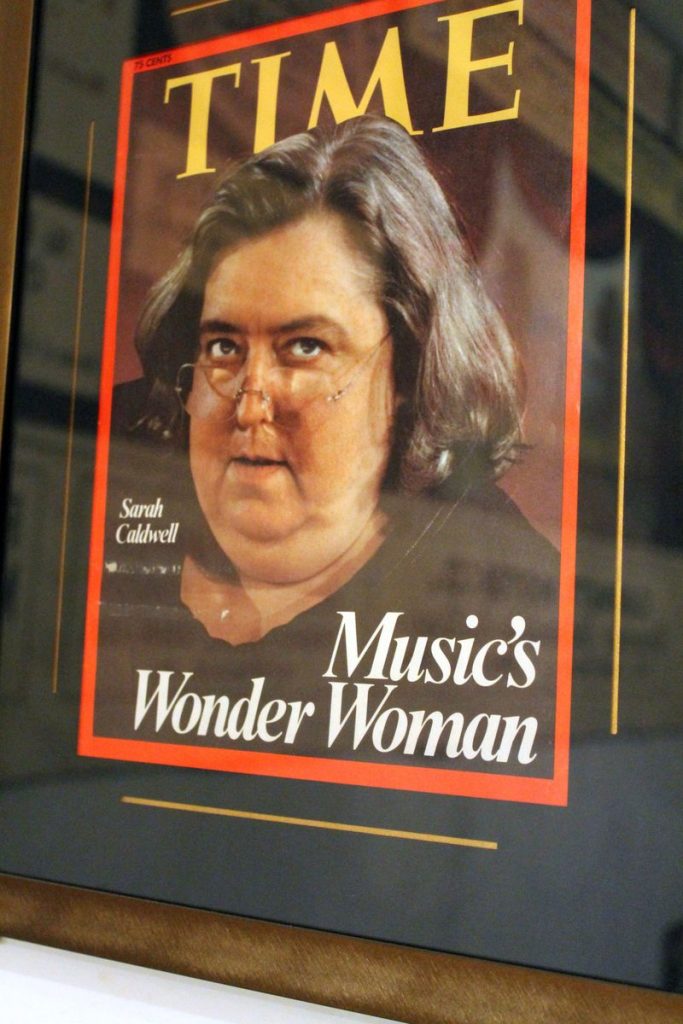
In 1975, Time magazine put the Maryville native on the cover: “Music’s Wonder Woman.”
The next year, she entered truly rarified air, becoming the first woman to conduct at the Metropolitan Opera in New York, a feat only three more women can claim since.
As with Nash, Caldwell didn’t lose her love of music, continuing with her opera company for as long as she was financially able.
In 1997, Caldwell was awarded a National Medal of Arts by President Bill Clinton for her life’s work.
She died in 2006.
In their times, Nash and Caldwell were well known, Nash locally and Caldwell across the globe, staging more than 100 operas. But as time has marched on, their stories are less and less prominent as others are told in their place.
One of Nash’s students in her later years said that if not for old photos at her Kansas City school, no one in her class may have known of her place in history.
“Her old photos were in view of the suffragette band of 1913 and other fading photos,” the student said in a letter to the Nodaway County Historical Society. “I don’t think that her students were all that aware how historically notable it was that she played her part in the suffragette movement, (even though) they all saw the old photos.”
And if the two had met — the fastidious band leader and the chaotic conductor — it’s unlikely they would have enjoyed sharing a workspace together.
“I remember her being all business …” the student said in his letter recalling Nash. “That must have been maddening for her because the ages were 8 to 60 years old musicians full of distractions.”
The two women, located on opposite ends of the personality spectrum, and who chose paths that couldn’t have diverged much more, nonetheless laid out the gamut of how to be extraordinary, in every sense of the word.
Though they’re unlikely to have shared much except for their passion for music and a hometown, Nash and Caldwell showed that to be extraordinary takes conviction, commitment and a belief that no matter what, there is always a place for such people at the front of the parade.
And, maybe above all — whether it’s 5,000, or just three so far — to make room for whomever comes next.
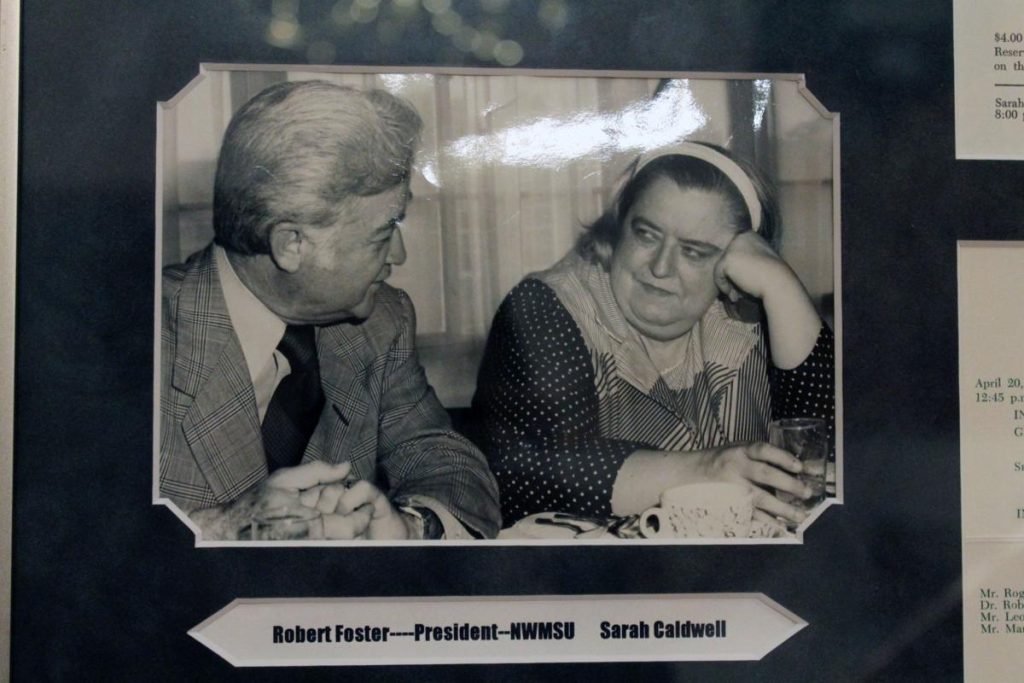
NODAWAY COUNTY HISTORICAL SOCIETY PHOTO
Sarah Caldwell pictured with Robert Foster, president of Northwest Missouri State University, in a photo preserved at the Nodaway County Historical Society Museum. Caldwell lived in Maryville until she was about 14.
FORUM FILE PHOTO
Alma Nash’s drum on display at the Nodaway County Historical Society Museum. Nash played many instruments throughout her life.
FORUM FILE PHOTO
The Missouri Ladies Military Band, directed by Alma Nash. The band led the Women’s Suffrage Procession in Washington on March 3, 1913.
FORUM FILE PHOTO
Sarah Caldwell featured on the cover of Time magazine from 1975. A year later, Caldwell would become the first female conductor at the Metropolitan Opera in New York.
NODAWAY COUNTY HISTORICAL SOCIETY PHOTO
The Missouri Ladies Military Band marches up Pennsylvania Avenue during the Women’s Suffrage Procession on March 3, 1913. The band, directed by Maryville native Alma Nash, was made up of 22 women who unexpectedly led the parade.