
Dementia Corner: Helping kids understand
Dementia Corner: Helping kids understand
Ways to Help Children Understand Alzheimer’s Disease
The following quote is from a friend’s Facebook page.
Standing in line for pho tonight, behind me a father was explaining what Alzheimer’s is to his young son.
Boy: BUT Grandma forgot me!”
Dad: “Remember Dory? She forgot things, too, right?”
Boy: “Yes.”
Dad: “But did that mean she loved Nemo less?”
Boy: (beaming) “No!”
What a wise response the Dad made in the conversation quoted above. Explaining the effects of Alzheimer’s disease by something familiar to the child like the movie “Finding Nemo” may help a child begin to understand this complex disease. A diagnosis of dementia affects generations within the family involved. Grandchildren often are overlooked and the tendency to shelter them from the truth can be tempting. The stress for the primary caregiver is tremendous and to navigate conversations with young children at appropriate times can add to the already overwhelming stress.
Thankfully, there are many resources available to use with children who are dealing with a loved ones who have Alzheimer’s or other forms of dementia. One of my favorite such books was written by Reverend Linn Posell and Teepa Snow and is entitledA Heart Full of Gems. Instead of the usual 1st through 7th, or mild to severe stages, Possell and Snow use 6 different gems to explain the stages of the condition. Of course, one first needs to understand what each gem stands for – Sapphire, Diamond, Emerald, Amber, Ruby, and Pearl. For this information, you might want to check out this link to Snow’s GEMS. https://teepasnow.com/about/about-teepa-snow/the-gems-brain-change-model
A Heart Full of Gems tells of a boy who has a grandmother in the early stages of dementia. An imaginary peacock friend comes along and talks him through the possible changes that the grandmother may experience. It ends on a positive note because the boy figures out how to respond to his grandmother as she experiences the different stages of dementia.
The thought and care given to this book is aptly described by the words in the dedication: “dedicated to those we love and those we have loved and lost, in hope that they will be better understood.” Increased understanding by all generations is the goal.
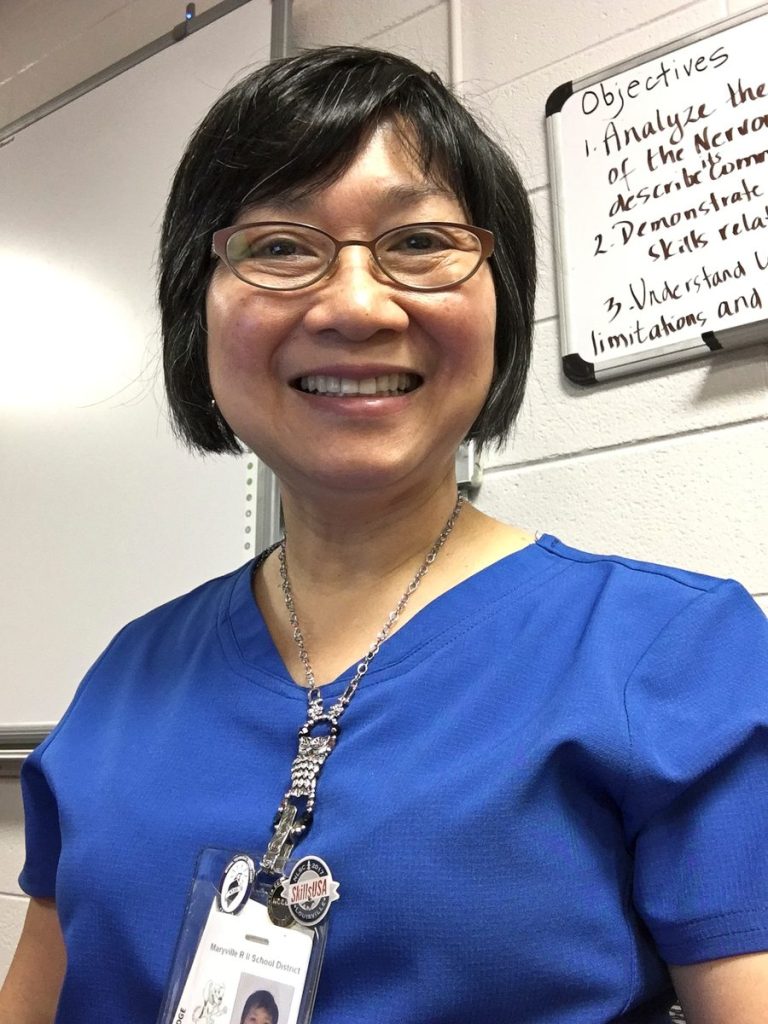
Bing Boettner, RN BSN, is a health science instructor at Northwest Technical School.



