Lettuce Dream fills shelves during E. coli scare
TONY BROWN/THE FORUM
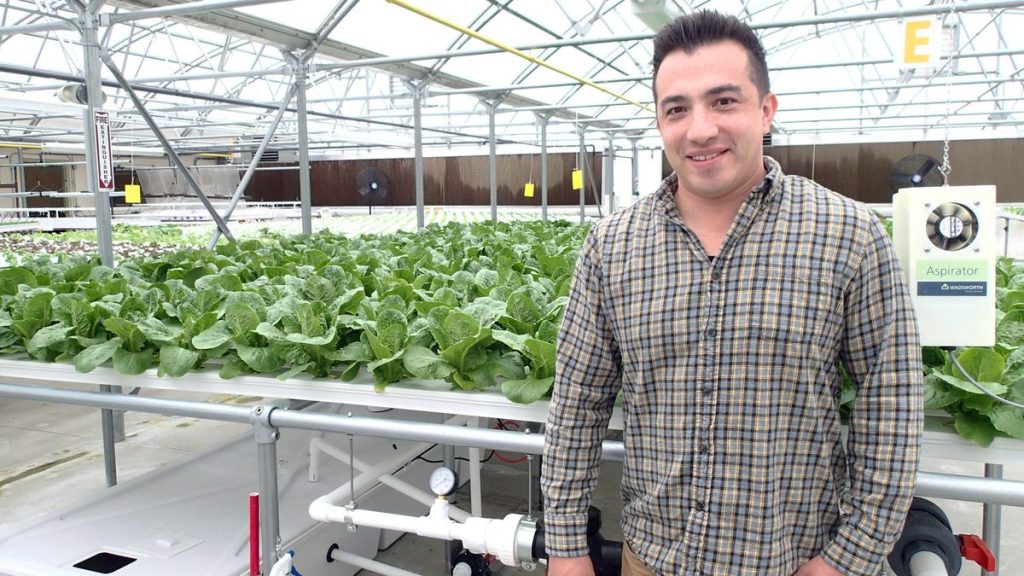
Charlie Clodfelter, director of the nonprofit Lettuce Dream hydroponic greenhouse in Maryville, stands beside a large indoor bed of romaine lettuce. A recent outbreak of E. coli infection tied to romaine grown in the Yuma, Arizona, area, has proved a windfall for the greenhouse, which supplies area stores, restaurants and food service operations and produces more than 200 pounds of romaine lettuce each week.
MARYVILLE, Mo. — While an E. coli outbreak tied to romaine lettuce has caused consternation and inconvenience nationwide and illness in more than a dozen states, the proscription of romaine grown in the Yuma, Arizona, region — the nation’s “winter vegetable capital” — has created a windfall for a local alternative agriculture producer.
Lettuce Dream, a nonprofit hydroponic greenhouse operation in Maryville that serves as a vocational training facility for adults coping with developmental and cognitive disabilities, produces more than 200 pounds of romaine lettuce each week.
And while some of that lettuce was already finding its way to grocery store produce shelves and restaurant tables, the E. coli scare has resulted in an unexpected windfall for the greenhouse’s bottom line, according Lettuce Dream Director Charlie Clodfelter.
“It’s been bad for a lot of people, but it’s been good for us, Clodfelter said this week, adding that he received a call from the local Hy-Vee supermarket on Saturday requesting an immediate addition to the store’s usual order.
“It’s a case of know your farmer, know your food. Using a local supplier makes things a lot easier,” he said.
In order to fill Hy-Vee’s emergency request, Clodfelter said he and a group of Lettuce Dream volunteers assembled at the greenhouse that same day and conducted an emergency harvest.
Typically, Clodfelter said, Hy-Vee purchases between 30 and 50 pounds of romaine from Lettuce Dream each week, but the E. coli outbreak has resulted in the store upping that order by around 30 percent.
Signs posted on the fully stocked Hy-Vee lettuce cooler inform shoppers that all romaine lettuce offered for sale is locally grown by Lettuce Dream or otherwise produced by growers outside the Yuma region.
Clodfelter said a second crash order came in shortly after the Hy-Vee request from The Farmhouse, a Kansas City-based restaurant in the process of establishing an eatery and catering operation at the city-owned Mozingo Lake Recreation Park conference center east of town.
Lettuce Dream produces between 220 and 250 pounds of romaine each week, which Clodfelter said accounts for about 50 percent of the greenhouse’s total production. Other lettuce varieties grown by the nonprofit include Salanova and butterhead.
The nature of Lettuce Dream’s operation, in which produce is grown in indoor beds filled with circulating nutrient-enriched water rather than soil, helps ensure the nonprofit’s lettuce is free of contaminants, such as E. coli bacteria — disease-causing organisms that have been known to infiltrate soil-grown plants via fertilizer, storm water runoff, animal feces and the unwashed hands of field workers.
In an indoor, hydroponic environment like Lettuce Dream, which uses city-treated water and mineral-based fertilizer, the odds of bacterial infiltration drop dramatically, said Clodfelter, who explained that the operation works to make the odds of contamination even longer through frequent inspections for rodents and other small animals, the regular sanitizing of all surfaces with which plants come in contact and protocols meant to ensure the cleanliness of greenhouse staff and clients.
Workers harvesting Lettuce Dream produce wear hairnets, gloves and aprons, Clodfelter said, and are trained to observe proper glove procedures and other sanitary precautions.
The operation, he said, has also implemented a detailed “traceability” program that allows both the greenhouse and its wholesale customers to keep track of precisely when specific lots of produce were harvested, transported and sold.
Among other things, the system means Lettuce Dream, should such an emergency ever arise, can issue a recall notice to affected buyers in two hours or less.
All of these protocols and systems are audited annually during an on-site visit by a U.S. Department of Agriculture inspector, said Clodfelter, who added that the greenhouse passed its last review with flying colors.
According to the Associated Press, U.S. health officials warned consumers last Friday to dispose of store-bought romaine lettuce and told restaurants not to serve it. The U.S. Centers for Disease Control and Prevention further cautioned people against eating any form of romaine grown in the Yuma area.
As of Thursday, health officials had yet to identify the precise origin of the contaminated produce.
News reports state that, so far, the outbreak has infected 53 people in 16 states. At least 31 have been hospitalized, including five with kidney failure. No deaths have been reported.
Symptoms of E. coli infection include diarrhea, severe stomach cramps and vomiting.