First Presbyterian mounts hurricane relief effort
TONY BROWN/THE FORUM
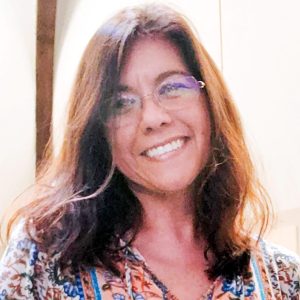
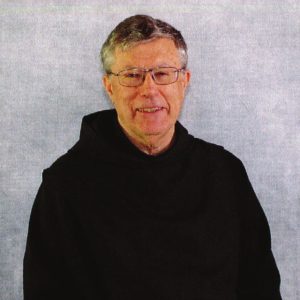
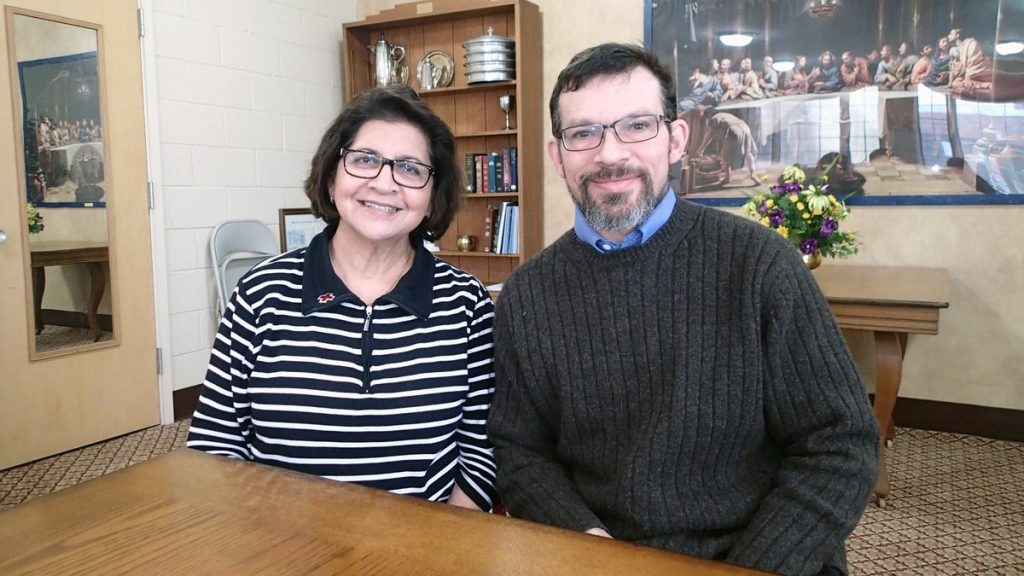
Red Cross volunteer Shoba Brown, left, and the Rev. Jonathan Mitchell of the First Presbyterian Church of Maryville, are among the members of local faith communities currently organizing a communitywide fundraiser to benefit survivors of Hurricane Maria, which decimated the U.S. island territory of Puerto Rico late last summer.
MARYVILLE, Mo. — As a bird would fly, it’s about 2,300 miles from Maryville to the eastern Caribbean island of Puerto Rico, the unincorporated U.S. territory — home nearly three and a half million people —devastated last September by Hurricane Maria.
But distance is no object for the members of a local church, who, through a connection to a Red Cross volunteer, are seeking to reach out to those still suffering from the impact of what is regarded as the island’s worst natural disaster ever and the tenth-most intense Atlantic hurricane on record.
The Rev. Jonathan Mitchell, pastor of the First Presbyterian Church of Maryville, said several members of his congregation were discussing church ministries shortly after the hurricane occurred, and decided that the disaster presented an opportunity for expanding First Presbyterian’s humanitarian outreach beyond Nodaway County.
Mitchell said church members are already involved in such ministries as First Presbyterian’s Thursday-night “Shepherd’s Kitchen” meal, a weekly hot dinner served free to all comers, in addition to such local charities as the Nodaway County Ministry Center and Habitat for Humanity.
He added, however, that the tightknit, service-oriented church has also been on the lookout for ways to contribute on a national or international level.
So after Maria struck, church member Carole Funston mentioned that her friend, local Red Cross volunteer Shoba Brown, had been to the island to serve as a relief worker and might be able to act as a conduit for a First Presbyterian hurricane aid project.
“Originally we were thinking of something small and low-key,” Mitchell said.
However, as the pastor’s flock began the kick the idea around, plans for a larger initiative on a communitywide scale began to take shape.
Soon, members from other local churches became involved, including Vanessa Parsons, who worships at the First United Methodist Church of Maryville and directs the vocal music program at Maryville High School. Members of Brown’s faith community, the First Christian Church of Maryville, also signed on in support of the project.
The result is that Funston, Parsons, Brown, Mitchell and others are in the process of completing plans for a large-scale musical performance and fundraiser set for 2 p.m. Sunday, April 15, at MHS’ Schneider Performing Arts Center.
The event is to include music by Parsons and her father, First Presbyterian musical director Larry Mannasmith.
In addition, Brown is scheduled to deliver a presentation describing ongoing Puerto Rico relief efforts, which she hopes will include appearances, via computer, by aid workers still on the ground.
Tickets to the event are to go on sale shortly at local churches and businesses and will cost $20 for adults and $5 for students.
Brown said all proceeds will be handed over to the Red Cross in the name of First Presbyterian and are to be spent solely on Puerto Rico hurricane recovery efforts.
After spending about three weeks in the devastated U.S. territory last December, Brown, who still has contacts there, said much work remains to be done, and that many Puerto Ricans, especially those scattered across the island’s rugged mountains, lack access to electricity and clean water.
She said she spent much of her time on the island driving through those mountains on storm-damaged roads in order to distribute water filters, gas- and solar-powered generators, radios, solar-powered lights and other emergency gear.
And that’s just the beginning. With the early, basic-needs phase of the aid and recovery effort still underway, Brown said the island is only now beginning to come to grips with damage to structures, roads and infrastructure damaged or destroyed by the hurricane’s fury.
“They are still very much in a state of emergency,” she said, noting that washed-out roads and other obstacles are making it difficult to deliver necessities, including medical supplies, to those living outside the capital city of San Juan and other population centers.
According to news reports, the island’s power grid was effectively destroyed by the hurricane, leaving much of the populace without electricity. Puerto Rico’s governor, Ricardo Rosselló, estimated that Maria caused at least $90 billion worth of damage.
While fewer than 100 people were reported killed by the storm itself, the actual number of hurricane-related fatalities was far greater.
Hundreds of people who survived the hurricane’s initial blast are believed to have died later from conditions related to power outages, contaminated water and the absence of emergency medical care.
“We’re still in the early stages,” Mitchell said of First Presbyterian’s effort to make a difference in Puerto Rico by exploiting Brown’s connection to the Red Cross relief effort there.
“The idea is to get money directly to the people who need it.”