4-H volunteers fear loss of Extension staffer
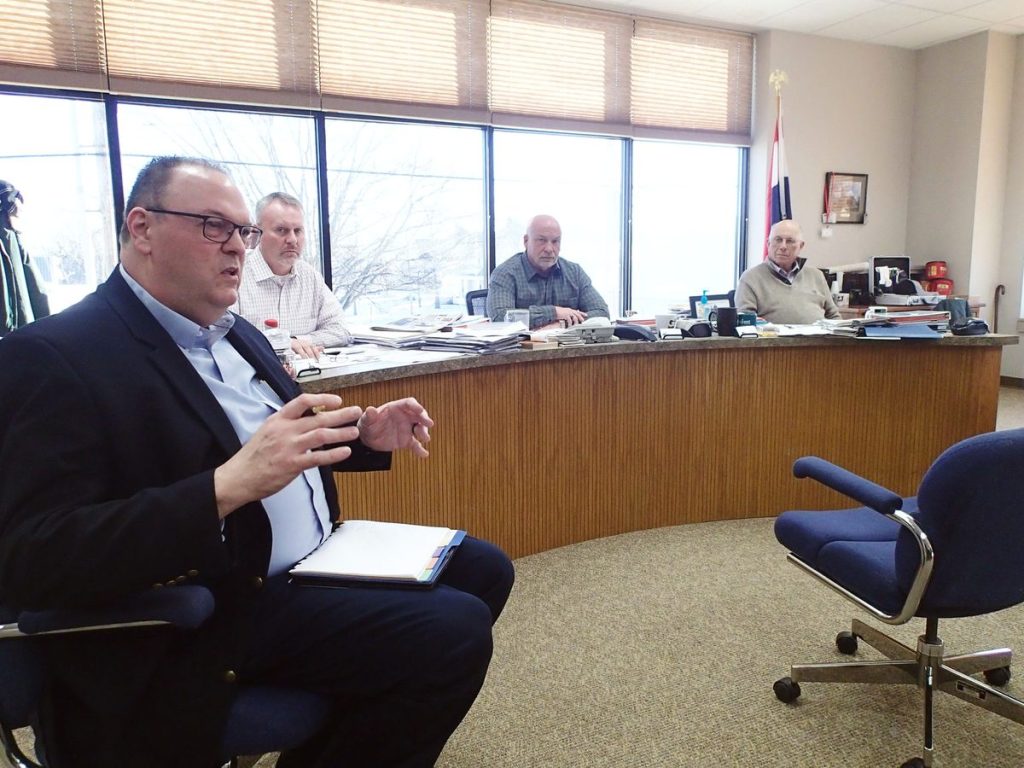
TONY BROWN/THE FORUM
Joe Lear, Northwest Region director for University of Missouri Extension, addresses a group of area residents at Friday’s Nodaway County Commission meeting. Lear and Rob Kallenbach, assistant dean of MU’s College of Agriculture, Food and Natural Resources, were in town to address concerns about a proposed staffing plan that would leave Nodaway County without a full-time 4-H youth development specialist.
MARYVILLE, Mo. — A proposed staff reorganization being floated around the state by University of Missouri Extension officials is raising hackles among supporters and volunteers of the Nodaway County 4-H program.
The popular agriculture-focused youth organization has long been administered by MU Extension and serves about 250 young people in Nodaway County ages 8-18.
As is the case in many Missouri counties, Nodaway has a 4-H youth development specialist — Annette Deering — who works as a full-time staff member of the Extension office housed on the top floor of the Nodaway County Administration Center on the northeast corner of the Maryville square.
Under a draft staffing plan under consideration by the university, however, Deering would be redesignated as a “county engagement specialist” and transferred to the Atchison County Extension office in Rock Port.
In this new role, Deering would supervise 4-H operations in three counties, Atchison, Holt and Nodaway, while also, according to Extension Northwest Region Director Joe Lear, working to identify “needs and resources” affecting MU Extension as a whole.
As an engagement specialist, Lear said, Deering — in addition to her 4-H duties — would devote a significant amount of time to building relationships with local nonprofits and government organizations.
About 10 people, including current and former members of the Nodaway County Extension Council, showed up at Friday’s regular County Commission session to discuss the draft staffing plan with Lear and Rob Kallenbach, assistant dean of MU’s College of Agriculture, Food and Natural Resources.
Several of those present, including presiding commissioner and council member Bill Walker, expressed reservations about the proposal and questioned the wisdom of leaving the area’s most populous county without a full-time 4-H professional.
Local residents attending the session pointed out that Nodaway has, by far, the largest number of young people aged 8-18 in the area, and that the Maryville 4-H club alone has nearly 90 members.
They also questioned whether Deering’s proposed new role, which would embrace a certain amount of fundraising and MU recruitment, would leave her with enough time to oversee 4-H programs in three counties.
“The center of gravity for 4-H is Nodaway County because of the population,” said Extension Council member Chris Wallace.
Former council member Mike Kinman made much the same argument, stating that a majority of area 4-H youngsters live in Nodaway, and that moving the youth development specialist to a smaller county, in his view, would constitute “poor management.”
Belinda Hess, co-leader of the Maryville 4-H club, said 4-H was an essential tool used to teach the “mores, values and ethics” of production agriculture, and that a half-time youth program associate for Nodaway County, as proposed in the draft plan, was insufficient.
“I don’t think a part-time person is enough by any means,” said Hess, who added that, in her view, every county in the state should have a full-time 4-H and youth education staff member.
She continued that 4-H is essential to efforts to combat a perceived lack of education and awareness about production agriculture in a society that is becoming increasingly urban.
“The only place you see a cow is in the zoo — that’s the sort of people you have now days,” Hess said.
Commissioner Walker told Lear and Kallenbach that his phone had been “ringing off the wall” with calls from constituents opposed to the proposed reorganization.
Told by Lear that Nodaway’s strong 4-H program would not suffer if the proposed staff changes take place, Walker responded, “I have to disagree with that.”
While sympathizing with local residents opposed to the draft plan, and thanking them for their “good input,” Lear and Kallenbach made it clear that fiscal challenges mean staffing changes are probably necessary if MU Extension is to continue to function effectively.
Lear pointed out that Extension’s staff roster has fallen from 400 in the 1960s and ’70s to around 200 today, and that the decline has been accompanied by steep drops in both funding and the number of 4-H volunteers statewide, trends that are essentially forcing the organization to do more with less.
“We are looking at redefining some roles while trying to figure out ways to be more engaged,” Lear said. “With the reduction in the number of staff, our surveys show that we have started to lose touch with some of our communities.”
That said, Lear added that research shows farm families and others served by Extension “really do like our specialist model,” which is designed to provide locally available expertise across the organization’s core competencies, which include agronomy; livestock production; natural resource engineering; quality-of-life programs embracing childcare, physical fitness, nutrition and opportunities for youth; and commercial and economic development.
However, in an era of shrinking resources and declining rural population, Lear said Extension’s “strong local engagement and networking” — organizational hallmarks 40 years ago — have weakened.
“So we asked ourselves, ‘How do we address that,’” he said, “and one answer has been, ‘Let’s take a look at what staffing looks like.’”
MU Extension has an annual budget of around $83 million, about $6 million of which comes from local governments for the support of county offices.
The Extension budget approved each year by the Nodaway County Commission totaled $40,000 in 2017 and covers administrative expenses and incidental costs.
Statewide, Extension also receives approximately $23 million in state appropriations and $10 million in federal funding, with the remainder of its budget coming from grants and contracts.
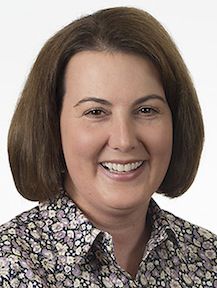
MU Extension photo
Annette Deering