City readies for $1.5 million in street overlays, repairs
TONY BROWN/DAILY FORUM
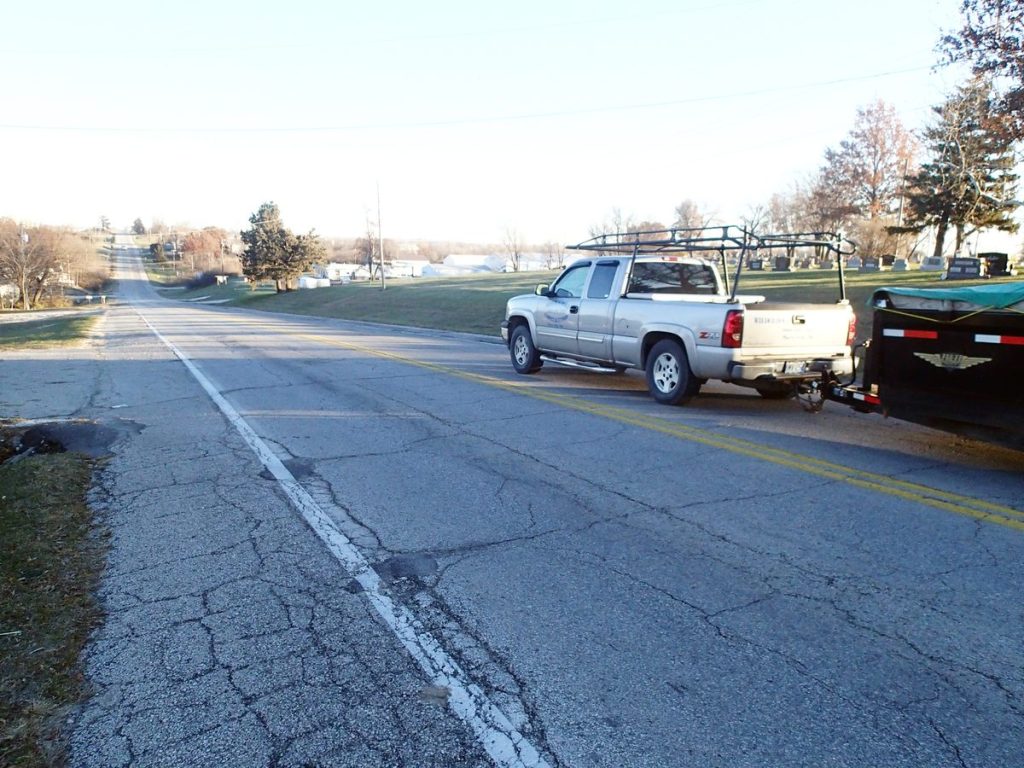
No final decisions have been made yet, but City of Maryville officials are continuing to plan for a $1.5 million street improvement initiative in 2018 that will embrace several miles of fresh asphalt overlays plus numerous repairs to “permanent” concrete thoroughfares. Included on the proposed list of projects is a one-mile section of North Main, pictured here, stretching north from 12th Street.
As 2017 draws to a close, City of Maryville officials continue making plans for implementing one of the most significant capital improvement budgets in years.
In addition to anticipated completion next month of a new $4.7 million conference center at Mozingo Lake Recreation Park, City Hall also is moving forward with plans to build a new police/fire headquarters on 1.7 acres of land along Vine Street between Second and First.
But in terms of improvements the majority of Maryville residents will notice, use and appreciate on a daily basis, one of the biggest changes will be upgraded city streets.
The fiscal 2018 budget, approved by the City Council in late September, includes $1.74 million for asphalt overlays and other street improvements. That’s about six times as much money as was spent last year and, so far as anyone knows, the largest amount of cash ever set aside for municipal transportation upgrades within a single spending cycle.
Funds to pay for the work will come largely from the city’s half-cent capital improvement sales tax, which was extended by voters last April for another 20 years.
Public Works Director C.E. Goodall said this week that his office has identified about $2 million in street repair needs, and that the list has been submitted to City Manager Greg McDanel for consideration.
The next step will be for McDanel and Goodall to identify priorities for the 2018 construction season and submit them for approval to the City Council.
Goodall said the ultimate goal is to resurface or repair up to 70 percent of Maryville’s existing streets, both asphalt and concrete, over the next three years. That comes to a little more than 50 miles of roadway.
Looked at another way, Maryville is planning to resurface or upgrade virtually every street in town that has gone without fresh pavement for at least 10 years.
While the lion’s share of that work is expected to take place this summer, the rest will be spread out over fiscal 2019 and 2020, when the overlay budget will likely shrink to its normal level of between $300,000 and $400,000.
As for next year, the street budget contains $1.25 million for asphalt overlays, $250,000 for as-needed concrete street repairs, including curbs and gutters where required, and $240,000 for downtown transportation improvements yet to be specified.
One possibility identified earlier by McDanel is the installation of permanent traffic signals at the intersections of Main and Third and Main and Fourth streets at the north and south ends of the courthouse square.
After 2018 asphalt overlay priorities are set, the city plans to hire a contractor through its regular competitive bid process. Concrete street work will be handled by J.D. Bishop Construction, whose existing contract with the city extends through next year.
Goodall said that while the city wants to make every effort to replace decayed sections of concrete streets, in some cases the better answer may be to overlay some of those thoroughfares with asphalt.
While concrete, or “permanent,” streets have a lifespan of around 30 years, Goodall said they are far more expensive to maintain or replace.
Replacing a single block of concrete can cost around $100,000, he said, while at current prices a crew can lay down as many as six blocks of fresh asphalt for approximately $80,000.
However, such asphalt “caps” are only practical if the concrete underneath is still fairly sound, which makes the choice of which surface to use something of a delicate balance.
On other fronts, Goodall and McDanel are looking to address several high-visibility street needs that also will carry high price tags.
These projects include a mile-long stretch of North Main between 12th Street and 242nd Street; an unpaved north-south gap on South Depot Street between East Halsey and the paved Polk Township-owned Depot extension linking to South Avenue (268th Street); and Hawk Road, a gravel road also owned by Polk Township that serves as the entryway to Northwest Missouri Regional Airport.
Goodall said all three locations are on the overall priority list, but that no final decisions have been made about which, if any, might be paved in 2018.
One reason for the delay, he explained, is the approaching onset of winter and the possibility of widely fluctuating temperatures, which could play havoc with roadways currently in good repair. So, as always in north Missouri, early spring and the return of pothole season will tell the tale.
But whatever the new year brings, Maryville motorists might as well get used to the notion that it’s going to be a long summer as far as driving goes just about anywhere inside the city limits. When warm weather returns, look for a lot of detour and road-closed signs, orange cones and rough going over freshly milled streets awaiting fresh asphalt.
Still, city officials are hoping such inconveniences will be quickly forgotten as drivers spend the next decade or so rolling smoothly down easy street.