Keepsakes tell story of WWII sailor’s sacrifice
COURTESY OF THE PALMER FAMILY
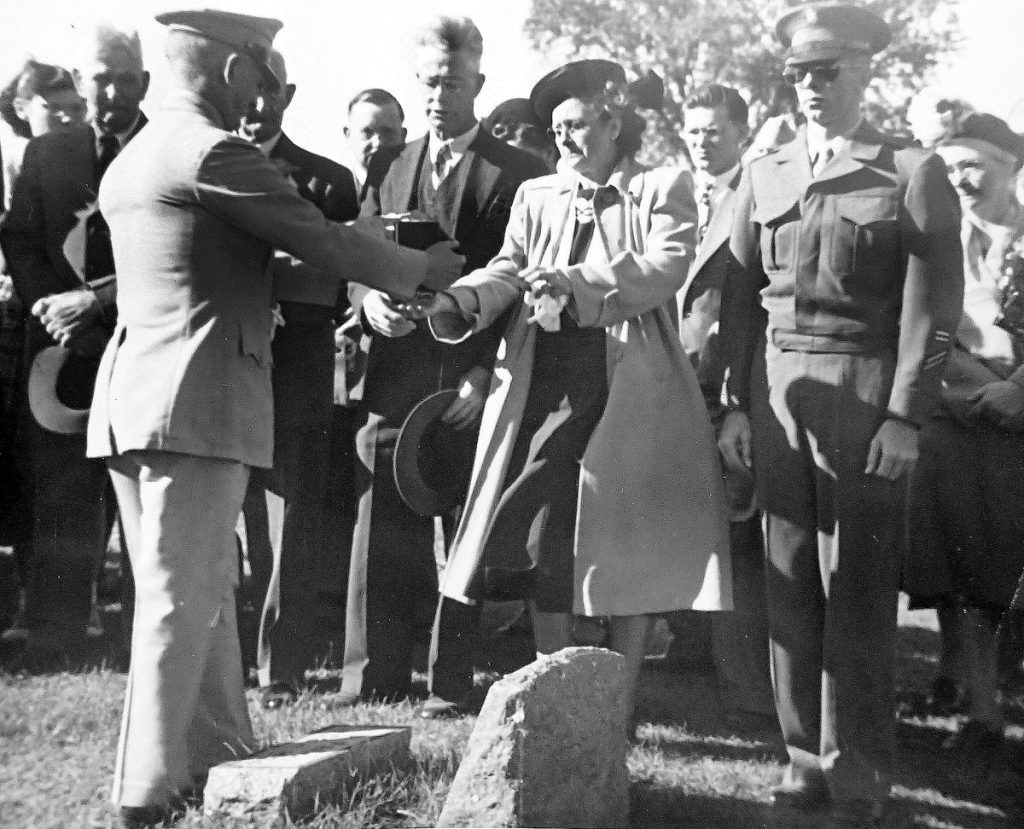
Evanell Palmer accepts a folded U.S. flag during the military funeral held for her son, Seaman 1st Class James LeRoy Palmer, who was killed in action on Oct. 27, 1944, during the Battle of Leyte in the Philippines during World War II. Palmer is one of the servicemen commemorated with an engraved paving stone at the new Lions Club flag plaza in Franklin Park.
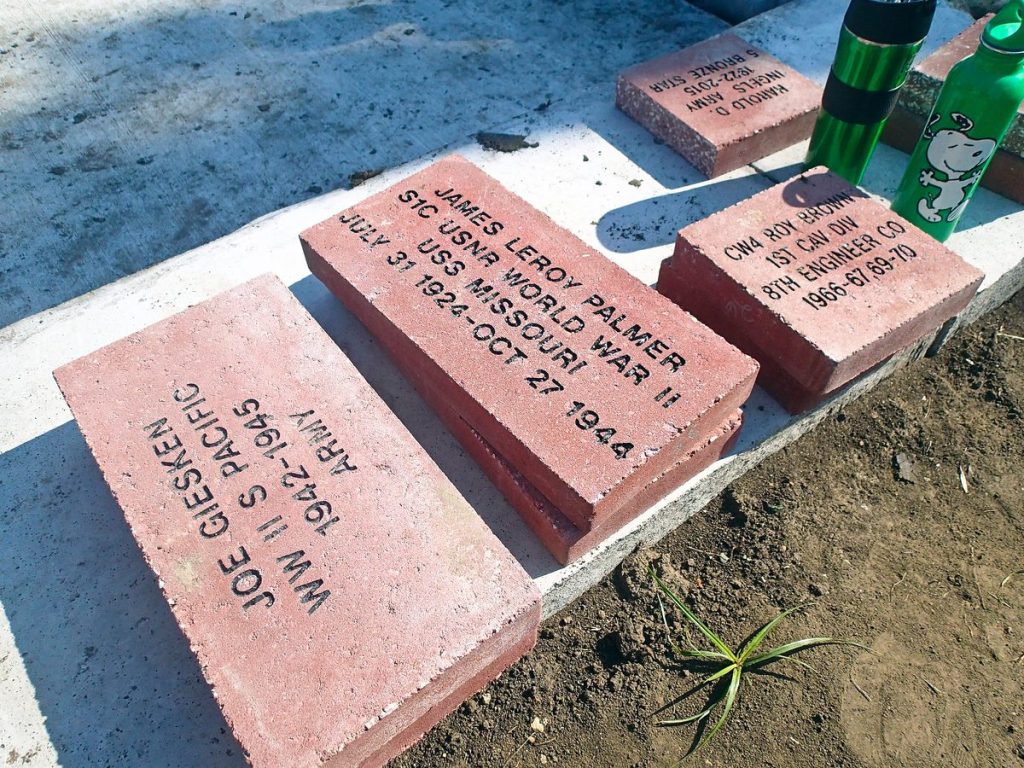
Dozens of engraved brick pavers were recently installed by area Lions Club members and other volunteers at the new Freedom Rock flag plaza in Maryville’s Franklin Park.
The plaza memorializes Nodaway County veterans who served in all branches of the U.S. military in all wars.
Most of the pavers, of course, simply bear the names, ranks and service dates of the veterans they honor. But the lives behind those names are largely hidden.
Family members and friends who purchased the stones doubtless recall stories about dad’s time in Vietnam, grandfather’s service in Korea or a cousin’s or schoolmate’s deployment to the Middle East. But for the casual visitor to the plaza, there are only the names — a simple roll of honor offering abbreviated recognition to local folks who wore their country’s uniform.
But in at least one instance, the name on a paver served as a key that unlocked the history — and the sacrifice — of a U.S. Navy sailor with Nodaway County roots, a 20-year-old who lost his life during World War II in a climactic battle against the imperial forces of Japan.
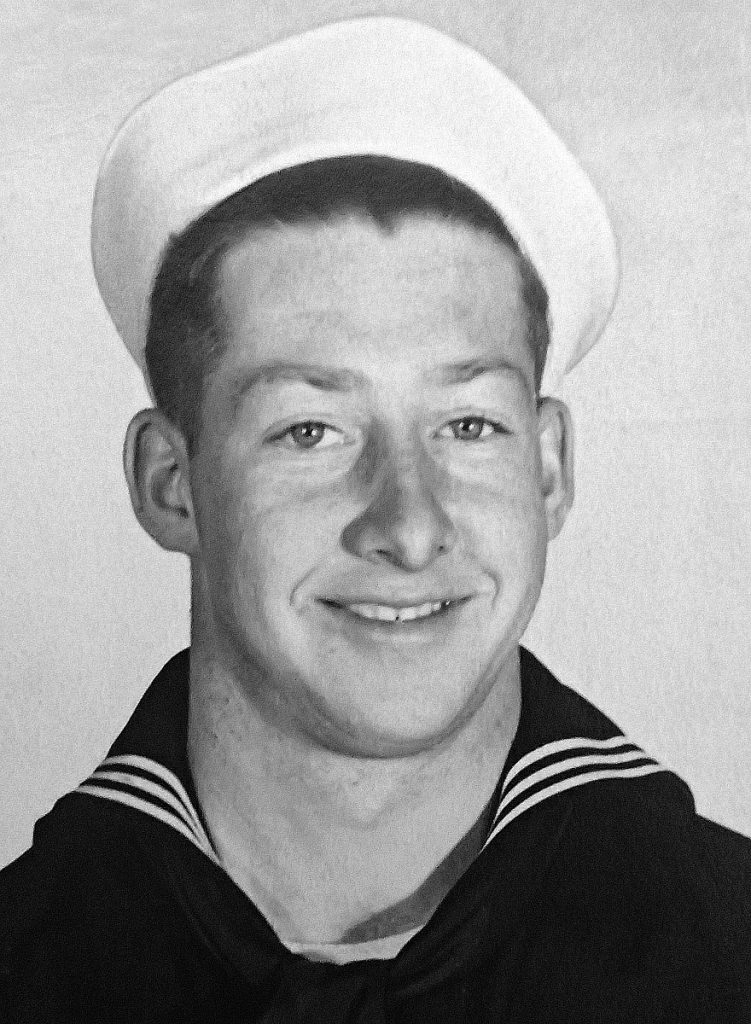
Seaman 1st Class James LeRoy Palmer, whose parents moved from the Burlington Junction area to Petaluma, California, during the Depression of the 1930s, was killed by an enemy shell burst on Oct. 27, 1944, during the Battle of Leyte, which launched the U.S. campaign to recapture the Philippines after almost three years of brutal Japanese occupation.
The fight is perhaps best remembered by Americans today for an iconic photograph of Gen. Douglas MacArthur wading ashore on the island of Leyte, thus making good his famous pledge to return to the Philippines following the catastrophic American defeat there in 1942.
But while MacArthur’s leadership and charisma may have fired the American public’s imagination, it was men like Palmer who did the dying.
Which is why his descendants, including nine nieces and nephews, five of whom live in Maryville, chipped in to buy a paver honoring his service.
As with other names on other stones, Palmer’s story would likely have remained a matter of fading family tradition had not one of his nieces, local resident Kathy Ridenour, seen a photograph of her uncle’s paver in the Daily Forum last month.
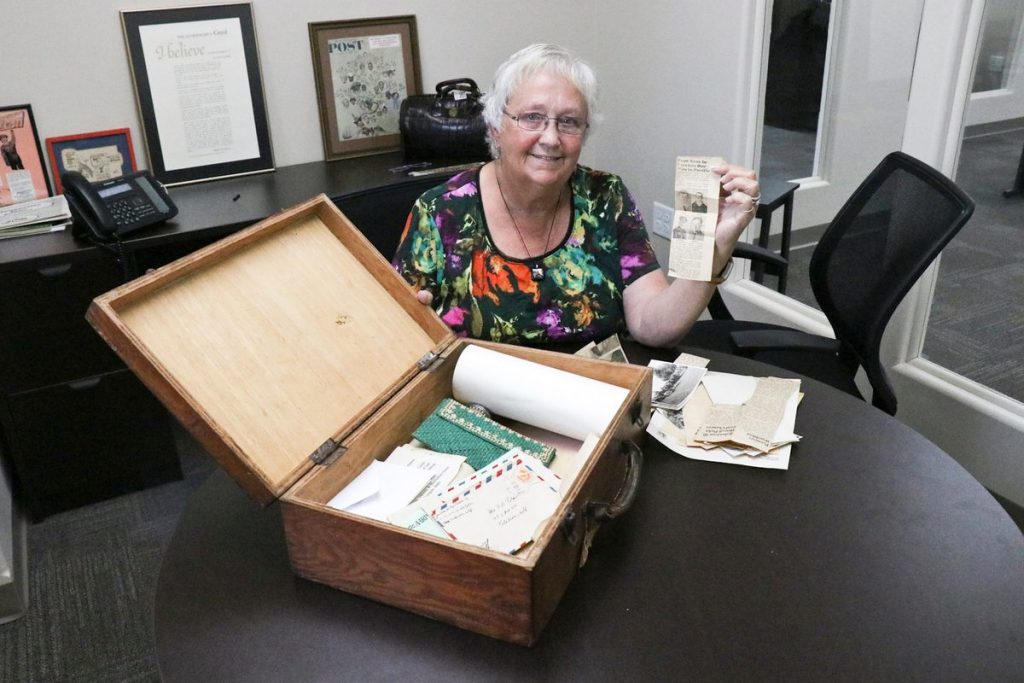
The image made her recall an old wooden box, preserved by the Palmer clan for years, which, as things turned out, contained a small treasure trove of news clippings, photographs and Navy documents relating to the young seaman’s military service and death.
Taken together, the box’s contents offer a glimpse back in time at an ordinary family forever changed by the massive tide of global conflict.
James LeRoy Palmer’s parents, Roland and Evanell Palmer, left Missouri for California to escape the poverty and drought that plagued America’s heartland during the hardscrabble 1930s. They settled with their children near San Francisco, though ultimately returning to the Burlington Junction area. Shortly after the United States entered the war in December 1941, all four of the couple’s sons were in uniform.
James was the only sailor. His three brothers, Robert, William and Dean, served in the Army. Robert, who enlisted before the war began, saw action in Italy and France. Dean also ended up in the Pacific and at one point was stationed on Guam. William shipped out to England.
Milton Heldt, married to one of three Palmer daughters, was in the Navy as well.
That’s a heavy price for a single family to pay. But in the 1940s, with virtually the entire world at war, their story wasn’t exceptional, it was typical. This was the hour of the “greatest generation,” and sacrifice and service were commonplace.
And so it was for the Palmers. Shortly after James LeRoy’s death, his parents received, as did tens of thousands of others, the dreaded telegram, which is still preserved in that box of family mementoes:
“The Navy Department deeply regrets to inform you that your son, James LeRoy Palmer, seaman first class, was killed in action while in the service of his country. The department extends to you its sincerest sympathy in your great loss …”
Subsequent communications from the Navy, also preserved, state that James was fatally wounded by shell fragments and buried ashore by “U.S. Army authorities.”
Ultimately the young sailor’s remains were returned to the United States, and Seaman 1st Class James LeRoy Palmer, recipient of the American Campaign and Asiatic-Pacific Campaign medals and the Purple Heart, was buried on Sunday, Sept. 26, 1948, in a cemetery in Clarinda, Iowa.
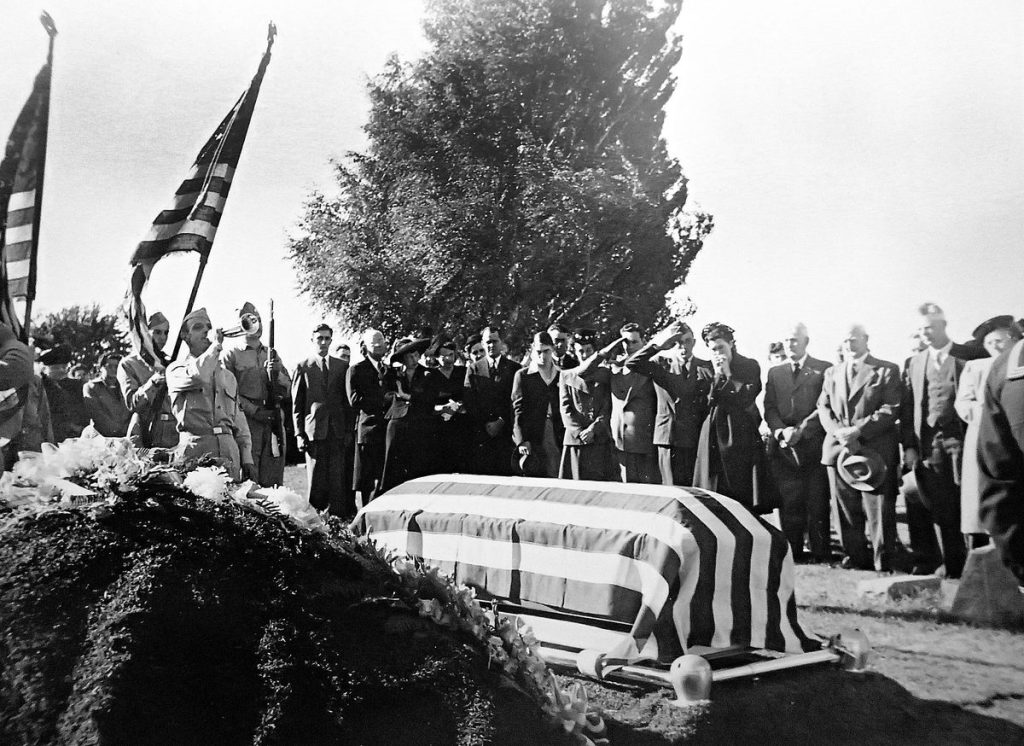
Members of the American Legion’s Rolla Dicks Post No. 315 of Burlington Junction served as pallbearers. Photographs of the graveside service show a man who appears to be a U.S. military officer presenting a grieving Evanell Palmer with a folded flag and a uniformed bugler playing “Taps.”
James LeRoy Palmer’s obituary, preserved in typescript and marked with ink pen corrections, reads in part: “James LeRoy served for 20 months in the U.S. Navy having received his boot training at Farragut, Idaho, and was sent overseas in November 1943 to the South Pacific and was with the victorious campaign toward the Philippine Islands.”
A quiet epitaph for a young man who should have lived a much longer life, but who, like MacArthur, though perhaps more tragically and profoundly, loved his country, did his duty and returned.
COURTESY OF THE PALMER FAMILY
Seaman 1st Class James LeRoy Palmer
COURTESY OF THE PALMER FAMILY
A soldier plays “Taps” during the Sept. 1948 military funeral for Seaman 1st Class James LeRoy Palmer, who was killed during the Battle of Leyte, which pitted United States forces against the imperial Japanese army and navy in the later stages of World War II. A collection of photographs and documents relating to Palmer’s military service and death has been preserved by the family for more than 70 years.
TONY BROWN/DAILY FORUM
Pictured is an engraved paving stone given by the family of Seaman 1st Class James LeRoy Palmer, who was killed while fighting in the Pacific during World War II. The paver was installed last month by volunteer workers at the new Lions Club memorial flag plaza in Franklin Park.
PHIL COBB/DAILY FORUM
Kathy Ridenour is shown here with a box of World War II documents and photographs relating to her uncle James LeRoy Palmer, who was killed in the Battle of Leyte and whose name is commemorated on a brick in the new Lions Club flag plaza in Franklin Park.