Senior Center to lose state, federal funding
TONY BROWN/DAILY FORUM
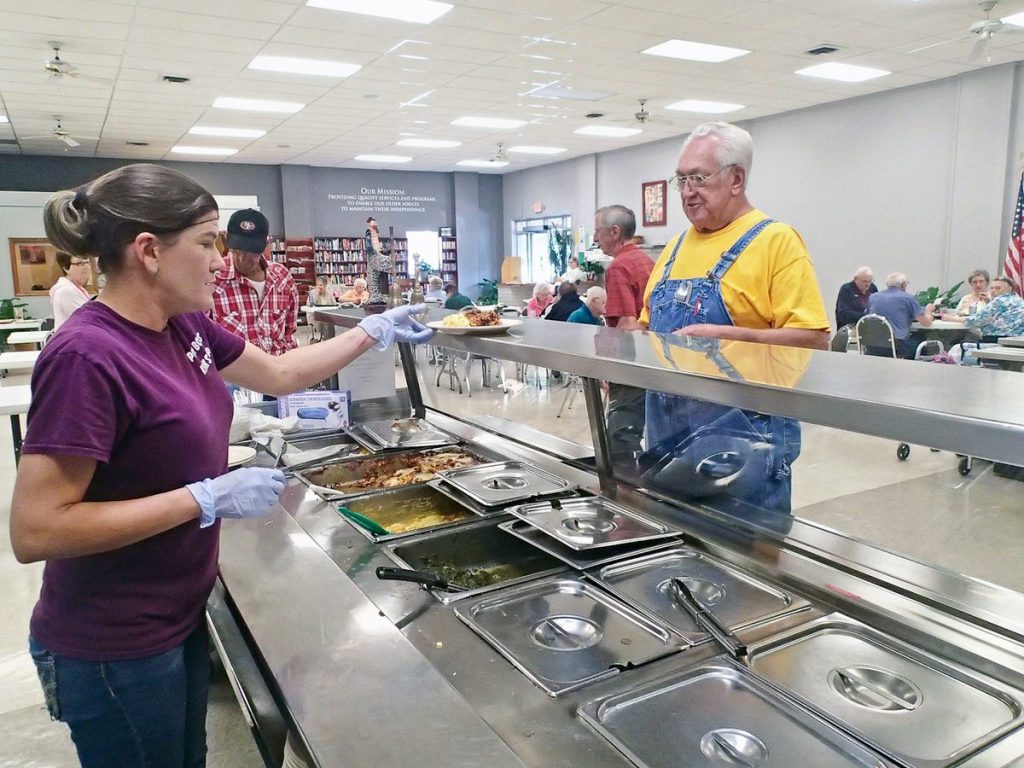
Pamela Wissler, head cook at the Nodaway County Senior Center, dishes up lunch for a patron over the noon hour on Wednesday. Senior Center Administrator Amie Firavich has gone on record as saying the center is losing 100 percent of its state and federal funding for the new fiscal year, which began July 1. Including Medicaid dollars, such funding accounts for about half of the center’s $300,000 annual budget.
Nodaway County Senior Center Administrator Amie Firavich said Wednesday that the center, located at 1210 E. First St. in Maryville, has been denied state and federal funding through the Albany-based Northwest Missouri Area Agency on Aging for the fiscal year that began July 1.
Firavich said she was notified in writing July 24 by Area Agency CEO Rebecca Flaherty that the local center’s bid for providing nutritional assistance to Nodaway seniors had been denied, along with two similar programs in Cameron and St. Joseph.
Flaherty could not immediately be reached for comment.
Last year, Firavich said, the center received about $150,000 in federal and state nutrition dollars and Medicaid funding, which covered about half the operation’s total budget.
The center serves a cafeteria-style lunch Monday through Friday to about 65 patrons and home delivers another 95 meals to elderly and disabled residents countywide, two-thirds of whom live in Maryville.
Firavich said this is the first time in about 30 years that the center’s annual bid for funding has been denied by the agency, which functions under the umbrella of the Missouri Department of Health and Senior Services.
The center’s current contract with the agency, Firavich said, had remained in force under a 60-day extension that expires today.
Firavich said she became concerned about the center’s government funding in June, when she was notified that the operation had been selected for a pilot program that, according to state documents, was intended to move selected senior centers and other nutrition assistance programs toward “privatization” in the face of anticipated state and federal budget cuts.
She said the pilot was later cancelled.
Despite the loss of funding, Firavich said the Senior Center will continue both its cafeteria and home-delivery operations, but almost certainly at increased cost.
She said the actual cost to the center for food comes to $7 per meal, and that clients over 60 are asked for a voluntary contribution of $4 a plate.
Diners under age 60 pay the full $7 price, but many older patrons contribute only what they feel they can afford, and Firavich said the center receives an average of $2.37 for each meal served.
Firavich said donations and meal payments, which in the past have been turned over to the Area Agency, total between $70,000 and $75,000 a year.
In the absence of government funding, Firavich said meal contributions will become mandatory charges, and what amounts to a “senior discount” will be offered to patrons over age 60.
While government assistance has accounted for a big chunk of the center’s budget, the operation does have other sources of revenue, including about $50,000 derived annually through a countywide tax earmarked for senior services.
In the past, Firavich said, the center has also received around $25,000 from the United Way and another $3,000 to $5,000 in donations from local service clubs, community groups and various fundraisers.
The center has about $100,000 in reserves, she said.
“We’re not going to stop serving either (at the Senior Center) or home-delivery,” Firavich said. “But we are trying to get the word out so that people know the position we’re in.”
She said she is working on a business plan that will ensure the operation’s viability with or without government funds. The center is already certified as a 501(c)(3) non-profit corporation.
State Rep. Allen Andrews said Wednesday he was aware that funding cuts had been proposed for the Senior Center and had spoken with Flaherty.
Andrews described funding for such centers statewide as “complicated” because of the mix of revenue streams from federal, state and private sources. He added that there is increasing competition for social-services dollars as the U.S. population ages and millions of baby boomers move into retirement.
“More and more people are coming into this area of need,” Andrews said, “and these are real needs that have to be addressed. So the question is how are we going to take care of our most vulnerable citizens?”
“I’m all about taking care of people in need as best as we possibly can,” continued Andrews, who said he has called on the Area Agency to prevent people from “slipping through the cracks.”
He stopped short, however, of voicing support for restoration of Senior Center funding, saying it was the agency’s decision.
“There are things that we can do to be able continue to meet people’s needs and meet them better than we have before, said Andrews, adding that nutritional support services statewide may have to “build a better mousetrap” by implementing new organizational and funding models.